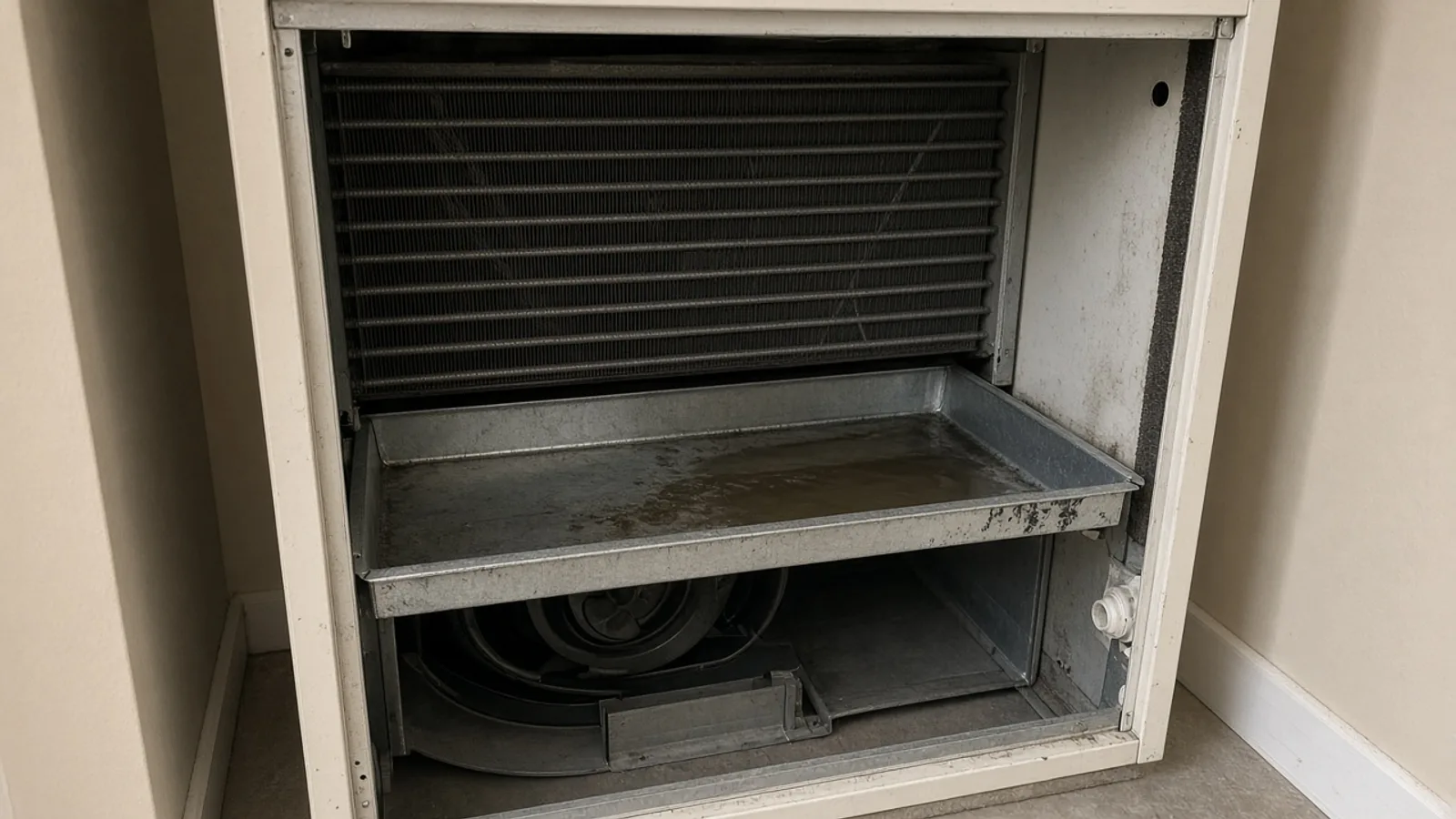
How an HVAC System Can Spread Mold
Air conditioning pulls moisture out of the air as it cools, and that water is meant to drain away. When the drain clogs, the pan cracks, or insulation gets wet, moisture stays inside the equipment. Wet, dusty surfaces inside an air handler or duct can support growth.
Once growth is established, the system's airflow can carry spores and odors through the ducts to every room served.
Common Causes
- Clogged condensate drain lines. Debris or algae can block the line, causing water to back up into the pan and cabinet.
- Cracked or rusted drain pans. Water leaks into surrounding insulation and framing.
- Wet duct insulation. Cold supply ducts in hot attics or crawl spaces can sweat, and damaged insulation holds the moisture.
- Leaky or poorly sealed ducts. Humid air pulled into the system adds moisture where it shouldn't be.
- Oversized equipment or poor humidity control. Systems that cool too quickly may not run long enough to dry the coil and drain properly.
- Long periods of non-use. A system left idle in a closed, humid building can develop odor and growth.
Signs to Watch For
- A musty odor when the system starts, especially at first startup of the season
- Visible dark growth or staining at vents and registers
- Water around the air handler or stains on the ceiling below it
- Symptoms that seem worse indoors and ease when you leave
- Dust or debris blowing from vents when the system runs
A musty smell with no visible source can be an early chemical signal of microbial growth. We cover that in what MVOCs are and why they matter.
What an HVAC Inspection Checks
- The air handler cabinet, coil area, and drain pan, where accessible
- The condensate drain line, for clogs, leaks, and proper slope
- Duct insulation and accessible duct runs, for moisture and condensation
- Moisture readings and thermal imaging around equipment and ceilings or walls nearby
- Air sampling, to see whether spore levels are elevated compared with the outdoor control
- Surface sampling where growth is visible
The inspector looks at the system alongside the rest of the building, because a damp system and a damp building often have the same cause. To learn more about this service, see HVAC mold inspection.
Why Duct Cleaning Alone Often Doesn't Last
If the moisture source is still present, cleaning the surfaces doesn't stop growth from returning. The drain, the leak, the wet insulation, or the humidity problem has to be found and fixed. An inspection identifies that source, which is why it comes first, and why the findings should be documented before any work begins.
The same sequence applies to any cleanup. See mold remediation vs mold inspection.
When a System Warrants an Inspection
- A persistent musty odor from the vents
- Water damage near the air handler or ducts
- Visible growth at registers
- A building that has been closed up and humid for a long time
- Recurring symptoms with no other explanation, as we discuss in our post on mold and your health
- After a leak or flood that affected equipment or ductwork
If something smells off when the system runs, schedule an inspection. The report will show whether the system is part of the problem and what's feeding it.