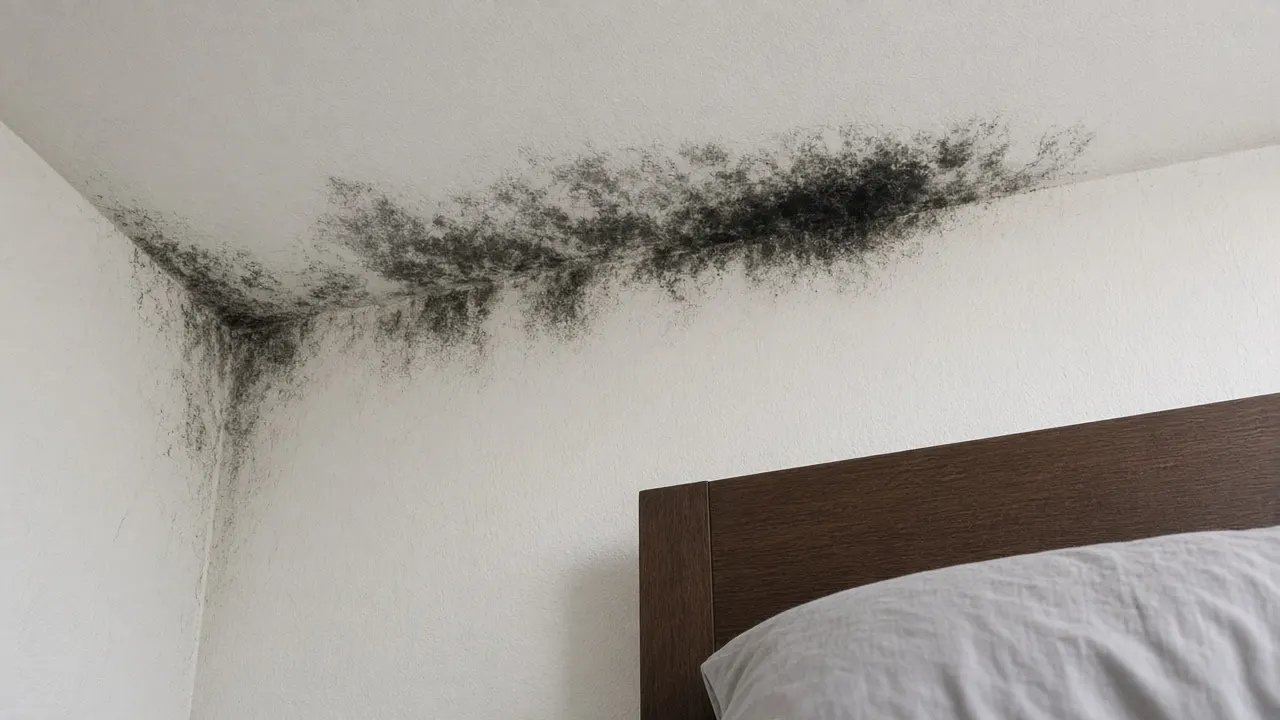
Why Mold Symptoms Are Frequently Misattributed
The symptoms most commonly associated with mold exposure — nasal congestion, throat irritation, coughing, eye irritation, skin rashes, headaches, and fatigue — overlap almost entirely with seasonal allergies, viral upper respiratory infections, and general stress responses. Without the building context, there is no clinical marker that distinguishes mold exposure from any of these other causes.
The building context is the key diagnostic signal. Symptoms that follow a consistent location pattern — present at home, improved at work or outdoors, returned upon coming home — are pointing at the building, not at seasonal pollen or a circulating virus. This pattern is worth paying attention to even when nothing visible is present, because mold established inside wall assemblies, in crawl spaces, or in HVAC systems produces no visible surface growth while releasing spores and mycotoxins into the air continuously.
The Spectrum of Health Responses
Not everyone exposed to the same mold conditions responds the same way. Health responses exist on a spectrum determined by individual sensitivity, the species and concentration of mold present, the duration of exposure, and underlying health conditions.
- Irritation responses. The most common reaction in otherwise healthy adults. Mucous membrane irritation — runny nose, watery eyes, throat irritation — that resolves when leaving the building and returns upon re-entry. Not an allergic response, but a direct irritant effect from spores and fungal fragments in the air.
- Allergic responses. In individuals with mold allergies, IgE-mediated immune responses produce more pronounced and persistent symptoms — sneezing, congestion, asthma exacerbations — that may not resolve immediately upon leaving the building because the immune system remains activated. Mold is one of the most common allergens in the United States.
- Asthma exacerbation. The CDC and EPA both identify mold exposure as a documented asthma trigger. Individuals with pre-existing asthma who experience worsening symptoms at home without a clear seasonal or infectious cause should consider building assessment.
- Hypersensitivity pneumonitis. A less common but more serious inflammatory lung condition caused by repeated exposure to high concentrations of certain mold species, particularly in agricultural or water-damaged building contexts. Symptoms include fever, chills, muscle aches, and shortness of breath appearing 4 to 8 hours after exposure.
- Mycotoxin exposure. Some mold species — Stachybotrys chartarum and certain Aspergillus and Penicillium species — produce mycotoxins under specific growth conditions. The health effects of mycotoxin inhalation in residential settings remain an active area of research, and the scientific consensus on dose-response relationships is not settled. What is established is that mycotoxin-producing species require sustained wet conditions to produce toxins and are found primarily in chronically water-damaged buildings.
Which Species Carry the Most Documented Risk
The vast majority of mold found in buildings — Cladosporium, Penicillium, Aspergillus, Alternaria — are ubiquitous in outdoor air and produce irritation and allergic responses in sensitive individuals but are not associated with the severe health outcomes sometimes attributed to mold exposure.
The species that carry more specific documented health concerns in residential contexts are:
- Stachybotrys chartarum. The species most associated with severe mold-related illness in the popular literature. Grows on cellulose — drywall paper, wood — under sustained wet conditions. Produces trichothecene mycotoxins under those conditions. Requires chronic water damage to establish and is not found in normally maintained buildings.
- Aspergillus fumigatus. A thermophilic species that grows at body temperature and can cause invasive aspergillosis in immunocompromised individuals. Relevant primarily in healthcare settings and for individuals with severely compromised immune systems.
- Chaetomium. A water-damage indicator genus associated with chronic moisture conditions. Produces secondary metabolites that have shown cytotoxic effects in research settings. Its presence in an air or surface sample indicates sustained water damage rather than surface condensation.
When Symptoms Alone Justify Testing
Testing the building is indicated when the symptom pattern follows the location pattern described above — present in the building, improved elsewhere — and particularly when:
- Symptoms have persisted for more than two to four weeks without a clear infectious or seasonal cause
- Multiple occupants of the same building experience similar symptoms
- Symptoms worsen in specific rooms or areas of the building
- The building has a known history of water damage, flooding, or plumbing failures
- There is a musty odor without visible mold
- Asthma or allergy symptoms are worsening in an individual who has been stable
What Air Quality Testing Establishes That a Doctor's Visit Cannot
A physician can document symptoms and test for allergic sensitization to mold genera. What a physician cannot do is tell you whether the building you occupy has an active mold source releasing spores into the air above the normal baseline for your location.
Air quality testing draws a measured volume of air through a spore trap in the affected space alongside an outdoor control sample, and a laboratory identifies what genera are present and at what concentrations. The indoor-to-outdoor comparison establishes whether there is an indoor source releasing spores above the local ambient level — information that is not available from any clinical test.
This building-level data is what connects symptoms to a specific indoor environment and what justifies the remediation scope that addresses the source. Without it, remediation is guesswork and symptoms return.
When to Test the Building vs When to See a Physician
These are not mutually exclusive, and both may be appropriate simultaneously. The distinction is in what each assessment can tell you.
See a physician when symptoms are severe, when asthma is worsening, when there is fever or shortness of breath, or when symptoms are not following a clear location pattern. A physician can rule out infectious causes and assess allergic sensitization.
Test the building when the location pattern is present, when multiple occupants are affected, when there is a known history of water damage, or when a physician has ruled out other causes and symptoms persist. The building assessment is what determines whether a mold source exists and where it is.
If you have symptoms that follow a location pattern and want independent, lab-verified documentation of the air quality in your home, schedule an air quality inspection.