The Basic Distinction
Mold inspection is the diagnosis. Mold remediation is the treatment. These are two separate professional services that require different tools, different training, and — critically — different financial incentives.
A mold inspection uses thermal imaging cameras, calibrated moisture meters, and laboratory-analyzed air and surface samples to find where mold is growing, how extensive it is, what species are present, and what moisture source is sustaining it. The output is a written report with lab results that defines what needs to happen next.
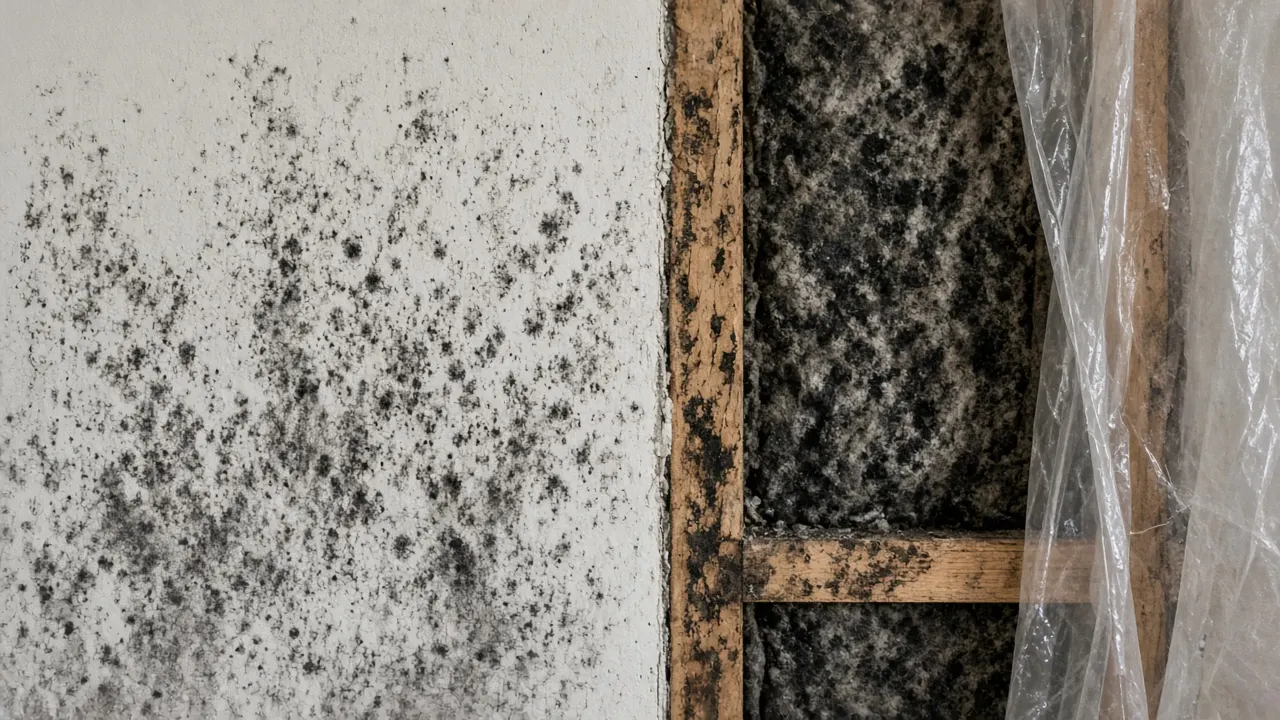
Mold remediation is the physical work that follows — containment of the affected area, removal of affected materials, drying and treatment of structural components, and disposal of contaminated material. This is performed by a contractor using specialized equipment and following established remediation protocols.
Why the Same Company Shouldn't Do Both
A company that both inspects and remediates has a financial interest in what the inspection finds. The larger the remediation scope it identifies, the more revenue it earns from the cleanup work. This is not a criticism of any specific company — it is a structural conflict of interest that exists regardless of the company's integrity.
The most common manifestation is scope inflation — a remediation proposal that addresses more material than the actual affected area warrants. In a home with mold on a section of drywall, a company that also does remediation might propose treating the entire wall, the adjacent walls, and the ceiling on the reasoning that the problem could have spread. An independent inspection with thermal imaging and moisture meters characterizes exactly how far the moisture has actually traveled — which is often significantly less than a visual estimate suggests.
A second manifestation is source misidentification. Finding mold is straightforward. Identifying what moisture source is sustaining it requires time and instrument work that a company motivated to proceed to remediation has less incentive to perform thoroughly. A remediation that doesn't address the moisture source will return within a season — generating another remediation contract.
How the Inspection Report Defines the Remediation Scope
The inspection report is the document that makes remediation competitive. Without it, every remediation contractor you call performs their own free inspection and produces a scope based on that walkthrough — which has the conflict of interest described above built into it.
With an independent inspection report, you have a documented scope — specific affected areas, moisture readings, species identified, moisture source located — that you can send to multiple remediation contractors for comparable bids. Every contractor is bidding on the same defined problem rather than on their own potentially inflated estimate of it.
This changes the dynamic of the remediation market significantly. Contractors who might otherwise propose a larger scope are constrained by an independent document that defines the actual extent of the problem. In Southern California's older housing markets and Michigan's pre-war residential stock — where remediation scopes can be substantial — the inspection report typically produces smaller, more accurate remediation bids than a remediation contractor's free inspection would.
What to Do First When You Suspect Mold
- Do not call a remediation company first. Any company that offers a free inspection and also performs remediation has a financial interest in what it finds. Their inspection is a sales tool, not an independent assessment.
- Call an inspection-only company. A company that performs no remediation earns its revenue from the inspection itself. There is no financial incentive to find more than the instruments confirm.
- Get the report before authorizing any work. The report defines the scope. No remediation contractor should begin work without a documented scope from an independent assessment.
- Use the report to get multiple remediation bids. Send the inspection report to two or three remediation contractors. The bids will be more accurate and more comparable than bids based on each contractor's own walkthrough.
- Schedule post-remediation verification separately. After the remediation is complete, an independent inspection confirms the work succeeded. This verification is only meaningful when it comes from a company that had no involvement in the remediation.
The Three Situations Where This Matters Most
Real estate transactions. A buyer needs accurate moisture documentation before closing, not a remediation proposal from a company that profits from finding more. An independent inspection report is what satisfies a lender's requirement for mold documentation and what holds up in a purchase negotiation.
Landlord-tenant disputes. Both a landlord responding to a habitability complaint and a tenant documenting conditions need findings that carry no financial interest. A report from a company that also remediates can be challenged by either party as self-serving.
Insurance claims. Insurance adjusters require independent documentation of the condition, its probable cause, and the scope of affected material. A report from the remediation contractor that will also perform the cleanup does not satisfy that requirement.
If you have found or suspect mold and want a diagnosis without a financial conflict of interest, schedule an independent inspection.