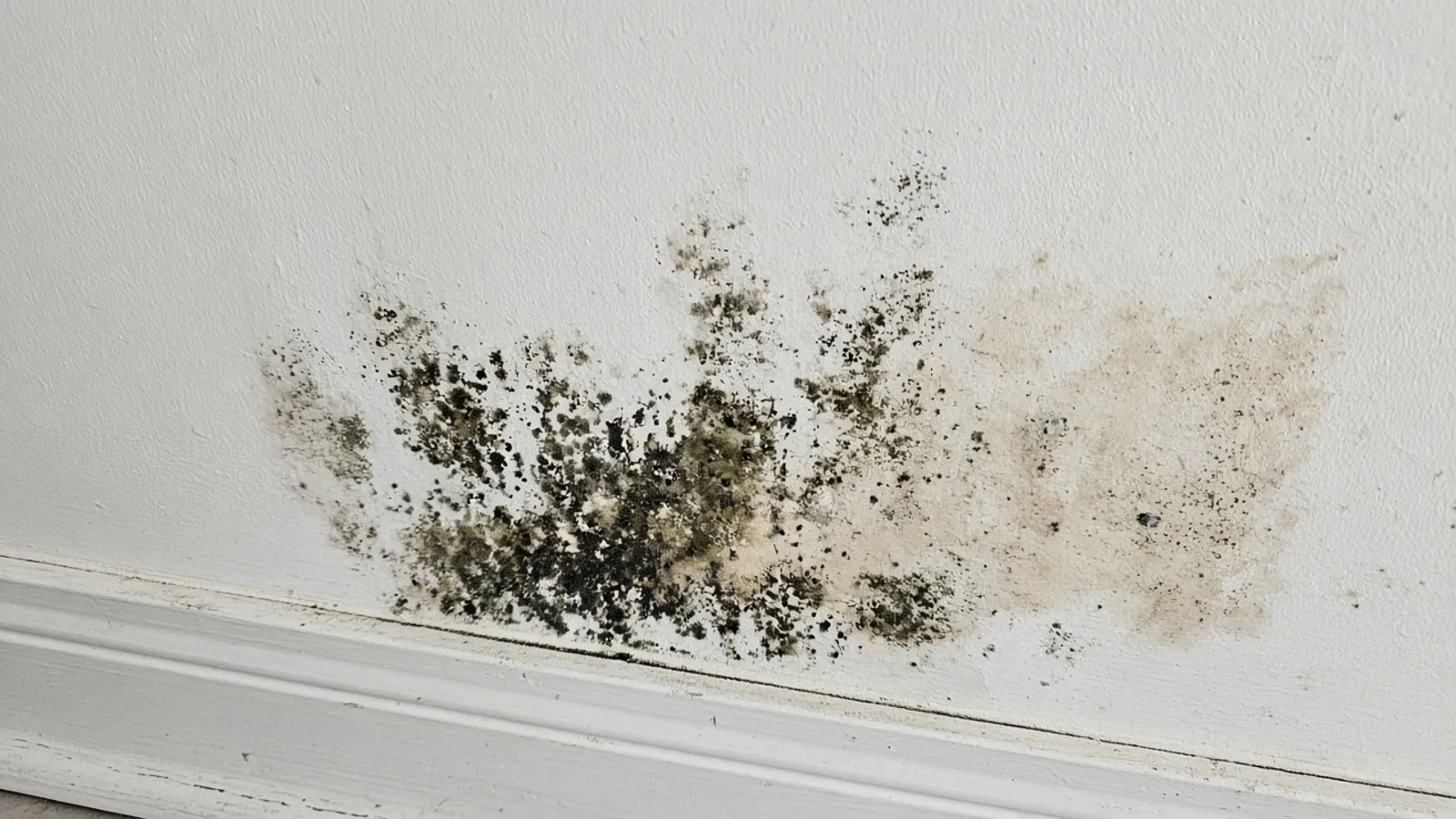
Why Leaks Go Unnoticed
A leak doesn't need to be dramatic to cause damage. A slow drip at a supply line fitting, a slab leak, a failed window seal, or a small roof flashing gap can wet the same piece of framing or drywall for months. The water stays inside the wall, under the floor, or above the ceiling, and the surface can look normal until the damage is advanced.
That's why moisture problems are often discovered late, by a smell, a stain, or a soft spot, instead of when they begin.
Signs a Hidden Leak May Exist
- A musty or earthy smell with no obvious source
- Stains that appear, fade, and return
- Paint that bubbles, peels, or blisters
- Warped baseboards, buckled or soft flooring
- Unexplained increases in water use, or the sound of running water when nothing is on
- Condensation on windows or cold walls that doesn't clear
- Warm or cool patches on a floor or wall
How a Moisture Survey Works
A survey combines two instruments, because each answers a different question.
- Thermal imaging. A thermal camera scans walls, ceilings, and floors for temperature patterns that can indicate moisture. It covers a large area quickly and shows where to look closer, without opening anything.
- Moisture meters. A calibrated meter reads moisture content in the material itself. It confirms whether an area the camera flagged is actually wet, and how wet compared with dry material nearby.
- Visual and access checks. The inspector looks at plumbing, roof and window details, crawl spaces, attics, and mechanical equipment for the likely source.
No demolition is needed for the survey. For more on what each instrument can and can't show, see is mold always visible? To learn more about our service, visit leak and moisture detection and thermal imaging.
What It Can and Can't Tell You
A survey finds where material is wet and helps narrow down the source. It does not always name the exact pipe or seam. Some leaks need follow-up from a plumber, a roofer, or a leak specialist who can pressure-test a line or trace a pipe.
It also doesn't prove mold. Wet material is the condition mold needs, so a survey is often paired with laboratory sampling when growth is suspected. We explain that pairing in air quality testing for mold.
When a Survey Is Worth Doing Without Visible Mold
- After a leak, flood, or storm that was dried but never verified
- When a musty smell is present and nothing is visible
- Before buying a property, especially an older one
- When a stain keeps coming back after being painted over
- At the end of a restoration, to confirm that materials are dry before walls close up
After a known water event, timing matters. See mold after water damage: when to test.
What to Do While You Wait for an Inspection
- If you suspect an active plumbing leak, shut off the water to the affected area if you can do so safely
- Photograph stains and damage with dates
- Note when you first noticed the problem and any past leaks
- Don't paint, seal, or tear out the affected area before it's documented
- Run a dehumidifier or improve airflow if the area is damp, and avoid spreading growth if you see it
If you suspect hidden water, schedule an inspection. Catching it early usually means a smaller repair.