Why Mold Can Grow Where You Can't See It
Mold needs moisture, a food source, and time. Drywall paper, wood framing, insulation backing, and subflooring are all food. Moisture gets into those materials from slow plumbing leaks, roof and flashing failures, condensation, and ground moisture, and it often does so inside wall cavities, under flooring, in crawl spaces, and above ceilings.
In those locations, the finished surface can look completely normal while the material behind it stays wet. By the time a stain or a patch of growth shows up on the surface, the problem behind it has usually been active for a while.
What a Moisture Meter Measures
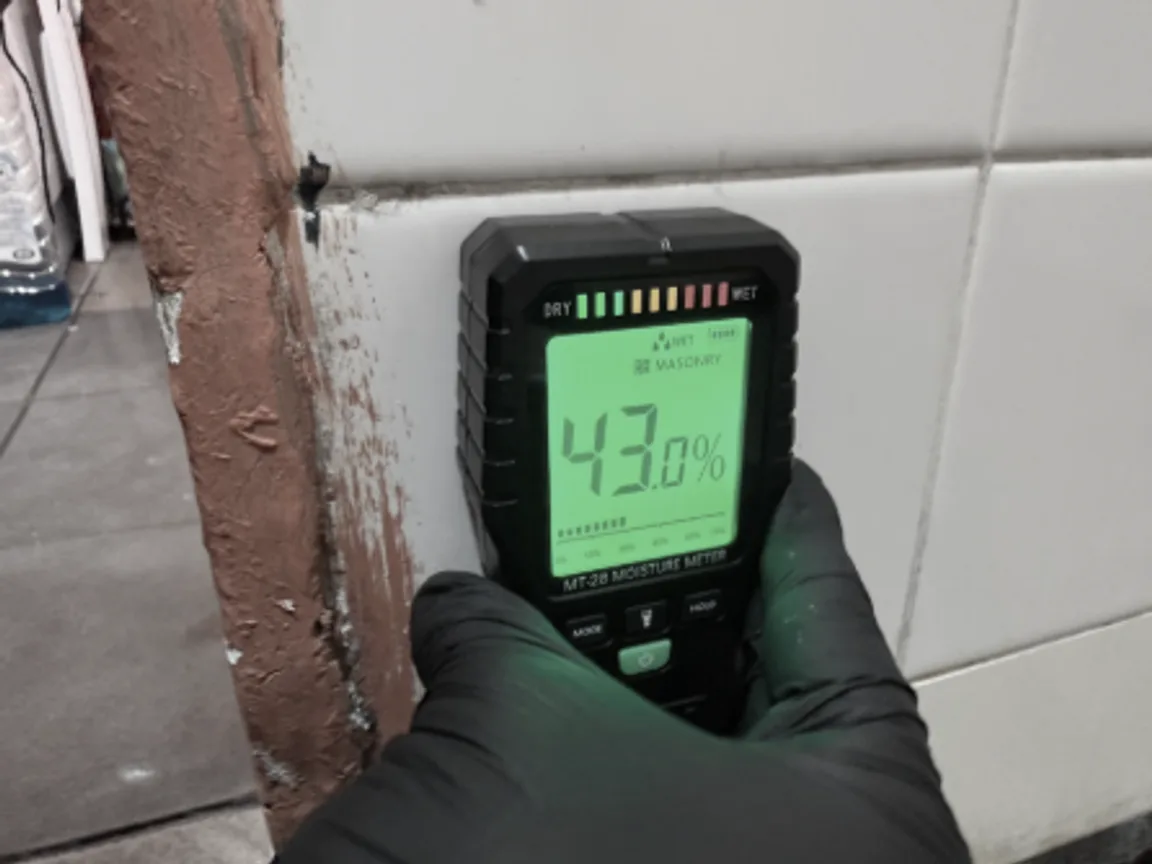
A moisture meter measures how much moisture is in a material, such as wood or drywall. Pin-type meters read moisture content at the point where the pins are inserted. Pinless meters scan the area beneath the surface without making holes.
- What it tells you. Whether a material is wetter than it should be, and how that compares with dry material nearby.
- What it doesn't tell you. Whether mold is present. Wet material is the condition mold needs, not proof that mold has started.
- Limits. Readings can be affected by the type of material, surface coatings, metal behind a wall, and how deep the meter reads. A reading is interpreted against dry reference readings, not a single universal number.
What a Thermal Camera Shows
A thermal camera shows temperature differences across a surface. Wet material often holds and releases heat differently from dry material, so a damp area can appear as a cooler or warmer pattern than its surroundings. That lets an inspector scan a whole wall or ceiling quickly and decide where to take closer readings.
- What it tells you. Where temperature patterns suggest moisture, air leaks, or missing insulation, without opening the wall.
- What it doesn't tell you. It does not see mold, and it does not measure moisture directly. A cool spot can also be a plumbing line, a cold exterior corner, or an air duct.
- Why it's paired with a meter. The camera points to where to look, and the moisture meter confirms whether the area is actually wet.
Why Instruments Find Conditions, and Labs Confirm Mold
Together, the camera and meter locate moisture. They can't tell you what's growing or whether it's growing at all. That takes sampling. Air samples, collected alongside an outdoor control sample, and surface samples go to an accredited laboratory, which identifies the genera present and their concentrations.
Each tool answers a different question. Camera and meter: where is the moisture? Laboratory: what is in the air and on the surface? The inspector's report ties the two together and identifies the likely source. For the sampling side, see air quality testing for mold.
Clues That Mold May Be Hidden
- A musty or earthy smell with no visible source. This can be an early sign of growth, as we explain in our article on what MVOCs are.
- Paint that bubbles, peels, or blisters on a wall or ceiling
- Warped baseboards, buckled flooring, or soft spots underfoot
- Stains that return after being painted over
- Condensation that keeps forming on windows or cold walls
- A past leak, flood, or roof problem that was dried but never verified
- Allergy-like symptoms that ease when you leave the building
What a Clean-Looking Visual Check Can Miss
A visual walkthrough sees surfaces. It misses wall cavities, the underside of subfloors, the space above ceilings, and the inside of ductwork. A home inspection will often note a stain or smell and recommend a specialist. A mold inspection goes further by mapping moisture with instruments, sampling where warranted, and finding the source.
A home test kit has the same blind spots, since it samples only the air or surface where you put it. We cover that in do DIY mold test kits work? For the full process, see what a mold inspection actually covers.
When to Schedule an Inspection
Consider an inspection if you notice any of the clues above, if there's been water damage that wasn't verified as dry, if you're buying or renting a property, or if symptoms follow a location pattern. Crawl spaces, attics, and basements deserve extra attention because they hide problems well. See our guide to crawl space mold inspection for one of the most common hidden locations.
If you suspect mold but can't see it, schedule an inspection. The written report will show where the moisture is, what's present, and what's causing it.