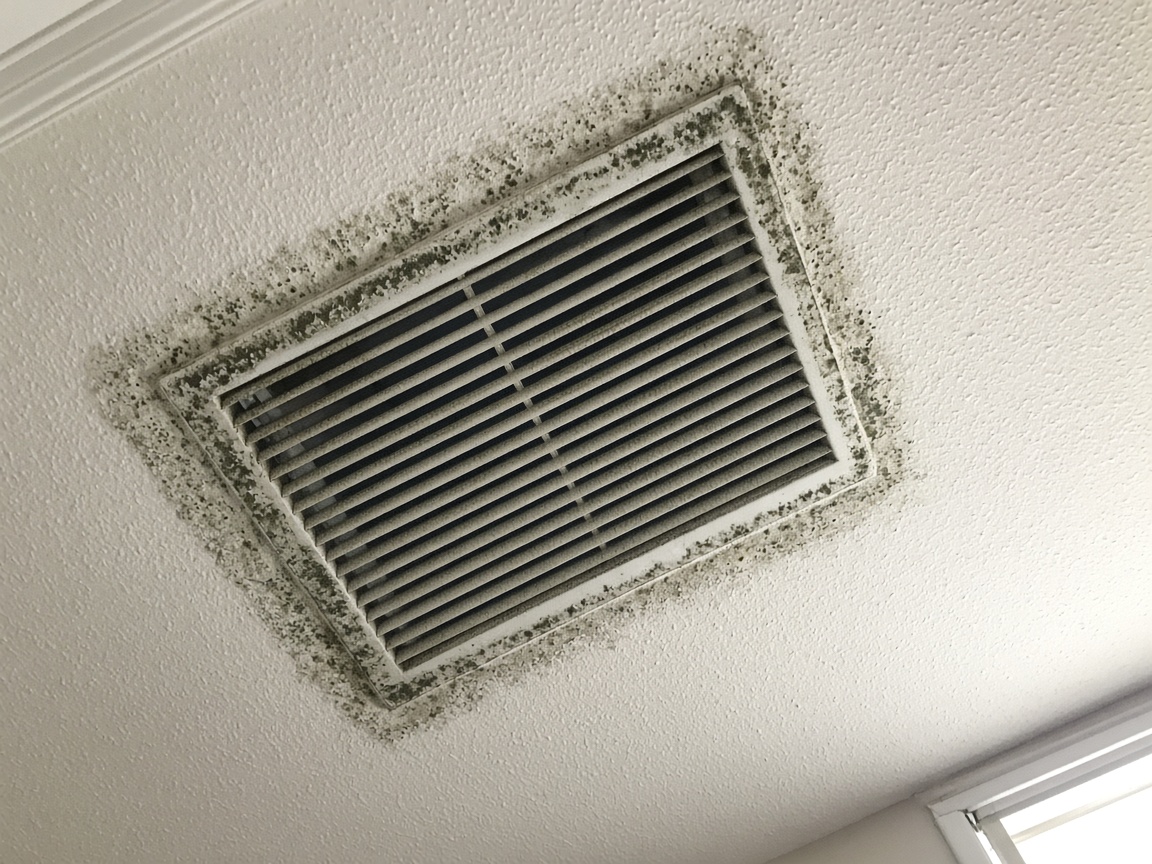
What Air Quality Testing Measures
Mold reproduces by releasing spores — microscopic particles that travel through air, settle on surfaces, and germinate when they find moisture. Air quality testing for mold captures a measured volume of air through a collection device and counts the spores present by genus and concentration.
The result is a spore count — expressed as spores per cubic meter of air — broken down by genus: Cladosporium, Penicillium/Aspergillus, Stachybotrys, Chaetomium, and others depending on what the laboratory identifies. The count tells you what genera are present and at what concentration, which informs the assessment of whether indoor conditions are normal or elevated.
What it does not tell you, on its own, is where the growth is, how extensive it is, or what moisture source is sustaining it. Air testing characterizes the symptom — elevated spore counts — not the cause. This is why air testing is used alongside a physical inspection rather than as a substitute for one.
The Outdoor Control Sample: Why It Changes Everything
The single most important element of a valid air quality test is the outdoor control sample. Every air test should include at least one sample taken outside the building at the same time as the indoor samples, under the same weather conditions.
Mold spores exist in all outdoor air everywhere on earth. The baseline spore count outdoors on a given day depends on season, weather, local vegetation, and geographic location. What matters for an indoor air quality assessment is not the raw indoor count — it is the indoor count relative to the outdoor baseline.
In coastal California — Oxnard, Redondo Beach, Newport Beach, Santa Barbara — the outdoor baseline spore count is genuinely different from an inland desert community like Palm Springs or a Michigan city like Ann Arbor in February. A reading that looks alarming against a generic national reference range may be within the expected range for a sea-level coastal property. A reading that looks moderate may be elevated for an inland desert environment where outdoor spore counts are very low.
Any air quality test without an outdoor control sample cannot be accurately interpreted. If you receive a mold testing report that only shows indoor results, the findings are incomplete.
Types of Air Sampling Methods
There are two primary methods used in residential and commercial mold inspections:
- Spore trap sampling (Air-O-Cell, Zefon Bio-tape, similar cassettes). A calibrated pump draws a precise volume of air — typically 75 liters over five minutes — through a sticky collection surface inside a cassette. The cassette goes to the laboratory, where a microscopist counts and identifies spores under magnification. This is the standard method for residential and commercial inspections. It is fast, consistent, and produces results in 24 to 48 hours.
- Culturable sampling (Andersen impactor). Air is drawn through a plate containing growth medium, and spores that land on the medium germinate into colonies over several days. This method identifies only viable — living — spores and can distinguish between species within a genus that spore trap sampling groups together. It takes longer and costs more. It is used in specific situations where species-level identification within a genus matters, such as distinguishing between Aspergillus flavus and Aspergillus fumigatus when a health concern involves those specific species.
For most residential mold inspections, spore trap sampling provides the information needed at the right cost and turnaround time. Culturable sampling is reserved for specific clinical or forensic situations.
How to Read an Air Quality Report
A laboratory report from a spore trap sample lists each genus identified, the spore count per cubic meter of air, and whether the count is raw or normalized to a standard sample volume. The inspector's job is to translate those numbers into a finding.
The key comparisons are:
- Indoor versus outdoor for each genus. Indoor counts that exceed outdoor counts for the same genus indicate an indoor source — growth somewhere in the building that is releasing spores into the air. The larger the differential, the more active the indoor source.
- Diversity pattern. A normal indoor air sample shows a mix of genera at moderate concentrations, reflecting the outdoor environment with some variation. A sample dominated by a single genus at high concentration — especially one that is rare outdoors — indicates a concentrated indoor source of that specific mold.
- Indicator genera. Stachybotrys, Chaetomium, and Ulocladium are water-damage indicator genera — they thrive in wet, cellulose-rich environments and are rarely found in significant quantities without an active moisture problem. Their presence in an air sample, even at relatively low counts, is a meaningful finding.
When Air Testing Is the Right Choice
Air testing is indicated in these situations:
- You or building occupants have symptoms — respiratory irritation, persistent coughing, allergy-like reactions — that improve when you leave the building but you cannot find visible mold
- You smell something musty but cannot locate a source after a thorough visual inspection
- You want to confirm that a remediation was successful — post-remediation clearance testing
- You are purchasing a property and want to establish whether the air quality is within normal parameters before closing
- A water damage event has occurred and you want to confirm no mold has established in the affected areas after restoration
- You are in litigation or a landlord-tenant dispute and need independent, documented air quality data
When Air Testing Is Not Sufficient on Its Own
Air testing alone does not locate the source of elevated spore counts. If an air sample shows elevated Cladosporium and Penicillium/Aspergillus relative to the outdoor baseline, the test has confirmed an indoor source — but not where it is, how extensive it is, or what is feeding it.
In those cases, the air test result triggers a physical inspection: thermal imaging and moisture meters to locate the wet material that is hosting the growth, visual inspection of the likely locations — crawl space, attic, wall cavities adjacent to plumbing, HVAC components — and surface sampling at the suspected source to confirm the species match between the indoor air sample and the growth.
This is why an inspection that includes air testing is more valuable than an air test alone. The air result tells you something is wrong. The physical inspection tells you what and where. Both together produce the information needed to define an accurate remediation scope.
If you have concerns about indoor air quality in your home or building and want a complete assessment, schedule an inspection that includes air sampling.