How Commercial Inspections Differ From Residential
The method is the same: thermal imaging, calibrated moisture meters, and laboratory sampling. What changes is the scale and the structure of the building. Commercial properties have larger footprints, shared roofing and HVAC, multiple tenants, and occupancy patterns that put steady humidity into the air.
That means a commercial inspection spends more time on building systems than on any single room. The source of a problem in one tenant space is often in a roof, a mechanical room, or a plumbing line that serves several spaces.
Common Problem Areas by Property Type
- Restaurants and commercial kitchens. Long cooking hours, dishwashing, and refrigeration add moisture, and exhaust and drain lines can leak inside walls and above ceilings.
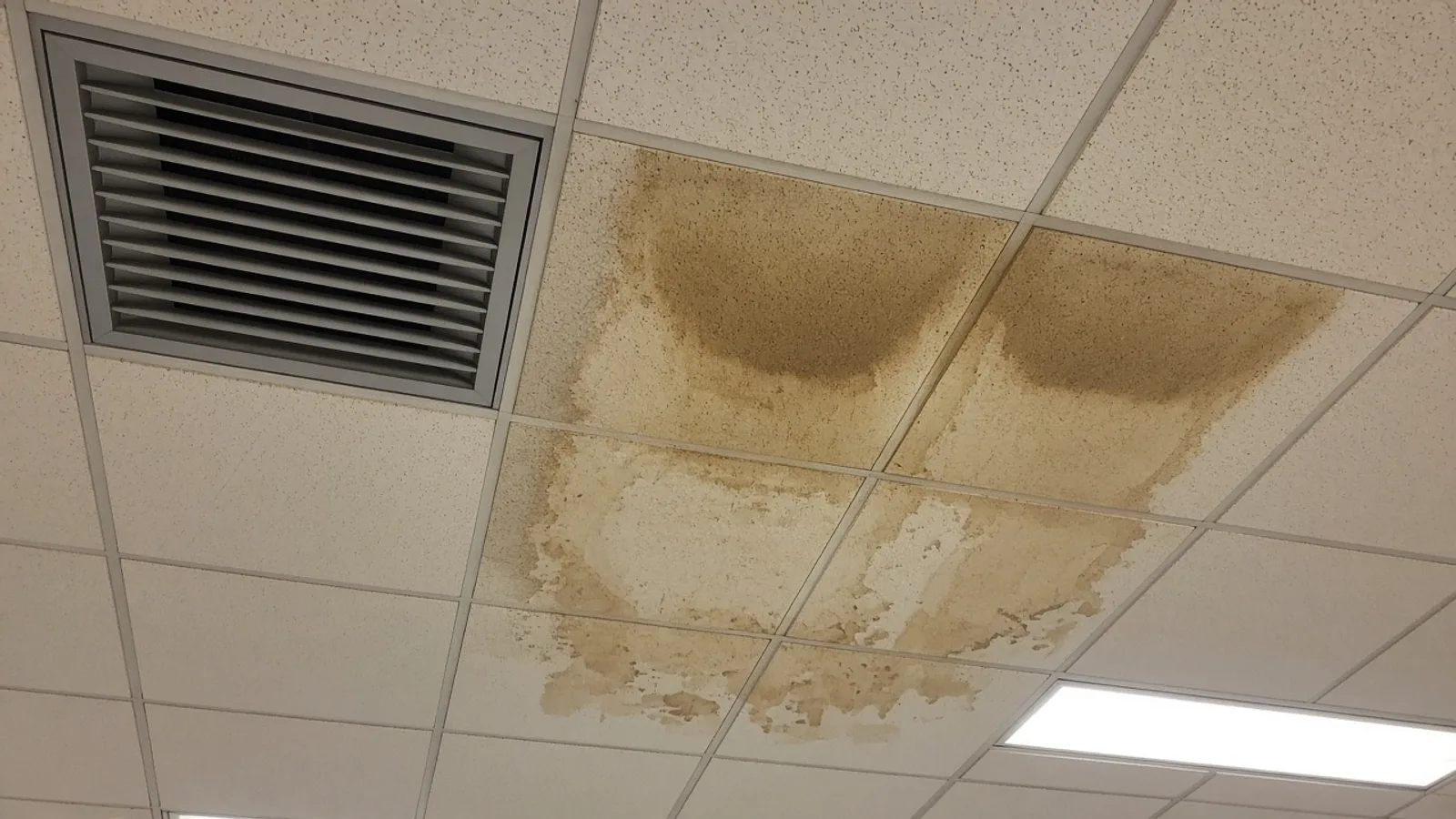
- Offices. Rooftop HVAC, condensate lines, and flat roofs are the usual suspects. A leak above a suspended ceiling can run for months before a stain appears.
- Hotels and multifamily buildings. Stacked plumbing, many bathrooms, and shared walls mean a leak in one unit can show up in another.
- Medical and dental offices. Sterilization and procedure-related humidity add load, and occupants may be more sensitive to air quality problems.
- Retail and warehouses. Large flat roofs with limited drains, loading areas, and slab moisture are the common conditions.
Where Moisture Hides in Commercial Buildings
- Flat and low-slope roofs, where ponding water finds seams and penetrations
- Rooftop HVAC units and their condensate lines and drain pans
- The space above suspended ceilings, where leaks travel unseen
- Mechanical rooms, janitorial closets, and plumbing chases
- Below-grade spaces, parking structures, and slab edges
- Exterior walls, parapets, and window or storefront seals
What the Inspection Covers
The inspector walks the reported area and the building systems that could feed it. Thermal imaging scans walls and ceilings, moisture meters confirm what looks wet, and air or surface samples go to an accredited laboratory where growth is suspected or the source is unclear. Air samples are collected alongside an outdoor control, so indoor results are compared with the outdoor baseline.
The written report documents where moisture was found, what the laboratory identified, and the likely source. For a deeper look at the process, see what a mold inspection actually covers.
What the Report Is Used For
- Responding to tenant or employee complaints with documented findings
- Deciding which building system needs repair, and in what order
- Documenting a space's condition at lease turnover or before a sale
- Giving contractors a defined scope so bids are comparable
- Confirming that repairs worked, through independent follow-up testing
Because an inspection-only company performs no cleanup work, the report has no financial interest in how large the problem looks. That matters when several parties, such as an owner, a tenant, and a property manager, all need to rely on the same document. We explain that in mold remediation vs mold inspection.
Keeping Disruption Low
Inspections are non-invasive, so businesses usually stay open. Ask about after-hours scheduling for restaurants, medical offices, and other spaces where daytime access is hard, and about same-day or next-day appointments when there's an active leak.
When to Schedule One
- After a roof leak, plumbing failure, or storm
- When occupants report a musty odor, symptoms, or recurring complaints
- At tenant turnover or before a lease or sale
- When a space has had water damage that was dried but never verified
- After repairs, to confirm the work succeeded
For HOA and multifamily properties, our guide to mold in a condo or HOA covers how shared systems affect responsibility. To learn about our commercial service, visit commercial mold inspection, or schedule an inspection.