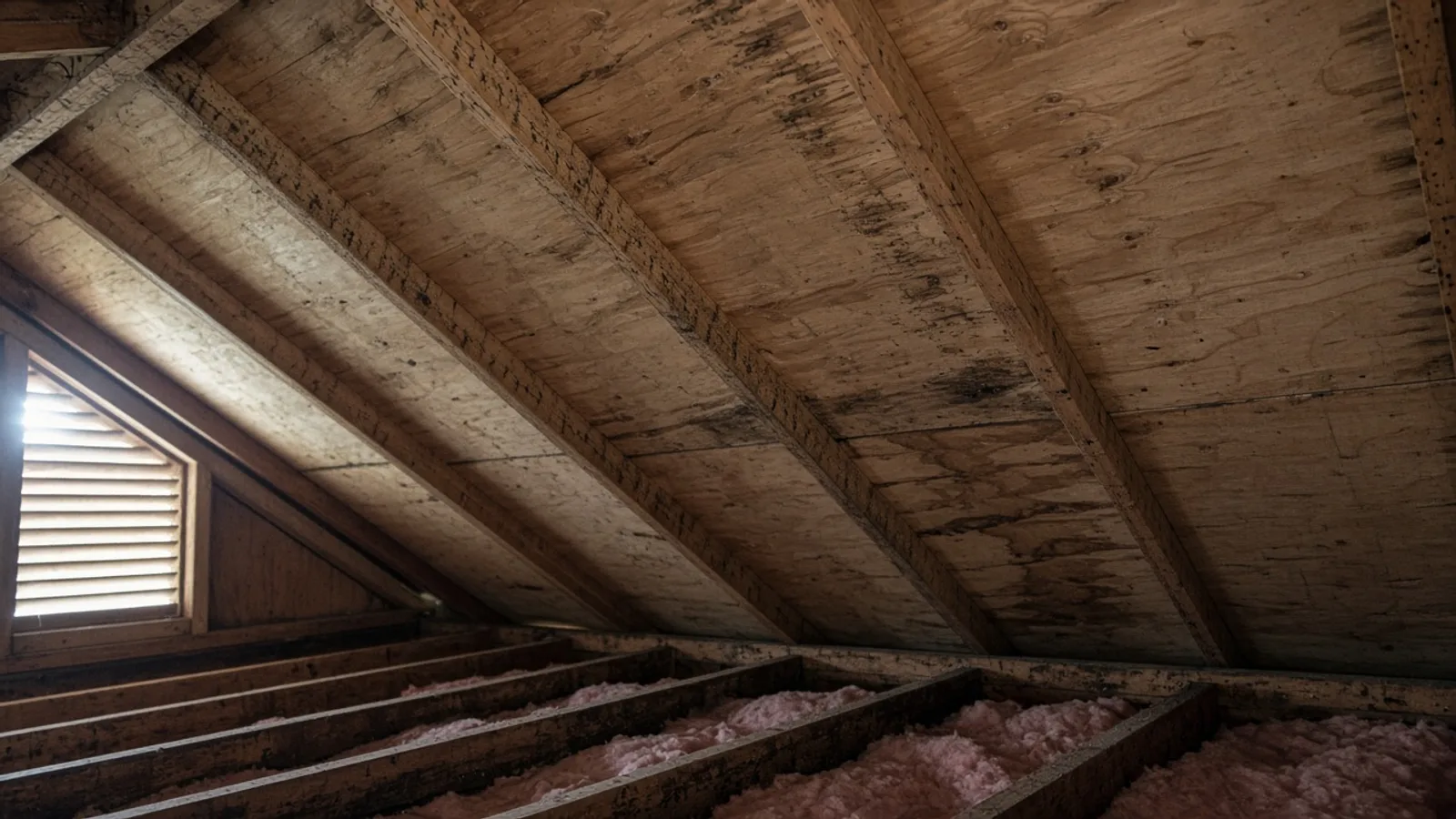
Why Attics Are a Common Hiding Place
An attic sits between a heated or cooled home and the weather. Warm, humid indoor air rises into it. The roof sheathing above can be much colder than the air below. When moist air meets a cold surface, it condenses, and wood sheathing and framing are exactly the kind of organic surface mold uses.
People rarely go up there, so a problem can run for years before anyone sees it.
Common Causes
- Fans that exhaust into the attic. Bath and kitchen fans that vent into the attic instead of outdoors dump humid air directly onto the sheathing. This is common in older homes and after remodels.
- Blocked or missing ventilation. Insulation pushed against the soffit vents or a lack of intake and exhaust vents stops air from moving, which traps moisture.
- Air leaks from the house. Gaps around recessed lights, attic hatches, and wiring penetrations let warm indoor air leak up.
- Roof leaks. A failed flashing around a vent, chimney, or skylight, or worn roofing, can wet the framing below.
- Ice dams in cold climates. Heat escaping from the attic melts snow that refreezes at the eaves, pushing water back under the shingles.
What It Can Look Like
- Dark staining or speckling on the underside of the roof deck
- Damp, matted, or discolored insulation
- Frost on nails or sheathing in cold weather
- Rusted nail tips or water stains around penetrations
- A musty smell that comes down into the living space
Dark staining isn't always mold, and you can't tell species by color. We cover that in black mold: what it is and isn't.
What an Attic Inspection Covers
- The roof sheathing and rafters, for staining, moisture, and active growth
- The ventilation layout, including intake and exhaust, and whether airflow is blocked
- Where bath and kitchen fans actually terminate
- Insulation condition and whether it's wet or compressed
- Roof penetrations such as vents, chimneys, and skylights
- Moisture meter readings and thermal imaging of ceilings below
- Air or surface sampling where growth is suspected
The report ties the findings to a source, which is what determines the right fix. For the service itself, see attic mold inspection.
How Climate Changes the Pattern
Cold climates such as Michigan. Large temperature differences drive condensation, and ice dams are a recurring cause of ceiling moisture. We cover the seasonal side in why mold grows in winter.
The Pacific Northwest. Long wet seasons keep roofing and sheathing damp for months, and ventilation matters more.
Coastal and Southern California. Marine humidity and heavy rain bursts after dry spells can find worn roofing and flashing details, and hot attics add stress to ducting and seals.
Prevention Without Cleanup
- Make sure every bath and kitchen fan vents outdoors
- Keep soffit vents clear of insulation
- Seal gaps where warm indoor air can leak into the attic
- Fix roof leaks and failed flashing promptly
- Check the attic after heavy storms and at the start of winter, if it's safe to do so
If you've noticed staining, a musty smell, or ceiling spots, schedule an inspection. A written report will show the source and the extent.