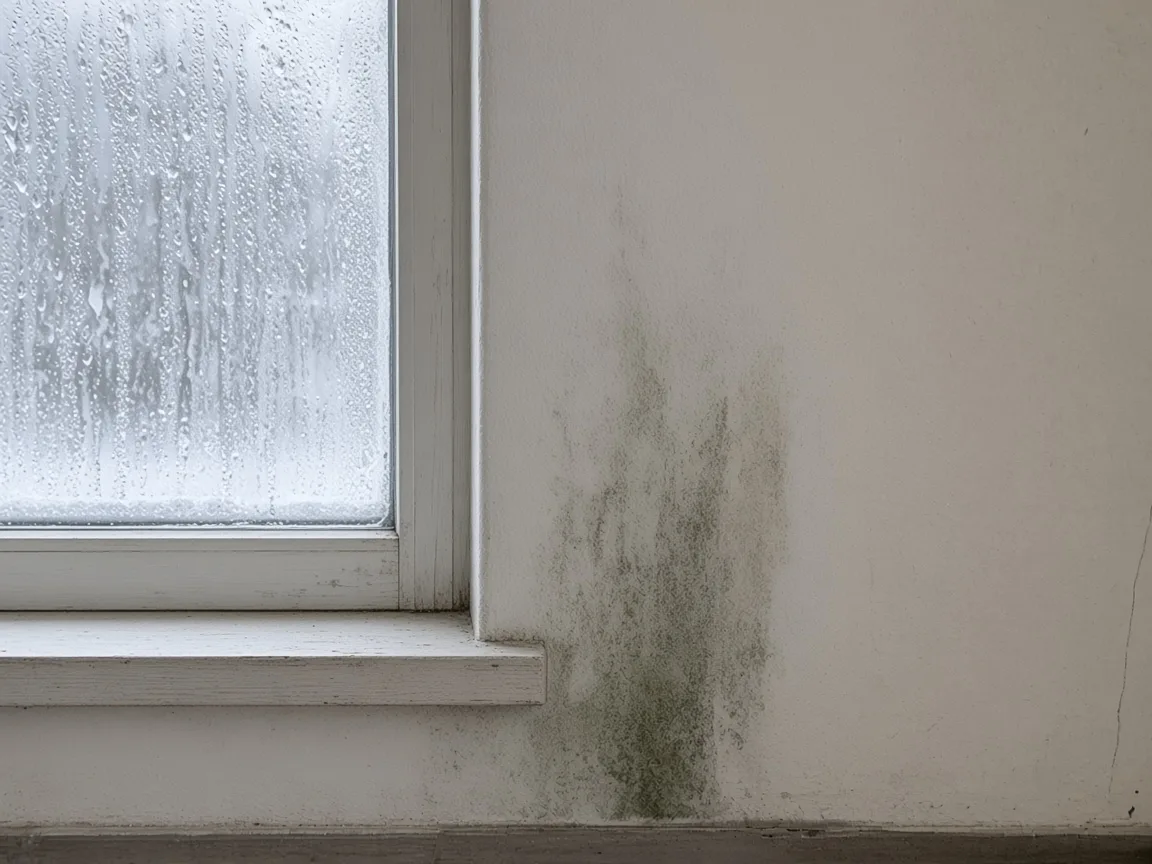
How Winter Creates Moisture Without a Leak
Warm indoor air holds more water vapor than cold air. When that air reaches a cold surface, such as a window frame, an exterior wall, or the underside of a roof, the vapor condenses into liquid water. Every shower, pot of boiling water, and loaded dryer adds vapor to the air, and in winter homes are sealed up tight, so it has fewer places to go.
That water can soak into drywall, insulation, and framing. Mold needs moisture and an organic surface, and wet wood and paper-faced drywall provide both. A home with no plumbing leak at all can still develop a moisture problem through condensation alone.
The Most Common Winter Trouble Spots
- Attics. Bath and kitchen fans that exhaust into the attic instead of outdoors, and warm air leaking up through ceiling penetrations, condense on cold roof sheathing. Blocked soffit vents and compressed insulation make it worse.
- Windows and exterior corners. Single-pane and older aluminum windows run cold and collect condensation, which runs down into sills and wall cavities.
- Crawl spaces and basements. Cold, damp ground and closed foundation vents keep humidity elevated, and wet winters keep soil saturated against foundation walls.
- Roof edges. In cold climates, ice dams form when heat escaping from the attic melts snow that refreezes at the eave, forcing water back under the shingles and into the ceiling below.
- Closets and rooms against exterior walls. Poor air movement in cold corners lets humidity settle, and furniture pushed against a cold wall traps it.
Humidity Is the Number to Watch
A hygrometer costs little and shows indoor relative humidity at a glance. Public health guidance commonly recommends keeping indoor humidity between about 30 and 50 percent. Readings that stay above roughly 60 percent for long periods, especially alongside condensation on windows, are a signal that moisture is accumulating somewhere.
For more on how moisture and mold are connected, see our guide to how moisture fuels mold and how to spot it early.
How It Differs by Region
Michigan and other cold climates. Large temperature differences between indoors and outdoors drive condensation in attics and wall cavities, and freeze-thaw cycles open small foundation cracks each winter. Ice dams are a recurring cause of ceiling moisture.
The Pacific Northwest. The long wet season keeps soil and crawl spaces damp for months. Moisture comes less from sharp cold and more from sustained rain and high ambient humidity.
Southern California. Winters are mild, but heavy rain events arrive in short bursts after long dry spells. Cracked stucco, aging caulk, and roofing gaps that held through the dry season admit water during the first big storms, and cool coastal mornings still produce condensation on single-pane windows.
What to Check Before Spring
- Look at window sills and corners for water droplets, staining, or peeling paint
- Check that bath and kitchen fans actually vent outdoors, not into the attic
- Look in the attic, if it's safe to access, for dark staining on the underside of the roof deck or damp insulation
- Check ceilings below the roof edge for stains after snow melts or heavy rain
- Check the crawl space or basement for damp walls, standing water, or a musty smell
- Keep furniture a few inches off cold exterior walls so air can move
A musty smell with no visible source is worth taking seriously. It can be an early chemical signal of growth inside a wall or attic, which we explain in what MVOCs are and why they matter.
When to Call for an Inspection
Condensation damage is hidden by design. Thermal imaging and moisture meters can find wet insulation and framing without opening walls, and laboratory sampling confirms whether growth has started. The earlier a winter moisture problem is found, the smaller the repair. If you've noticed persistent condensation, a musty odor, or staining after a cold snap or storm, schedule an inspection.