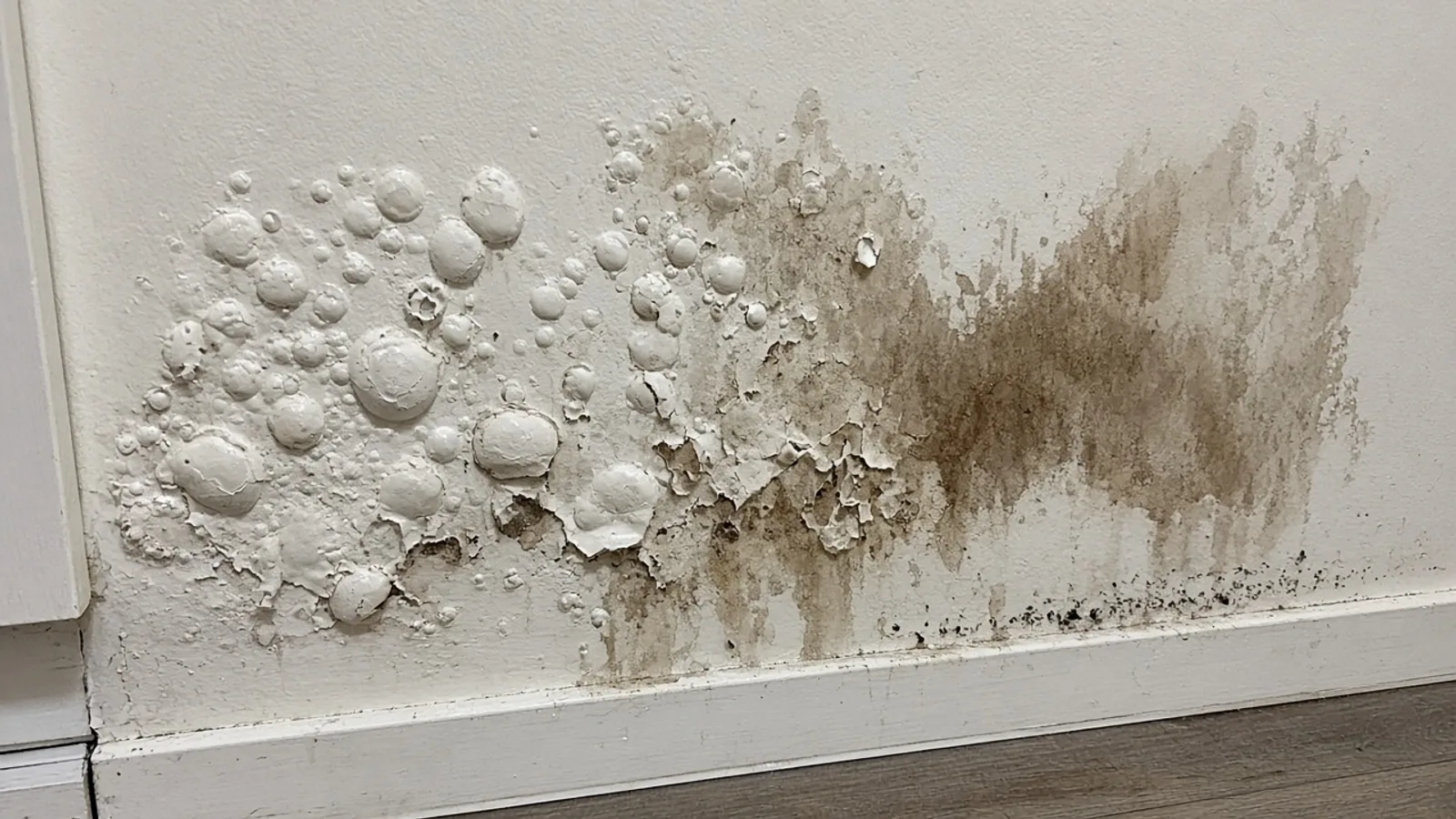
What a Moisture Meter Measures
A moisture meter measures the water content of a material such as drywall, wood, or concrete. It doesn't detect mold. Mold needs water, so wet material is the condition mold uses, and finding that wet material is how an inspector locates problems before growth is visible. We cover that distinction in is mold always visible?.
Pin Meters
A pin meter has two small probes that are pressed into the material. It measures electrical resistance between the pins, which changes with the moisture content of the material.
- Strengths. It reads at the exact point of the pins, so it's good for confirming moisture at a specific location.
- Limits. It leaves tiny holes, and it only reads where it's inserted, so it can't scan a whole wall.
Pinless Meters
A pinless meter rests against the surface and uses an electromagnetic signal to read beneath it, without making holes.
- Strengths. It's fast and non-destructive, so an inspector can sweep across a wall, floor, or ceiling and spot where readings change.
- Limits. It reads to a limited depth, and it's relative: it shows where one area is wetter than another more reliably than it gives an exact figure.
Why Inspectors Use Both
The two types complement each other. A pinless meter maps where moisture is, quickly and without damage. A pin meter confirms the reading at a specific spot. Using both gives a more reliable picture than either one alone.
What Affects Readings
- The type of material: drywall, wood, and concrete read differently
- Coatings, paint, and wallpaper
- Metal behind the surface, such as pipes or fasteners, which can distort a pinless reading
- Temperature and surface conditions
- The depth of the moisture compared with how deep the meter reads
That's why a reading isn't interpreted by itself. Inspectors compare it against dry reference readings from similar material nearby, and look at the pattern across a wall or floor, not a single number.
How Meters and Thermal Imaging Work Together
A thermal camera shows temperature patterns across a surface, which can indicate where moisture may be. It doesn't measure moisture directly. The meter confirms whether a flagged area is actually wet and shows how far saturation has spread. Together, they map moisture conditions across a building without any destructive investigation.
For more, see our moisture detection service and thermal imaging service.
What a Meter Reading Can't Tell You
- Whether mold is present, since that takes laboratory sampling
- Which species are growing
- The exact source of the water, though the pattern helps narrow it
When growth is suspected, sampling follows the moisture survey. See which mold sample does your situation need? To have moisture mapped in your building, schedule an inspection.