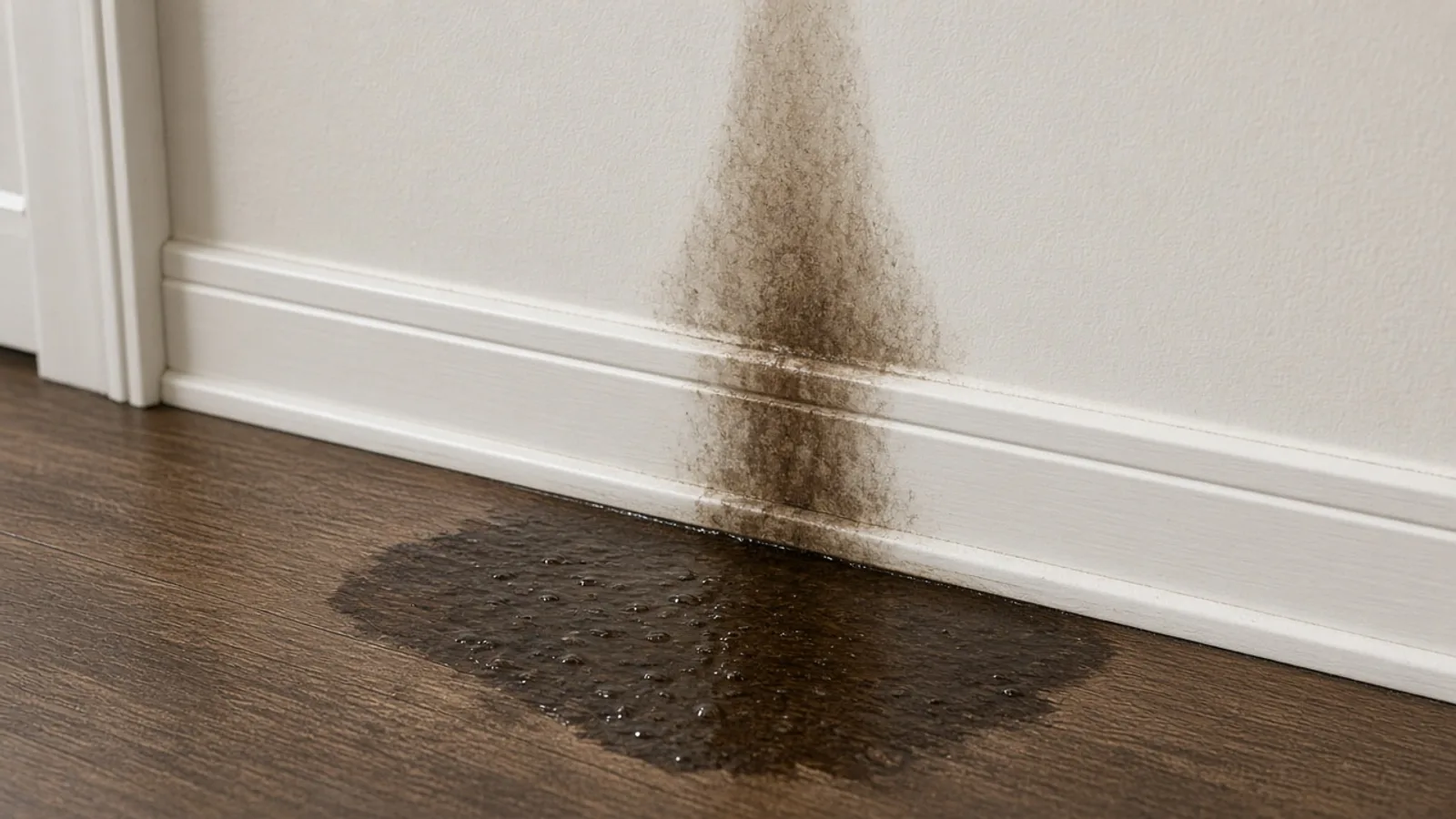
Why a Rising Bill Points to a Hidden Leak
Your water use shouldn't change much from month to month unless something in your routine changed. A bill that climbs with no change in habits can mean water is escaping through a slab line, a wall supply pipe, a fixture, or an irrigation line.
A hidden leak is also a moisture source. Wet framing, drywall, and subfloor are what mold grows on, which is why leaks and mold problems are so closely connected.
A Simple Self-Check
- Turn off all water use in the building: faucets, appliances, ice makers, and irrigation
- Find your water meter and note the reading, or check whether the leak indicator is moving
- Wait 30 minutes to an hour without using any water, then check again
- If the reading changed, water is moving through the system, which suggests a leak
A change doesn't tell you where the leak is, and a toilet that runs on can also cause it. If you find nothing simple like that, a leak behind a wall or under a slab is possible.
Other Clues
- The sound of running water when nothing is on
- Warm patches on a floor, which can mean a leaking hot water line
- A musty smell with no visible source
- Stains that appear, fade, and return
- Paint that bubbles or peels, or flooring that buckles or feels soft
- Higher humidity or condensation than usual
Where Hidden Leaks Tend to Be
- Supply lines inside walls, especially older galvanized pipe
- Lines under slab foundations
- Under sinks, behind toilets, and around tubs and showers
- Water heaters, dishwashers, and washing machine connections
- Irrigation lines near foundations
- Roof penetrations and window seals, for water coming from outside
How Moisture Detection Finds It Without Cutting Into Walls
Our inspectors map moisture through walls, floors, and ceilings with non-destructive instruments. Calibrated moisture meters measure water content in the material, and thermal imaging cameras show temperature differences that can mark active leaks and condensation. You get the location of the moisture before any repair starts, so a plumber or contractor can work on the right spot.
For more on the process, read leak and moisture detection: finding hidden water and see our leak and moisture detection service.
What a Survey Can and Can't Pinpoint
A moisture survey shows where material is wet and how far the moisture has spread. It narrows the source, but it doesn't always name the exact pipe or joint. Some leaks need a plumber to pressure-test a line or trace it. The survey tells that plumber where to start.
Plumber or Moisture Inspector?
- Know a fixture or pipe is leaking: call a plumber
- Water bill is high and you can't find the cause: a moisture survey can narrow it down first
- You've fixed a leak and want to confirm everything is dry: a moisture survey verifies it
- You've had a leak and a musty smell: a survey and, where needed, sampling
After a known leak, timing matters. See mold after water damage. If you suspect a hidden leak, schedule an inspection and we'll map the moisture before any repair begins.