How Shared Wall Construction Creates Moisture Migration
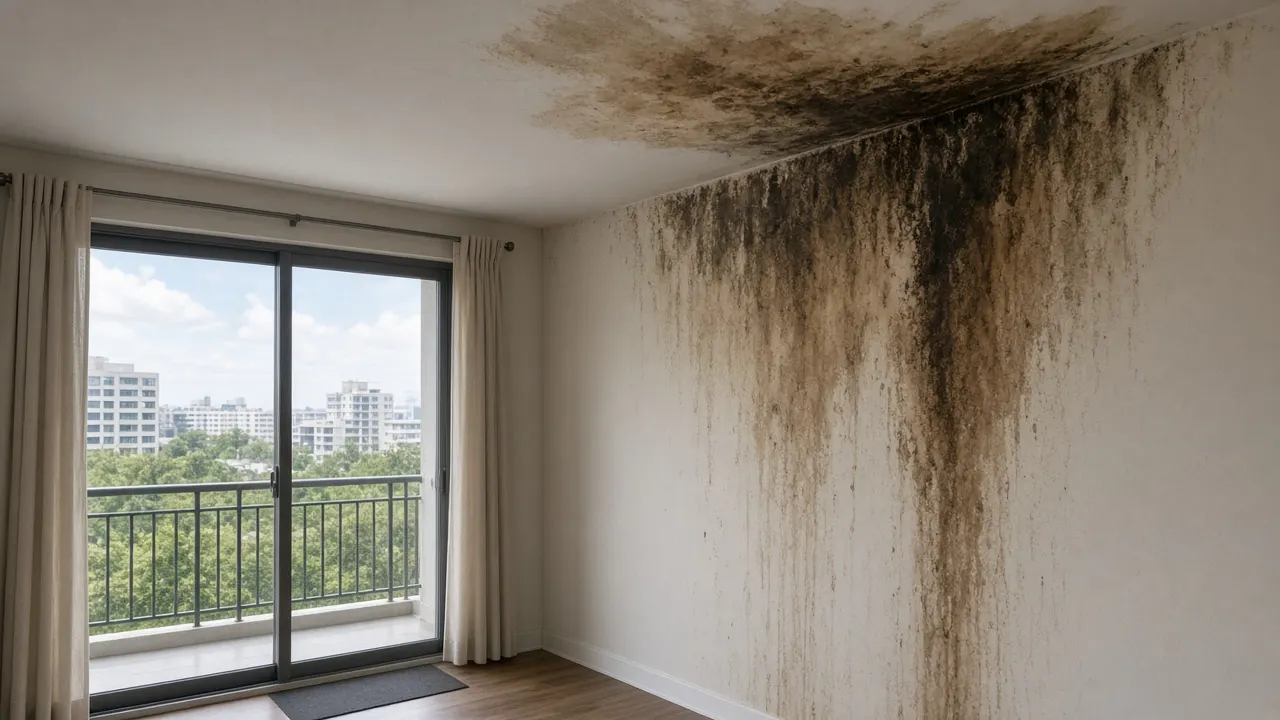
In attached construction — condominiums, townhomes, stacked flats — moisture does not respect unit boundaries. A failed section of shared roofing allows water to travel down a party wall and appear in the unit below or beside it months after the source event. A plumbing stack shared between units develops a slow leak at a joint inside the shared wall cavity, depositing moisture into the framing that serves two or three units simultaneously. An HVAC unit on a shared roof develops a condensate overflow that runs into the ceiling plenum serving multiple units.
In all three cases, the mold appears inside an individual unit. But the moisture source is in a common element — shared roofing, shared plumbing, shared mechanical infrastructure — that the HOA is responsible for maintaining under California Civil Code 4775.
California Civil Code 4775 and HOA Responsibility
California Civil Code 4775 establishes the default maintenance responsibility framework for common interest developments. Unless the CC&Rs specify otherwise, the association is responsible for maintaining common areas — which includes the exterior of buildings, roofing, shared plumbing and electrical systems, and structural elements shared between units.
Individual owners are responsible for their own units — the interior space, fixtures, appliances, and any modifications they have made. The boundary between association responsibility and owner responsibility is defined by the CC&Rs, and in most California HOA communities that boundary runs at the unfinished surfaces of the shared walls, floors, and ceilings.
When mold appears in a unit and the moisture source is in a shared building system, the association is responsible for addressing the source and typically responsible for remediating the resulting damage — even though the damage appears inside the individual unit.
The Key Question: Where Did the Moisture Come From
This is the question that determines financial responsibility, and it is a question that only an independent, instrument-based inspection can answer with the credibility needed in a dispute.
A plumber hired by the association to investigate a reported unit problem has a financial relationship with the association. A remediation contractor hired by the association to address visible mold has an interest in defining the scope as narrowly as possible. Neither can produce findings that the affected unit owner can reasonably treat as independent.
An independent mold inspection from a company with no remediation work to sell uses thermal imaging and moisture meters to trace the moisture pathway from the visible growth back to its source — through the wall assembly, through the ceiling, up to the roofing system, or into the shared plumbing chase. That documentation defines whether the source is inside the unit or in a common element, which is the only factual basis for the financial responsibility question.
Common Sources of HOA-Responsibility Mold
- Failed roofing over individual units. Water enters at a failed flashing, valley, or penetration in the shared roof and travels down into the unit or units below. The roof is a common element; the moisture source is the association's responsibility.
- Shared plumbing stack failures. A slow leak at a joint in a plumbing stack that runs through the shared wall between units deposits moisture into the shared wall cavity. Both adjacent units may show mold; the source is in a common element.
- Common area HVAC condensate. A rooftop HVAC unit serving multiple units develops a condensate overflow that runs into the ceiling plenum. The mechanical equipment is a common element.
- Exterior waterproofing failure. Failed stucco, window flashing, or balcony waterproofing on the building exterior allows water into the wall assembly serving one or more units. The exterior envelope is typically a common element.
- Underground parking and below-grade seepage. Water migrating through the foundation or parking structure into ground-floor or below-grade units. The structural foundation is a common element.
CC&R Disputes and What Documentation Holds Up
When an HOA disputes responsibility — claiming the moisture originated inside the unit rather than in a common element — the dispute becomes a factual question about moisture pathways. CC&Rs that are ambiguous about the boundary between unit and common element don't resolve this question; the moisture pathway does.
A thermal imaging scan that shows the moisture traveling from a shared roof system down through the party wall into the unit is documentation that defines the pathway factually. Moisture meter readings that show elevated moisture content progressing from the shared wall toward the unit interior document the direction of travel. Laboratory air sampling that shows elevated spore counts consistent with the species found at the source location confirms the connection.
This documentation, produced by an independent company with no remediation stake, is what holds up in an HOA board meeting, in mediation, and in small claims or civil court. Documentation from a contractor hired by either side does not carry the same weight.
The HOA Clearance Report After Remediation
After the association performs remediation on a common element source and the resulting unit damage, an independent post-remediation clearance report serves both the association and the unit owner. For the association, it documents that the common element was repaired and the resulting mold was addressed — closing out the association's liability. For the unit owner, it confirms the remediation was effective and the unit is safe to reoccupy.
A clearance report from the same company that performed the remediation does not satisfy either party's need for independent confirmation. A clearance report from a company that performed no remediation — and has no financial relationship to the contractor that did — is the document that closes the matter.
If you are a unit owner with mold that may have originated in a shared building system, or an HOA board needing independent documentation to close a liability, schedule an independent inspection.