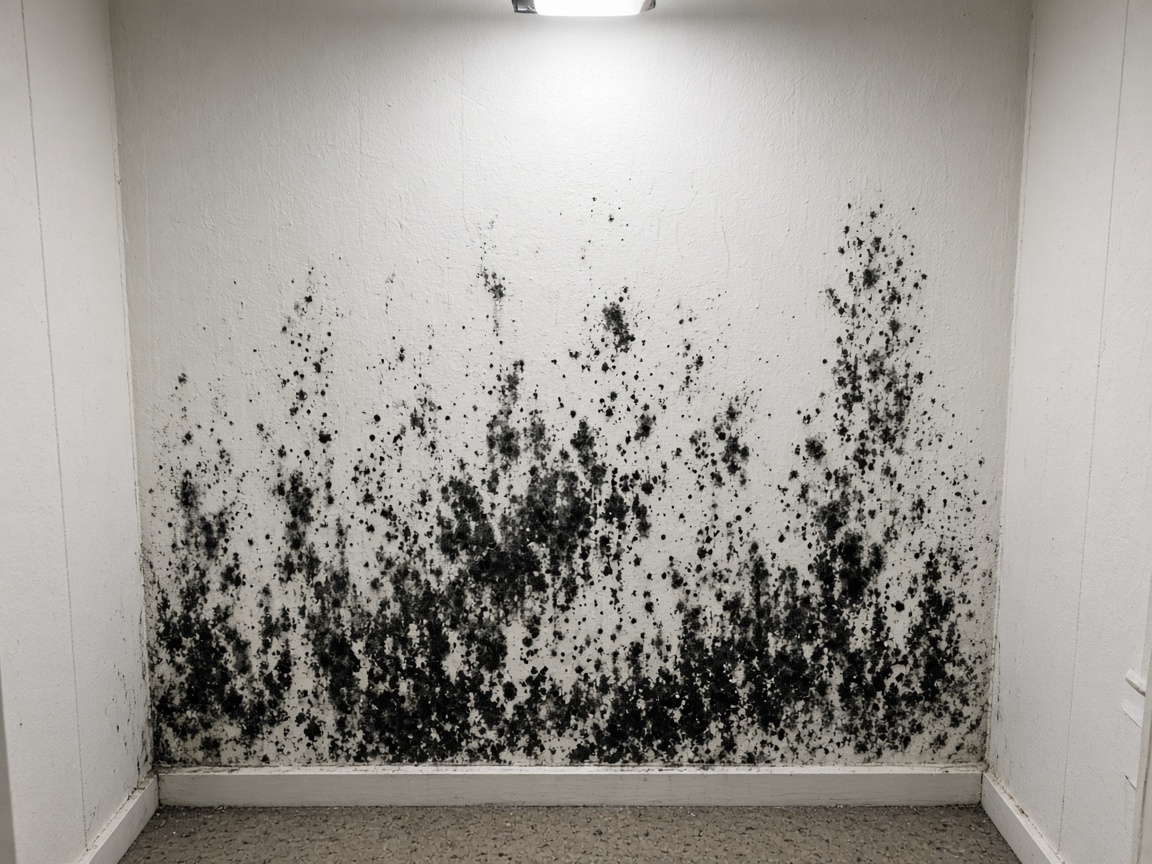
What 'Black Mold' Actually Means
The term black mold has become cultural shorthand for toxic mold, and specifically for Stachybotrys chartarum — a slow-growing, greenish-black species that produces mycotoxins under certain conditions. The concern is legitimate: Stachybotrys can produce harmful secondary metabolites, and sustained exposure in an enclosed space is a genuine health concern.
The problem is that dark-colored mold is not necessarily Stachybotrys. Cladosporium, Aspergillus, and Penicillium — all extremely common household mold genera — frequently appear black or dark green depending on growth stage and substrate. Cladosporium, one of the most ubiquitous outdoor and indoor molds in the world, looks black on certain surfaces. So does Aspergillus niger, a species found in soil and air everywhere.
You cannot identify mold species by eye. A dark patch on your bathroom ceiling is not evidence of Stachybotrys. It requires laboratory analysis to determine what you actually have.
Why the Species Identification Matters
The remediation protocol for Stachybotrys differs from the protocol for Cladosporium. Stachybotrys grows on cellulose — drywall paper, wood, cardboard — and requires sustained wet conditions over weeks to months to establish. It does not become airborne easily in the way that lighter-spored genera do, which is why it is often found on chronically wet material rather than detected in air samples.
Remediating based on appearance alone — assuming dark growth is toxic and treating accordingly — can lead to unnecessary demolition and cost. More importantly, it can lead to unnecessary disturbance of material that would be better addressed with a targeted, documented approach. Disturbing mold without proper containment spreads spores through the living space.
Species identification also matters for health evaluation. If a building occupant has been experiencing symptoms and wants to understand whether mold exposure is a contributing factor, knowing the specific genera present — and their concentrations — is what allows a physician to make that assessment.
What to Do When You Find Dark Mold
The sequence matters. Most of the mistakes made after finding dark mold happen because someone acts before they have the information they need.
- Leave it alone. Do not scrub, bleach, or disturb the growth. Bleach kills surface cells but does not penetrate porous material, and scrubbing releases spores into the air. Both actions destroy the sample needed for identification and can spread growth to previously unaffected areas through the HVAC system.
- Isolate the area. Close the door or seal the opening. If the affected area shares an HVAC return, turn off the system or close vents in that room so spores do not circulate.
- Document what you see. Photographs of the growth and its location provide a baseline. Note whether there is any associated moisture — a water stain, damp drywall, condensation on a nearby surface.
- Get it sampled before anything is removed. A surface sample identifies the species present. An air sample in the affected space and an adjacent space establishes whether spores have spread beyond the visible growth. These samples, analyzed by a state-certified laboratory, are the information that determines what happens next.
Stachybotrys: What It Actually Requires to Grow
Stachybotrys chartarum requires two conditions that distinguish it from most common mold genera. It needs cellulose as a substrate — paper-faced drywall, wood, ceiling tiles — and it needs sustained moisture over an extended period. A slow plumbing leak behind a wall running for months, a chronic roof leak that has been rewetting the same drywall repeatedly, a crawl space with a failed vapor barrier that has maintained elevated humidity for years.
This growth profile means Stachybotrys is rarely the first mold species established after an acute water event. It tends to follow the faster-growing genera that colonize wet material in the first days and weeks. Finding Stachybotrys is often a signal of a long-running, unaddressed moisture problem rather than a recent one.
In Southern California's older housing stock — the Craftsman bungalows of Fullerton and Highland Park, the stucco homes of the San Fernando Valley, the beach cottages of the South Bay — Stachybotrys is occasionally found in crawl spaces and in wall cavities adjacent to chronic plumbing failures. In Michigan's pre-war housing, it appears in basement spaces that have been managing groundwater for decades rather than addressing it.
The Difference Between Testing and Inspection
A mold test without an inspection tells you what species are in the air or on a surface. It does not tell you where the growth is, how extensive it is, or what moisture source is sustaining it.
A mold inspection without sampling tells you where moisture is and where growth is visible. It does not tell you the species present or confirm whether spores have spread to other areas.
When dark growth is found, the complete picture requires both: an inspection that maps moisture and identifies the extent of visible growth, and sampling that characterizes the species and spore concentrations. Together they produce the information needed to define an accurate remediation scope — one that addresses the actual problem rather than a visual estimate of it.
If you have found dark growth in your home and want to know what you are dealing with before deciding what to do, schedule an inspection and sampling. The results will tell you whether the concern is well-founded, what species are present, and what a proportionate response looks like.