
HVAC Mold Testing
Your HVAC moves air through every room in the building. HVAC mold testing confirms whether your ducts and air handler are spreading mold along with it.
Overview
Why HVAC mold testing matters
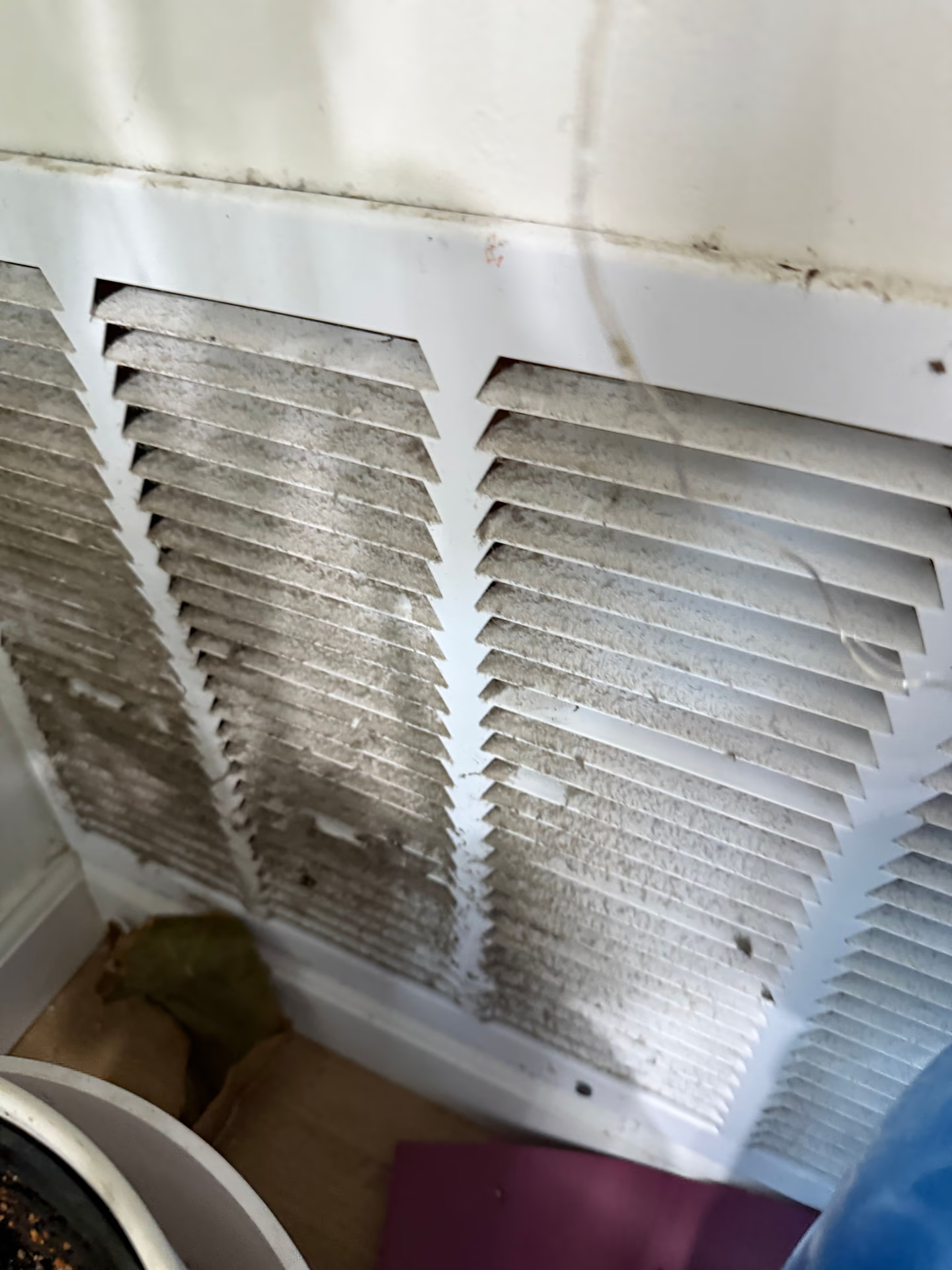
Cooling coils, drain pans, and duct interiors create a dark, moisture-rich environment where mold has every advantage. Once growth takes hold, the system circulates spores throughout the building on every run cycle. HVAC mold testing pulls samples from supply registers, returns, and the duct walls themselves, confirming whether the air system is generating contamination or carrying it from elsewhere.
HVAC mold testing detects:
- —Mold colonies forming on coils, drain pans, and duct walls
- —Elevated spore counts in supply and return air streams
- —Species patterns pointing to moisture problems in the air handler
- —Pre and post-cleaning comparisons to verify duct work succeeded
Benefits
What you get from HVAC mold testing
Know whether your air system is part of the answer or the source of the problem
System-specific
Targets coils, pans, registers, and duct walls.
Baseline & post-clean
Compares samples before and after duct cleaning.
Distribution mapping
Shows which zones carry the highest spore loads.
Lab-confirmed
State-certified analysis with species and concentration.
About
How an HVAC mold testing visit runs
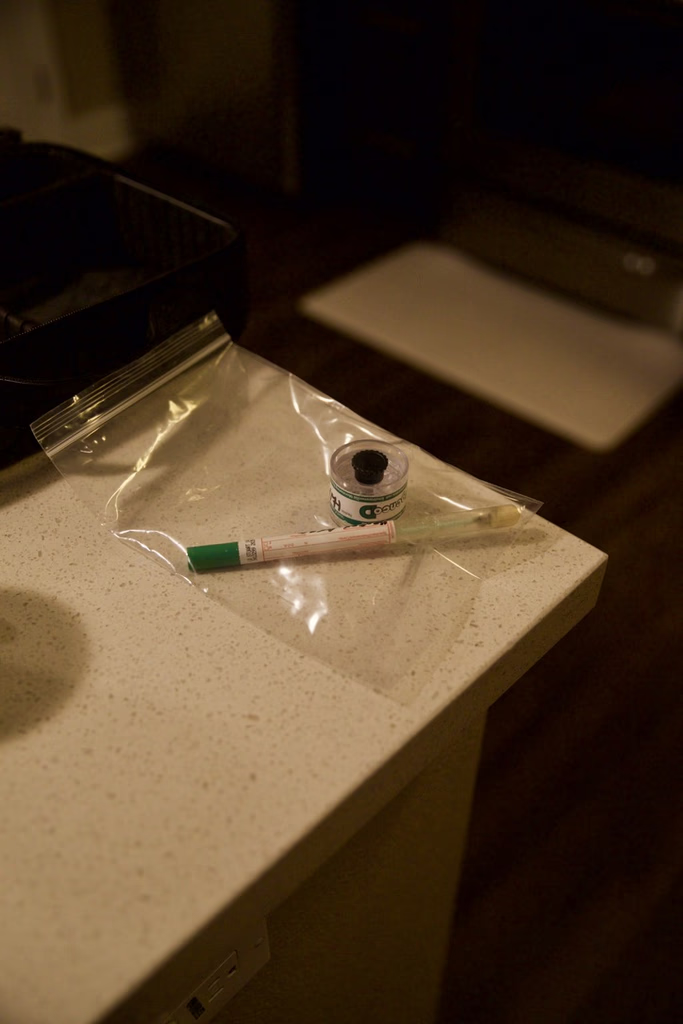
Our certified mold inspectors collect air samples at supply and return registers, plus surface samples from evaporator coils, drain pans, and any accessible duct sections. Samples go to a state-certified lab for mold species identification and spore counts.
Our process includes:
- —Air sampling at supply registers, return air, and around the air handler
- —Surface swab collection from coils, drain pans, and duct walls
- —Lab-verified results for species and concentration
- —A mold inspection report with findings and clear next steps
HVAC mold testing FAQ
Call For An InspectionContact
Book HVAC mold testing
Tell us about the system and we'll respond the same day
Phone
+1(866) 308-8880Address
21241 Ventura Blvd #166, Woodland Hills, CA 91364
Newsletter
The Indoor Air Quality Briefing
Monthly notes from our inspectors on prevention and air quality.