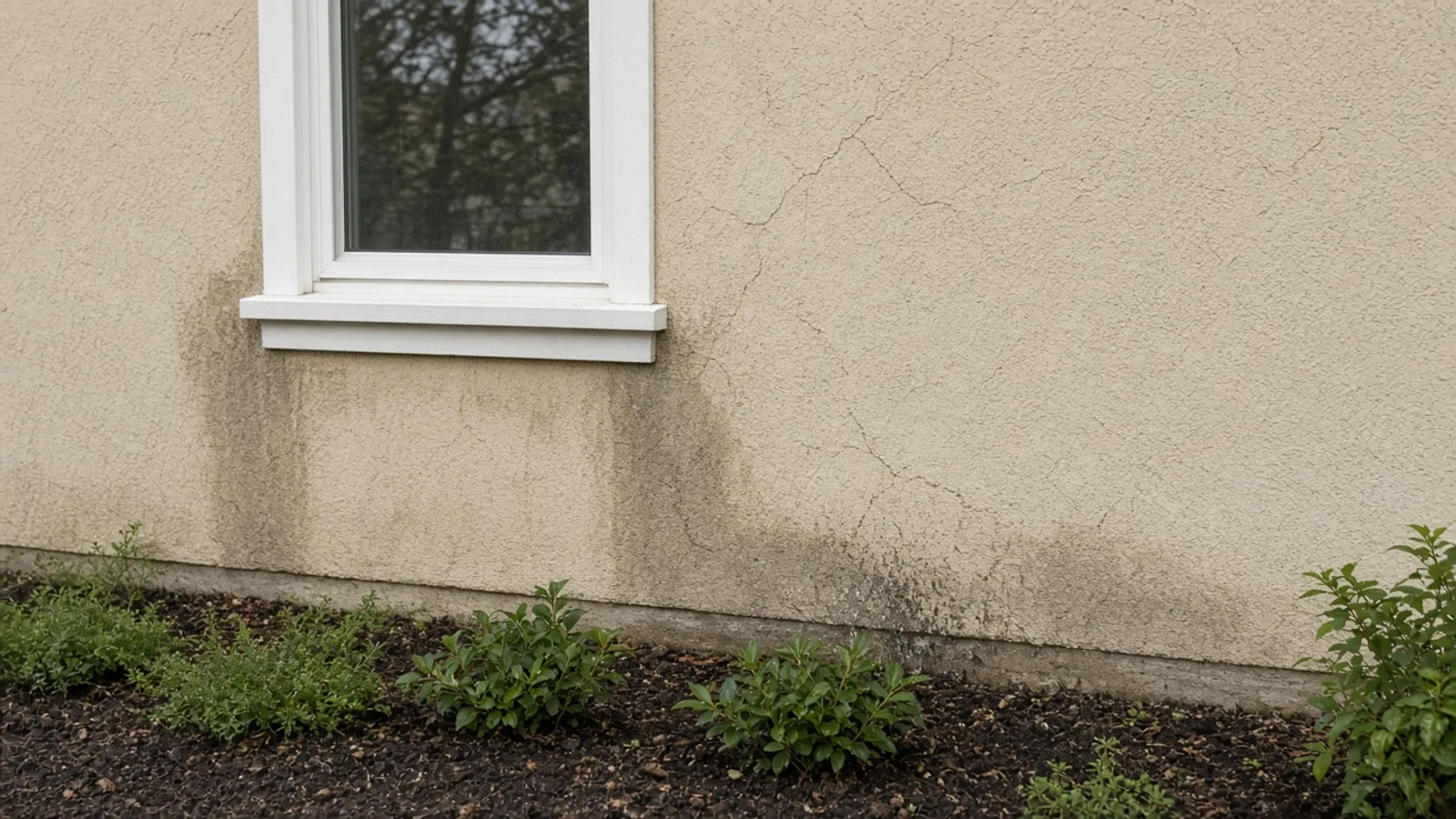
Why Stucco Traps Moisture
Stucco sits over a water-resistant layer and the wall framing. Water that gets behind the stucco, through a crack, a window edge, or a roof junction, can sit against the sheathing and framing. Stucco is rigid and holds water out well when intact, but it dries slowly from the inside. Material that stays wet for a long time can support mold.
Common Entry Points
- Cracks. Hairline cracks from settling, temperature swings, and movement can open over time.
- Window and door edges. Failed flashing and aging sealant around openings are among the most common entry points.
- Roof-to-wall junctions. Where a roof meets a wall, water can run behind the stucco if the flashing is damaged.
- Balconies, decks, and railings. Waterproofing and fasteners on elevated surfaces are another place for water to enter.
- Base of the wall. Irrigation overspray and ground splash can wet the bottom of walls repeatedly.
- Penetrations. Pipes, vents, lights, and electrical fixtures that pass through the wall need sealing.
Why the Problem Stays Hidden
The surface can look fine while the wall behind it is wet. Because stucco is solid, there are no bubbling paint or soft spots to give an early warning in many cases. The first signs may be a musty smell, a stain on an interior wall, damaged baseboards, or soft framing found during a repair.
How Instruments Find It
An inspector doesn't need to break through the stucco to look for moisture. Thermal imaging can show temperature patterns that suggest wet areas, and calibrated moisture meters confirm whether the wall is actually wet and map how far it extends. Interior walls below windows and along exterior walls are often checked as well, since moisture tends to show up there first. See pin vs. pinless moisture meters and our thermal imaging service.
Which Buildings Are More Exposed
- Older stucco homes with aging flashing and sealants
- Newer homes built tight for energy efficiency, where moisture has less ability to dry
- Homes with balconies, decks, and many windows
- Condos and townhomes, where shared walls and roofs can carry water between units. See mold in a condo or HOA.
- Coastal properties, where salt air wears down sealants faster
The Seasonal Pattern
In regions with long dry spells followed by heavy rain, stucco and caulking crack and shrink during the dry months. The first big storms then find those gaps. Water gets in during a few days of rain, and the wall may stay wet for weeks. A check after a heavy storm, especially on older buildings, catches this early.
What an Inspection Documents
A report records where the wall is wet, how far it extends, what the likely entry point is, and what laboratory sampling found where growth was suspected. That gives an owner, a property manager, or a contractor a clear picture of the problem before any wall is opened. If you suspect moisture behind your stucco, schedule an inspection.