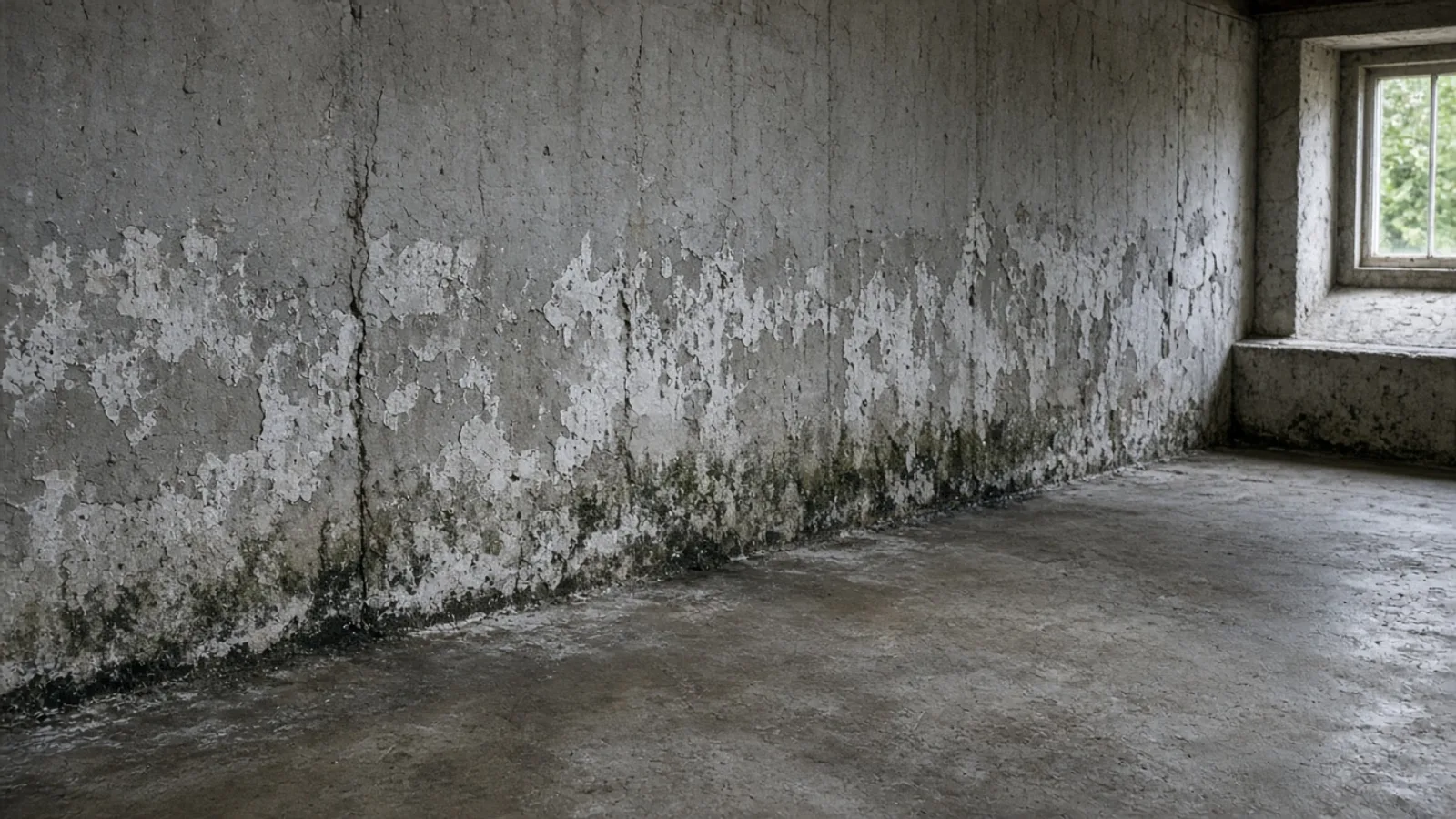
Why Basements Stay Damp
- Groundwater and wet soil. Water in the soil presses against foundation walls and floors and finds cracks, joints, and porous concrete.
- Foundation cracks and floor-to-wall joints. These are the most common entry points for seepage.
- Grading and drainage. Ground that slopes toward the house, clogged gutters, and downspouts that discharge near the foundation send water straight to the walls.
- Window wells. Wells that fill with debris or water can leak around the window.
- Condensation. Warm, humid air meeting cold basement walls and pipes leaves water on the surface, even with no leak.
- Plumbing and equipment. Water heaters, washing machines, sump pumps, and supply lines can leak or fail.
Where Climate Matters
In cold climates like Michigan, clay soil holds water against foundations, and the spring thaw releases a lot of it at once. Freeze-thaw cycles also open small cracks in foundation walls each winter. In wet regions like the Pacific Northwest, a long rainy season keeps soil saturated for months. We cover the seasonal side in why mold grows in winter.
Warning Signs
- A musty or earthy smell, especially after rain
- White, chalky mineral deposits on concrete or block walls
- Peeling paint, bubbling wall finishes, or stains near the base of walls
- Damp carpet, warped paneling, or soft baseboards
- Stored boxes or furniture that feel damp or show spotting
- A sump pump that runs constantly, or one that has failed
- Condensation on windows, pipes, or ductwork
Finished vs. Unfinished Basements
An unfinished basement lets you see the walls and floor, so problems are easier to spot. A finished basement hides them. Drywall, paneling, carpet, and insulation can trap moisture against the foundation and give mold a place to grow with no sign on the surface. Moisture can run for a long time behind finished walls before a smell or stain appears.
What an Inspection Checks
- Foundation walls and the floor-to-wall joint for cracks and moisture
- Moisture readings and thermal imaging across walls, floors, and ceilings
- The sump pump and drainage, where present
- Window wells, exterior grade, gutters, and downspouts
- Plumbing, water heater, and laundry connections
- HVAC equipment and condensate lines in the basement
- Air or surface sampling where growth is suspected
For the full process, see what a mold inspection actually covers. For moisture readings and thermal imaging, see pin vs. pinless moisture meters.
Fix the Source First
Cleaning visible mold or painting over a stain doesn't solve a basement problem if water is still coming in. The source has to be found and fixed, whether that's grading, a drain, a crack, a leak, or condensation. We explain why in mold keeps coming back: why surface cleaning doesn't fix the source.
If you've noticed a damp smell, staining, or water after rain, schedule an inspection. The written report will show where moisture is, what's present, and what's feeding it.