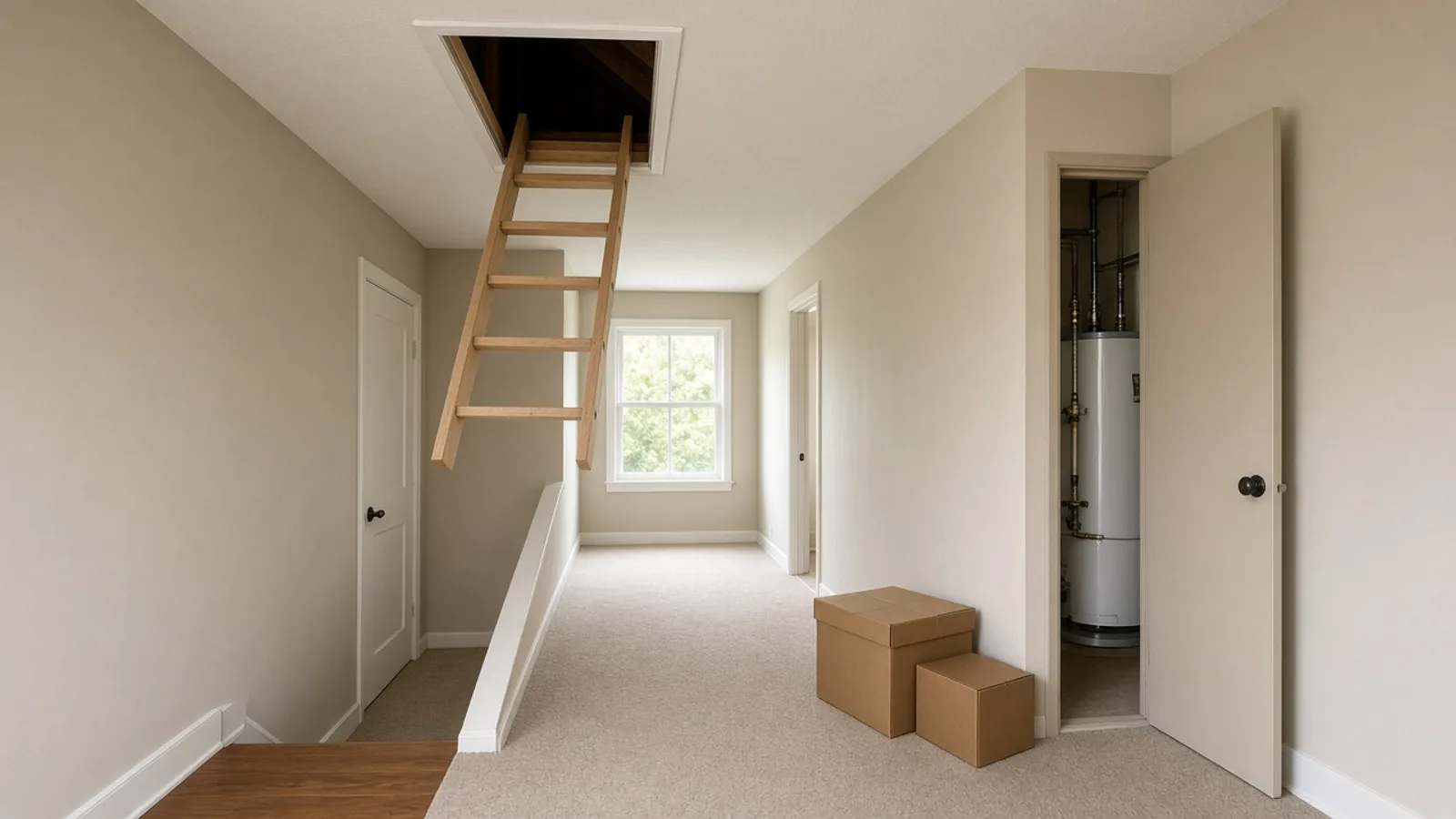
1. Make Sure Areas Are Accessible
Moisture hides in the places people rarely go. Before the visit, make sure the inspector can get to:
- The attic hatch and the space around it
- The crawl space access, or the basement stairs
- The water heater, air handler, and any mechanical closets
- Cabinets under sinks, and the area behind toilets and washing machines
- Closets and walls where you've noticed a smell or stain
- Garages, sheds, or additions that are part of the building
If an area is locked, blocked by stored items, or hard to reach, say so ahead of time. A room that can't be reached can't be assessed.
2. Move Items Away From Suspect Walls
Furniture, boxes, and stored items pushed against an exterior wall or a stained area get in the way of moisture readings and thermal images. Pulling them a few feet out, where it's easy to do, helps. You don't need to rearrange the house.
3. Write Down the History
What you know about the building's past is one of the most useful things you can share. Jot down:
- Any leaks, floods, or storm damage, and roughly when they happened
- Repairs or remodels, and who did them
- When you first noticed the smell, stain, or symptom
- Whether it gets better or worse at certain times, such as after rain, when the air conditioning starts, or after showers
- The age of the roof, the water heater, and the heating and cooling system
4. Gather Photos and Past Reports
Photos of a stain from earlier in the year, repair invoices, and any earlier inspection or testing reports help the inspector see what has changed. If a previous report exists, a comparison with today's findings can be very informative. See how to read a mold inspection report for what the sections mean.
5. Ask About Air Sampling
If air sampling is planned, ask the inspector whether they want windows and doors kept closed beforehand, and for how long. Many do, since open windows change what the air sample captures. Also mention if you've been running fans, dehumidifiers, or air purifiers. Those aren't a problem, but the inspector should know. We explain how air sampling works in air quality testing for mold.
What Not to Do Before the Visit
- Don't scrub, bleach, or paint over visible growth. It destroys the evidence the inspector needs and can spread spores.
- Don't tear out drywall, flooring, or insulation before the moisture source and extent are documented.
- Don't run a fan directly at an affected area.
- Don't spray anything on the area to "test" it.
On the Day
- Have someone present who can give access and answer questions about the building
- Plan on a couple of hours for a typical home, longer for larger or more complex properties
- Expect the inspection to be non-invasive. You can usually stay in the building
- Ask questions as you go. A good inspector will explain what each tool is showing
For what happens during the visit, see what to expect during a mold inspection. When you're ready, schedule an inspection.