
Collects airborne mold spores to assess air quality and detect hidden contamination.
our services
Mold Testing
State-certified testing that spots hidden mold—so you can act early, stay safe, and avoid costly repairs.
About
Why Mold Testing Matters
Mold isn't always visible. It hides in air vents, under floors, and inside walls. The only way to know what you're breathing—or what's spreading—is through lab-grade testing.
- —Identify mold species and spore levels
- —Detect hidden growth in "clean" areas
- —Assess the health risk to occupants
- —Decide on the right next steps
Methodology
How our mold testing works
The three sampling methods we use, chosen for what your property is showing
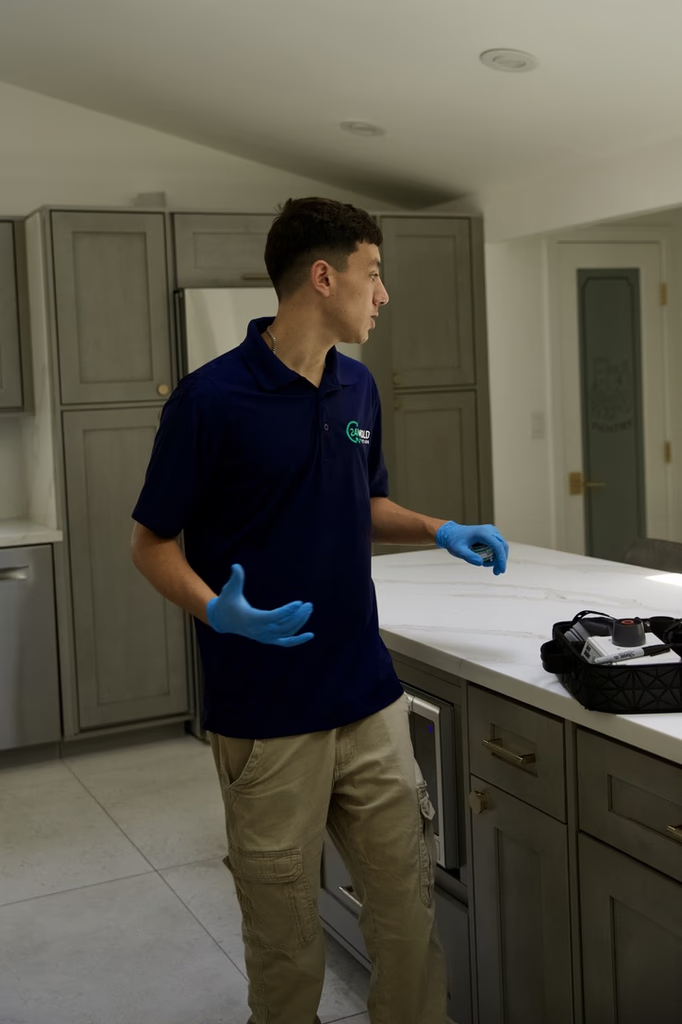
Sterile swabs and clear adhesive tape collect mold from visible spots on dry surfaces, giving the lab a clean sample for species identification. Suitable for walls, ceilings, baseboards, and furniture where the residue is what you're checking.
For damp or recently water-damaged areas, the sampling approach changes. Wet sampling captures live, actively growing colonies that dry methods underrepresent, which matters under flooring, behind tile, and around recent leaks.
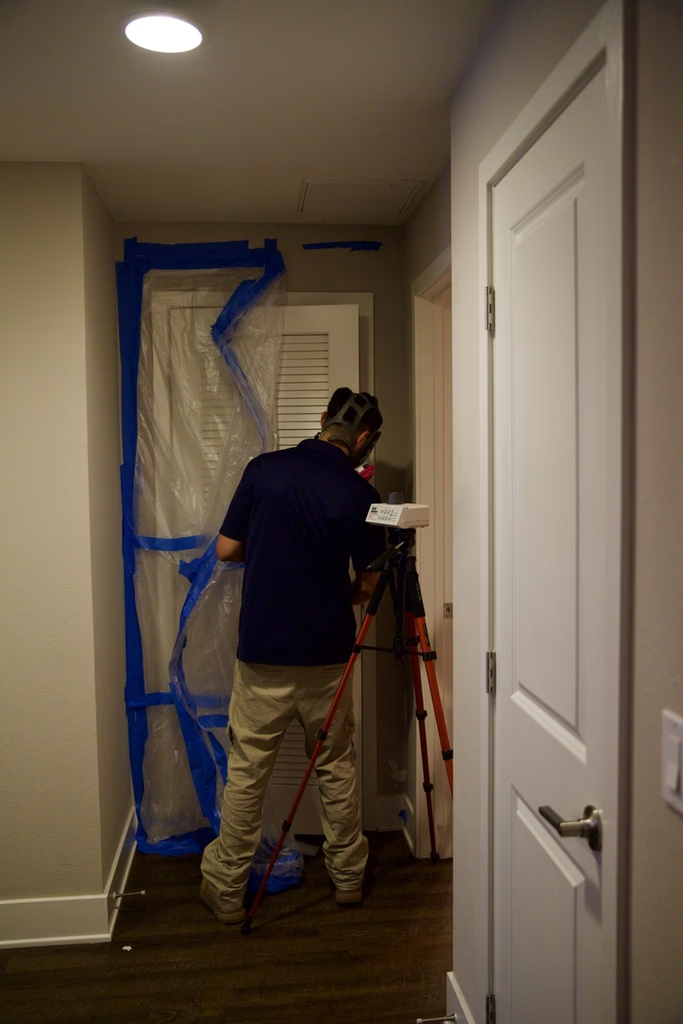
A calibrated pump pulls a controlled volume of air through a spore trap cassette, capturing viable and non-viable spores from the breathing zone. The lab counts species and compares concentrations to outdoor levels, telling you whether your indoor air is healthy.
Checklist
Is Testing Right for You?
Mold testing is ideal if:
- —You suspect mold but can't see it
- —You've had water damage
- —Residents or tenants are reporting health symptoms
- —You're buying, selling, or managing a property
- —You need peace of mind after remediation
Still unsure? Let's talk. We'll help you decide which method suits your case best.
Testing Overview
Our Testing Methods
Techniques we use to collect accurate mold samples from air and surfaces.
Lifts mold samples from surfaces using clear adhesive—quick and non-destructive.
Gathers samples from damp or textured areas to identify active mold growth.
Mold inspection West Covina FAQ
Call For An InspectionSame-day and next-day appointments are usually available across our West Covina service area, with 24/7 emergency response for active leaks, recent water damage, or urgent real estate timelines. Standard scheduling runs 1 to 3 business days depending on availability.
Our certified mold inspectors assess bathrooms, kitchens, laundry rooms, basements, attics, crawl spaces, HVAC components, and any area showing signs of past or current water issues. Thermal imaging and moisture meters identify hidden moisture behind walls and under floors.
Yes — and specifically because those properties are at the age where multiple original building systems are simultaneously reaching the end of their design service life. Original copper plumbing in 1950s and 1960s West Covina homes is now 60 to 70 years old and showing the pinhole leak pattern characteristic of this material at the end of its service life — a failure mode that delivers sustained moisture to wall cavities without producing visible surface staining or dramatic water events that would trigger immediate investigation. Slab foundations in these properties were poured without the vapor retarder layers that current building codes require, meaning ground moisture migration through the slab has been occurring since construction and has had decades to establish moisture conditions in flooring materials and lower wall assemblies. Single-pane aluminum windows in these homes generate seasonal condensation that runs down interior wall surfaces and accumulates at the base of wall framing — a chronic, low-level moisture source that is rarely traced back to its origin until mold growth becomes visible.
Pricing varies based on the size of the property, the scope of testing required, and whether any lab work is included. Most residential mold inspections in West Covina fall within the standard industry range of $300 to $600, with a clear quote provided before any work begins.
Air sampling, swab testing, tape lift testing, wall cavity sampling, and HVAC mold testing. The inspector recommends the right method on-site based on what's found. Samples go to a state-certified lab, with results typically back in 24 to 72 hours.
Mold needs water to grow, so finding the moisture source is what prevents the same problem from coming back after any cleanup. Moisture detection during the inspection identifies plumbing leaks, roof leaks, condensation issues, and humidity buildup that's feeding any growth.
Yes. Post-remediation verification confirms the remediation contractor's work succeeded and the space is safe to reoccupy. Because we don't perform remediation ourselves, the verification stays independent of the remediation contractor's interests, which is what insurers and tenants look for.
No. We inspect, test, and document, and we do not perform remediation or removal on any property. That separation has a practical edge in this city's housing stock. West Covina's 1950s and 1960s tract homes are slab-on-grade with original copper supply lines now 60 to 70 years old, and the failure they produce is a pinhole leak feeding a wall cavity for months with no dramatic water event to mark it. How much of that wall is actually wet is a measurement, not an opinion, and a company paid to demolish and rebuild it has an obvious interest in the answer. Our report maps the moisture, names the source, and defines a scope several remediation contractors can bid on identical terms. If you already have a removal quote in hand, an independent inspection tells you whether that scope matches the damage. If the work is finished, we can verify it afterward, which a contractor signing off on their own job cannot credibly do.
Inside the city we cover South Hills, Eastland, Sunset, West Covina Hills, Vineland, Hollencrest, the Gallery Row area, and the blocks around Cortez Park, across 91790, 91791, and 91792, including addresses that carry a West Covina mailing city but sit in unincorporated county pockets along the edges. Beyond the city limits, Covina, Baldwin Park, Azusa, Glendora, El Monte, Pomona, Diamond Bar, and Pasadena each have their own 24H Mold Inspection page written for that city's housing stock, so if your property is in one of them, start there. Searches for mold detection in Covina or home inspectors in Baldwin Park routinely come from addresses a few blocks either side of a boundary line. Standard appointments across the West Covina service area run same-day to three business days, and emergencies — an active leak, a failed water heater, a slab line breaking under a 1960s tract house — are handled 24/7. If you are not certain which page covers your address, call the number on this page.
A spore-trap air test draws a measured volume of air through a cassette in each area of concern, plus one sample taken outdoors on the same visit. The outdoor sample is what gives the indoor number meaning: spores are present in all outdoor air, so the question is whether the interior is elevated against the local background that day. In West Covina that background moves. The city sits in the eastern San Gabriel Valley where summer inversions hold air against the foothills, the San Bernardino Freeway runs straight through the middle of it, and wildfire smoke off the ranges north and east changes what is airborne for weeks at a time. An accredited lab identifies the genera present and their concentrations, typically in 24 to 72 hours. Air testing is the right tool when someone has symptoms or there is a musty smell with nothing visible, and the result is read alongside the moisture findings rather than on its own, because a spore count with no water source attached is a number nobody can act on.
Not directly, and the boundary is worth stating plainly. BKK took roughly 3.5 million tons of Class I hazardous waste and some 20 million tons of municipal refuse on the ridge above the South Hills before hazardous disposal ended in 1984 and the site closed for good in 1996. The methane and vinyl chloride readings that forced homes south of it to evacuate in 1984 are why gas extraction and monitoring systems still operate there. Landfill gas is not our scope, and questions about it belong with the agencies overseeing the site. What we inspect on those blocks is what mold actually requires, which is water. The houses stepped up that ridge are 1950s and 1960s slabs on graded pads, with retaining walls, area drains, and irrigation working against them, so the recurring findings are slab-edge moisture, wet bottom plates behind baseboard, and garage or storage space taking hillside seepage. If you are being told a subsurface condition explains an indoor odor, a moisture map and an indoor-outdoor spore comparison separate the two questions.
They answer different questions, and in this city's inventory the gap between them is wide. A general home inspection is a visual condition survey by a generalist covering the whole property, and the line that usually sends people here reads evidence of past moisture, recommend evaluation by a specialist. A mold inspection is narrow and instrumented: thermal imaging and moisture meters to locate water inside assemblies, then lab samples to identify what is growing. That gap matters in West Covina because almost the entire residential stock is 1950s to 1980s slab-on-grade tract housing, where the two most common moisture sources — a pinhole leak in original copper and ground moisture through a slab poured without a vapor retarder — leave no surface evidence a visual inspection can catch until flooring or drywall is already damaged. With a short contingency period, the practical move is to schedule both in the same week, so any moisture finding is documented with lab backing while there is still room to negotiate repairs.
Detection finds the water and the growth. Testing identifies what the growth is. Detection is instrument work done on site: thermal imaging to flag the temperature signature wet material leaves behind a finished surface, pin and pinless meters to confirm it is genuinely damp and map how far the damp area extends, and a borescope into a wall cavity when there is reason to open one. Spore testing is the lab half, with air cassettes, swabs, or tape lifts analyzed for genera and concentration. Most West Covina homes need both, in that order. Skipping detection is how owners end up holding a lab report that confirms elevated spores but says nothing about the copper pinhole leak, the sweating duct, or the aluminum window condensation feeding it, all three ordinary in this city's mid-century tracts. A useful report names the moisture source, shows where the wet material starts and stops, and pairs that with lab results, so a remediation contractor is pricing a defined area instead of guessing at one.
Do not disturb it, and do not let anyone quote removal before the moisture source is identified. Black mold usually means Stachybotrys, but several unremarkable dark growths look identical on a wall and only a lab tells them apart. What does not change either way is the sequence, because growth that returns after cleaning is being fed by water nobody found. In West Covina's slab tract houses the usual sources are a supply line leaking under the slab, a shower pan or angle stop weeping into a shared wall, condensation at single-pane aluminum window frames running down to the bottom plate, and ducts sweating in an attic that runs extremely hot through an eastern San Gabriel Valley summer. Scrubbing surface growth and repainting removes the evidence without touching the cause, and the material behind the paint keeps going. Photograph what you can see, keep the area closed off from the rest of the house, and have the moisture mapped before any demolition, since the map is what decides how much material has to come out.
It opens with what prompted the call, then moves to instruments: thermal imaging across suspect walls and ceilings, moisture meters to confirm what the camera flags, humidity readings, and a look at the assemblies that hold water in this city's housing. On a 1950s-to-1980s slab tract house that means the slab edge behind baseboard, the wall behind kitchen and bathroom plumbing, the water heater in the garage, the attic, and the air handler and duct runs that sweat through a San Gabriel Valley summer. Air or surface samples are taken where the findings call for them and go to an accredited lab, with results in 24 to 72 hours. Most single-family visits run two to three hours; a condo or a duplex takes longer, because the shared wall between units has to be read from both sides where access allows.
Test first. Without an inspection nobody knows how far the growth extends, what is feeding it, or whether the visible patch is the whole story, and removal scoped from a walkthrough either misses hidden growth or bills for material that was never wet. We inspect and test only and perform no remediation, so no finding of ours creates work we would then sell. The order matters especially in West Covina's mid-century tracts, where the usual source is a pinhole leak in sixty-year-old copper or a line under the slab, and neither is corrected by demolition. The repair is a plumber's job, sometimes a repipe, and the cleanup only holds once that is done. A defined report lets you sequence the two correctly and gives several remediation contractors identical scope to bid, which usually produces a smaller job than a walkthrough estimate does.
California does not issue a single statewide license for mold inspectors, so the checking falls to you. Confirm recognized industry certification and current insurance; that samples are analyzed by an accredited independent laboratory rather than read on site; that the company does not also sell remediation, since an inspector paid on cleanup has a reason to find more of it; and that you will receive a written report with photographs, instrument readings, and sample locations rather than a verbal summary. Ask to see a sample report before you schedule. In West Covina the report's real audience is frequently an escrow file or an insurer, because so much of the demand here comes from resale of 1950s-to-1980s tract housing on short contingency periods, and a document showing methodology and lab results survives that scrutiny in a way a free walkthrough does not.
Yes — retail along the Eastland and Plaza corridors, offices and medical suites, restaurants, industrial buildings, and the apartment and condominium stock clustered near those centers. The method is unchanged; the hiding places are different. Retail here sits under low-slope roofs drained by a handful of interior drains and scuppers, so a blocked drain moves water sideways above a ceiling grid rather than dripping where the failure is, and layers of tenant improvement bury older damage behind newer finishes. Restaurant kitchens add a humidity load the original exhaust was never sized for. In multifamily work the practical questions are which units are affected and whether a stacked plumbing chase is the path, and those answers need to come from someone with no stake in the size of the cleanup, which is why we do not perform it.
Give the same report to three of them so they price identical work instead of three different opinions about what is wrong. Ask each whether they will correct the water source or only remove material — in this city's housing the source is usually aging copper, a slab line, a water heater that failed in the garage, or ducts sweating in a superheated attic, and none of that is fixed by demolition. Expect a plumbing trade in the sequence, and get the order right so finishes are not closed up over a line that is still leaking. Confirm license classification and insurance, ask for containment and negative air pressure on anything beyond a small area, and require a written scope rather than a lump sum. When the work is done, have clearance testing performed by someone who had no part in the removal.
If water sat more than a day, or you cannot confirm the structure dried through, yes. Growth can start within 24 to 48 hours, and the water that matters is inside the assembly rather than the water that was mopped up. The recurring West Covina causes are a slab line or copper pinhole leak that has been running quietly, a water heater failing in an attached garage, a winter storm finding a roof that has been patched rather than replaced, and an HVAC condensate line backing up during a long stretch of hot weather. Restoration crews dry what they can reach, but the bottom plate behind baseboard and the material under flooring on a slab routinely stay wet. An independent moisture assessment confirms the drying worked and creates a dated record for an insurer — independent because we neither dried the building nor will remove anything from it.
Contact
Book your West Covina mold inspection today
Tell us what's going on and we'll respond the same day
Location
24H Mold Inspection of West Covina
Phone
(626) 727-7255Hours
- MondayOpen 24 hours
- TuesdayOpen 24 hours
- WednesdayOpen 24 hours
- ThursdayOpen 24 hours
- Friday6 AM – 6 PM
- SaturdayClosed
- SundayOpen 24 hours
Service area neighborhoods
- South Hills
- Eastland
- Sunset
- West Covina Hills
- Vineland
- Hollencrest
- Gallery Row area
- Cortez Park area