1
Mold inspection
- Moisture detection
- Infrared technology
- Certified mold inspectors
- No conflict of interest

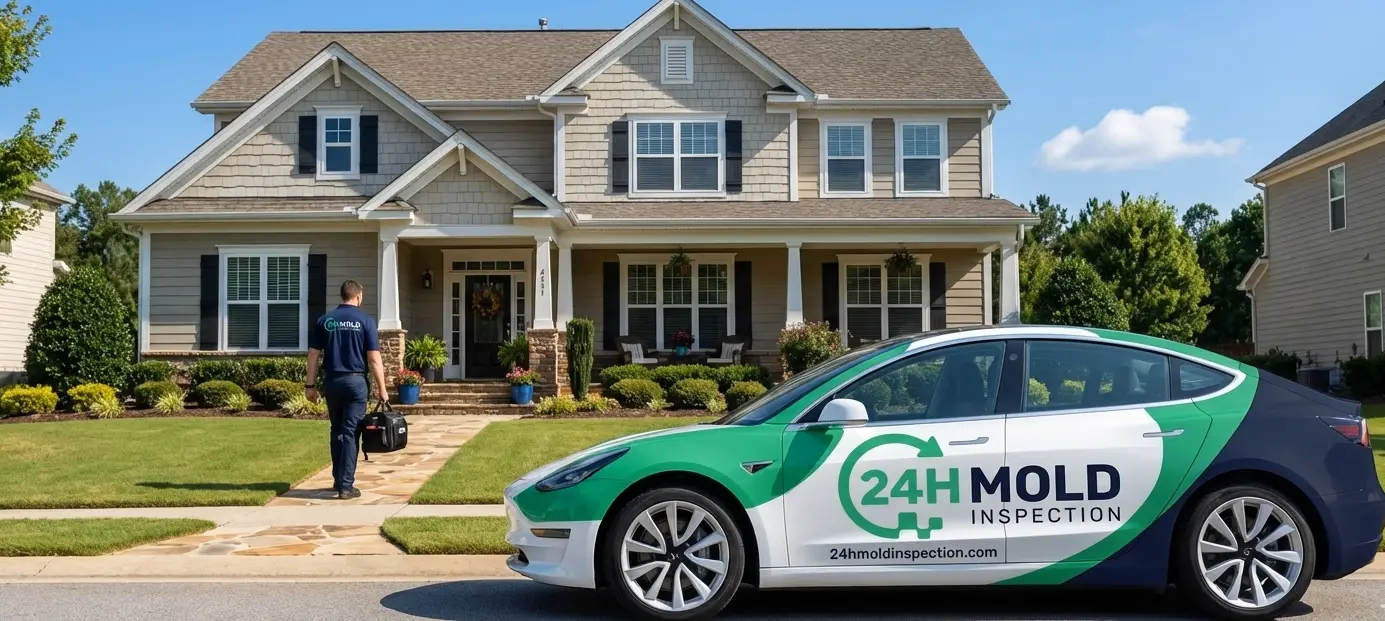
Certified mold inspection and testing in West Covina. Same-day appointments, lab-verified reports, and no financial stake in any remediation work that follows.
(626) 727-7255What We Do
Air and surface samples analyzed in a state-certified lab. You receive mold species ID, spore count data, and lab-verified documentation that holds up with insurers, attorneys, or counsel.
About
At 24H Mold Inspection of West Covina, we know no two buildings respond to moisture the same way.
West Covina sits in the San Gabriel Valley at a position defined by its role as a mid-twentieth-century suburban expansion city — most of its residential stock was built between the 1950s and the 1980s in successive waves of tract development that moved east from the older San Gabriel Valley cities toward the Inland Empire fringe. This concentration of mid-century and late-century construction creates a mold risk environment where the properties are at precisely the age at which original plumbing, HVAC systems, and building envelope materials are reaching the end of their design service life, but where the issues they generate are often not yet visible at surfaces and require tool-assisted inspection to identify. The San Gabriel Mountains to the north provide cold air drainage that creates morning fog and condensation conditions in the foothill-adjacent northern neighborhoods of the city.
West Covina's residential inventory is overwhelmingly single-family tract development from the 1950s through the 1980s, with a smaller component of condominium and multi-family development in the city's commercial corridors and near the Eastland Mall area. The 1950s and 1960s homes represent the highest mold risk segment — original plumbing systems at 60 to 70 years of age, slab foundations built without modern vapor retarder standards, and single-pane aluminum window frames that generate chronic condensation on interior surfaces during the temperature swings that the San Gabriel Valley experiences between hot afternoons and cool nights. The 1970s and 1980s tract homes introduce HVAC-related condensation and builder-grade insulation issues that compound as those systems age.
Services
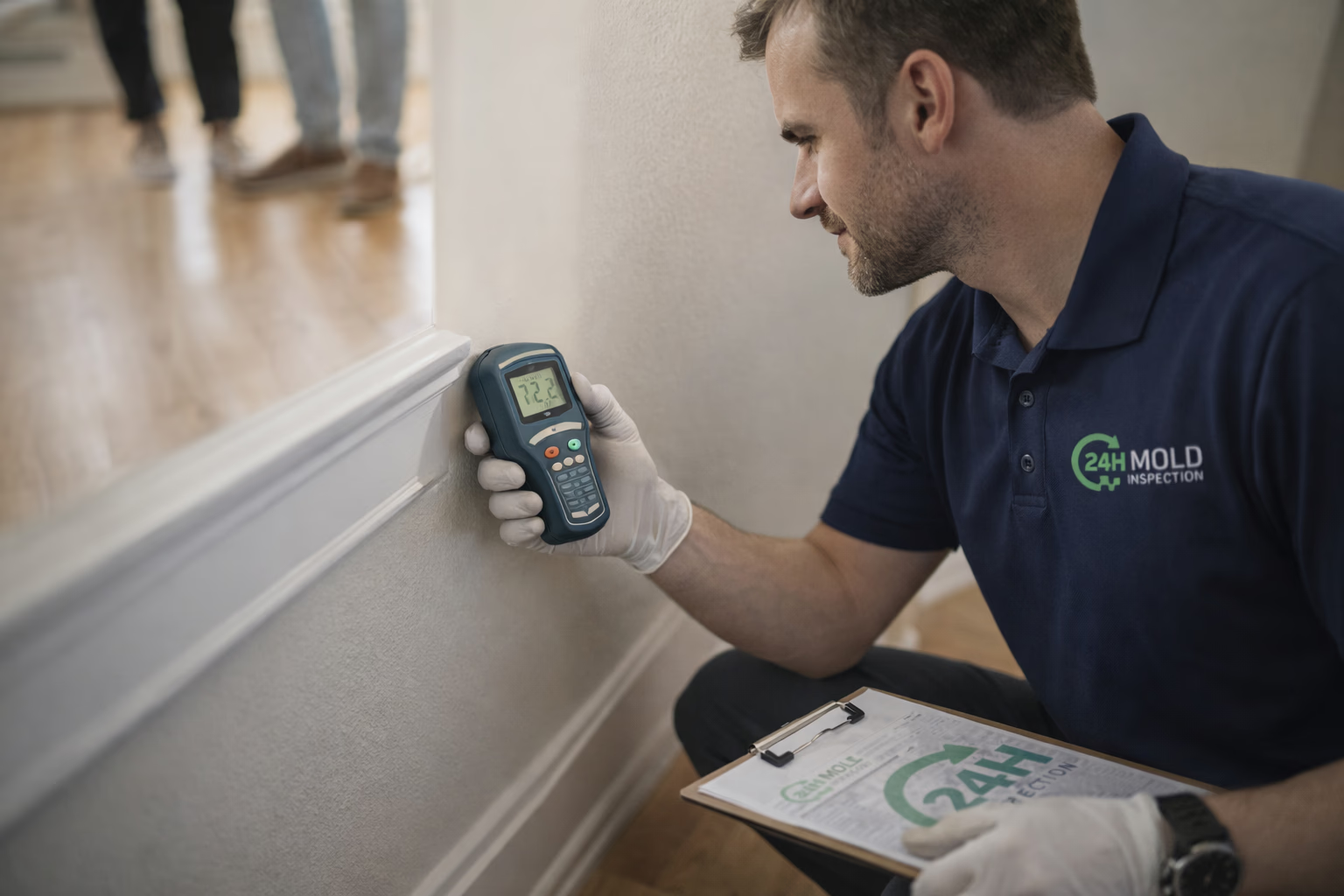
Mold inspection, mold testing, and environmental risk assessments for West Covina properties. Available 24/7, with no remediation work to bias the findings.
Why Us
24H Mold Inspection of West Covina combines local field experience with state-certified methods and lab analysis. Reports get back to you quickly and clearly, with no upsell tacked on to the findings.
We don't stop at surface-level findings. Active leaks, health symptoms, post-remediation work, and pre-purchase due diligence each call for a different inspection approach. Our certified mold inspectors guide you through the specific situation rather than running a generic checklist.
Strengths
We check every box, then go further. Book your inspection today
Licensed inspectors with proven field experience in West Covina.
FLIR thermal cameras, calibrated moisture meters, and lab-verified sampling.
Straightforward updates and honest reporting throughout the process.
4.7 stars from 14+ West Covina homeowners and businesses.
Testimonials
Thousands of West Covina property owners have come to us for reliable, detailed mold assessments
Great mold inspection services. Helped me out very much and were very kind and personable
David M.
5 Step Process
Choose a date and time that fits your schedule.
Flexible scheduling means same-day and next-day appointments are usually available, with 24/7 emergency response when the situation needs it.
Our certified mold inspectors assess every mold-prone area.
We walk the property identifying visible mold and moisture issues, using thermal imaging and moisture meters to catch what's hidden behind walls and under flooring.
Air and surface samples collected for lab analysis.
Our certified mold inspectors collect targeted samples from key areas to find mold spores both visible and hidden, with sample sites documented on a property map.
Lab testing returns precise results.
Samples go to a state-certified lab for detailed analysis identifying mold species and contamination levels, typically returned within 24 to 72 hours.
Insights and clear next steps from our experts.
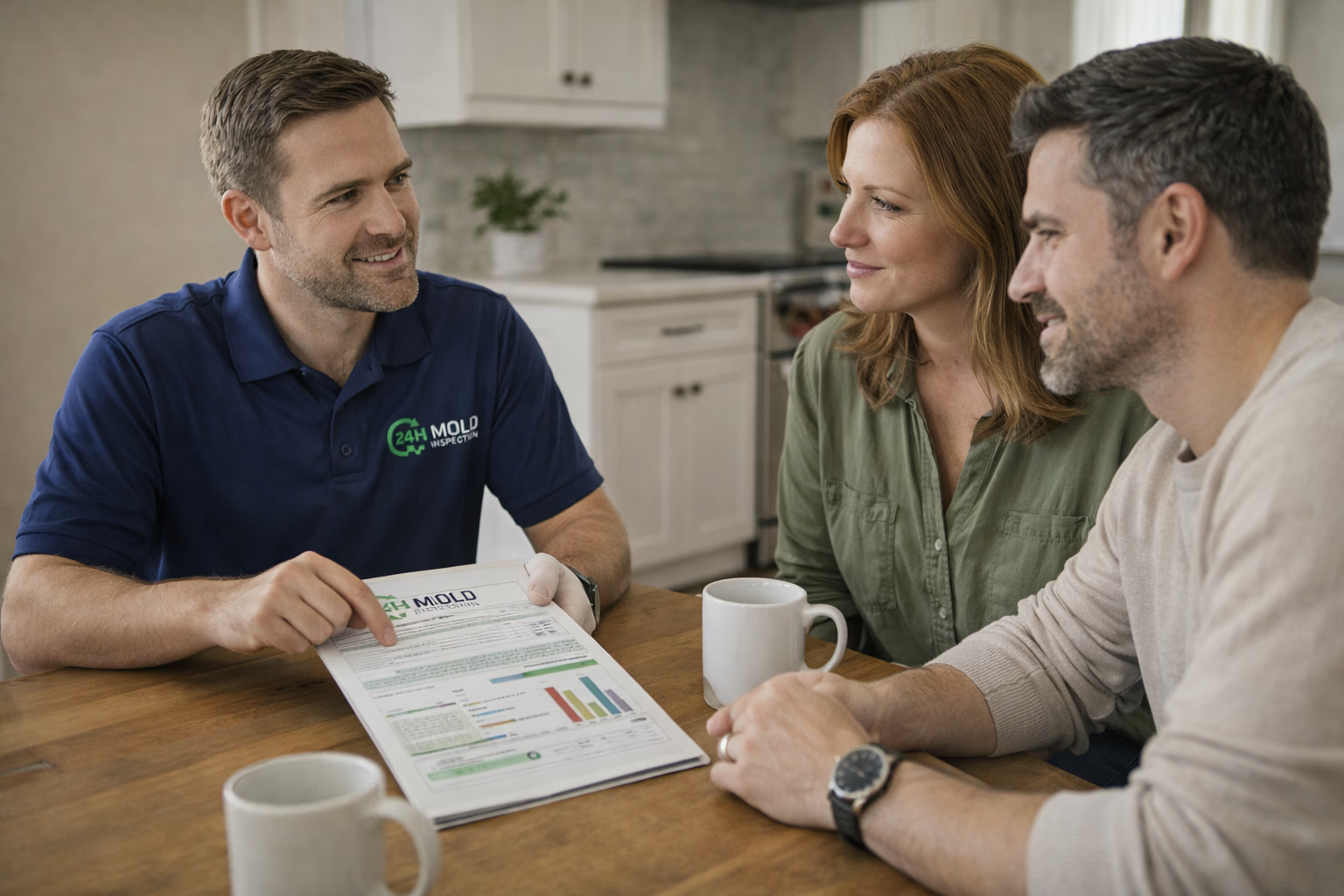
You receive a written report with lab results, inspector findings, and specific recommended action steps to resolve any mold issues safely.
Who We Serve
24H Mold Inspection of West Covina brings clear answers to HOAs, hotels, commercial buildings, and homes through certified mold inspection and testing services.
BKK operated as a hazardous waste landfill on the ridge above these blocks, taking roughly 3.5 million tons of Class I waste before that disposal ended in 1984, and municipal refuse until the city forced the site closed in 1996. Explosive methane and vinyl chloride readings drove the evacuation of homes immediately south of it in 1984, and gas extraction and monitoring systems have run on that ground ever since. The housing stepped up the ridge is 1950s and 1960s slab tract construction on graded pads, with retaining walls, area drains, and irrigation working against the foundation. Everything below the floor here already gets scrutiny, and that is exactly where slab-edge moisture and a wet bottom plate hide.
Twenty-seven stores opened at Eastland on October 24, 1957, on a 49-acre parcel laid against the newly built San Bernardino Freeway, the county's first freeway-oriented regional center: a mall on the upper level and a strip of shops facing the freeway below. It was enclosed in 1979 and opened back up as a power center decades later. Each rebuild left the same envelope behind, low-slope roofs drained by a handful of interior drains and scuppers, with layers of tenant improvement burying older damage. Block one of those drains and water spreads sideways above a ceiling grid instead of dripping in one obvious place. The 1950s tracts that filled in around the center carry the slab-era problems of their own decade.
The hillside tracts on the south side were graded by the standard method of the 1960s and early 1970s: cut the ridge, push the spoil into the canyon below, and set the building pad across the seam between the two. Split-level homes here have lower floors sitting partly below grade, with brow ditches, terrace drains, and subdrains meant to carry hillside water around the structure. Those lines silt up, planters get built over them, and pool and irrigation water goes into ground the grading plan never counted on. The bedrock underneath is stratified shale, firm dry and slick wet, so seepage reaching a downhill wall arrives steadily rather than as an obvious leak.
West Covina incorporated in 1923 with 507 residents, largely to keep a sewage farm off its land, and the west side stayed in walnut groves for another generation. Then the tracts came: 4,499 people in 1950, 50,645 by 1960, the fastest-growing city in the United States in 1955. Grove land out toward Vineland Avenue was scraped flat and built at speed, slab-on-grade with thin footings and no vapor retarder under the concrete, because nothing required one yet. Seventy years on, that slab still passes ground moisture up into flooring and the base of wall framing, and the dead-flat grading leaves a saturated yard or a broken irrigation line nowhere to drain except toward the house.
The blocks around Cortez Park and the community center on East Cortez went up in the middle of the boom, and a handful of older properties survived it, several of them on the city's list of significant historic resources. That mix is what makes the area worth inspecting carefully: the pre-boom houses sit on raised foundations over crawl spaces, while the tract homes beside them are slab, and the two fail in opposite directions. A crawl space hides standing water, blocked vents, and subfloor rot for years without a sign indoors. A slab pushes ground moisture upward into flooring instead. Runoff off this side of the city drains to concrete channels that fill fast in a hard winter storm.
Google Search
Add 24H Mold Inspection as a preferred source so our pages are easier to spot in your Google results.
Contact
Tell us what's going on and we'll respond the same day
Location
24H Mold Inspection of West Covina
Phone
(626) 727-7255Hours
Service area neighborhoods
Newsletter
Monthly notes from our inspectors on prevention and air quality.