24H Mold Inspection
West Covina24/7 EMERGENCY(626) 727-7255
HomeOur ServicesMold TestingAir Testing
Mold Testing

Air Testing

Mold air testing detects airborne spores and assesses indoor air quality, even in spaces where no visible contamination has shown up yet.

Overview

Why mold air testing matters

Most mold is invisible. Spores float undetected through ducts and doorways, spreading from room to room with the air itself. Air testing reveals the species and concentration of what's airborne, even when no visible growth is found on any surface.

Mold air testing detects:

  • Invisible mold spores circulating through the air
  • Differences in spore levels from one room to the next
  • Contamination inside HVAC systems and hard-to-reach areas
  • Early warning signs in rooms that appear unaffected
Why mold air testing matters
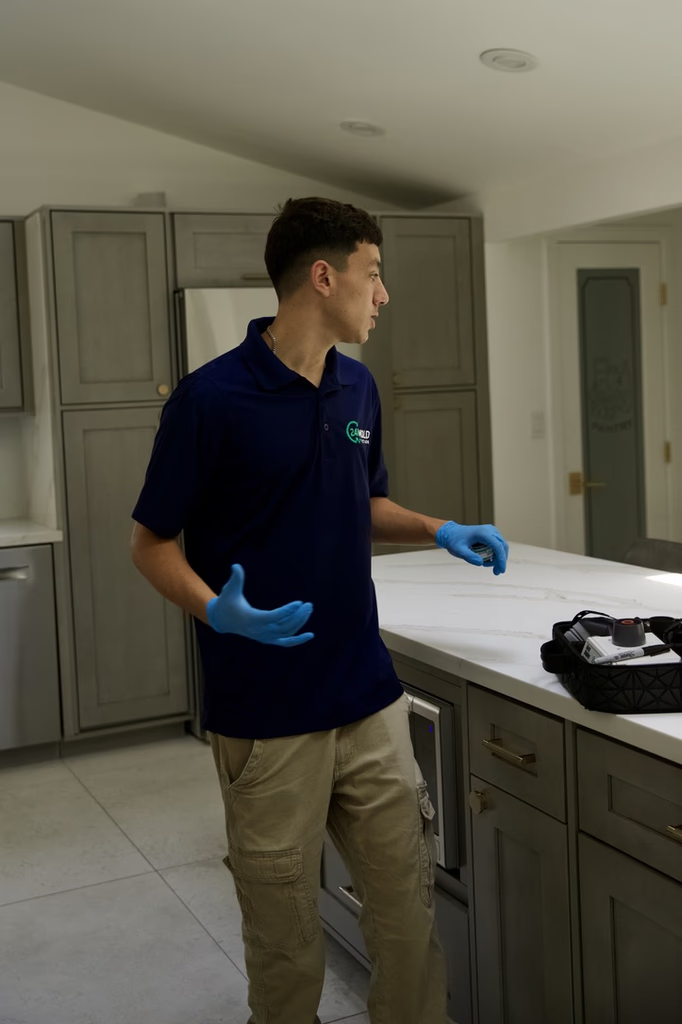
Mold inspector at work

Benefits

What you get from air testing

Understand the air quality and find what your eyes can't

  • Non-invasive: No drilling, no surface damage, no demolition needed.
  • Early detection: Catch contamination before it spreads or symptoms start.
  • Data-driven: Measure and compare spore counts room by room with lab-verified results.
  • Defensible documentation: State-certified lab results that hold up for insurance and real estate use.

About

How mold air testing works

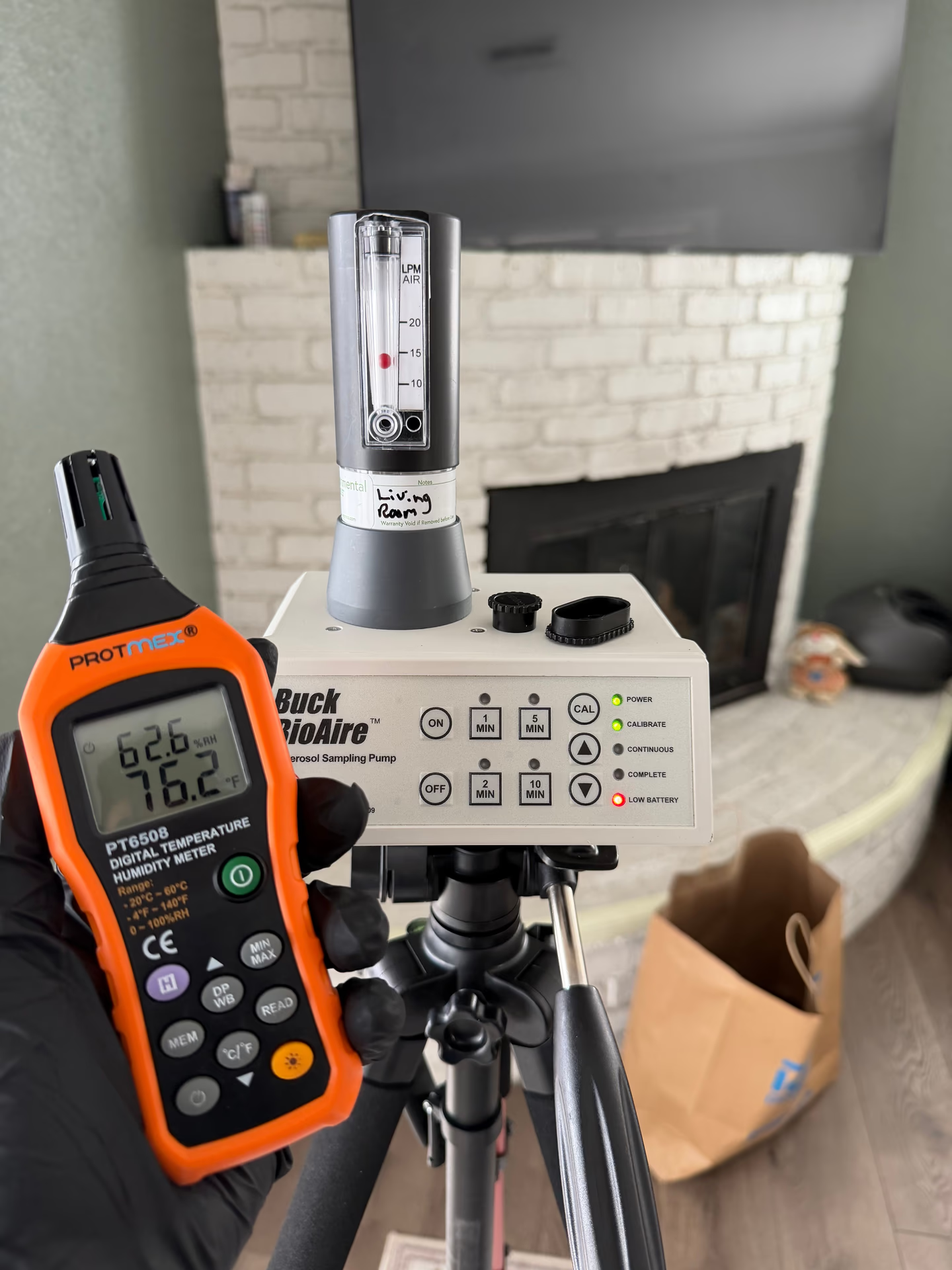
Our certified mold inspectors use calibrated sampling pumps to draw air through a spore trap cassette, capturing airborne mold spores. The lab identifies the mold species under a microscope, including any HVAC contamination if the system is implicated.

Our process includes:

  • Targeted sampling in problem areas and comparison sampling outdoors
  • Spore traps or impactor cassettes calibrated for accurate collection
  • Lab-verified results identifying species and spore counts
  • A written mold inspection report with the numbers and next steps
How mold air testing works

Mold inspection West Covina FAQ

Call For An Inspection
No. We inspect, test, and document, and we do not perform remediation or removal on any property. That separation has a practical edge in this city's housing stock. West Covina's 1950s and 1960s tract homes are slab-on-grade with original copper supply lines now 60 to 70 years old, and the failure they produce is a pinhole leak feeding a wall cavity for months with no dramatic water event to mark it. How much of that wall is actually wet is a measurement, not an opinion, and a company paid to demolish and rebuild it has an obvious interest in the answer. Our report maps the moisture, names the source, and defines a scope several remediation contractors can bid on identical terms. If you already have a removal quote in hand, an independent inspection tells you whether that scope matches the damage. If the work is finished, we can verify it afterward, which a contractor signing off on their own job cannot credibly do.
Inside the city we cover South Hills, Eastland, Sunset, West Covina Hills, Vineland, Hollencrest, the Gallery Row area, and the blocks around Cortez Park, across 91790, 91791, and 91792, including addresses that carry a West Covina mailing city but sit in unincorporated county pockets along the edges. Beyond the city limits, Covina, Baldwin Park, Azusa, Glendora, El Monte, Pomona, Diamond Bar, and Pasadena each have their own 24H Mold Inspection page written for that city's housing stock, so if your property is in one of them, start there. Searches for mold detection in Covina or home inspectors in Baldwin Park routinely come from addresses a few blocks either side of a boundary line. Standard appointments across the West Covina service area run same-day to three business days, and emergencies — an active leak, a failed water heater, a slab line breaking under a 1960s tract house — are handled 24/7. If you are not certain which page covers your address, call the number on this page.
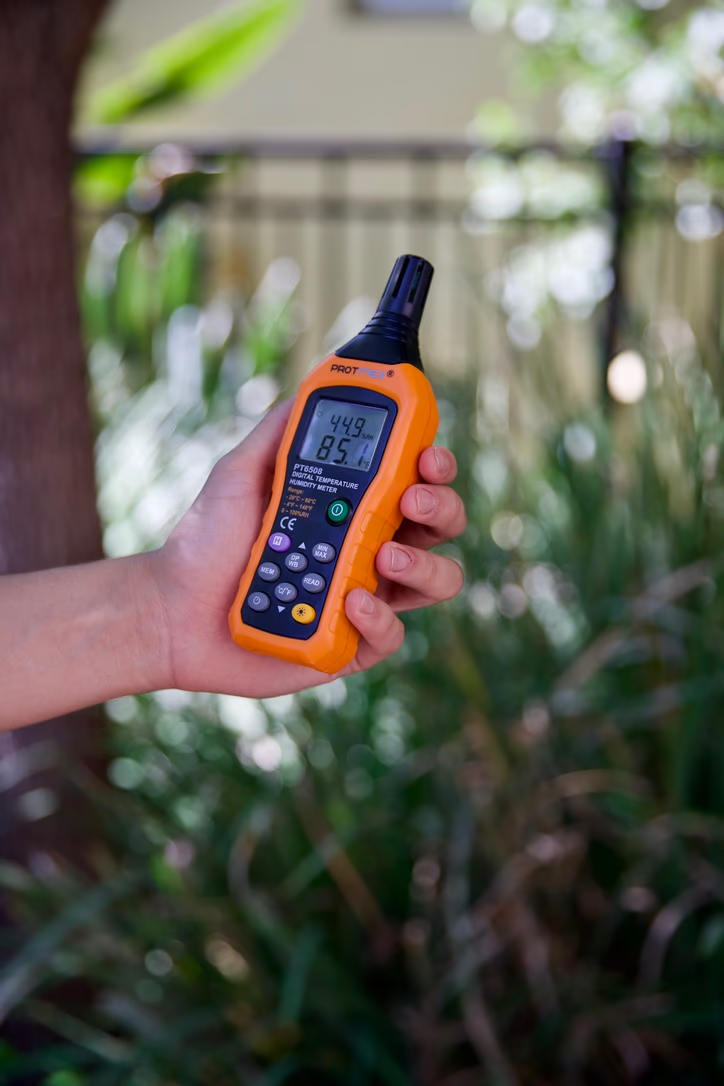
A spore-trap air test draws a measured volume of air through a cassette in each area of concern, plus one sample taken outdoors on the same visit. The outdoor sample is what gives the indoor number meaning: spores are present in all outdoor air, so the question is whether the interior is elevated against the local background that day. In West Covina that background moves. The city sits in the eastern San Gabriel Valley where summer inversions hold air against the foothills, the San Bernardino Freeway runs straight through the middle of it, and wildfire smoke off the ranges north and east changes what is airborne for weeks at a time. An accredited lab identifies the genera present and their concentrations, typically in 24 to 72 hours. Air testing is the right tool when someone has symptoms or there is a musty smell with nothing visible, and the result is read alongside the moisture findings rather than on its own, because a spore count with no water source attached is a number nobody can act on.
Not directly, and the boundary is worth stating plainly. BKK took roughly 3.5 million tons of Class I hazardous waste and some 20 million tons of municipal refuse on the ridge above the South Hills before hazardous disposal ended in 1984 and the site closed for good in 1996. The methane and vinyl chloride readings that forced homes south of it to evacuate in 1984 are why gas extraction and monitoring systems still operate there. Landfill gas is not our scope, and questions about it belong with the agencies overseeing the site. What we inspect on those blocks is what mold actually requires, which is water. The houses stepped up that ridge are 1950s and 1960s slabs on graded pads, with retaining walls, area drains, and irrigation working against them, so the recurring findings are slab-edge moisture, wet bottom plates behind baseboard, and garage or storage space taking hillside seepage. If you are being told a subsurface condition explains an indoor odor, a moisture map and an indoor-outdoor spore comparison separate the two questions.
They answer different questions, and in this city's inventory the gap between them is wide. A general home inspection is a visual condition survey by a generalist covering the whole property, and the line that usually sends people here reads evidence of past moisture, recommend evaluation by a specialist. A mold inspection is narrow and instrumented: thermal imaging and moisture meters to locate water inside assemblies, then lab samples to identify what is growing. That gap matters in West Covina because almost the entire residential stock is 1950s to 1980s slab-on-grade tract housing, where the two most common moisture sources — a pinhole leak in original copper and ground moisture through a slab poured without a vapor retarder — leave no surface evidence a visual inspection can catch until flooring or drywall is already damaged. With a short contingency period, the practical move is to schedule both in the same week, so any moisture finding is documented with lab backing while there is still room to negotiate repairs.
Detection finds the water and the growth. Testing identifies what the growth is. Detection is instrument work done on site: thermal imaging to flag the temperature signature wet material leaves behind a finished surface, pin and pinless meters to confirm it is genuinely damp and map how far the damp area extends, and a borescope into a wall cavity when there is reason to open one. Spore testing is the lab half, with air cassettes, swabs, or tape lifts analyzed for genera and concentration. Most West Covina homes need both, in that order. Skipping detection is how owners end up holding a lab report that confirms elevated spores but says nothing about the copper pinhole leak, the sweating duct, or the aluminum window condensation feeding it, all three ordinary in this city's mid-century tracts. A useful report names the moisture source, shows where the wet material starts and stops, and pairs that with lab results, so a remediation contractor is pricing a defined area instead of guessing at one.
Do not disturb it, and do not let anyone quote removal before the moisture source is identified. Black mold usually means Stachybotrys, but several unremarkable dark growths look identical on a wall and only a lab tells them apart. What does not change either way is the sequence, because growth that returns after cleaning is being fed by water nobody found. In West Covina's slab tract houses the usual sources are a supply line leaking under the slab, a shower pan or angle stop weeping into a shared wall, condensation at single-pane aluminum window frames running down to the bottom plate, and ducts sweating in an attic that runs extremely hot through an eastern San Gabriel Valley summer. Scrubbing surface growth and repainting removes the evidence without touching the cause, and the material behind the paint keeps going. Photograph what you can see, keep the area closed off from the rest of the house, and have the moisture mapped before any demolition, since the map is what decides how much material has to come out.

Contact

Book your West Covina mold inspection today

Tell us what's going on and we'll respond the same day

Location

24H Mold Inspection of West Covina

Service area neighborhoods

  • South Hills
  • Eastland
  • Sunset
  • West Covina Hills
  • Vineland
  • Hollencrest
  • Gallery Row area
  • Cortez Park area
Call For Service(626) 727-7255