
Detect hidden moisture, leaks, and insulation issues without invasive methods.
our services
Mold Inspection
Advanced moisture detection and infrared technology—so you can act before it spreads.
About
Why Mold Inspection Matters
Mold often hides behind walls or under flooring. Our inspection process is designed to catch both the obvious and the invisible—before they become costly repairs or health concerns.
- —Detect visible mold
- —Locate the source of moisture that feeds it
- —Identify which areas need testing or remediation
- —Get peace of mind after leaks or before buying property
Methodology
How our mold inspectors inspect
We combine certified field experience with calibrated detection tools
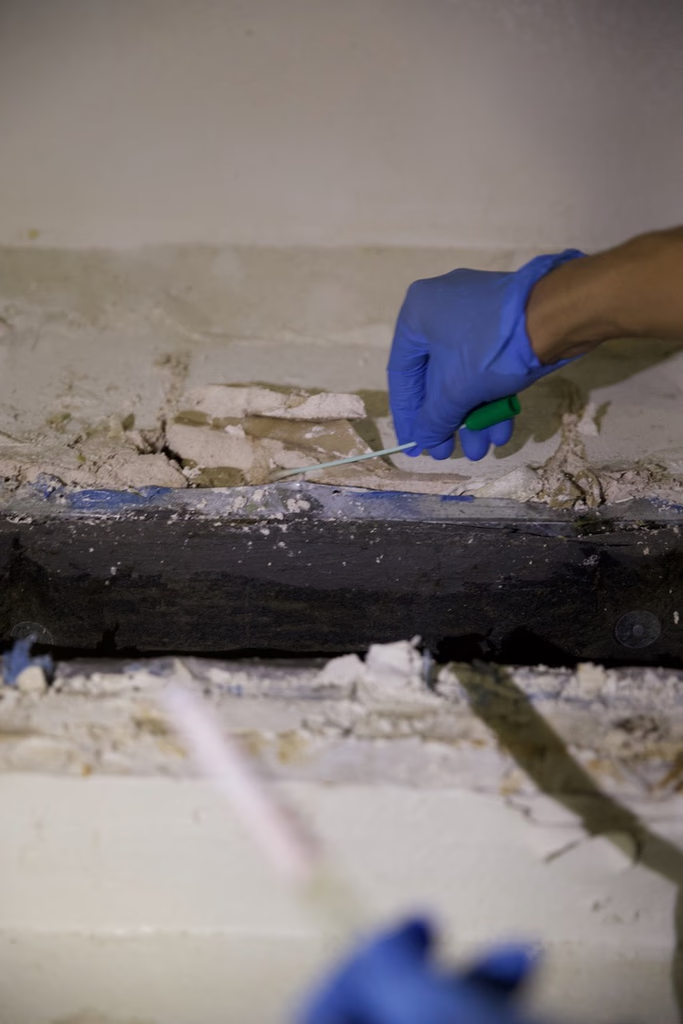
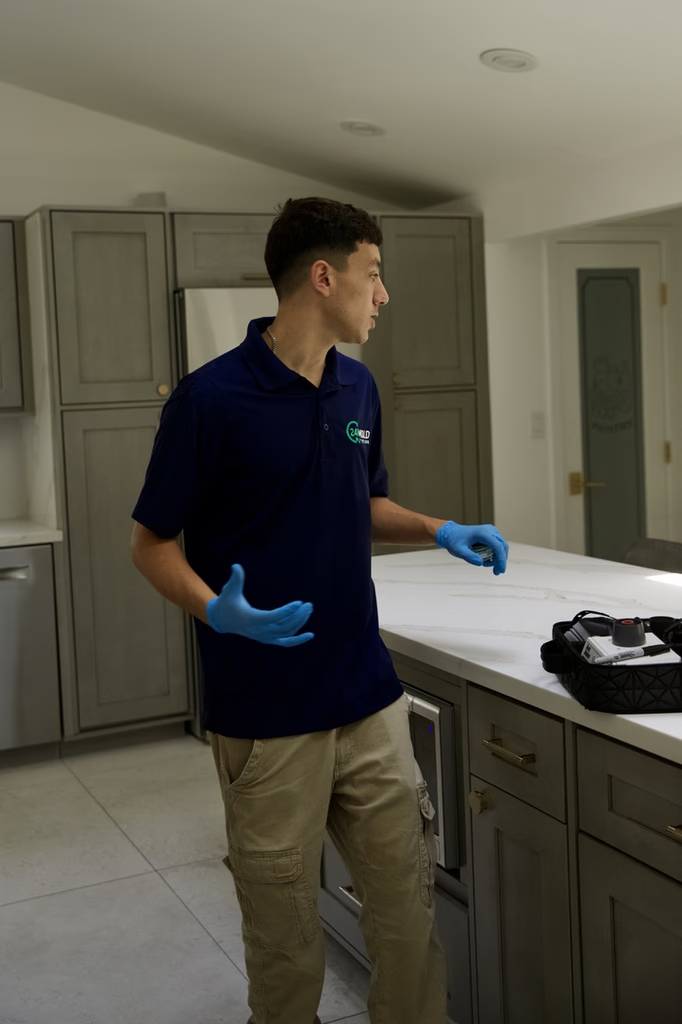
Every job starts with a structured walkthrough of high-risk areas: bathrooms, kitchens, attics, basements, crawl spaces, and around any plumbing, windows, or HVAC components. The inspector documents visible growth, stains, warping, and other physical signs as they go.
Mold doesn't grow without water, so finding the moisture is half the work. Pin and pinless moisture meters measure water content inside walls, ceilings, and flooring materials, locating active leaks and elevated humidity that the eye can't see.
FLIR thermal imaging cameras read temperature differentials behind surfaces, which is how we find wet areas inside walls without opening anything up. Cold spots flag moisture, condensation, and air leaks that often correlate with hidden mold growth.
Checklist
Is an Inspection Right for You?
Mold inspection is ideal if:
- —You've had recent leaks or water damage
- —You notice musty odors in certain rooms
- —You're buying, selling, or managing a property
- —You want to check for mold before testing or remediation
- —You just want peace of mind
Still unsure? Our team will help you decide if an inspection—or testing—is the right first step.
Inspection Overview
Our Inspection Methods
Understand the key methods we use to deliver a complete, thorough mold inspection.
Measure moisture levels inside surfaces to find leaks, trapped water, or early signs of mold risk.
Homes, condos, and rentals—moisture and mold assessment with clear reporting for occupants and transactions.
Offices, retail, hospitality, and industrial—inspections that respect operations and support facilities teams.
Mold inspection Pomona FAQ
Call For An InspectionSame-day and next-day appointments are usually available across our Pomona service area, with 24/7 emergency response for active leaks, recent water damage, or urgent real estate timelines. Standard scheduling runs 1 to 3 business days depending on availability.
Our certified mold inspectors assess bathrooms, kitchens, laundry rooms, basements, attics, crawl spaces, HVAC components, and any area showing signs of past or current water issues. Thermal imaging and moisture meters identify hidden moisture behind walls and under floors.
In Pomona's pre-war and mid-century residential properties, the three most consistent mold pathways we identify are crawl space ground moisture accumulation, aging plumbing failures behind walls, and deteriorated exterior building envelope materials that allow water intrusion during rain events. Crawl spaces in the city's older raised-foundation homes frequently lack functional vapor barriers — either because they were never installed or because original materials have degraded over decades — which allows ground moisture from the San Gabriel Valley's soil to migrate continuously into the foundation space and adjacent structural framing. Original galvanized plumbing in these properties has in many cases exceeded its 50 to 70-year service life and develops pinhole leaks inside wall cavities that sustain mold-supporting moisture without producing visible water damage at surfaces. The combination of these factors in a single structure creates layered moisture risk that requires systematic, tool-assisted inspection to fully characterize.
Pricing varies based on the size of the property, the scope of testing required, and whether any lab work is included. Most residential mold inspections in Pomona fall within the standard industry range of $300 to $600, with a clear quote provided before any work begins.
Air sampling, swab testing, tape lift testing, wall cavity sampling, and HVAC mold testing. The inspector recommends the right method on-site based on what's found. Samples go to a state-certified lab, with results typically back in 24 to 72 hours.
Mold needs water to grow, so finding the moisture source is what prevents the same problem from coming back after any cleanup. Moisture detection during the inspection identifies plumbing leaks, roof leaks, condensation issues, and humidity buildup that's feeding any growth.
Yes. Post-remediation verification confirms the remediation contractor's work succeeded and the space is safe to reoccupy. Because we don't perform remediation ourselves, the verification stays independent of the remediation contractor's interests, which is what insurers and tenants look for.
If the home inspection mentioned staining, a musty smell, or signs of past leaks, yes — that note is the home inspector's way of handing the question to a specialist. A general inspection is a visual survey of the whole house; a mold inspection measures moisture inside walls, floors, and crawl spaces with thermal imaging and moisture meters, and sends air or surface samples to an accredited lab. In Pomona the difference shows up most in two kinds of houses. The Victorians and Craftsman homes of Lincoln Park and the older central neighborhoods sit on raised foundations, and the crawl space is where their moisture problems live and where a walkthrough rarely goes. The hillside homes of Phillips Ranch and Ganesha Hills take runoff against their uphill walls and slab edges, which looks fine from inside until the drywall is opened. Book the mold inspection within your contingency period so the results can still affect the deal.
They have more places for it to hide. The Lincoln Park Historic District covers 45 blocks and more than 800 structures, mostly single-family homes built between the 1890s and the 1940s, from late Victorians and Craftsman bungalows to Spanish and Colonial Revival houses. Nearly all of them were built on raised wood foundations over crawl spaces that were never designed with vapor barriers, and many still carry original or early-replacement galvanized plumbing and cast-iron drains. Over a century, they have also collected re-roofs, room additions, and enclosed porches, each joint a potential leak. The usual pattern is growth on the subfloor and joists beneath a bathroom or kitchen, damp crawl space soil after a wet winter, and staining in the attic around old chimney and vent penetrations. Because the district is protected, repairs often have to preserve original materials, so locating the exact source before anything is removed saves both the house and the budget.
Some of them, yes, and the effects can surface years later. Pomona felt the October 1987 quake centered in the San Gabriel Valley, and on February 28, 1990 a magnitude 5.7 earthquake centered at the foot of the San Gabriels just north of the Pomona Valley broke windows and caused structural damage in Pomona itself. Shaking of that kind opens hairline cracks in stucco and plaster, separates flashing at windows and chimneys, cracks unreinforced brick and older foundations, and strains plumbing joints inside walls. Some of that was repaired at the time; much of it was cosmetic patching over a crack that kept letting water in. In Pomona's pre-war housing, where chimneys, brick foundations, and lath-and-plaster walls are common, those old repairs are a frequent starting point for wall-cavity moisture. If your home dates from before 1990 and shows patched cracks near windows or chimneys, a moisture survey of those walls is worth doing.
Mostly problems driven by the slope. Louis Lesser bought Phillips Ranch in 1964 and began building in 1965, turning one of the largest undeveloped parcels in Los Angeles County into a hillside master-planned community on the city's southwest side. Homes there sit on graded pads cut into the hills, with retaining walls, terraced yards, and long downhill drainage runs. In a heavy storm, runoff concentrates against uphill walls and enters at the joint between slab and foundation, and clogged terrace drains or V-ditches turn a normal rain into a wet wall. Irrigation on steep yards keeps the uphill side damp year-round. Inside, the signs are mineral deposits on the slab edge, swelling baseboards on the hill side, and a musty smell in the lowest rooms or a below-grade garage. Mold detection here starts at the uphill wall and the retaining-wall drainage, then moves to the attic and HVAC in homes now 40 to 50 years old.
It is often worth it, whether you're the student, the parent, or the owner. Cal Poly Pomona was built on the former W.K. Kellogg ranch, and the neighborhoods around the campus carry a large stock of single-family houses rented by the room and small apartment buildings that turn over every academic year. High occupancy means more showers, cooking, and laundry than a house was designed to vent, and the gap between tenants is when slow leaks, failed bathroom fans, and window condensation go unnoticed. California law treats visible mold as a substandard housing condition under Health and Safety Code section 17920.3, and a building's age is not a defense. An inspection at move-in or after a reported leak documents the condition with moisture readings, photos, and lab results — a record that settles deposit and repair disputes, and that helps an owner fix the cause rather than repaint over it every summer.
It can, and it should whenever the home has one. Enclosed spa rooms and pool houses are among the most humid spaces a house can have: warm water evaporating constantly, often with an exhaust fan sized for a bathroom rather than a hot tub, and walls and ceilings that were finished with ordinary drywall. Growth tends to appear in ceiling corners, behind wall panels, and in the attic above. Outdoors, the risk shifts to water movement — splash-out and backwash draining toward the foundation, leaking supply and return lines under decking, and equipment pads plumbed through an exterior wall. On the sloped lots of Phillips Ranch and Ganesha Hills, a slow pool-line leak adds to the downhill water already moving against the house. We measure humidity and surface moisture in the enclosed space, check the adjoining walls and attic, and trace any moisture along the house wall back toward the pool plumbing.
Spore detection measures what is in the air; mold detection finds where the moisture and growth are. Spore detection uses a pump and spore trap to sample indoor air in each area of concern, with a matching outdoor sample collected at the same visit, and an accredited lab identifies the genera and concentrations. Mold detection is the instrument survey: thermal imaging for cool, wet areas behind finished surfaces, moisture meters to confirm and map them, and a borescope into a wall cavity when needed. In Pomona the outdoor baseline varies a lot — the open hillsides above Phillips Ranch and Ganesha Hills, the dust of the Fairplex grounds during events, and the traffic along the 10 and 71 all change it — so an indoor count only means something next to a same-day outdoor sample. Most inspections use both: the air sample confirms a problem, and the moisture survey shows where it is.
Only inspection and testing. We don't remediate, and that separation is the reason our reports are useful to the contractor you do hire. An inspector who also sells the cleanup is estimating their own job. We locate the growth, identify the moisture driving it, and document the extent with thermal imaging, moisture meters, and lab-analyzed samples. In Pomona the cause is often somewhere a remediation crew isn't paid to look: a crawl space under a Lincoln Park bungalow, a galvanized line weeping inside a pre-war wall, runoff entering at the uphill slab edge of a Phillips Ranch home, or an old earthquake crack that never stopped letting water in. Remove the mold without fixing that and it returns. The written report gives you a defined scope that several remediation contractors can bid on equally, and once the work is done we can come back for independent clearance testing before walls are closed.
Our indoor air quality testing is focused on mold: airborne spores and the moisture conditions that produce them. The inspector collects air samples through a spore trap in each room of concern, takes an outdoor sample at the same visit as a baseline, and measures humidity and surface moisture in the areas sampled. An accredited lab identifies genera and concentrations, typically within 24 to 72 hours, and the report explains whether indoor levels are elevated against outdoors and where the likely source is. The cost depends mainly on the number of samples, which depends on the size of the home and how many areas are involved — a single-story postwar house near downtown usually needs fewer than a multi-level Phillips Ranch home with a below-grade room. You get a quote before any sampling. If testing points to growth inside a wall or crawl space, the moisture survey from the same visit usually shows where.
A residential inspection follows water through the house rather than stopping at what is visible. It starts with history — past leaks, odors, symptoms, remodels — and then works room by room with a thermal camera and moisture meter: bathrooms and kitchens, the water heater and supply lines, laundry, windows, the slab perimeter or crawl space, and the attic. In Pomona's older neighborhoods, the crawl space under raised foundations gets particular attention, along with chimneys and old patched plaster cracks. In the hillside neighborhoods, the uphill walls and retaining-wall drainage do. HVAC equipment and ducts are checked for condensation and contamination. Where growth is suspected, air samples with an outdoor baseline and surface swabs or tape lifts go to an accredited lab. The report documents findings, the moisture source, photos, lab results, and the recommended scope if remediation is needed — with no remediation work of our own riding on that scope.
Yes. Active leaks, flooding, and sudden odors after water damage get 24/7 response in Pomona, and same-day or next-day appointments are usually available for everything else. The urgency is real: mold can begin growing within 24 to 48 hours once building materials are wet. The common emergencies here are a supply line or water heater failing in an older house, a slab leak under a postwar home, a crawl space flooded after a heavy storm, and runoff entering a hillside home in Phillips Ranch or Ganesha Hills. An emergency visit maps how far the water has traveled inside walls and under floors, so drying equipment goes where it is needed, and documents conditions with dated readings and photos for your insurer. If someone in the household is reacting to the air, samples can be taken on the same visit. Because we don't sell restoration, the drying contractor's work can later be verified independently.
Our Pomona team covers the whole city — Lincoln Park and the historic core, downtown, Ganesha Hills and the Fairplex area, Phillips Ranch, Wilton, Westmont, Indian Hill, Casa Colina, and the neighborhoods around Cal Poly Pomona — with same-day and next-day appointments and 24/7 response for active leaks and water damage. Several nearby cities have their own 24H Mold Inspection page written for their own housing, including Diamond Bar, Chino, Chino Hills, Ontario, Montclair, and Upland. If your property is in one of those, start with that city's page. If you aren't sure which team covers your address — Pomona's borders with its neighbors run through hillside neighborhoods where the mailing city doesn't always match — call the number on this page and we'll route you to the right one.
Contact
Book your Pomona mold inspection today
Tell us what's going on and we'll respond the same day
Location
24H Mold Inspection of Pomona
Phone
(840) 837-2225Hours
- MondayOpen 24 hours
- TuesdayOpen 24 hours
- WednesdayOpen 24 hours
- ThursdayOpen 24 hours
- Friday6 AM – 6 PM
- SaturdayClosed
- SundayOpen 24 hours
Service area neighborhoods
- Lincoln Park
- Ganesha Hills
- Wilton
- Phillips Ranch
- Pomona downtown
- Casa Colina
- Indian Hill
- Westmont