1
Mold inspection
- Moisture detection
- Infrared technology
- Certified mold inspectors
- No conflict of interest

Certified mold inspection and testing in Pomona. Same-day appointments, lab-verified reports, and no financial stake in any remediation work that follows.
(840) 837-2225What We Do
Air and surface samples analyzed in a state-certified lab. You receive mold species ID, spore count data, and lab-verified documentation that holds up with insurers, attorneys, or counsel.
About
At 24H Mold Inspection of Pomona, we know no two buildings respond to moisture the same way.
Pomona is one of the older cities in Los Angeles County's Inland Empire fringe, with a housing stock that reflects successive waves of development from the late nineteenth century through the mid-twentieth century — a concentration of construction age that creates a mold risk environment defined more by aging infrastructure than by climate. The city's position at the eastern end of the San Gabriel Valley puts it in a transitional climate zone between the marine-influenced basin climate to the west and the drier Inland Empire climate to the east, with the San Gabriel Mountains to the north channeling cold air drainage that generates significant overnight temperature drops and the condensation cycles that accompany them. Multi-family residential density in Pomona's urban core adds a dimension of shared-system moisture propagation — plumbing failures in one unit affecting adjacent units — that is less prominent in lower-density communities.
Pomona's property inventory includes pre-war craftsman and bungalow homes in its historic core neighborhoods, post-war single-family development throughout its residential areas, a significant multi-family residential inventory in higher-density urban zones, and commercial and light-industrial properties along its major corridors. The historic residential stock carries all the characteristics of early and mid-twentieth century construction: original plumbing systems well past their service life, raised wood-frame foundations with crawl spaces requiring active moisture management, and exterior building envelope materials that have had decades to develop the gaps and degradation that allow chronic moisture intrusion.
Services
Mold inspection, mold testing, and environmental risk assessments for Pomona properties. Available 24/7, with no remediation work to bias the findings.

Why Us
24H Mold Inspection of Pomona combines local field experience with state-certified methods and lab analysis. Reports get back to you quickly and clearly, with no upsell tacked on to the findings.
We don't stop at surface-level findings. Active leaks, health symptoms, post-remediation work, and pre-purchase due diligence each call for a different inspection approach. Our certified mold inspectors guide you through the specific situation rather than running a generic checklist.
Strengths
We check every box, then go further. Book your inspection today
Licensed inspectors with proven field experience in Pomona.
FLIR thermal cameras, calibrated moisture meters, and lab-verified sampling.
Straightforward updates and honest reporting throughout the process.
5.0 stars from 42+ Pomona homeowners and businesses.
Testimonials
Thousands of Pomona property owners have come to us for reliable, detailed mold assessments
Great job! Great service! Amazing people.
Connor K.
5 Step Process
Choose a date and time that fits your schedule.
Flexible scheduling means same-day and next-day appointments are usually available, with 24/7 emergency response when the situation needs it.
Our certified mold inspectors assess every mold-prone area.
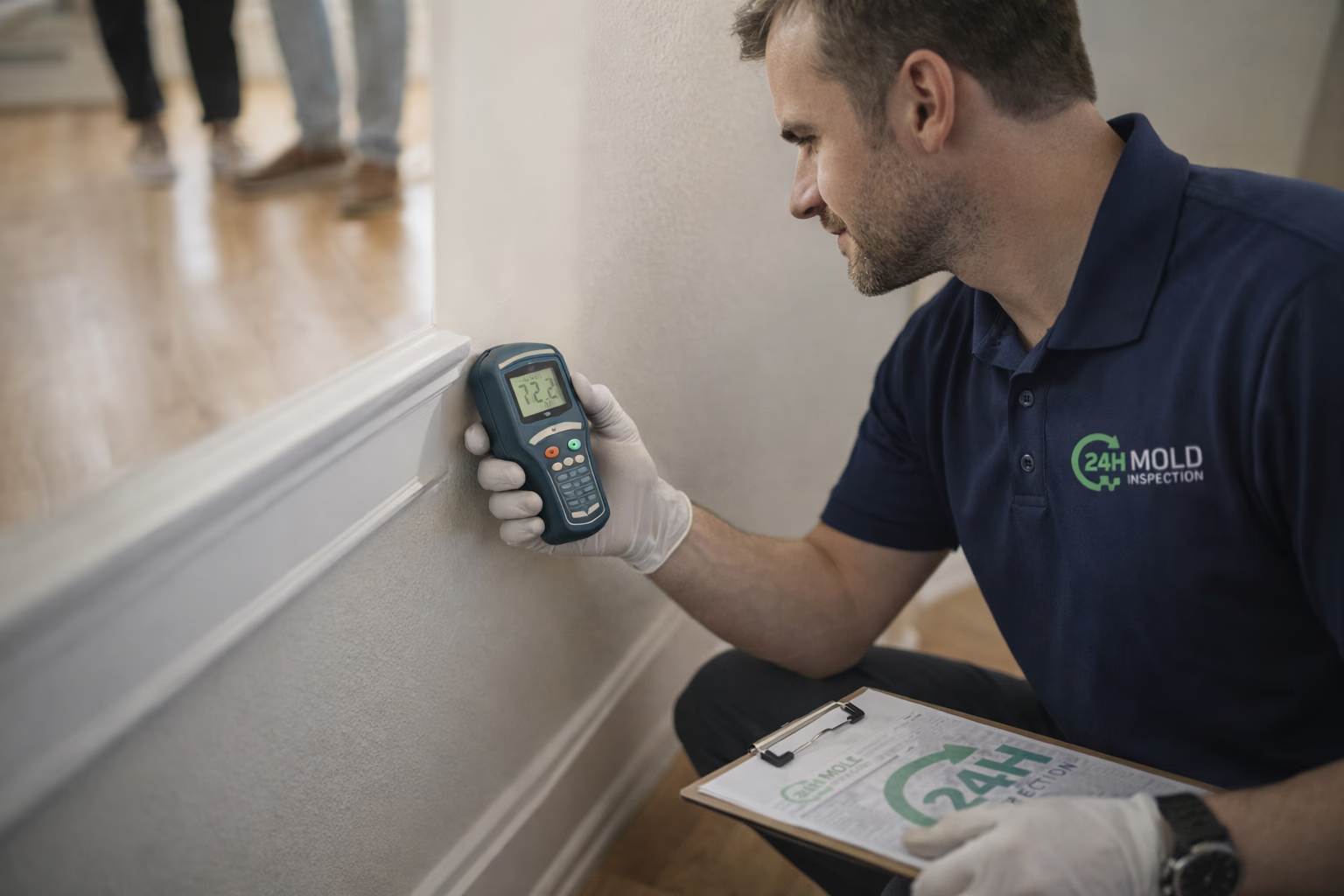
We walk the property identifying visible mold and moisture issues, using thermal imaging and moisture meters to catch what's hidden behind walls and under flooring.
Air and surface samples collected for lab analysis.
Our certified mold inspectors collect targeted samples from key areas to find mold spores both visible and hidden, with sample sites documented on a property map.
Lab testing returns precise results.
Samples go to a state-certified lab for detailed analysis identifying mold species and contamination levels, typically returned within 24 to 72 hours.
Insights and clear next steps from our experts.
You receive a written report with lab results, inspector findings, and specific recommended action steps to resolve any mold issues safely.
Who We Serve
24H Mold Inspection of Pomona brings clear answers to HOAs, hotels, commercial buildings, and homes through certified mold inspection and testing services.
Lincoln Park is a 45-block, 230-acre residential district of more than 800 structures, mostly single-family homes built from the 1890s through the 1940s — late Victorians, National Folk houses, Craftsman bungalows, and Colonial, Mission, Tudor, and Classical Revival designs. The city designated it in 1998 and it joined the National Register in 2004. Nearly all of these homes stand on raised wood foundations over crawl spaces built without vapor barriers, with original or early-replacement galvanized plumbing and a century of re-roofs, additions, and enclosed porches. Damp crawl space soil, subfloor growth under bathrooms, and leaks at old chimney and roof penetrations define the risk here.
Pomona incorporated in 1888, and its downtown still holds the brick and masonry commercial blocks of the citrus era, many now converted to studios, lofts, and apartments over storefronts. On February 28, 1990 a magnitude 5.7 earthquake centered just north of the Pomona Valley broke windows and caused structural damage in Pomona, and older buildings here carry the cracks and repairs of that and earlier quakes. Unreinforced and lightly reinforced masonry wicks water and holds it, flat roofs pond behind parapets, and conversions add showers and kitchens to buildings designed for retail and storage, often over slabs with no vapor barrier.
The Los Angeles County Fair has been held here since 1922, when the city donated the first 43 acres; the Fairplex grounds now cover 543 acres, and during World War II the Army took them over. Above the fairgrounds, Ganesha Park dates to 1888 and the Ganesha Hills neighborhood climbs the slopes with older hillside homes and views across the valley. Homes cut into the hillside take runoff against their uphill walls and foundations, retaining walls and terraced yards collect water when their drains clog, and older houses on stepped foundations hide damp lower rooms and crawl spaces below the main floor.
Louis Phillips built his mansion here in 1875 on land he acquired in the 1860s, and in 1964 Louis Lesser Enterprises bought what remained of the ranch — one of the largest undeveloped parcels in Los Angeles County — and began building a master-planned hillside community the following year. Phillips Ranch homes sit on graded pads with retaining walls, terraced yards, and long downhill drainage runs. In heavy storms, runoff concentrates against uphill walls and enters at the joint between slab and foundation, and clogged V-ditches turn a normal rain into a wet wall. Homes here are now 40 to 60 years old, adding aging attics and HVAC to the slope risks.
Cal Poly Pomona occupies the former W.K. Kellogg ranch, and the neighborhoods around it carry a large stock of single-family houses rented by the room and small apartment buildings that turn over every academic year. South of downtown, postwar tracts of single-story stucco homes on slabs fill much of the rest of the city. High occupancy means more showers, cooking, and laundry than these houses were built to vent, and the gap between tenants is when slow leaks and failed bathroom fans go unnoticed. In the postwar tracts, slab leaks, cracked cast-iron drains, and garage conversions on unsealed concrete are the recurring sources.
Google Search
Add 24H Mold Inspection as a preferred source so our pages are easier to spot in your Google results.
Contact
Tell us what's going on and we'll respond the same day
Location
24H Mold Inspection of Pomona
Phone
(840) 837-2225Hours
Service area neighborhoods
Newsletter
Monthly notes from our inspectors on prevention and air quality.