1
Mold inspection
- Moisture detection
- Infrared technology
- Certified mold inspectors
- No conflict of interest

Certified mold inspection and testing in Palmdale. Same-day appointments, lab-verified reports, and no financial stake in any remediation work that follows.
(661) 844-7723What We Do
Air and surface samples analyzed in a state-certified lab. You receive mold species ID, spore count data, and lab-verified documentation that holds up with insurers, attorneys, or counsel.
About
At 24H Mold Inspection of Palmdale, we know no two buildings respond to moisture the same way.
Palmdale occupies the southern portion of the Antelope Valley and combines master-planned communities, established residential neighborhoods, aerospace-related employment centers, and expanding commercial development. Like the rest of the Antelope Valley, the city experiences a high-desert climate characterized by hot summers, cool winters, and substantial daily temperature swings. While outdoor moisture levels are generally low, mold issues frequently originate from plumbing leaks, HVAC systems, evaporative cooling equipment, roofing failures, and slab moisture migration. The city’s rapid growth over recent decades has created a diverse mix of construction ages and building styles, producing moisture conditions that vary significantly from one neighborhood to another.
Palmdale contains master-planned developments, suburban homes, desert residential communities, townhomes, apartment complexes, and commercial properties. HVAC performance, slab construction, and long-term temperature fluctuations frequently affect moisture conditions.
Services
Mold inspection, mold testing, and environmental risk assessments for Palmdale properties. Available 24/7, with no remediation work to bias the findings.

Why Us
24H Mold Inspection of Palmdale combines local field experience with state-certified methods and lab analysis. Reports get back to you quickly and clearly, with no upsell tacked on to the findings.
We don't stop at surface-level findings. Active leaks, health symptoms, post-remediation work, and pre-purchase due diligence each call for a different inspection approach. Our certified mold inspectors guide you through the specific situation rather than running a generic checklist.
Strengths
We check every box, then go further. Book your inspection today
Licensed inspectors with proven field experience in Palmdale.
FLIR thermal cameras, calibrated moisture meters, and lab-verified sampling.
Straightforward updates and honest reporting throughout the process.
Highly rated by Palmdale homeowners and businesses.
5 Step Process
Choose a date and time that fits your schedule.
Flexible scheduling means same-day and next-day appointments are usually available, with 24/7 emergency response when the situation needs it.
Our certified mold inspectors assess every mold-prone area.
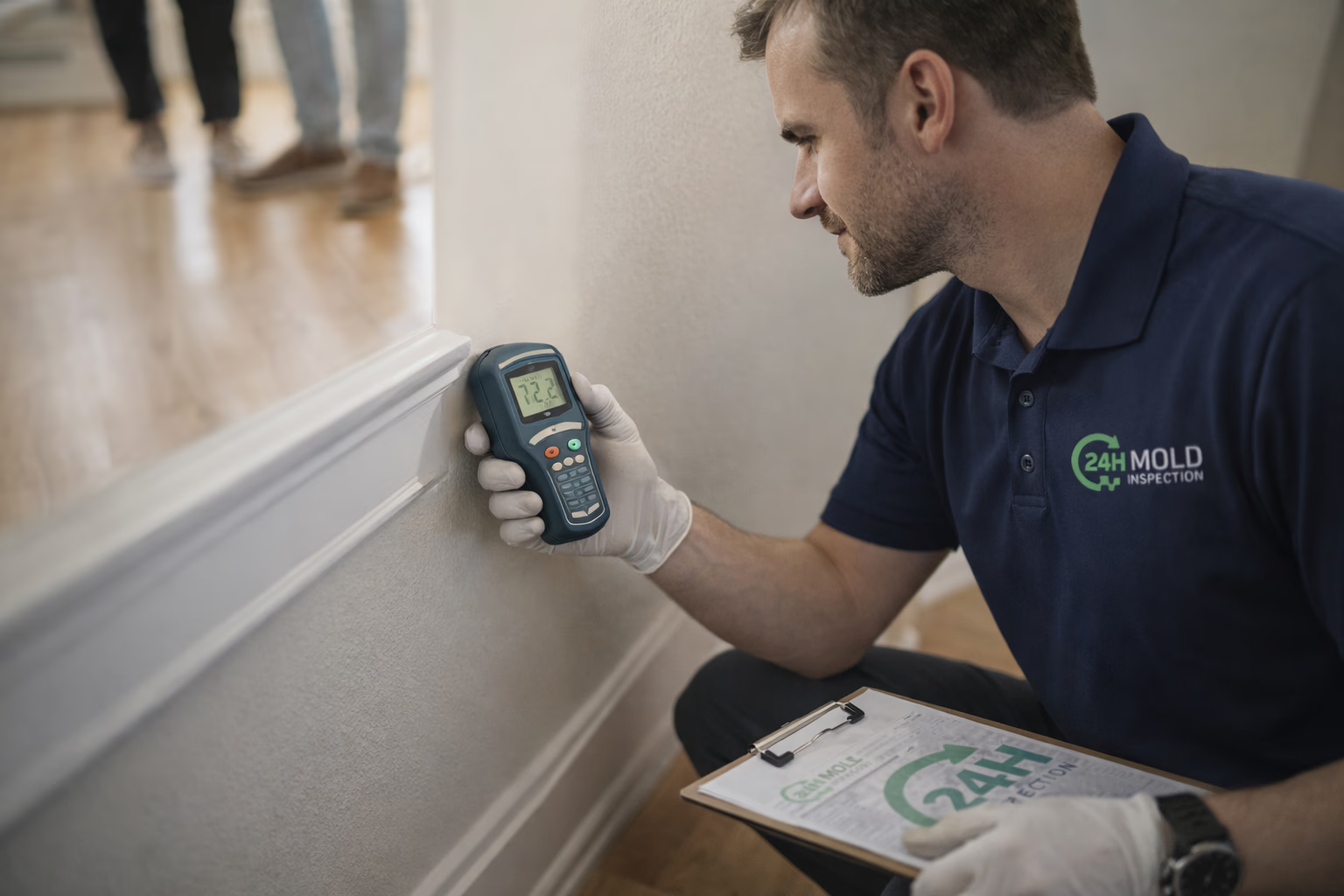
We walk the property identifying visible mold and moisture issues, using thermal imaging and moisture meters to catch what's hidden behind walls and under flooring.
Air and surface samples collected for lab analysis.
Our certified mold inspectors collect targeted samples from key areas to find mold spores both visible and hidden, with sample sites documented on a property map.
Lab testing returns precise results.
Samples go to a state-certified lab for detailed analysis identifying mold species and contamination levels, typically returned within 24 to 72 hours.
Insights and clear next steps from our experts.
You receive a written report with lab results, inspector findings, and specific recommended action steps to resolve any mold issues safely.
Who We Serve
24H Mold Inspection of Palmdale brings clear answers to HOAs, hotels, commercial buildings, and homes through certified mold inspection and testing services.
Palmdale became a city in August 1962, incorporating just 2 square miles of land around what is now the civic center. The streets around it hold the city's oldest homes and commercial buildings: small single-story houses from the 1950s and 1960s, older commercial frontage along Palmdale Boulevard, and buildings that have been expanded, re-roofed, and re-plumbed several times. Original galvanized lines, roofs layered over older roofs, evaporative coolers leaking at their curbs, and additions joined to small original houses are the usual moisture paths here, along with flat-roofed storefronts whose drains fill with wind-blown sand and debris.
The federal government bought the Palmdale airport in 1952 and established Air Force Plant 42, and Lockheed set up there the following year; its Skunk Works division later made the plant its base. The aerospace jobs drove housing across the east side, where single-story stucco homes on slabs now range from 40 to 70 years old. Slab leaks, cast-iron drains cracking under bathrooms, roof-mounted coolers run during monsoon humidity, and garage conversions on unsealed concrete are the recurring sources of hidden moisture, with winter freezes adding burst lines in exterior walls and garages.
The San Andreas Fault runs through Palmdale along the north shore of Lake Palmdale, and just north of the Avenue S exit Highway 14 passes through a road cut whose eastern wall exposes nearly 90 feet of rock layers folded and squeezed between faults; the California Aqueduct crosses the fault here too. Homes on the city's south side live closest to that boundary. Earthquakes open hairline cracks in stucco and slabs, loosen window and door flashing, and strain plumbing joints inside walls and beneath floors — creating the paths that let the next storm, or a slowly weeping line, put water where it can't dry.
Rancho Vista, on the west side, was largely built from the late 1980s through the 1990s, and many of its two-story stucco homes on large lots date to 1987 through 1990. Thirty-five years on, original systems are failing together: water heaters and supply lines in garages and closets, condensate lines from attic air handlers clogging and overflowing into ceilings, roofing underlayment wearing out beneath tiles that still look intact, and stucco cracks around windows letting storm water behind the wall. Upstairs bathrooms over living space add the risk of a slow leak soaking the floor framing between levels before it shows below.
Anaverde is a 2,000-acre master-planned community in the hills on the city's southwest side, planned for some 5,000 homes and the first new master-planned community in the Antelope Valley since the 1980s. Homes sit on graded hillside pads with tight envelopes, energy-efficient windows, and attic HVAC. The moisture risks are newer-construction ones: shower and cooking moisture held indoors when ventilation is undersized, ducts sweating in hot attics through long cooling seasons, framing and concrete closed in before fully dry, and irrigation and runoff on sloped lots moving toward slab edges and retaining walls on the downhill side of the home above.
Google Search
Add 24H Mold Inspection as a preferred source so our pages are easier to spot in your Google results.
Contact
Tell us what's going on and we'll respond the same day
Location
24H Mold Inspection of Palmdale
Phone
(661) 844-7723Hours
Service area neighborhoods
Newsletter
Monthly notes from our inspectors on prevention and air quality.