
Collects airborne mold spores to assess air quality and detect hidden contamination.
our services
Mold Testing
State-certified testing that spots hidden mold—so you can act early, stay safe, and avoid costly repairs.
About
Why Mold Testing Matters
Mold isn't always visible. It hides in air vents, under floors, and inside walls. The only way to know what you're breathing—or what's spreading—is through lab-grade testing.
- —Identify mold species and spore levels
- —Detect hidden growth in "clean" areas
- —Assess the health risk to occupants
- —Decide on the right next steps
Methodology
How our mold testing works
The three sampling methods we use, chosen for what your property is showing
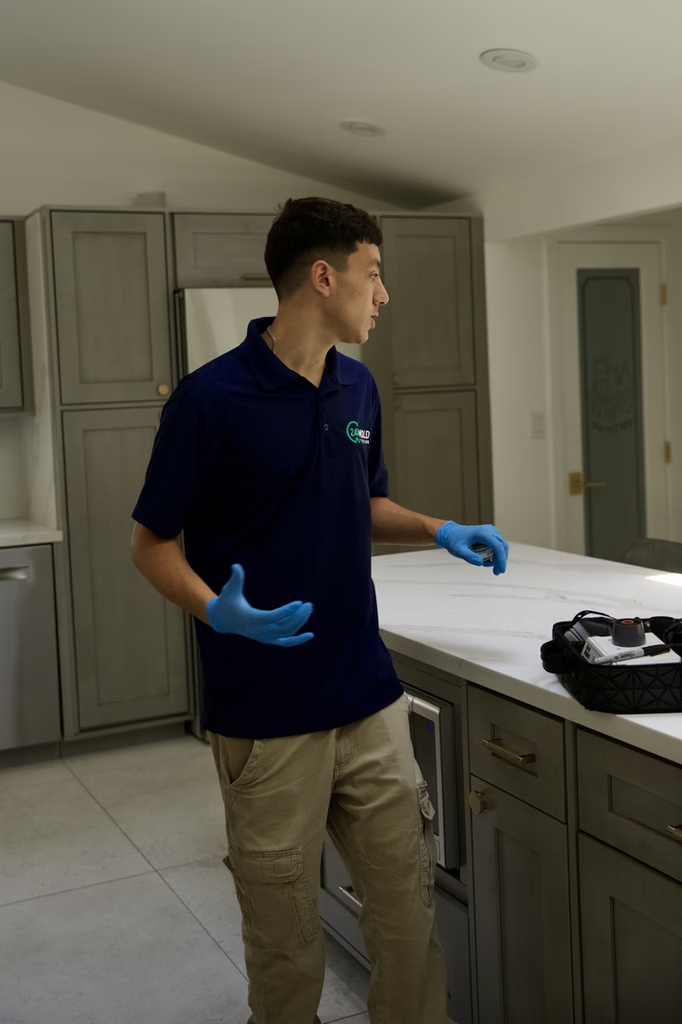
Sterile swabs and clear adhesive tape collect mold from visible spots on dry surfaces, giving the lab a clean sample for species identification. Suitable for walls, ceilings, baseboards, and furniture where the residue is what you're checking.
For damp or recently water-damaged areas, the sampling approach changes. Wet sampling captures live, actively growing colonies that dry methods underrepresent, which matters under flooring, behind tile, and around recent leaks.
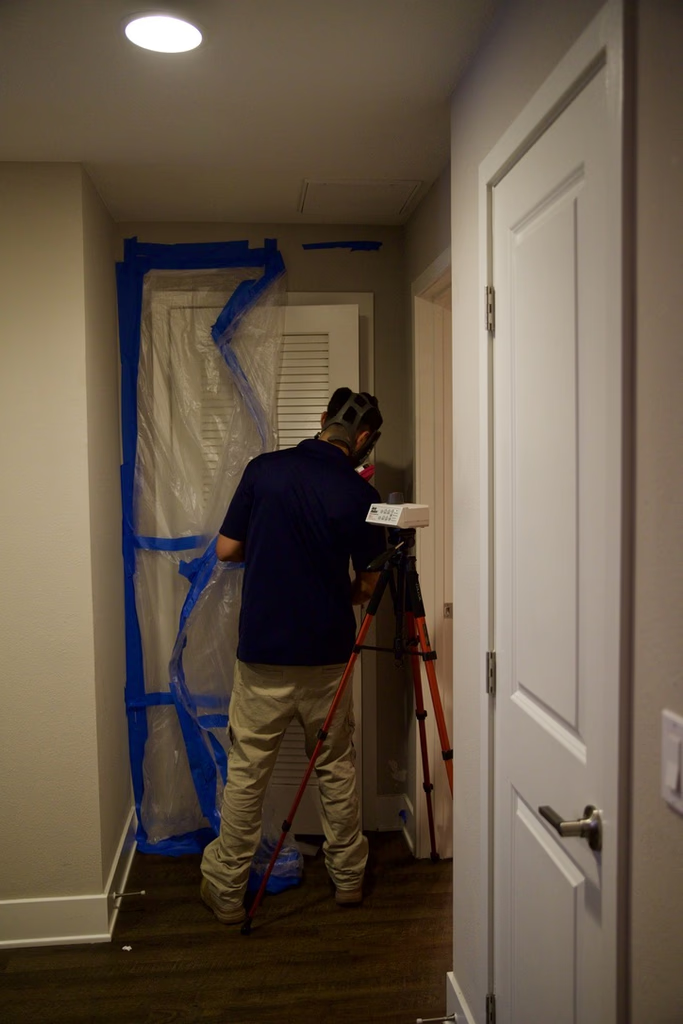
A calibrated pump pulls a controlled volume of air through a spore trap cassette, capturing viable and non-viable spores from the breathing zone. The lab counts species and compares concentrations to outdoor levels, telling you whether your indoor air is healthy.
Checklist
Is Testing Right for You?
Mold testing is ideal if:
- —You suspect mold but can't see it
- —You've had water damage
- —Residents or tenants are reporting health symptoms
- —You're buying, selling, or managing a property
- —You need peace of mind after remediation
Still unsure? Let's talk. We'll help you decide which method suits your case best.
Testing Overview
Our Testing Methods
Techniques we use to collect accurate mold samples from air and surfaces.
Lifts mold samples from surfaces using clear adhesive—quick and non-destructive.
Gathers samples from damp or textured areas to identify active mold growth.
Mold inspection Palmdale FAQ
Call For An InspectionSame-day and next-day appointments are usually available across our Palmdale service area, with 24/7 emergency response for active leaks, recent water damage, or urgent real estate timelines. Standard scheduling runs 1 to 3 business days depending on availability.
Our certified mold inspectors assess bathrooms, kitchens, laundry rooms, basements, attics, crawl spaces, HVAC components, and any area showing signs of past or current water issues. Thermal imaging and moisture meters identify hidden moisture behind walls and under floors.
They can. Large temperature differences between indoor and outdoor environments may increase condensation potential around HVAC systems, ductwork, windows, and other building components, particularly when ventilation is inadequate.
Pricing varies based on the size of the property, the scope of testing required, and whether any lab work is included. Most residential mold inspections in Palmdale fall within the standard industry range of $300 to $600, with a clear quote provided before any work begins.
Air sampling, swab testing, tape lift testing, wall cavity sampling, and HVAC mold testing. The inspector recommends the right method on-site based on what's found. Samples go to a state-certified lab, with results typically back in 24 to 72 hours.
Mold needs water to grow, so finding the moisture source is what prevents the same problem from coming back after any cleanup. Moisture detection during the inspection identifies plumbing leaks, roof leaks, condensation issues, and humidity buildup that's feeding any growth.
Yes. Post-remediation verification confirms the remediation contractor's work succeeded and the space is safe to reoccupy. Because we don't perform remediation ourselves, the verification stays independent of the remediation contractor's interests, which is what insurers and tenants look for.
Leave it in place and find out what it is before anyone removes it. Dark growth is often a common species rather than Stachybotrys, and the two cannot be told apart by eye — only a lab sample can. Scrubbing or bleaching it releases spores into the house and destroys the evidence needed to scope the cleanup. Close off the room, shut down any HVAC or evaporative cooler that circulates air through it, and photograph what you see. Then look for the water, because black mold in a Palmdale home almost always means sustained moisture: a supply line weeping behind a wall, a slab leak, a cooler leaking into the attic, a roof that let in a monsoon storm, or condensation in a closet on an exterior wall during a cold desert night. A surface sample identifies the species, air samples show whether it has spread, and the moisture survey shows where it is coming from — which is what a remediation contractor needs to bid the job correctly.
An inspection first, because the cause decides whether cleanup will last. Many Palmdale homes, especially the late-1980s and 1990s houses of Rancho Vista and the west side, now have attics that are 30-plus years old, with original ductwork, original or once-replaced roofing, and bathroom fans that often terminate in the attic rather than outdoors. Each produces a different growth pattern. Fans venting into the attic leave growth concentrated above bathrooms; condensation from cold nights and poor ventilation spreads it across a whole roof slope; a leak at a vent, valley, or cooler opening clusters it around that point. Wind-lifted roofing shows up as staining along a ridge or eave after the next rain. The inspector checks sheathing, rafters, insulation, and ducts with a moisture meter and thermal camera and samples where needed. The report tells the cleanup contractor what to remove, and tells you what to repair so the growth doesn't return.
Indirectly, yes. The San Andreas runs right through Palmdale — along the north shore of Lake Palmdale and through the famous road cut where Highway 14 passes the Avenue S exit, where nearly 90 feet of rock layers are folded and squeezed between faults. The California Aqueduct crosses the fault here as well. Living this close to an active plate boundary means the region's earthquakes, large and small, keep testing local buildings. Shaking opens hairline cracks in stucco and slabs, separates window and door flashing, and loosens plumbing joints inside walls and beneath floors. None of that causes mold on its own; it creates the path. The next monsoon storm or winter rain gets behind the stucco, or a stressed joint starts to weep. After any quake strong enough to crack plaster or shift a door frame, check the stucco, the slab perimeter, and the plumbing for new moisture pathways — especially in homes on the south side of the city closest to the fault.
These homes are reaching the age where original systems start to fail at once. Rancho Vista, on Palmdale's west side, was largely built from the late 1980s through the 1990s — many of its two-story stucco houses date to 1987 through 1990 — on large lots with tile or composition roofs and forced-air systems in the attic. Thirty-five years on, the common moisture sources are original water heaters and supply lines failing in garages and closets, condensate lines from attic air handlers clogging and overflowing into ceilings, roofing underlayment wearing out beneath tiles that still look intact, and stucco cracks around windows letting storm water behind the wall. Second-floor bathrooms over living areas add the risk of a slow leak soaking the floor framing between levels. A moisture survey of the attic, the water heater area, and the walls and ceilings under upstairs bathrooms covers where these houses usually fail, and catches problems before they reach the drywall face.
They can, even though they are newer than most of Palmdale's housing. Anaverde is a 2,000-acre master-planned community in the hills on the city's southwest side — the first new master-planned community in the Antelope Valley since the 1980s — with homes built on graded hillside pads. New construction brings its own moisture risks. Tight building envelopes and energy-efficient windows hold in shower and cooking moisture when ventilation is undersized or bathroom fans go unused. Ducts in hot attics sweat during long cooling seasons. Framing and concrete that were closed in before they dried fully can release moisture for the first year or two. On sloped lots, irrigation and runoff move toward slab edges and retaining walls on the downhill side of the home above. If your home is still within its builder warranty period, a documented moisture inspection gives you specific findings to submit before the warranty runs out.
Indirectly, by setting up the next leak. Palmdale sits where the mountains meet the open Antelope Valley, and strong high-desert wind events sweep through the city several times a year, especially in spring and late fall. Those winds lift and crack roof tiles, peel back composition shingles along ridges and eaves, tear flashing, and pack dust and sand into gutters, roof valleys, and cooler housings. None of that leaks on a dry, windy day. It leaks during the next monsoon thunderstorm or winter rain, when water gets beneath the displaced roofing into the attic, soaks the insulation, and runs along rafters before staining a ceiling well away from the damaged spot. Clogged valleys can also back water up under the roofing and into the top of an exterior wall. After a major wind event, a roof check before the next storm is the first step; if a stain or musty smell appears later, an attic moisture inspection finds the growth while it is still contained.
East Palmdale holds much of the city's older housing, built as the aerospace work around Air Force Plant 42 grew — the government bought the Palmdale airport in 1952 and Lockheed set up there the following year. Many of these homes are single-story stucco houses on slabs, now 50 to 70 years old, often with roof-mounted evaporative coolers, gas wall furnaces or early forced air, and copper or galvanized supply lines. The moisture sources we find most often are slab leaks, cast-iron drains cracking under bathrooms, coolers leaking at the roof curb or run during monsoon humidity, roofs re-covered over older layers, and garage conversions built directly on unsealed slabs. Winter freezes add burst lines in exterior walls and garages. The first signs tend to be small — a musty closet, a warm spot on the floor, a swelling baseboard — so a moisture survey around the plumbing walls, the cooler opening, and the slab edge is the efficient place to start.
We only inspect and test. We don't remediate, and we keep it that way so the findings stay independent of the cleanup. A company that inspects and then removes the mold is estimating its own job, and the scope tends to grow. We locate the growth, trace the moisture feeding it, and document the extent with thermal imaging, moisture meters, and lab-analyzed samples. In Palmdale the cause is often something a remediation crew isn't hired to fix: an evaporative cooler leaking into the attic, a bathroom fan venting into the attic space, a slab leak under a 1960s house, a burst line from a winter freeze, or a roof opened up by a wind event. Remove the mold without fixing that and it returns. The written report gives you a defined scope that several remediation contractors can bid on equally, and when the work is done we can return for independent clearance testing before anything is closed up.
Our air quality testing is focused on mold: we measure airborne spores indoors against the outdoor air at the same time. The inspector draws a measured volume of air through a spore trap in each room of concern and collects an outdoor sample on the same visit, and an accredited lab identifies genera and concentrations, usually within 24 to 72 hours. The outdoor comparison is essential in Palmdale, where wind, dust, construction on the growing west and south sides, and the open desert around the city make outdoor levels swing widely, so an indoor result is only meaningful next to a same-day outdoor sample. Air testing is the right first step when someone has symptoms or there's a musty smell with nothing visible. In homes with an evaporative cooler or attic air handler, we also check the system itself, since it can carry spores from a wet attic into every room. Results are read together with the moisture survey.
Detection is the work of finding the water and the growth before anything is opened up. In a Palmdale home that means thermal imaging across walls, ceilings, and floors to flag cool or damp areas; moisture meter readings to confirm and map them; a close look at the attic, the cooler or air handler, the water heater, the plumbing walls, and the slab perimeter; and a borescope into a wall cavity where needed. Testing comes after: air, swab, or tape samples sent to an accredited lab to identify what is growing. Most Palmdale inspections need both, in that order, because a lab result without a moisture source tells you there's a problem but not where. In the older east-side houses, detection most often leads to a slab or cooler leak; in Rancho Vista and the west side, to the attic, a water heater, or an upstairs bathroom; in Anaverde, to ventilation and new-construction moisture.
If water sat for more than a day or you can't confirm everything dried, yes. The common causes in Palmdale are a line split by a winter freeze, a water heater or supply line failing in an older home, an evaporative cooler or attic condensate line overflowing in summer, a roof leak after a wind event, and monsoon runoff reaching the slab and the bottom of walls. Desert air dries surfaces quickly, which makes water damage here easy to underestimate: the floor and wall face feel dry within a day while the inside of the wall cavity, the sill plate, the carpet pad, and the slab beneath stay wet much longer. Mold can start within 24 to 48 hours in that hidden moisture. An independent moisture assessment confirms whether drying actually finished, documents any growth that started, and gives you a dated record for your insurance claim, separate from whoever did the drying.
Our Palmdale team covers the whole city — Rancho Vista and West Palmdale, Anaverde, East Palmdale, the Lake Palmdale area, the Avenue S corridor, and Desert View Highlands — as well as the unincorporated communities around it, from Sun Village and Littlerock to Lake Los Angeles, with same-day and next-day appointments and 24/7 response for burst pipes, active leaks, and storm water. Nearby cities with their own 24H Mold Inspection page include Lancaster and Santa Clarita; if your property is in one of those, start with that city's page. If you aren't sure which team covers your address, call the number on this page and we'll route you to the right one.
Contact
Book your Palmdale mold inspection today
Tell us what's going on and we'll respond the same day
Location
24H Mold Inspection of Palmdale
Phone
(661) 844-7723Hours
- MondayOpen 24 hours
- TuesdayOpen 24 hours
- WednesdayOpen 24 hours
- ThursdayOpen 24 hours
- Friday6 AM – 6 PM
- SaturdayClosed
- SundayOpen 24 hours
Service area neighborhoods
- Rancho Vista
- Anaverde
- West Palmdale
- East Palmdale
- Lake Palmdale area
- Desert View Highlands
- Mulligan area
- Avenue S corridor