1
Mold inspection
- Moisture detection
- Infrared technology
- Certified mold inspectors
- No conflict of interest

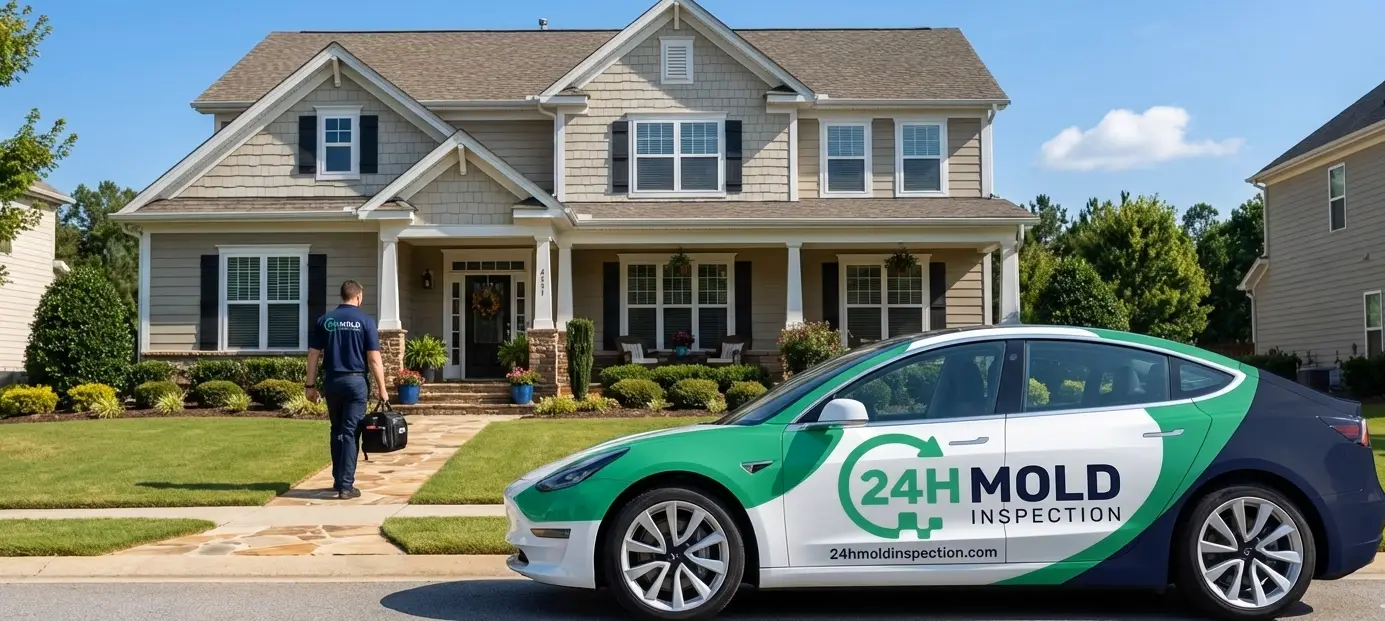
Certified mold inspection and testing in Norwalk. Same-day appointments, lab-verified reports, and no financial stake in any remediation work that follows.
(562) 729-0499What We Do
Air and surface samples analyzed in a state-certified lab. You receive mold species ID, spore count data, and lab-verified documentation that holds up with insurers, attorneys, or counsel.
About
At 24H Mold Inspection of Norwalk, we know no two buildings respond to moisture the same way.
Norwalk sits in the southeastern Los Angeles basin where the flat, low-elevation landscape along the San Gabriel River corridor creates drainage and groundwater conditions that differentiate this community from the hillside and coastal markets elsewhere in the county. The San Gabriel River runs along Norwalk's eastern boundary, and the low-lying residential neighborhoods near the river corridor experience elevated groundwater and periodic flood influence that drives basement and crawl space moisture in the adjacent properties. The city's housing stock is predominantly mid-century suburban residential, and the combination of aging building systems, flat drainage conditions, and river-adjacent moisture creates a concentrated mold risk environment across Norwalk's older neighborhoods.
Norwalk is predominantly mid-century single-family residential built during the postwar suburban expansion of southeastern Los Angeles County, with a notable share of multi-family and commercial properties along the major corridors. The flat topography and clay-bearing soils common in this part of the basin retain surface water and keep groundwater elevated following rainfall events, maintaining soil moisture pressure against foundation walls for longer than properties on more freely draining soils.
Services
Mold inspection, mold testing, and environmental risk assessments for Norwalk properties. Available 24/7, with no remediation work to bias the findings.

Why Us
24H Mold Inspection of Norwalk combines local field experience with state-certified methods and lab analysis. Reports get back to you quickly and clearly, with no upsell tacked on to the findings.
We don't stop at surface-level findings. Active leaks, health symptoms, post-remediation work, and pre-purchase due diligence each call for a different inspection approach. Our certified mold inspectors guide you through the specific situation rather than running a generic checklist.
Strengths
We check every box, then go further. Book your inspection today
Licensed inspectors with proven field experience in Norwalk.
FLIR thermal cameras, calibrated moisture meters, and lab-verified sampling.
Straightforward updates and honest reporting throughout the process.
5.0 stars from 27+ Norwalk homeowners and businesses.
Testimonials
Thousands of Norwalk property owners have come to us for reliable, detailed mold assessments
Dark spots appeared under the sink and I wanted to be sure it was safe. The inspector arrived on time, took swabs, and ran air samples in the kitchen and hallway. He found localized growth, explained containment options, and recommended a simple fix to improve ventilation. The same day I had a written mold inspection report that I could share with my contractor. Professional, detailed, and easy to understand.
Jaenalyn S.
5 Step Process
Choose a date and time that fits your schedule.
Flexible scheduling means same-day and next-day appointments are usually available, with 24/7 emergency response when the situation needs it.
Our certified mold inspectors assess every mold-prone area.
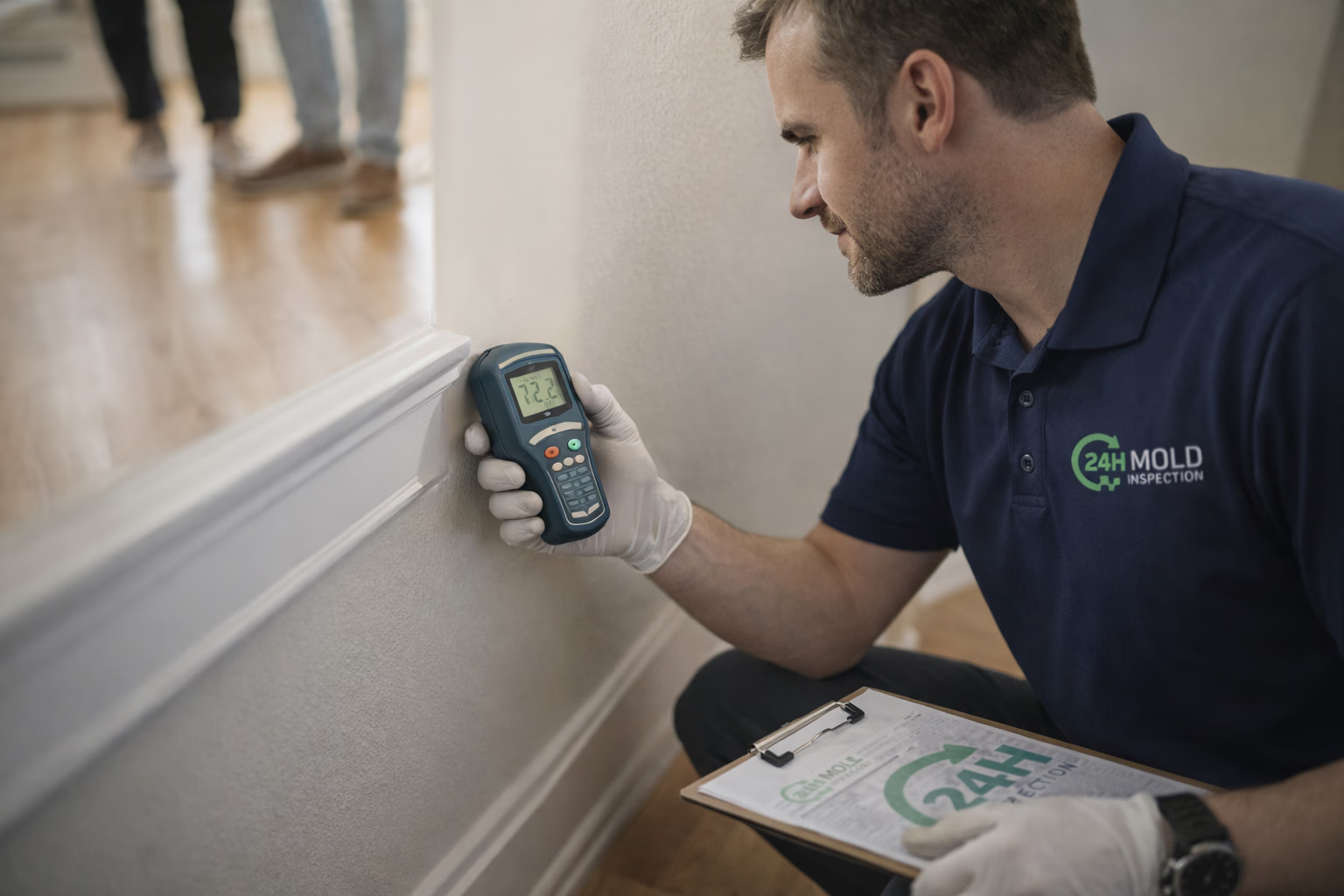
We walk the property identifying visible mold and moisture issues, using thermal imaging and moisture meters to catch what's hidden behind walls and under flooring.
Air and surface samples collected for lab analysis.
Our certified mold inspectors collect targeted samples from key areas to find mold spores both visible and hidden, with sample sites documented on a property map.
Lab testing returns precise results.
Samples go to a state-certified lab for detailed analysis identifying mold species and contamination levels, typically returned within 24 to 72 hours.
Insights and clear next steps from our experts.
You receive a written report with lab results, inspector findings, and specific recommended action steps to resolve any mold issues safely.
Who We Serve
24H Mold Inspection of Norwalk brings clear answers to HOAs, hotels, commercial buildings, and homes through certified mold inspection and testing services.
Norwalk Square went up at Pioneer Boulevard and Rosecrans Avenue between 1951 and 1954, anchored by J.C. Penney, Sears, and Market Basket, with new housing tracts filling the land around it. Those blocks are the template for most of the city: single-story stucco tract homes poured on concrete slabs over flat, clay-bearing basin soil, with supply lines running through the slab or attic and forced-air heat in a hall closet. Slabs of that era rarely included a vapor barrier, so ground moisture moves up through the concrete and collects under carpet, laminate, and the bottom plates of walls — most noticeably after a wet winter keeps the clay saturated.
Norwalk's western edge runs along the San Gabriel River and the 605 freeway built beside it, a corridor where the river is confined to a flood-control channel and the land on either side sits low and flat. Homes on this side of the city are closest to the shallow groundwater the river recharges, and after a heavy storm season the soil beneath their slabs and crawl spaces stays wet for weeks. That moisture rises into floor assemblies and presses against foundations long after the channel has drained, which is why problems here tend to surface in spring rather than during the storm itself: damp carpet pad, lifting floor tile, and a musty smell in ground-floor rooms.
Gilbert Sproul surveyed a town site beside the new Anaheim Branch Railroad, and the name Norwalk — taken from the north walk trail across his property — was recorded in 1874. By 1900 most of the roughly fifty families here worked in farming or dairying. The D.D. Johnston–Hargitt House, a two-story Eastlake Victorian built in 1890–91 on what was then a 120-acre vineyard, is the best-known survivor of that era. The older blocks near the original town site still hold a scattering of pre-war wood-frame houses on raised foundations, many enlarged or re-sided over the decades, where aging plumbing, crawl spaces, and layered remodels hide moisture a postwar slab house never would.
The center of the city carries its civic and institutional anchors: City Hall on Norwalk Boulevard, the commuter rail depot on Imperial Highway, and the Metropolitan State Hospital campus on Bloomfield Avenue, which took its first patients on February 15, 1916 and was laid out on a self-sufficient cottage plan with its own farm and dairy. Housing along these corridors runs denser than the surrounding tracts, with apartment and condominium complexes that share roofs, stack bathrooms, and park under carports. In attached buildings one unit's leak becomes the neighbor's problem — water follows plumbing chases and party walls, and growth often surfaces in the unit that did nothing wrong.
Carmenita Road runs along Norwalk's eastern side through a band of light-industrial and commercial property — tilt-up warehouses, older flat-roofed shops and offices, and the newer distribution buildings that have been proposed and built along the corridor. Flat roofs with internal drains are the common thread. Leaves, dust, and debris block the drains, water ponds against parapet walls, and a leak travels across the roof deck before dripping through a ceiling tile far from where it entered. Older tilt-up panels develop failing joint sealant, and slabs poured without vapor retarders send moisture into stored inventory and office carpet. In commercial space the damage is usually discovered late, because no one walks the roof.