
Infrared cameras reveal temperature anomalies that indicate hidden leaks, condensation zones, and moisture paths behind finished surfaces.
our services
Leak & Moisture Detection
Hidden moisture is the root cause of most mold problems. We locate it precisely—without tearing into walls—so you can fix the source, not just the symptoms.
About
Why Moisture Detection Comes First
Mold needs moisture to grow, and moisture hides. We use non-destructive instruments to map water through walls, floors, and ceilings—and thermal cameras to see temperature anomalies that indicate active leaks or condensation—giving you a precise location before any repair work begins.
Moisture detection helps you:
- —Pinpoint the exact source of a leak before demolition
- —Map moisture spread behind walls and under flooring
- —Identify condensation-prone areas before mold appears
- —Confirm repairs were effective after water damage is addressed
Methodology
How We Detect Moisture
Non-destructive tools that locate water without cutting into your property.
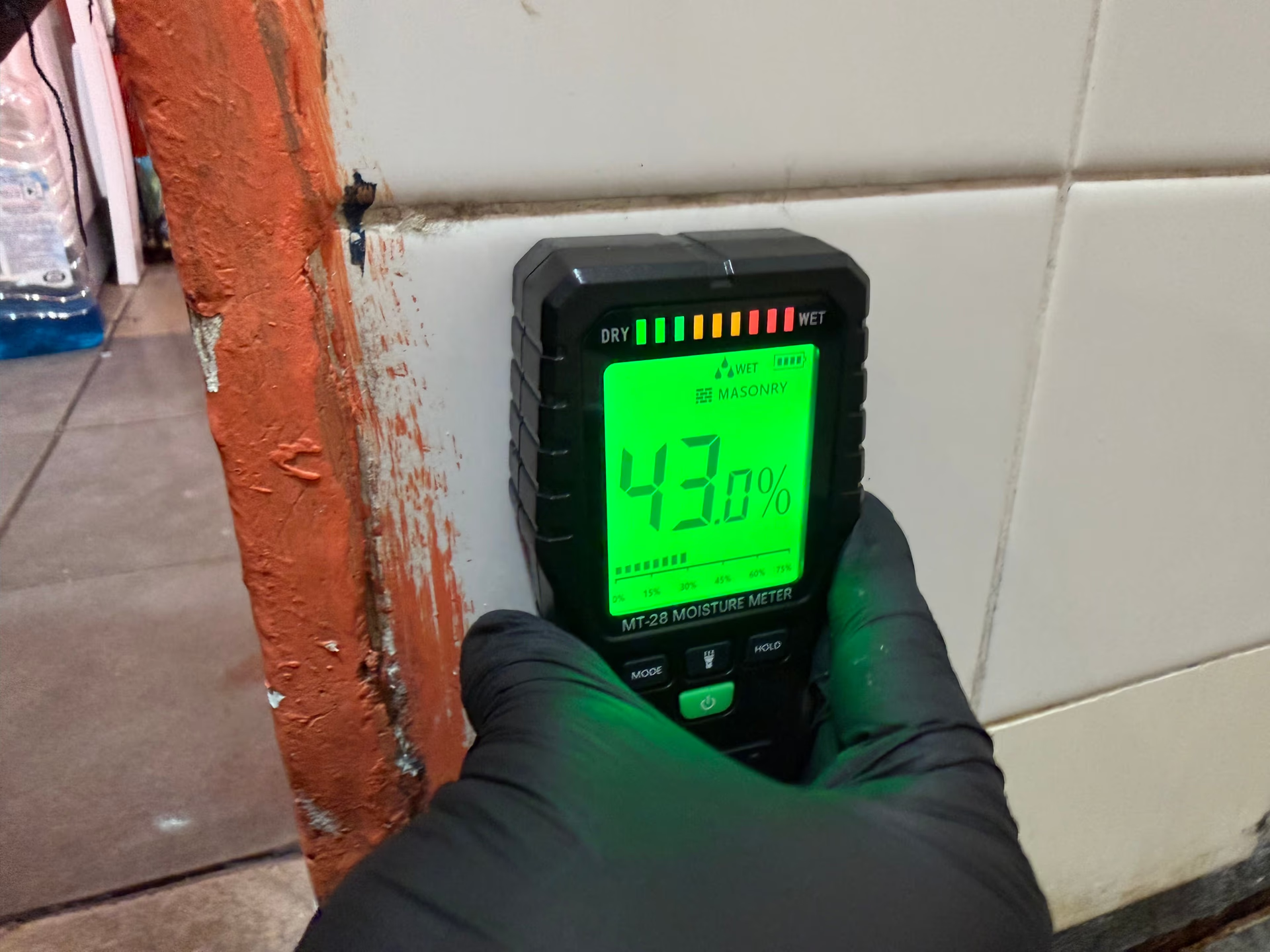
We measure the moisture content of walls, floors, and ceilings using both pin-based and non-invasive pinless meters—mapping the full extent of saturation without surface damage.
Best for:
— Drywall, wood framing, and subfloor assessment
— Mapping moisture spread after a water event
— Establishing baseline readings for monitoring
Our thermal cameras detect temperature differentials across surfaces. Water-loaded materials hold heat differently than dry materials, making leaks and saturated zones visible behind finished walls.
Best for:
— Finding active leaks behind drywall without cutting
— Locating plumbing or roof leaks not yet surface-visible
— Identifying condensation zones that feed mold
Every finding is documented with photos, moisture readings, and thermal images. You receive a clear report so contractors, insurers, or property managers can act immediately.
Report includes:
— Moisture readings mapped by room and surface
— Thermal images with annotated anomaly locations
— Probable source identification and next steps
Checklist
When Do You Need Moisture Detection?
Moisture detection is the right first step if:
- —You smell mold or dampness but can't find the source
- —You've had a plumbing leak, roof leak, or flood
- —You're buying a property and want to verify no hidden moisture
- —You had water damage and want to confirm the area is fully dry
- —Recurring mold keeps coming back after surface cleaning
Moisture detection is often the fastest and most cost-effective way to scope a mold problem before committing to testing or remediation.
Detection Services
Our Detection Methods
Two complementary tools that together give a complete picture of moisture conditions in any building.
Pin and pinless meters precisely measure moisture content in walls, floors, and ceilings—mapping the full extent of saturation without destructive investigation.
Mold inspection Newport Beach FAQ
Call For An InspectionSame-day and next-day appointments are usually available across our Newport Beach service area, with 24/7 emergency response for active leaks, recent water damage, or urgent real estate timelines. Standard scheduling runs 1 to 3 business days depending on availability.
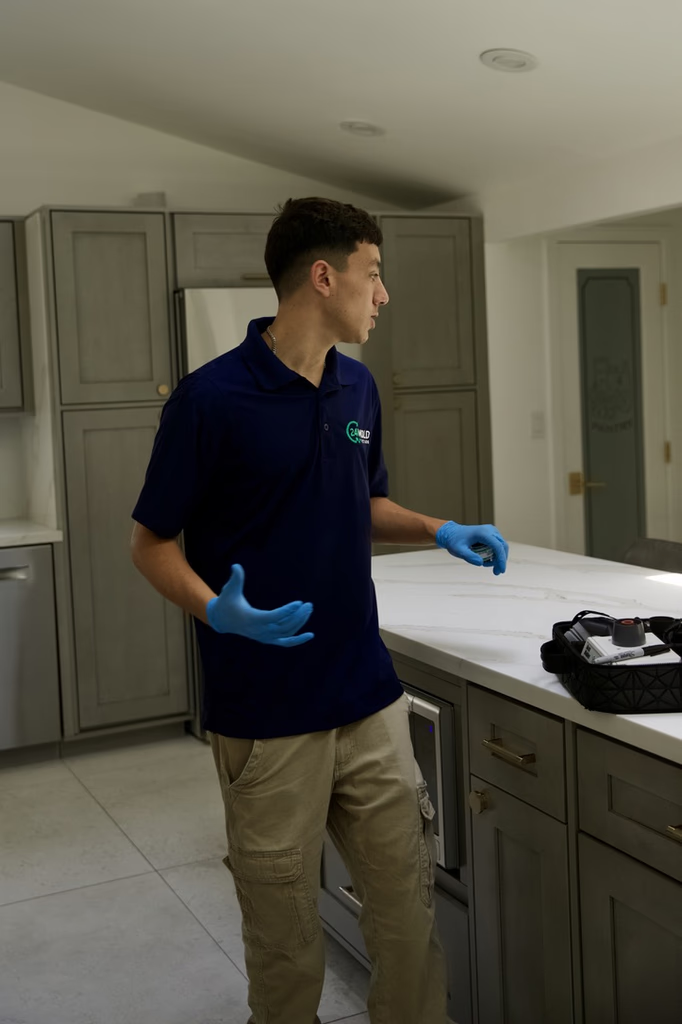
Our certified mold inspectors assess bathrooms, kitchens, laundry rooms, basements, attics, crawl spaces, HVAC components, and any area showing signs of past or current water issues. Thermal imaging and moisture meters identify hidden moisture behind walls and under floors.
Bay-adjacent and harbor-front properties in Newport Beach carry a distinct and elevated mold risk profile compared to inland homes. The combination of tidal moisture, salt air, and the persistent marine layer maintains ambient humidity at building surfaces for extended periods — particularly overnight and into the morning hours. Properties with below-grade living space or slab foundations near the bay are also subject to hydrostatic pressure from the shallow coastal water table, which can push ground moisture through foundation concrete even without active plumbing failures. Salt air accelerates the degradation of exterior sealants, caulking, and window glazing, creating additional moisture entry points at the building envelope that are easy to overlook during standard visual inspections.
Pricing varies based on the size of the property, the scope of testing required, and whether any lab work is included. Most residential mold inspections in Newport Beach fall within the standard industry range of $300 to $600, with a clear quote provided before any work begins.
Air sampling, swab testing, tape lift testing, wall cavity sampling, and HVAC mold testing. The inspector recommends the right method on-site based on what's found. Samples go to a state-certified lab, with results typically back in 24 to 72 hours.
Mold needs water to grow, so finding the moisture source is what prevents the same problem from coming back after any cleanup. Moisture detection during the inspection identifies plumbing leaks, roof leaks, condensation issues, and humidity buildup that's feeding any growth.
Yes. Post-remediation verification confirms the remediation contractor's work succeeded and the space is safe to reoccupy. Because we don't perform remediation ourselves, the verification stays independent of the remediation contractor's interests, which is what insurers and tenants look for.
Balboa Island — nicknamed "The Bathtub" for its low profile — and neighboring Lido Isle are man-made harbor islands ringed by seawalls that are now roughly a century old. During king tides, water can reach or top those walls, and the city routinely deploys pumps, gap boards, and sandbags to hold it back; homes that aren't raised take on water at the ground floor, from below and from the street. Even short-duration flooding saturates flooring, baseboards, and the base of wall assemblies, and mold can begin within 24 to 48 hours. Ground-floor and below-grade spaces on the islands are the priority, especially after a king-tide or storm event that pushed water inside.
The Balboa Peninsula packs older beach cottages and narrow-lot rebuilds along Newport Harbor — the largest recreational boat harbor on the West Coast — where many homes have private docks and bulkheads. Constant salt air, tidal influence, and direct waterline contact press moisture into foundations and framing, and king tides periodically flood the low-lying streets. Bulkheads and dock connections are additional points where water and salt reach the structure, degrading sealants and opening moisture paths. Peninsula homes benefit from an inspection focused on the waterfront-facing foundation and framing, ground-floor assemblies, and the building envelope where salt exposure is heaviest.
Upper Newport Bay is one of Southern California's largest coastal estuaries, and the bluff neighborhoods that ring it — Eastbluff, Dover Shores, and the Back Bay corridor — sit beside open salt marsh and a shallow water table. That wetland edge keeps ambient humidity and ground moisture high, working into slabs, crawl spaces, and the lower levels of homes along the bluffs, particularly during and after significant rainfall. Because the moisture is chronic and comes from the ground and air rather than a single leak, it can support mold without any obvious water event. Homes along the Back Bay benefit from an inspection focused on slab and crawl-space moisture and lower-level humidity.
They can, for reasons specific to how they were built. Newport Coast's gated communities — Crystal Cove, Pelican Hill, Newport Ridge — were master-planned in the 1990s and 2000s as Mediterranean-style villas on the coastal hills. Newer, tightly sealed construction traps interior humidity when ventilation falls short, so moisture from bathrooms, kitchens, and daily living can accumulate in wall cavities and around windows. At the same time, heavy hillside irrigation and slope drainage push water toward the foundations of homes built into the terrain. The result is that even a newer luxury home can develop hidden mold — from trapped indoor humidity, an envelope or window-flashing defect, or slope moisture at the foundation.
Corona del Mar's mid-century homes sit on ocean bluffs with aging wood-frame construction, original plumbing, and few of the moisture barriers used in modern building, while Harbor View Hills adds 1960s and 70s hillside tracts above the bay. Bluff-top salt exposure degrades exterior sealing, original plumbing develops slow behind-wall leaks, and slope drainage moves water toward foundations — so hidden wall and foundation moisture is a recurring find in these homes. The combination of older systems and a demanding coastal-bluff setting is what makes an instrument-based inspection worthwhile here rather than a visual check alone.
Condominium and attached-townhome developments near the bay and along the Pacific Coast Highway corridor represent a distinct risk profile, because shared-wall and shared-ceiling plumbing means a failure in one unit can propagate mold across several. Water from an upstairs or neighboring unit's leak travels through common wall and floor assemblies into adjacent units, causing mold without any failure originating inside the affected home. In these buildings the exterior walls, roofs, and common-area plumbing are typically HOA-maintained, which also affects who is responsible for the repair. An independent inspection documents where the moisture actually originates — key for both remediation and any claim to the HOA or a neighbor.
Newport Beach's topography is unusually varied, so the inspection depends on where the home sits. On Balboa Island or the Peninsula, the focus is ground-floor and below-grade assemblies exposed to king tides and waterline contact; along the Back Bay, slab and crawl-space moisture from the shallow water table; in Newport Coast, trapped indoor humidity and slope drainage at a newer sealed home; and in Corona del Mar or Harbor View Hills, aging wood frame, original plumbing, and bluff-top salt exposure. In a bay or PCH condo, it's the shared-wall plumbing that can carry mold between units. An independent inspection — with no stake in remediation — matches the check to the property and gives a clear moisture picture before closing.
Inspection and testing only — we do not perform removal or remediation, and that separation is deliberate. The company telling you how much mold you have should not be the company billing you to take it out. What you get from us is the diagnosis: how far the growth extends, the moisture source keeping it alive, lab confirmation of what is actually present, and a written report you can hand to several remediation contractors so they bid identical scope instead of their own estimates. That independence carries particular weight in this market. Newport Beach property values mean remediation quotes here run high, and a scope defined by an inspector with no financial interest in the cleanup is frequently the difference between a targeted repair and a demolition estimate. On bay-front and peninsula properties especially, where a walkthrough quote often assumes the worst about what is behind a wall, a documented scope tends to make the job smaller rather than larger.
The visit starts with history — what you noticed, when, and what the property has been through — then moves to a systematic survey: room by room visually, thermal imaging to locate the temperature differences that mark wet material behind finishes, and moisture meters to confirm it. What gets weighted depends heavily on where the property sits. On the Balboa Peninsula, Lido Isle, and the bay-front blocks, the inspection concentrates on the ground floor and any below-grade space, the base of exterior walls, and the building envelope, because a shallow water table and constant salt-laden humidity load those assemblies continuously rather than seasonally. On Newport Coast and Harbor View Hills the emphasis shifts to slope drainage, irrigation against foundations, and the multiple HVAC zones common in larger homes. Expect two to four hours for most properties, longer for a large hillside estate. You receive a written report with photographs, readings, and marked sample locations.
There is no state credential to look up. California's Toxic Mold Protection Act of 2001 directed the state to set permissible exposure limits for indoor mold, the limits were never established, and no agency licenses mold inspectors as a result. What you can check: recognized third-party industry certification, current liability insurance, an accredited independent laboratory rather than samples read on site, and a company that does not also sell remediation, since an inspector who profits from the cleanup has a reason to find more of it. Add one question that matters specifically in this market — turnaround. A great many Newport Beach inspections happen inside an escrow contingency window, and lab work takes twenty-four to seventy-two hours on top of the visit. Ask when the completed written report will be in your hands, not just when someone can come out. An inspector who cannot commit to a date is a real risk when a contingency deadline is the thing actually driving the decision.
Yes — offices and retail around Fashion Island and the airport area, restaurants and hospitality along the harbor and the Coast Highway, marina and waterfront commercial buildings, and medical and professional suites. Commercial inspection differs from residential in where moisture hides rather than in method: low-slope roofs pond and leak above ceiling systems, packaged rooftop HVAC units generate condensation across long duct runs, and damage develops above occupied space or inside mechanical areas that get attention only at service intervals. Waterfront commercial property adds a condition inland buildings do not have. Structures over or immediately adjacent to the water sit in permanently elevated humidity with salt exposure accelerating the failure of sealants and flashings, and the crawl spaces and utility areas beneath them are frequently within reach of tidal groundwater. Hospitality work is scheduled to take rooms out of service for as short a period as possible, which means scoping precisely rather than closing a floor on suspicion.
Give every contractor the same report and ask them to bid the documented scope, so quotes differ on price and method rather than on how much mold each company claims to find. Confirm a current CSLB license, required on any job over five hundred dollars in labor and materials, plus workers compensation and liability coverage. Two points are specific to this city. First, if the moisture source involves a bulkhead, seawall, dock, or anything else on the water side of the property, ask about permitting early — work of that kind in the coastal zone can require approvals that add substantial time, and finding out mid-job is expensive. Second, if the property is on Lido Isle, in a Newport Coast community, or in a condominium near the bay, check whether the association requires insurance certificates or maintains an approved vendor list. And confirm the moisture source repair is in the scope, not just the removal of affected material.
It is the independent check after the cleanup and before containment comes down and finishes are restored: confirmation that the affected material was genuinely removed, meter verification that framing and substrate have dried to a normal moisture content, and clearance air sampling compared against an outdoor control taken the same day. The outdoor control matters more here than inland, because coastal air carries its own spore load and a clearance number read without it cannot be interpreted. It should never be performed by the company that did the removal — a contractor verifying their own work is grading their own exam. In Newport Beach it earns its cost in two ways. At resale, an independent clearance report answers a buyer's question about a past mold event in a way a remediation invoice never does. And on bay-front property, where the moisture load is continuous rather than seasonal, verification is what confirms the assembly actually dried instead of simply being closed up.
Contact
Book your Newport Beach mold inspection today
Tell us what's going on and we'll respond the same day
Location
24H Mold Inspection of Newport Beach
Phone
(949) 849-5227Hours
- MondayOpen 24 hours
- TuesdayOpen 24 hours
- WednesdayOpen 24 hours
- ThursdayOpen 24 hours
- Friday6 AM – 6 PM
- SaturdayClosed
- SundayOpen 24 hours
Service area neighborhoods
- Balboa Peninsula
- Lido Isle
- Corona del Mar
- Newport Coast
- Newport Heights
- Eastbluff
- Harbor View Hills
- Back Bay corridor