
Collects airborne mold spores to assess air quality and detect hidden contamination.
our services
Mold Testing
State-certified testing that spots hidden mold—so you can act early, stay safe, and avoid costly repairs.
About
Why Mold Testing Matters
Mold isn't always visible. It hides in air vents, under floors, and inside walls. The only way to know what you're breathing—or what's spreading—is through lab-grade testing.
- —Identify mold species and spore levels
- —Detect hidden growth in "clean" areas
- —Assess the health risk to occupants
- —Decide on the right next steps
Methodology
How our mold testing works
The three sampling methods we use, chosen for what your property is showing
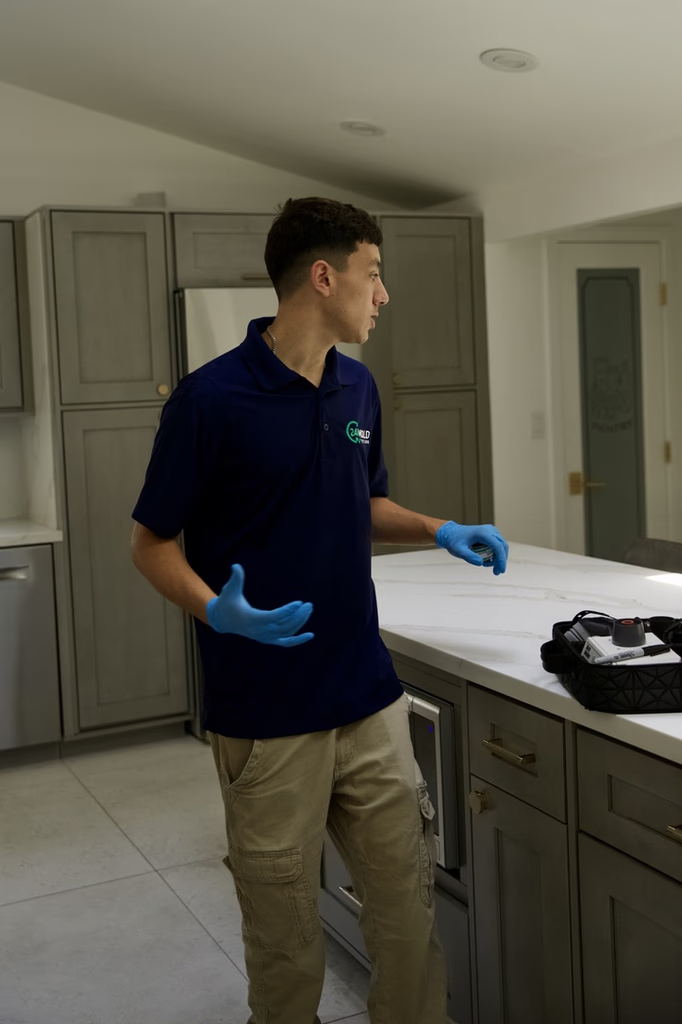
Sterile swabs and clear adhesive tape collect mold from visible spots on dry surfaces, giving the lab a clean sample for species identification. Suitable for walls, ceilings, baseboards, and furniture where the residue is what you're checking.
For damp or recently water-damaged areas, the sampling approach changes. Wet sampling captures live, actively growing colonies that dry methods underrepresent, which matters under flooring, behind tile, and around recent leaks.
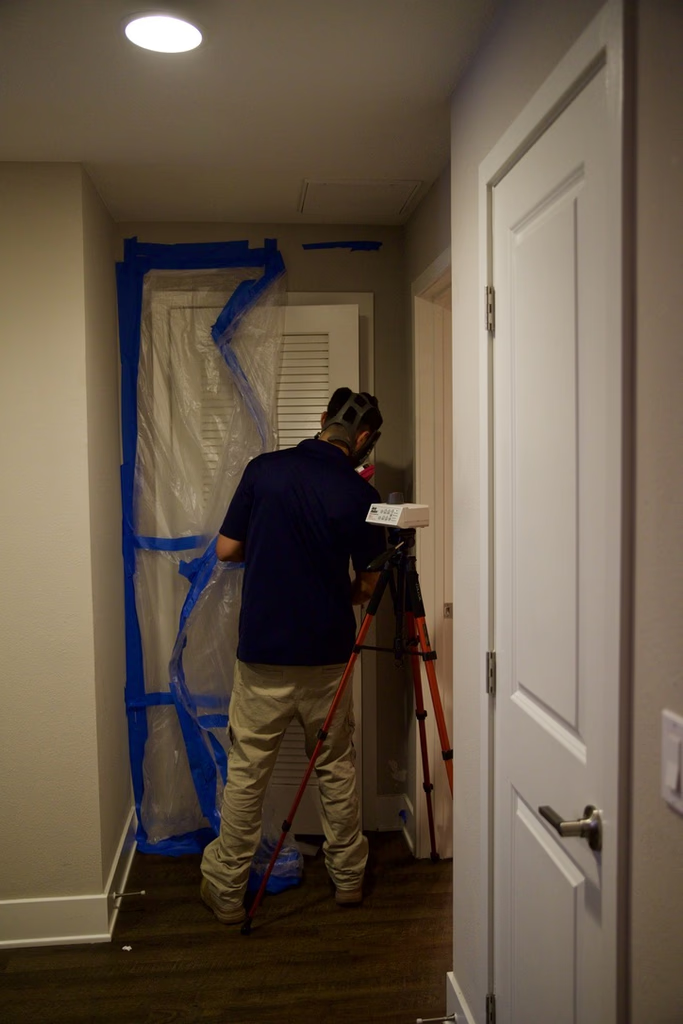
A calibrated pump pulls a controlled volume of air through a spore trap cassette, capturing viable and non-viable spores from the breathing zone. The lab counts species and compares concentrations to outdoor levels, telling you whether your indoor air is healthy.
Checklist
Is Testing Right for You?
Mold testing is ideal if:
- —You suspect mold but can't see it
- —You've had water damage
- —Residents or tenants are reporting health symptoms
- —You're buying, selling, or managing a property
- —You need peace of mind after remediation
Still unsure? Let's talk. We'll help you decide which method suits your case best.
Testing Overview
Our Testing Methods
Techniques we use to collect accurate mold samples from air and surfaces.
Lifts mold samples from surfaces using clear adhesive—quick and non-destructive.
Gathers samples from damp or textured areas to identify active mold growth.
Mold inspection Laguna Beach FAQ
Call For An InspectionSame-day and next-day appointments are usually available across our Laguna Beach service area, with 24/7 emergency response for active leaks, recent water damage, or urgent real estate timelines. Standard scheduling runs 1 to 3 business days depending on availability.
Our certified mold inspectors assess bathrooms, kitchens, laundry rooms, basements, attics, crawl spaces, HVAC components, and any area showing signs of past or current water issues. Thermal imaging and moisture meters identify hidden moisture behind walls and under floors.
Beachfront homes are primarily influenced by direct marine exposure, salt air, and coastal humidity, while canyon properties experience concentrated runoff, shaded conditions, and reduced airflow. Both environments present significant moisture challenges, but the mechanisms that create those challenges differ substantially.
Pricing varies based on the size of the property, the scope of testing required, and whether any lab work is included. Most residential mold inspections in Laguna Beach fall within the standard industry range of $300 to $600, with a clear quote provided before any work begins.
Air sampling, swab testing, tape lift testing, wall cavity sampling, and HVAC mold testing. The inspector recommends the right method on-site based on what's found. Samples go to a state-certified lab, with results typically back in 24 to 72 hours.
Mold needs water to grow, so finding the moisture source is what prevents the same problem from coming back after any cleanup. Moisture detection during the inspection identifies plumbing leaks, roof leaks, condensation issues, and humidity buildup that's feeding any growth.
Yes. Post-remediation verification confirms the remediation contractor's work succeeded and the space is safe to reoccupy. Because we don't perform remediation ourselves, the verification stays independent of the remediation contractor's interests, which is what insurers and tenants look for.
No. 24H Mold Inspection of Laguna Beach inspects and tests only, and we never perform remediation or removal — keeping those separate is the point. On a Laguna hillside or bluff property the honest scope of a problem is rarely obvious from the stain: water showing on a bedroom ceiling may be coming from a waterproof deck coating two levels up, from a hillside subdrain on the uphill side, or from a roof-to-wall detail on a 1930s cottage that has been added to three times. A company that bills for the cleanup has a financial reason to guess large. What we deliver is the diagnosis — what is growing, which moisture source is feeding it, how far it extends behind finishes, and lab results backing it up — so you can take a defined scope to remediation contractors and get bids that are actually comparable. When the work is done we can verify it independently, which carries weight with insurers, HOA boards, and buyers precisely because we had no part in the removal.
Frequently, and it is one of the more common findings here. In a marine-layer climate the attic problem is usually condensation rather than a leak: humid coastal air reaches the attic, meets a cool underside of roof sheathing on a foggy night, and condenses there. Local construction makes that easy. Ridge and canyon homes rebuilt or remodeled with tight, well-insulated envelopes push more interior moisture upward, and bath and kitchen fans that terminate in the attic instead of through the roof deliver it directly. The low-slope and cathedral roofs common on the city's mid-century and contemporary homes have little or no ventilated attic at all, so moisture that enters the assembly has nowhere to dry to. Salt air also shortens the life of flashing and vent boots on ocean-facing roofs. An attic inspection here means checking sheathing for staining, tracing where the fans actually vent, and taking moisture readings at the framing — not hunting for one dripping spot.
The method is the same anywhere — a measured volume of air drawn through a spore trap in each area of concern — but the outdoor baseline does the real work, and it matters more on the coast. Spores are always present outdoors, so an indoor number means something only against a matching outdoor sample taken the same day at the same property. In Laguna Beach that baseline moves considerably: a bluff-top house in onshore wind, a canyon property sitting under still damp air, and a ridge home on a clear day are three different outdoor profiles, and an inland reference would not describe any of them. Samples go to a state-certified lab that identifies the genera present and their concentrations, typically back within 24 to 72 hours. Air testing is the right tool when there is a musty smell or symptoms with nothing visible, which in local homes usually points to a wall cavity, a deck-over-living-space assembly, or a crawl space rather than the room you are standing in.
A general home inspection is a broad condition survey, and most contracts exclude mold outright; it reports what is visible in accessible areas. On Laguna's hillside and bluff properties that leaves the highest-risk assemblies unexamined, because the ones that matter here are concealed by design: waterproof deck coatings over living space, subterranean garages and lower levels cut into the slope, hillside drains and subdrains, and roof-to-wall transitions on cottages added to repeatedly since the 1930s. A mold inspection is narrower and instrument-driven — thermal imaging and moisture meters on those assemblies, entry into crawl spaces and attics, and lab-analyzed samples when something turns up. Most buyers here do both, and add the mold inspection when the general report notes staining, past slope or drainage repairs, an aging deck coating, or a musty lower level. Because we do not sell remediation, what you take into closing is a moisture picture rather than a repair estimate.
Yes. Our Laguna Beach team covers the full city — North Laguna and the Village, Laguna Canyon, Bluebird Canyon, Top of the World, Arch Beach Heights, South Laguna, and the gated coves at Emerald Bay, Irvine Cove, and Three Arch Bay — and works throughout south Orange County, including Laguna Niguel, Laguna Woods, Aliso Viejo, Dana Point, Newport Beach, and Mission Viejo. Coast Highway and the canyon road are the only real ways in and out of the city, so scheduling accounts for them: same-day and next-day appointments are normal, and we plan around summer festival traffic and Coast Highway closures when they happen. Several nearby cities have their own 24H Mold Inspection page with coverage written for that city's housing stock, so if your property is in one of them, start there. If you are not sure which team fits your address, call the number on this page and we will point you to the right one.
Start with the water that arrives from uphill rather than from the roof. Laguna's slopes sit on marine sedimentary bedrock and older landslide material, and hillside homes here rely on retaining walls, subdrains, area drains, and in some neighborhoods dewatering systems to keep groundwater from building up behind and beneath them — the same conditions that moved the ground in Bluebird Canyon in 1978 and again in 2005. After a heavy rain season, the things worth checking are below-grade walls in lower levels and garages, the bases of retaining walls, drain outlets that have silted or rooted shut, and any room whose finish floor sits below the uphill grade. Deck coatings and their flashings take the same beating in those storms. Moisture meters and thermal imaging find water inside those walls before it shows as staining, which on a hillside property is usually months earlier — and the readings also tell you whether the drainage is doing its job.
It is worth doing, and it is a common request here given how much of the cove and bluff housing is second homes. A closed-up house holds humid marine air with no ventilation and no one present to notice a slow failure — a supply line weeping under a sink, a deck coating leaking into the bedroom below, a window seal that gave up during a storm — so a problem that would be caught within a week in an occupied home runs for an entire season here. Salt air compounds it, shortening the life of flashing, fasteners, and slider tracks on ocean-facing elevations. An inspection between stays focuses on the assemblies that fail quietly: decks over living space, ocean-facing windows and sliding doors, water heaters and supply lines, crawl spaces, and closed-off lower levels. If the house is ever rented, a dated report before and after a tenancy also settles later questions about when the moisture started.
The visit opens with history — what you noticed, when, and what the property has been through — then moves to a systematic survey: room by room visually, thermal imaging to find the temperature differences that mark wet material behind finishes, and moisture meters to confirm it. On a Laguna property the building envelope gets far more attention than it would inland. Salt-laden marine air weathers exterior materials faster here, so window and door assemblies, deck-to-wall connections, and the flashing behind extensive glazing are checked closely, because those are the joints that fail first on an ocean-facing elevation. On hillside and bluff homes in Temple Hills, Top of the World, or above Victoria Beach, the drainage system matters as much as the building: slope drains, area drains, and retaining wall weeps that have silted up push water toward a foundation rather than away from it. Expect two to four hours for most homes, longer for a large custom property on a steep lot with multiple levels and decks.
The assessment is the on-site work — reading the building, mapping where moisture is present, and determining what is driving it. The testing is the laboratory piece: samples analyzed for species identification and spore counts. The assessment produces the answer; the testing confirms and quantifies it. The distinction carries extra weight in Laguna Beach, because a coastal property will almost always show some airborne spore activity, and a number in isolation tells you very little here. What actually matters is whether there is a moisture source inside the building — a failed deck flashing, a slope drain backing up against a foundation, a bathroom vented into a wall cavity rather than outside. That question is answered by the assessment, not the lab. Where growth is visible and the source is obvious, sampling frequently adds cost without changing the next step. Where there is odor with nothing visible, or where an insurer, buyer, or association needs documentation that will hold up, lab results are what make the findings defensible.
There is no statewide license to look up. California's Toxic Mold Protection Act of 2001 directed the state to establish permissible exposure limits for indoor mold, those limits were never set, and no agency issues or revokes a mold inspector credential as a result. What you can verify is more useful. Confirm recognized third-party industry certification and current liability insurance. Confirm that samples go to an accredited independent laboratory rather than being read on site. Confirm the company does not also sell remediation, because an inspector who profits from the cleanup has a direct reason to find more of it. And confirm the deliverable is a written report with photographs, instrument readings, and marked sample locations. Ask to see a redacted sample report before scheduling — in a market where a great many properties are second homes inspected while the owner is elsewhere, the report is frequently the only thing you will actually see, so its quality is the thing worth evaluating in advance.
Yes — resort and boutique hospitality properties, restaurants and retail along the Coast Highway and in the village, offices, and the condominium and homeowner associations that manage much of the bluff and hillside housing. Hospitality inspection has its own rhythm: guest rooms come out of service while work is underway, so the priority is identifying the source quickly and scoping the work precisely rather than closing an entire floor on suspicion. The recurring findings are bathroom exhaust that vents into a chase instead of outside, HVAC condensation across long duct runs, and moisture at ocean-facing wall assemblies where salt exposure has aged the sealant. Association work brings the drainage question forward, since slope drains, retaining walls, and common-area grading are typically the association's responsibility while everything inboard of the unit belongs to the owner. Documenting the path the water actually took is usually what decides which budget the repair comes out of.
Give every contractor the same report and ask them to bid the documented scope, so the quotes differ on price and method rather than on how much mold each company claims to find. Confirm a current CSLB license, required on any job over five hundred dollars in labor and materials, plus workers compensation and liability coverage. Two things are specific to Laguna. First, insist the moisture source repair is in the scope, because on hillside and bluff properties that frequently means drainage, grading, deck flashing, or retaining wall work rather than anything inside the house — removal without it simply resets the clock. Second, ask early whether the repair touches the exterior of a property in the coastal zone or on a slope, since that work can require permitting through the city that adds time to the schedule. Finding that out before a crew mobilizes is far better than discovering it once the wall is already open and the house is uninhabitable.
It is the independent check after the cleanup and before containment comes down and finishes are restored: confirmation that the affected material was genuinely removed, meter verification that the structure dried to a normal moisture content, and clearance air sampling compared against an outdoor control taken the same day. The outdoor control matters more here than almost anywhere, because coastal air carries its own spore load and a clearance number read without it is not interpretable. It should never be performed by the company that did the removal — a contractor verifying their own work is grading their own exam. In Laguna it earns its cost in two situations. On a second home occupied part of the year, verification is what tells you the building actually dried rather than merely looking finished when you left. And at resale in this market, an independent clearance report answers a buyer's question about a past mold event in a way a remediation invoice never does.
Contact
Book your Laguna Beach mold inspection today
Tell us what's going on and we'll respond the same day
Location
24H Mold Inspection of Laguna Beach
Phone
(949) 593-4450Hours
- MondayOpen 24 hours
- TuesdayOpen 24 hours
- WednesdayOpen 24 hours
- ThursdayOpen 24 hours
- Friday6 AM – 6 PM
- SaturdayClosed
- SundayOpen 24 hours
Service area neighborhoods
- Emerald Bay
- Top of the World
- North Laguna
- South Laguna
- Laguna Canyon
- Three Arch Bay
- Temple Hills
- Victoria Beach