24H Mold Inspection
Laguna Beach24/7 EMERGENCY(949) 593-4450
HomeOur ServicesMold TestingSwab Testing
Mold Testing

Swab Testing

Mold swab testing handles the textured, damp, and irregular surfaces where mold often grows without any visible sign.

Overview

Why mold swab testing matters

Mold grows in damp areas without always showing on the surface. Swab testing detects microbial growth on materials that are soft, porous, or moisture-prone, and is the right approach after water damage or in spaces that resist visual inspection.

Mold swab testing detects:

  • Hidden mold on porous or textured materials
  • Growth in damp spots like under sinks or around HVAC
  • Contamination on organic materials including wood and fabric
  • Mold that visual inspection alone tends to miss
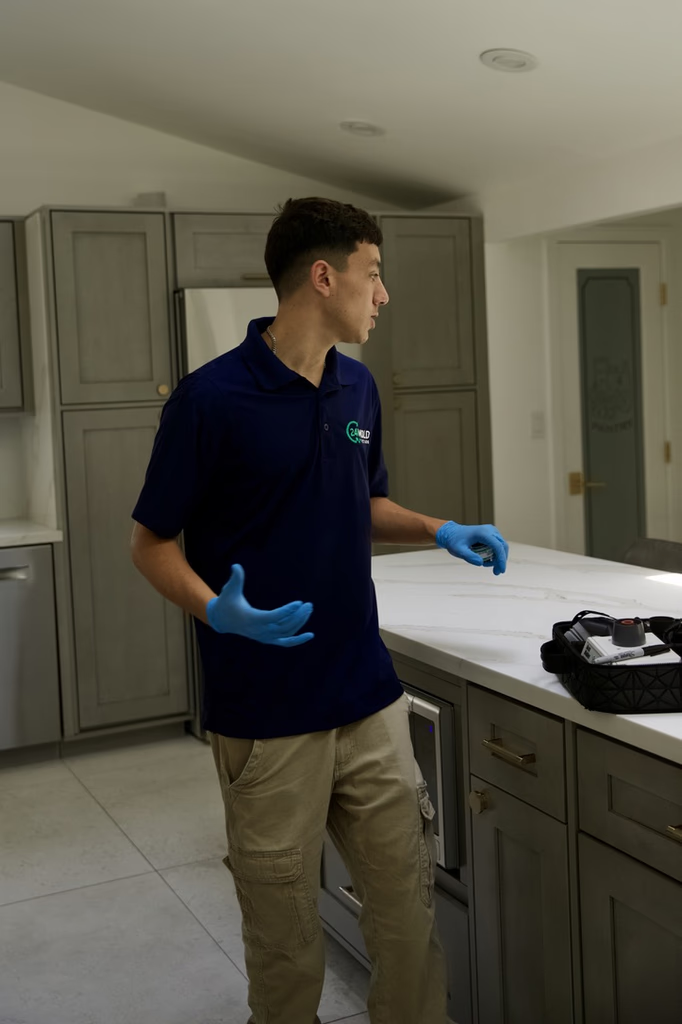
Why mold swab testing matters
Mold inspector at work

Benefits

What you get from swab testing

A flexible method for hard-to-sample surfaces

  • Moisture-ready: Designed for damp and water-damaged materials.
  • Flexible: Handles uneven, porous, and irregular surfaces.
  • Confirmatory: Validates mold presence in hidden or subtle areas.
  • Lab-backed: Lab-verified results with species identification.

About

How mold swab testing works

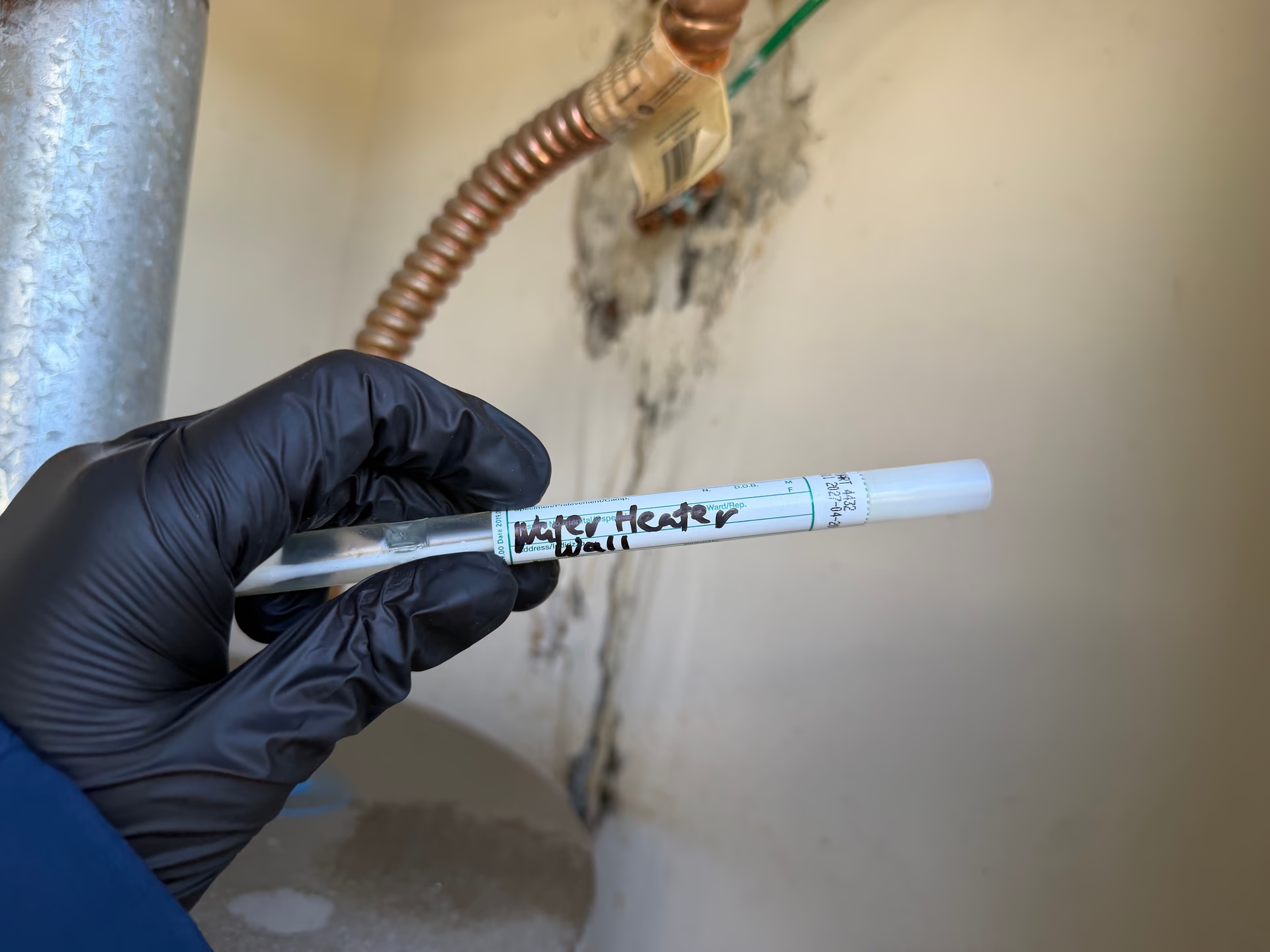
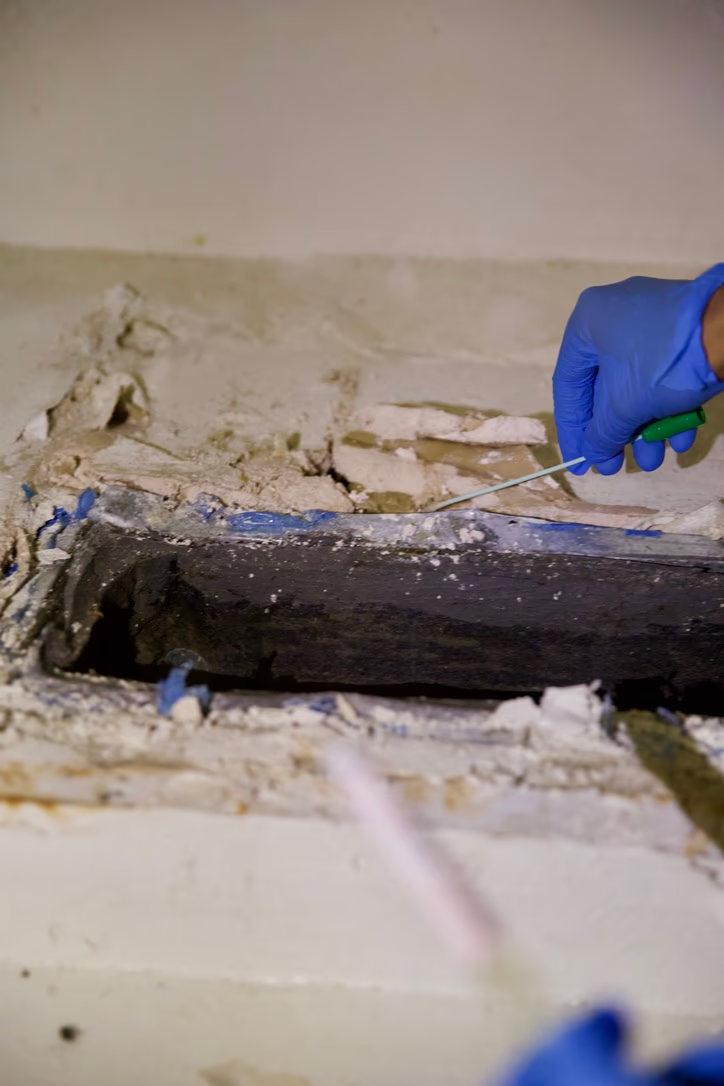
Our certified mold inspectors gently rub a sterile swab across the suspect area to collect a sample, then seal it and send it to a state-certified lab for mold species identification and contamination level.

Our process includes:

  • Sterile collection from textured surfaces and porous materials
  • Coverage of damp surfaces and hard-to-reach spots
  • Lab work returning spore counts and lab-verified results
  • A mold inspection report with clear next steps
How mold swab testing works

Mold inspection Laguna Beach FAQ

Call For An Inspection
No. 24H Mold Inspection of Laguna Beach inspects and tests only, and we never perform remediation or removal — keeping those separate is the point. On a Laguna hillside or bluff property the honest scope of a problem is rarely obvious from the stain: water showing on a bedroom ceiling may be coming from a waterproof deck coating two levels up, from a hillside subdrain on the uphill side, or from a roof-to-wall detail on a 1930s cottage that has been added to three times. A company that bills for the cleanup has a financial reason to guess large. What we deliver is the diagnosis — what is growing, which moisture source is feeding it, how far it extends behind finishes, and lab results backing it up — so you can take a defined scope to remediation contractors and get bids that are actually comparable. When the work is done we can verify it independently, which carries weight with insurers, HOA boards, and buyers precisely because we had no part in the removal.
Frequently, and it is one of the more common findings here. In a marine-layer climate the attic problem is usually condensation rather than a leak: humid coastal air reaches the attic, meets a cool underside of roof sheathing on a foggy night, and condenses there. Local construction makes that easy. Ridge and canyon homes rebuilt or remodeled with tight, well-insulated envelopes push more interior moisture upward, and bath and kitchen fans that terminate in the attic instead of through the roof deliver it directly. The low-slope and cathedral roofs common on the city's mid-century and contemporary homes have little or no ventilated attic at all, so moisture that enters the assembly has nowhere to dry to. Salt air also shortens the life of flashing and vent boots on ocean-facing roofs. An attic inspection here means checking sheathing for staining, tracing where the fans actually vent, and taking moisture readings at the framing — not hunting for one dripping spot.
The method is the same anywhere — a measured volume of air drawn through a spore trap in each area of concern — but the outdoor baseline does the real work, and it matters more on the coast. Spores are always present outdoors, so an indoor number means something only against a matching outdoor sample taken the same day at the same property. In Laguna Beach that baseline moves considerably: a bluff-top house in onshore wind, a canyon property sitting under still damp air, and a ridge home on a clear day are three different outdoor profiles, and an inland reference would not describe any of them. Samples go to a state-certified lab that identifies the genera present and their concentrations, typically back within 24 to 72 hours. Air testing is the right tool when there is a musty smell or symptoms with nothing visible, which in local homes usually points to a wall cavity, a deck-over-living-space assembly, or a crawl space rather than the room you are standing in.
A general home inspection is a broad condition survey, and most contracts exclude mold outright; it reports what is visible in accessible areas. On Laguna's hillside and bluff properties that leaves the highest-risk assemblies unexamined, because the ones that matter here are concealed by design: waterproof deck coatings over living space, subterranean garages and lower levels cut into the slope, hillside drains and subdrains, and roof-to-wall transitions on cottages added to repeatedly since the 1930s. A mold inspection is narrower and instrument-driven — thermal imaging and moisture meters on those assemblies, entry into crawl spaces and attics, and lab-analyzed samples when something turns up. Most buyers here do both, and add the mold inspection when the general report notes staining, past slope or drainage repairs, an aging deck coating, or a musty lower level. Because we do not sell remediation, what you take into closing is a moisture picture rather than a repair estimate.
Yes. Our Laguna Beach team covers the full city — North Laguna and the Village, Laguna Canyon, Bluebird Canyon, Top of the World, Arch Beach Heights, South Laguna, and the gated coves at Emerald Bay, Irvine Cove, and Three Arch Bay — and works throughout south Orange County, including Laguna Niguel, Laguna Woods, Aliso Viejo, Dana Point, Newport Beach, and Mission Viejo. Coast Highway and the canyon road are the only real ways in and out of the city, so scheduling accounts for them: same-day and next-day appointments are normal, and we plan around summer festival traffic and Coast Highway closures when they happen. Several nearby cities have their own 24H Mold Inspection page with coverage written for that city's housing stock, so if your property is in one of them, start there. If you are not sure which team fits your address, call the number on this page and we will point you to the right one.
Start with the water that arrives from uphill rather than from the roof. Laguna's slopes sit on marine sedimentary bedrock and older landslide material, and hillside homes here rely on retaining walls, subdrains, area drains, and in some neighborhoods dewatering systems to keep groundwater from building up behind and beneath them — the same conditions that moved the ground in Bluebird Canyon in 1978 and again in 2005. After a heavy rain season, the things worth checking are below-grade walls in lower levels and garages, the bases of retaining walls, drain outlets that have silted or rooted shut, and any room whose finish floor sits below the uphill grade. Deck coatings and their flashings take the same beating in those storms. Moisture meters and thermal imaging find water inside those walls before it shows as staining, which on a hillside property is usually months earlier — and the readings also tell you whether the drainage is doing its job.
It is worth doing, and it is a common request here given how much of the cove and bluff housing is second homes. A closed-up house holds humid marine air with no ventilation and no one present to notice a slow failure — a supply line weeping under a sink, a deck coating leaking into the bedroom below, a window seal that gave up during a storm — so a problem that would be caught within a week in an occupied home runs for an entire season here. Salt air compounds it, shortening the life of flashing, fasteners, and slider tracks on ocean-facing elevations. An inspection between stays focuses on the assemblies that fail quietly: decks over living space, ocean-facing windows and sliding doors, water heaters and supply lines, crawl spaces, and closed-off lower levels. If the house is ever rented, a dated report before and after a tenancy also settles later questions about when the moisture started.

Contact

Book your Laguna Beach mold inspection today

Tell us what's going on and we'll respond the same day

Location

24H Mold Inspection of Laguna Beach

Service area neighborhoods

  • Emerald Bay
  • Top of the World
  • North Laguna
  • South Laguna
  • Laguna Canyon
  • Three Arch Bay
  • Temple Hills
  • Victoria Beach
Call For Service(949) 593-4450