1
Mold inspection
- Moisture detection
- Infrared technology
- Certified mold inspectors
- No conflict of interest

Certified mold inspection and testing in Fountain Valley. Same-day appointments, lab-verified reports, and no financial stake in any remediation work that follows.
(657) 756-6884What We Do
Air and surface samples analyzed in a state-certified lab. You receive mold species ID, spore count data, and lab-verified documentation that holds up with insurers, attorneys, or counsel.
About
At 24H Mold Inspection of Fountain Valley, we know no two buildings respond to moisture the same way.
Fountain Valley is a largely flat residential community built on former agricultural land in central Orange County. Much of the city developed during the suburban growth boom of the 1960s through 1980s, resulting in extensive neighborhoods of slab-on-grade homes, established landscaping, and mature infrastructure. While the area lacks the steep terrain of nearby foothill communities, moisture issues frequently stem from aging plumbing systems, irrigation leaks, roofing failures, and long-term wear within older residential construction.
Fountain Valley consists primarily of single-family suburban homes, townhomes, apartment communities, medical facilities, and neighborhood commercial properties. Aging plumbing infrastructure and mature landscaping are common moisture-related considerations.
Services
Mold inspection, mold testing, and environmental risk assessments for Fountain Valley properties. Available 24/7, with no remediation work to bias the findings.

Why Us
24H Mold Inspection of Fountain Valley combines local field experience with state-certified methods and lab analysis. Reports get back to you quickly and clearly, with no upsell tacked on to the findings.
We don't stop at surface-level findings. Active leaks, health symptoms, post-remediation work, and pre-purchase due diligence each call for a different inspection approach. Our certified mold inspectors guide you through the specific situation rather than running a generic checklist.
Strengths
We check every box, then go further. Book your inspection today
Licensed inspectors with proven field experience in Fountain Valley.
FLIR thermal cameras, calibrated moisture meters, and lab-verified sampling.
Straightforward updates and honest reporting throughout the process.
5.0 stars from 1+ Fountain Valley homeowners and businesses.
Testimonials
Thousands of Fountain Valley property owners have come to us for reliable, detailed mold assessments
Response was quick. I had an appointment within a day and testing done the same day as appointment. Service was excellent and explanation of process thorough.
Christine O.
5 Step Process
Choose a date and time that fits your schedule.
Flexible scheduling means same-day and next-day appointments are usually available, with 24/7 emergency response when the situation needs it.
Our certified mold inspectors assess every mold-prone area.
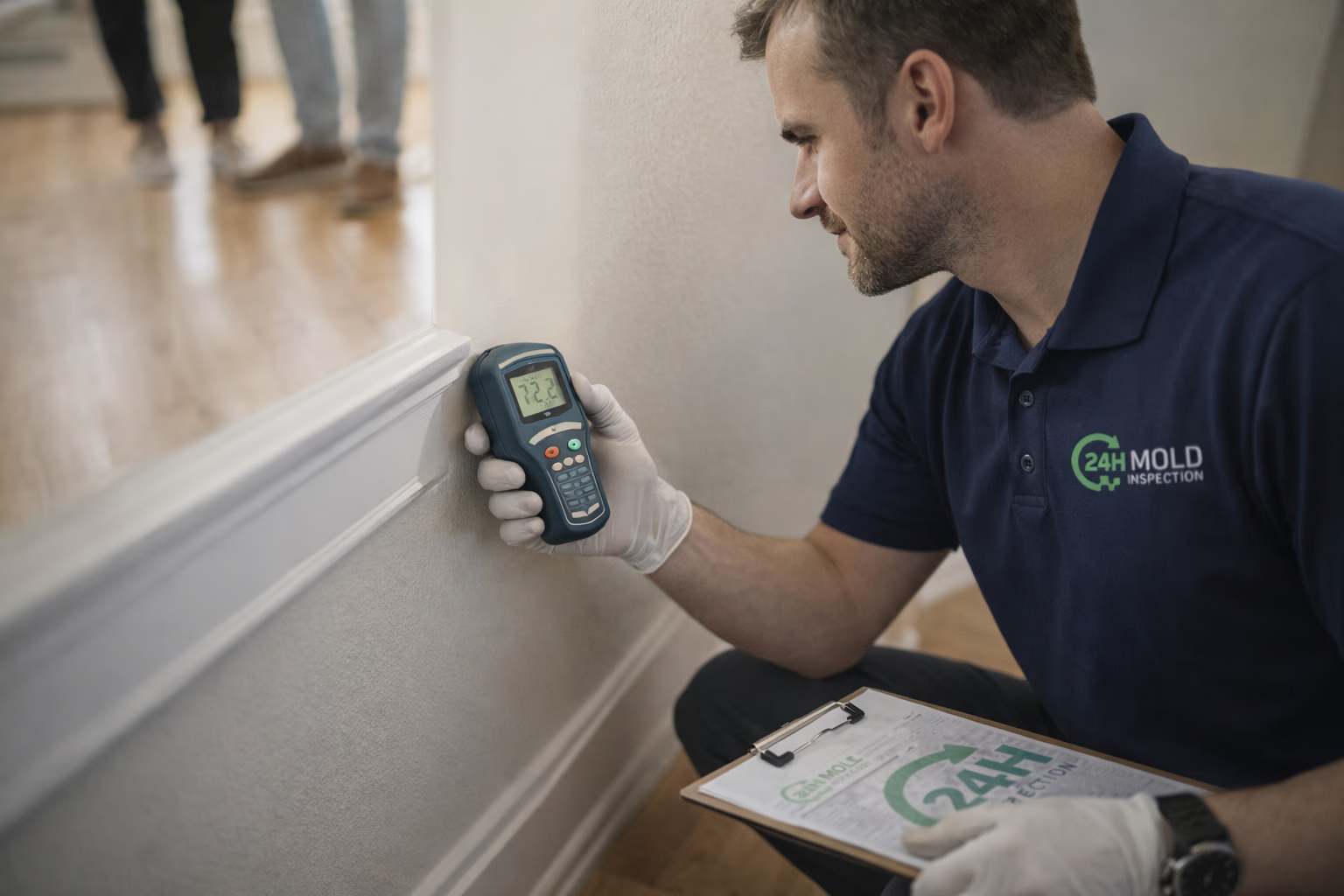
We walk the property identifying visible mold and moisture issues, using thermal imaging and moisture meters to catch what's hidden behind walls and under flooring.
Air and surface samples collected for lab analysis.
Our certified mold inspectors collect targeted samples from key areas to find mold spores both visible and hidden, with sample sites documented on a property map.
Lab testing returns precise results.
Samples go to a state-certified lab for detailed analysis identifying mold species and contamination levels, typically returned within 24 to 72 hours.
Insights and clear next steps from our experts.
You receive a written report with lab results, inspector findings, and specific recommended action steps to resolve any mold issues safely.
Who We Serve
24H Mold Inspection of Fountain Valley brings clear answers to HOAs, hotels, commercial buildings, and homes through certified mold inspection and testing services.
The federal government took this exact square mile in the 1940s for a Marine Corps auxiliary landing field, and the runways stayed in place long after the war; Orange County leased the ground for parkland in the 1960s and the tract housing filled in around the edges. Homes ringing the park sit on flat, low ground with almost no fall to the street, and the park's lakes and turf run irrigation year-round on the other side of the fence. Water that lands here does not run off — it soaks in and moves laterally to whatever sits downhill, which on these blocks means slab edges, planter beds built up against stucco, and the bottom plate of the wall behind them.
Green Valley was built as a planned community of attached townhomes and condominiums with common greenbelts, pools, and association-maintained landscaping, and every one of those features changes how a leak behaves. Units share party walls, stack on common risers, and drain through lines that cross ownership boundaries, so a failed angle stop or shower pan upstairs surfaces as a stain on a neighbor's ceiling and the person who reports it is rarely the one with the source. Association irrigation runs on a fixed schedule against slab edges that have settled for fifty years. The recurring dispute here is not what is growing but who owns the assembly it grew in — which is what an independent moisture map settles.
Brookhurst is the city's commercial spine, and the strip retail along it has been re-tenanted and remodeled many times since it went up in the 1960s and 1970s. The corridor carries a dense run of markets, bakeries, and Vietnamese restaurants whose kitchens put steam into the building all day — stock pots held at a simmer for hours are a humidity load nobody sized the original exhaust for. These buildings share party walls under low-slope roofs drained by a handful of interior drains and scuppers, so a blocked drain spreads water sideways above a ceiling grid instead of dripping in one obvious place. Layers of tenant improvements then seal older water damage behind new drywall, which is why inspections here start above the ceiling.
Ellis Avenue carries the region's water infrastructure: the county sanitation district's largest treatment plant sits at 10844 Ellis, and the water district's Talbert seawater-intrusion barrier — named for what this city was called before it incorporated in 1957 — injects purified water into the ground nearby to hold back seawater moving inland through the gap in the coastal barrier. All of it exists because the groundwater here sits close to the surface. For buildings that means vapor driving upward through slabs poured in the 1960s and 1970s, before under-slab vapor retarders were routine. Seal one of those slabs with vinyl plank, epoxy, or glued-down flooring and the moisture stops at the underside of the finish, which is where growth starts.
Before the tracts arrived, this was farmland on the floodplain that locals had called Gospel Swamp since the 1800s, after the revival meetings held on ground too wet to be worth much else. The city's name is not decorative either: artesian wells here once flowed at the surface with no pump on them. That is what these larger-lot homes were built on — peaty, organic soil that compresses unevenly and holds water, under slabs poured flat with minimal fall away from the house. Hairline slab and stucco cracks from that differential settlement give irrigation water a path in, and mature lawns and long-established planting beds keep the soil against the foundation wet through a season that never fully dries out.
Contact
Tell us what's going on and we'll respond the same day
Location
24H Mold Inspection of Fountain Valley
Phone
(657) 756-6884Service area neighborhoods
Newsletter
Monthly notes from our inspectors on prevention and air quality.