24H Mold Inspection
Fountain Valley24/7 EMERGENCY(657) 756-6884
HomeOur ServicesMold InspectionMoisture Detection
Mold Inspection

Moisture Detection

Find the hidden water inside walls, floors, and ceilings before it turns into mold, structural damage, or a far bigger repair bill.

Overview

Why hidden moisture is the real mold problem

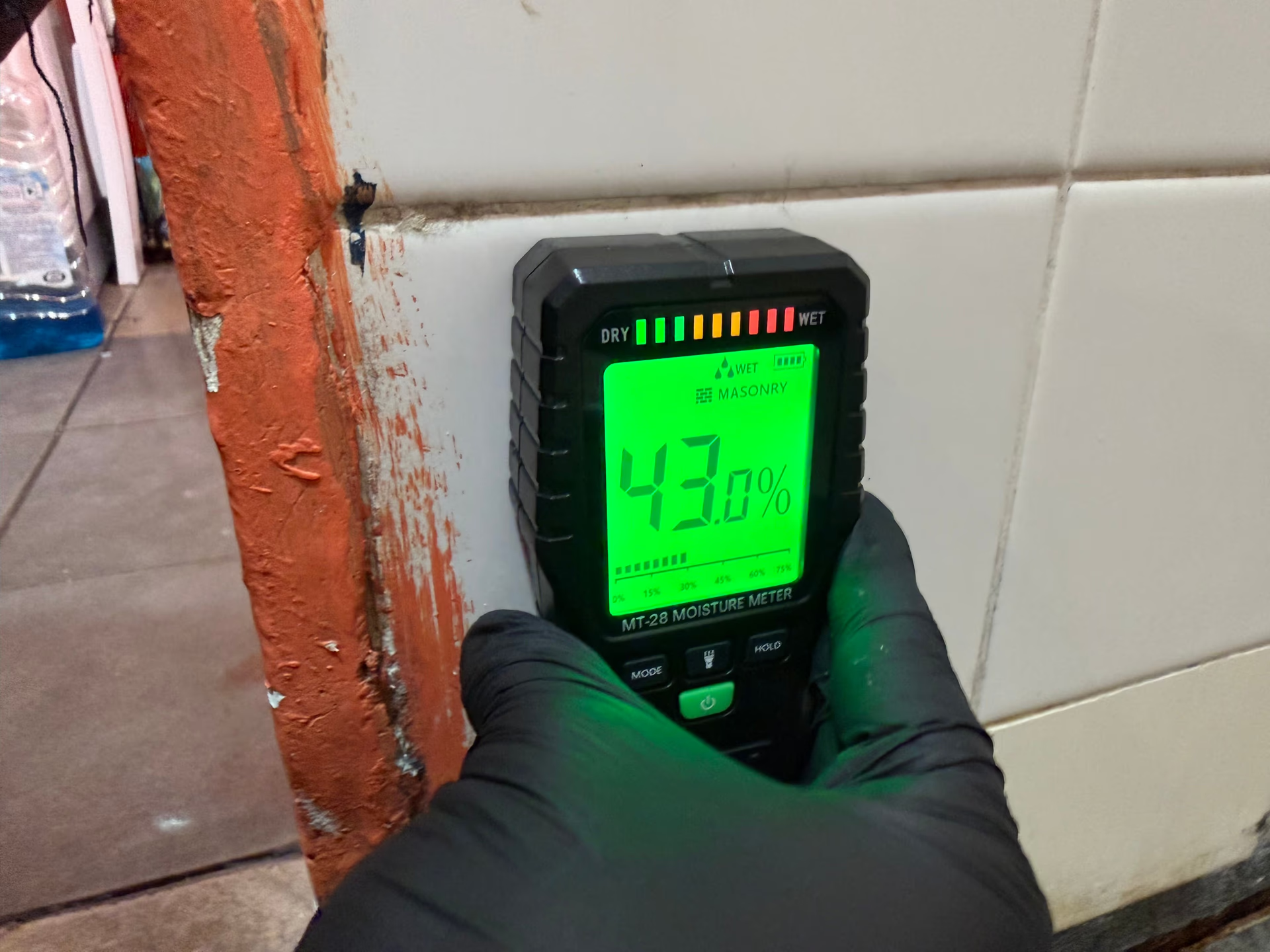
Hidden moisture rarely shows up until it's already a problem. Water gets behind walls, soaks into subflooring, and sits in ceilings while everything looks fine. Once it's been there long enough, you get mold, weakened framing, and a repair bill in the thousands.

Moisture detection identifies:

  • Hidden leaks from plumbing, roofs, and foundations
  • Saturated drywall, flooring, and insulation
  • Areas at risk for mold or mildew growth
  • Humidity buildup and condensation sources
Why hidden moisture is the real mold problem
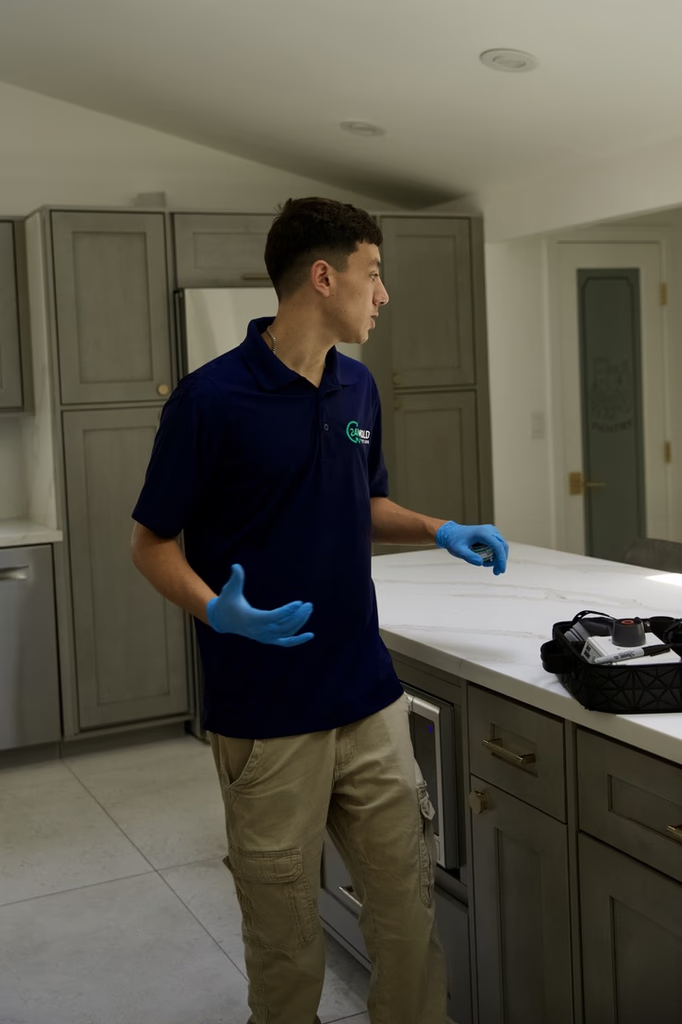
Mold inspector at work

Benefits

What you get from moisture detection

Catch water damage before it leads to expensive repairs or mold growth

  • Non-invasive: No walls opened, no cutting required.
  • Early leak detection: Find hidden leaks before damage gets worse.
  • Health protection: Reduce risks from mold and damp exposure.
  • Smarter repairs: Targets work to the exact problem area.

About

How a moisture detection visit runs

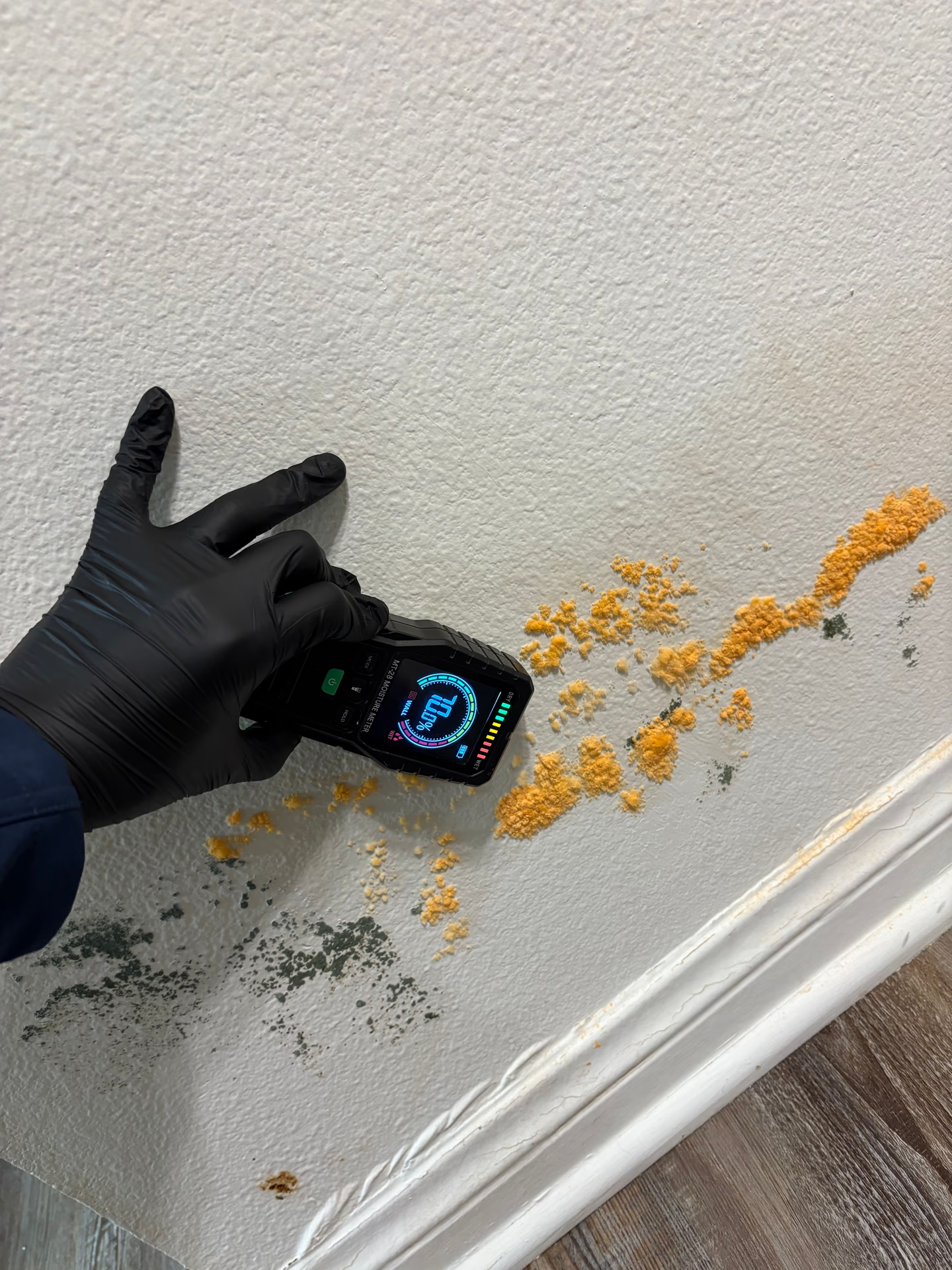
Our certified mold inspectors use high-precision moisture meters and detection tools to measure water content inside building materials. The instruments find trapped water without any cutting or drilling, even when the surface looks dry.

Our process includes:

  • Surface moisture scanning across the property
  • Deeper probe readings in high-risk areas like bathrooms and basements
  • Cross-checking with thermal imaging when warranted
  • A written mold inspection report with detailed moisture readings
How a moisture detection visit runs

Mold inspection Fountain Valley FAQ

Call For An Inspection
No. 24H Mold Inspection of Fountain Valley inspects and tests only, and we never perform remediation — the separation is deliberate. It matters more than usual on this ground. Nearly every home here is slab-on-grade on a former floodplain with a shallow water table, so the question that decides the size of a job is whether the water is a supply line failing under the concrete, vapor driving up through a slab poured without a retarder, or irrigation soaking a planter bed against the stucco. Those three look identical from inside the room and cost wildly different amounts to fix, and a company paid for the cleanup has a financial reason to keep finding more of it. What we produce is the diagnosis — what is growing, what is feeding it, how far it runs behind the wall or under the flooring, and lab confirmation of the samples. You take that to remediation contractors and collect comparable bids on one defined scope. When the work is done we can verify it independently, which carries weight with insurers precisely because we had no part in the removal.
All of Fountain Valley and the central Orange County cities around it. Inside the city that means Green Valley, Westmont, Park Place, Fountain Valley Estates, the Mile Square Park area, the Brookhurst corridor, the Ellis Avenue district, and the Los Caballeros vicinity — the whole city is under ten square miles and we can cross it in fifteen minutes, which is what makes same-day appointments realistic here rather than aspirational. Huntington Beach, Costa Mesa, Westminster, Garden Grove, Santa Ana, Newport Beach, Seal Beach, Los Alamitos, Stanton, Tustin, and Irvine each have their own 24H Mold Inspection page written around that city's housing stock and moisture patterns, so if your property sits across one of those lines, start there instead. Anaheim and the rest of north county are handled by this team directly. Emergency response for an active leak, a slab break, or a flooded unit runs 24/7 — the night it happens, not the next business morning.
Detection is what happens before anyone takes a sample. Visible growth needs identification, not detection; the harder job is locating water in a house that only smells wrong. It starts with history — what leaked, when, what was repaired — then an exterior walk for grade and drainage, moisture meters along baseboards and slab-adjacent walls, and thermal imaging to find the temperature signature wet material leaves behind a finished surface. In Fountain Valley the shortlist is short and consistent. Flat lots with almost no fall send irrigation and storm water toward the house instead of away from it. Slabs poured in the 1960s and 1970s sit over a shallow basin and drive vapor upward into flooring and carpet pad. And the copper under those slabs is now old enough that pinhole leaks announce themselves as a warm patch underfoot or a meter that will not stop turning. Spore sampling comes last, only where the walk-through justifies it and always against an outdoor baseline, because a spore count with no moisture source attached is not something a contractor can bid on.
Yes, and not only during storms. The city was built on the floodplain of the channel that forms its western edge — ground so wet before the war that it was farmed as marsh and known locally as Gospel Swamp, and where artesian wells flowed at the surface with no pump on them. Decades of federal flood-control work on that river system eventually let FEMA redraw the maps and pull much of the city out of the high-risk flood zone, which changed insurance requirements but did not change the soil. It is still flat, still organic and compressible in places, and the water table is still close to the surface. What that produces year to year is not dramatic flooding but slow, persistent moisture: yards that hold standing water for days after rain, vapor driving up through slabs, and settlement cracks that let irrigation in. If your home was mapped out of the flood zone and you dropped the flood policy, that is a good moment to have the slab perimeter and flooring checked once — the map changed, the ground did not.
No — they answer different questions. A general home inspection is a broad condition survey: roof, electrical, plumbing, appliances, structure. Its mold coverage stops at what is visible from accessible areas, most contracts exclude mold outright, and none of them include lab work. A mold inspection is narrow and instrument-driven: thermal imaging and moisture meters across walls and floors, attic entry, and air or surface samples read by a state-certified lab. The gap is wider here than in most of California because Fountain Valley homes have no basement and no crawl space to walk. Everything a home inspector would normally use as a window into a building's moisture history is sealed under a concrete slab, so the evidence is a warm spot in a hallway floor, an unexplained jump in the water bill, cupping at the edge of a plank floor, or a musty closet on an interior wall. Most buyers here do both: the home inspection for overall condition, then a mold inspection when it flags staining, odor, past water damage, or flooring that has moved.
We do not — encapsulation is remediation work, and we only inspect, test, and verify. It is worth understanding what it does, though, because it is often sold as the cheaper alternative to removal. Encapsulation seals a treated surface under a coating so residual material is bound in place. That is a legitimate final step on framing which has already been properly cleaned and dried. It is not a substitute for either of those things, and coating material that is still wet or still growing hides the problem behind a finish while trapping moisture inside the assembly. That failure mode turns up often in Fountain Valley for a specific reason: on slab-on-grade construction over a shallow water table, the moisture is frequently still arriving from below, so nothing applied to the surface will stop it. Before accepting any encapsulation bid, get moisture readings showing the material is genuinely dry and a source that has genuinely been fixed — then have the finished work verified by someone who was not paid to perform it.
They help, and they solve nothing on their own. Paperless and fiberglass-faced gypsum board removes the paper facing that ordinary drywall offers as food, and mold-resistant paints add a surface inhibitor. Both are worth specifying in a bathroom, a laundry, or any wall being rebuilt after water damage. Neither addresses water. Give a mold-resistant wall a steady moisture supply and growth simply moves to what sits behind and around it — the paper facing on the insulation batt, the dust film on the framing, the carpet pad, the underside of glued-down flooring. In this city that supply is often the slab itself: 1960s and 1970s pours over a shallow basin, no vapor retarder underneath, and a modern sealed finish on top that traps whatever comes up. So if you are rebuilding after a leak, spend on the moisture side first — fix the source, confirm the assembly is dry with meter readings rather than by eye, and put a vapor barrier under the new flooring. The resistant materials are worth having after that, not instead of it.

Contact

Book your Fountain Valley mold inspection today

Tell us what's going on and we'll respond the same day

Location

24H Mold Inspection of Fountain Valley

Service area neighborhoods

  • Green Valley
  • Westmont
  • Park Place
  • Fountain Valley Estates
  • Mile Square Park area
  • Brookhurst corridor
  • Ellis Avenue district
  • Los Caballeros vicinity
Call For Service(657) 756-6884