1
Mold inspection
- Moisture detection
- Infrared technology
- Certified mold inspectors
- No conflict of interest

Certified mold inspection and testing in Bellflower. Same-day appointments, lab-verified reports, and no financial stake in any remediation work that follows.
(562) 724-7277What We Do
Air and surface samples analyzed in a state-certified lab. You receive mold species ID, spore count data, and lab-verified documentation that holds up with insurers, attorneys, or counsel.
About
At 24H Mold Inspection of Bellflower, we know no two buildings respond to moisture the same way.
Bellflower is a mature Los Angeles County community with a diverse mix of post-war housing, multifamily properties, and neighborhood commercial development. Much of the city grew rapidly during the mid-twentieth century, creating a substantial inventory of homes with aging plumbing systems, slab foundations, and roofing materials that have undergone decades of repairs and renovations. Moisture issues frequently originate from hidden plumbing leaks, irrigation systems, roof failures, and deferred maintenance rather than regional climate conditions.
Bellflower contains single-family homes, duplexes, apartment communities, condominiums, and commercial buildings. Aging infrastructure, slab foundations, and long-term maintenance conditions commonly influence moisture performance.
Services
Mold inspection, mold testing, and environmental risk assessments for Bellflower properties. Available 24/7, with no remediation work to bias the findings.

Why Us
24H Mold Inspection of Bellflower combines local field experience with state-certified methods and lab analysis. Reports get back to you quickly and clearly, with no upsell tacked on to the findings.
We don't stop at surface-level findings. Active leaks, health symptoms, post-remediation work, and pre-purchase due diligence each call for a different inspection approach. Our certified mold inspectors guide you through the specific situation rather than running a generic checklist.
Strengths
We check every box, then go further. Book your inspection today
Licensed inspectors with proven field experience in Bellflower.
FLIR thermal cameras, calibrated moisture meters, and lab-verified sampling.
Straightforward updates and honest reporting throughout the process.
Highly rated by Bellflower homeowners and businesses.
5 Step Process
Choose a date and time that fits your schedule.
Flexible scheduling means same-day and next-day appointments are usually available, with 24/7 emergency response when the situation needs it.
Our certified mold inspectors assess every mold-prone area.
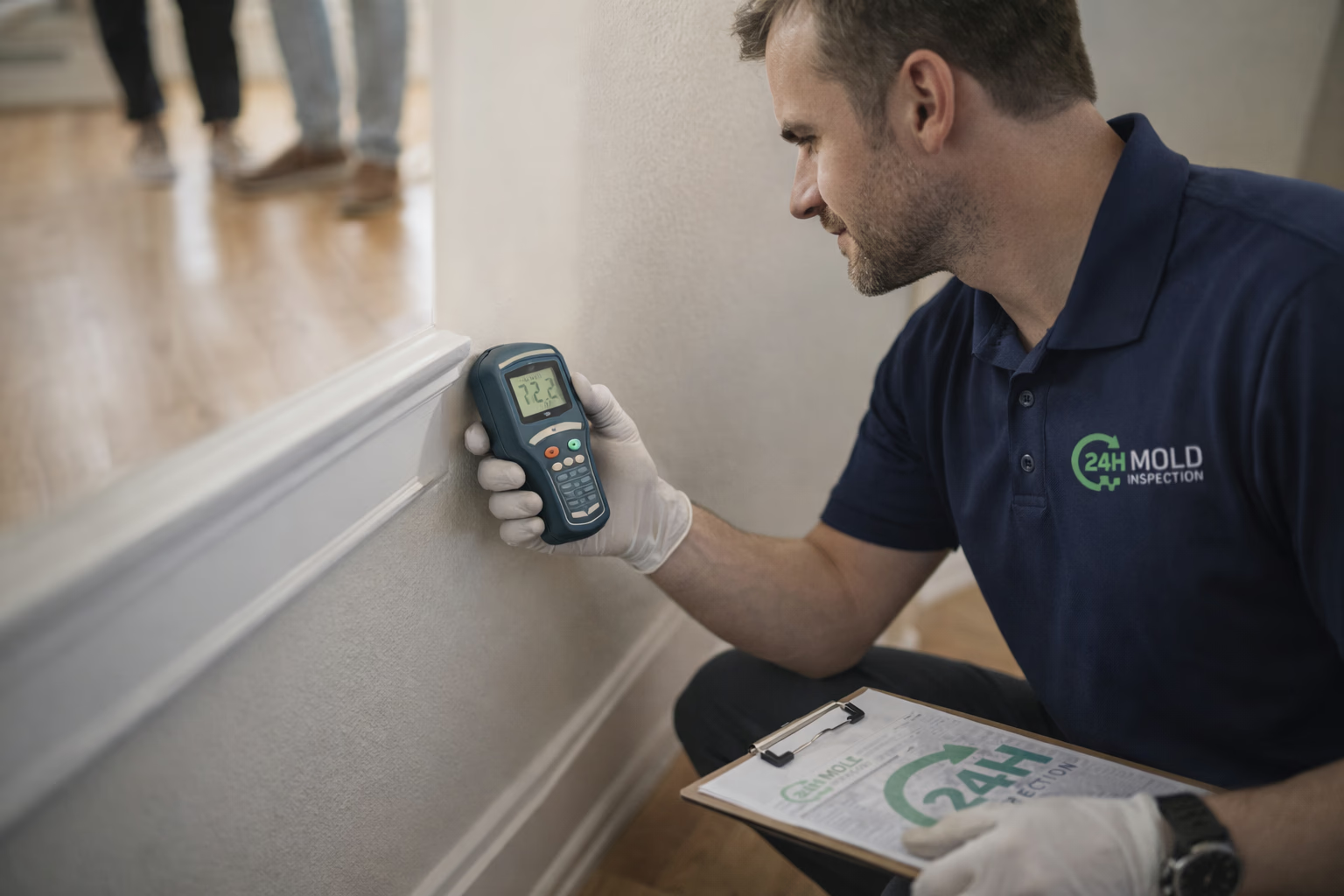
We walk the property identifying visible mold and moisture issues, using thermal imaging and moisture meters to catch what's hidden behind walls and under flooring.
Air and surface samples collected for lab analysis.
Our certified mold inspectors collect targeted samples from key areas to find mold spores both visible and hidden, with sample sites documented on a property map.
Lab testing returns precise results.
Samples go to a state-certified lab for detailed analysis identifying mold species and contamination levels, typically returned within 24 to 72 hours.
Insights and clear next steps from our experts.
You receive a written report with lab results, inspector findings, and specific recommended action steps to resolve any mold issues safely.
Who We Serve
24H Mold Inspection of Bellflower brings clear answers to HOAs, hotels, commercial buildings, and homes through certified mold inspection and testing services.
In 1869 the 4,000-acre Somerset Ranch covered most of what became Bellflower, roughly from Alondra Boulevard to Artesia Boulevard and from Lakewood Boulevard to Cornuta Avenue. The town was founded in 1906, and when the post office opened in 1909 the name Somerset was rejected to avoid confusion with Somerset, Colorado, so residents took the name of William Gregory's Bellefleur apple orchard instead. The oldest blocks still hold pre-war cottages and small houses, some on raised foundations and many enlarged over the decades, where crawl spaces, aging galvanized plumbing, and additions joined to original walls hide moisture.
Before flood control, the San Gabriel was a tramp river that left its bed in winter storms and spring thaws and at times ran straight down the line of what is now Bellflower Boulevard, which is why the whole area flooded every year. Today the boulevard is the city's main commercial street, mixing older single-story storefronts, small office buildings, and mixed-use blocks with newer redevelopment. Flat roofs behind parapets, clogged roof drains, slabs without vapor retarders, and restaurant and salon wet rooms are the recurring moisture sources, and the low, flat ground beneath still holds water after storms.
Most of Bellflower's housing went up in a burst after the war, and by the time the city incorporated on September 3, 1957, the single-story homes on slabs that define it today were largely in place. Seventy-plus years on, they share predictable failures: copper or galvanized supply lines leaking inside walls or beneath the slab, cast-iron drains cracking under bathrooms, roofs re-covered over older layers, and original ductwork sweating in hot attics. The flat clay-bearing soil stays saturated for weeks after winter storms, pushing moisture up through slabs poured without vapor barriers and into carpet pad, flooring, and the bottom of exterior walls.
Bellflower was first the apple and later the milk production center for the region, settled by small communities of Dutch, Japanese, and Portuguese dairy farmers, and many residential lots are still deep, a legacy of the parcels they were cut from. Over the decades owners added rear houses, duplex units, garage apartments, and converted garages behind the original homes, often at different times and sometimes without permits. Long buried supply and sewer lines leak on the way to rear units, slabs under converted spaces lack vapor barriers, and roof transitions between low additions and taller structures pond and leak.
The east-west corridors along Alondra and Artesia boulevards, together with Woodruff and Clark avenues, carry much of the city's multifamily housing — apartment complexes and condominiums from the 1960s and 1970s alongside neighborhood shopping centers. In these buildings water moves between units: stacked bathrooms and kitchens carry leaks down through floor assemblies, shared walls let moisture cross from one household to the next, and a single roof or plumbing failure can affect several units at once. Heavy occupancy and small bathrooms without working exhaust fans add humidity, and carports and covered parking keep adjacent walls shaded and slow to dry.
Google Search
Add 24H Mold Inspection as a preferred source so our pages are easier to spot in your Google results.
Contact
Tell us what's going on and we'll respond the same day
Location
24H Mold Inspection of Bellflower
Phone
(562) 724-7277Hours
Service area neighborhoods
Newsletter
Monthly notes from our inspectors on prevention and air quality.