24H Mold Inspection
Bellflower24/7 EMERGENCY(562) 724-7277
HomeOur ServicesMold InspectionThermal Imaging
Mold Inspection

Thermal Imaging

Infrared cameras find hidden mold conditions and water damage before any surface stain shows up.

Overview

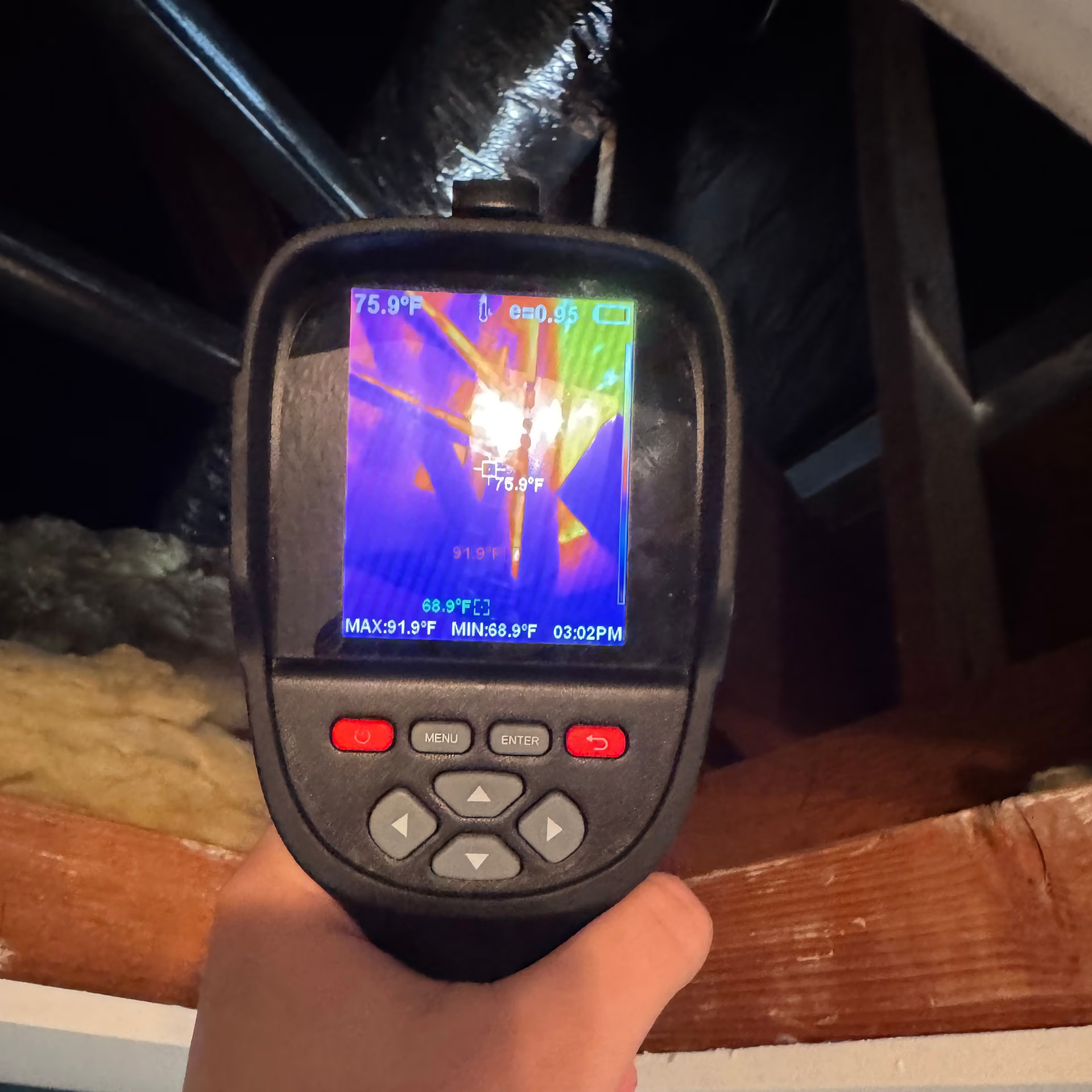
Why infrared thermal imaging finds mold others miss

Mold doesn't always announce itself. A small leak inside a wall, a stretch of failed insulation, or a cold-bridge condensation zone can build mold-friendly conditions for months before any stain reaches the surface. Thermal imaging reveals those conditions while they're still hidden, giving you a chance to address the moisture before mold has spread.

Thermal imaging detects:

  • —Hidden moisture inside walls, ceilings, and under floors
  • —Active leaks from plumbing, roofing, or HVAC components
  • —Insulation gaps and ventilation defects driving condensation
  • —Cold spots creating ideal future conditions for mold growth
Why infrared thermal imaging finds mold others miss
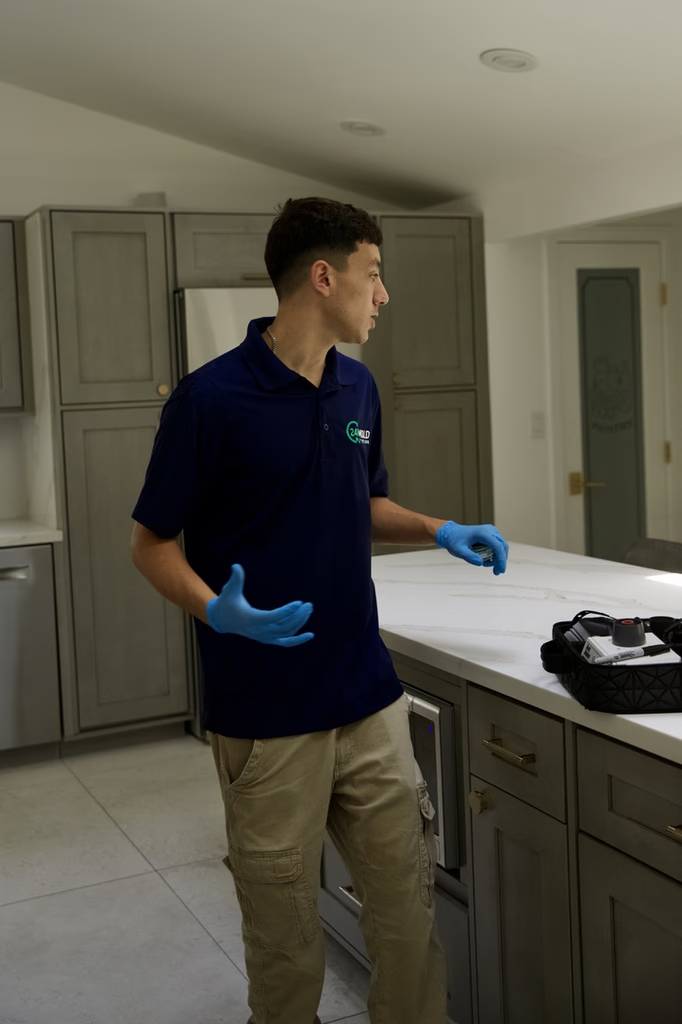
Mold inspector at work

Benefits

What you get from thermal imaging

Find hidden risks early without damaging the property

  • —Non-invasive: No drilling, no cutting, no surface damage.
  • —Early detection: Catches problems before damage becomes visible.
  • —Cost-effective: Targets repairs only where they're needed.
  • —Documented findings: Annotated thermal images included in the report.

About

How thermal imaging mold inspection works

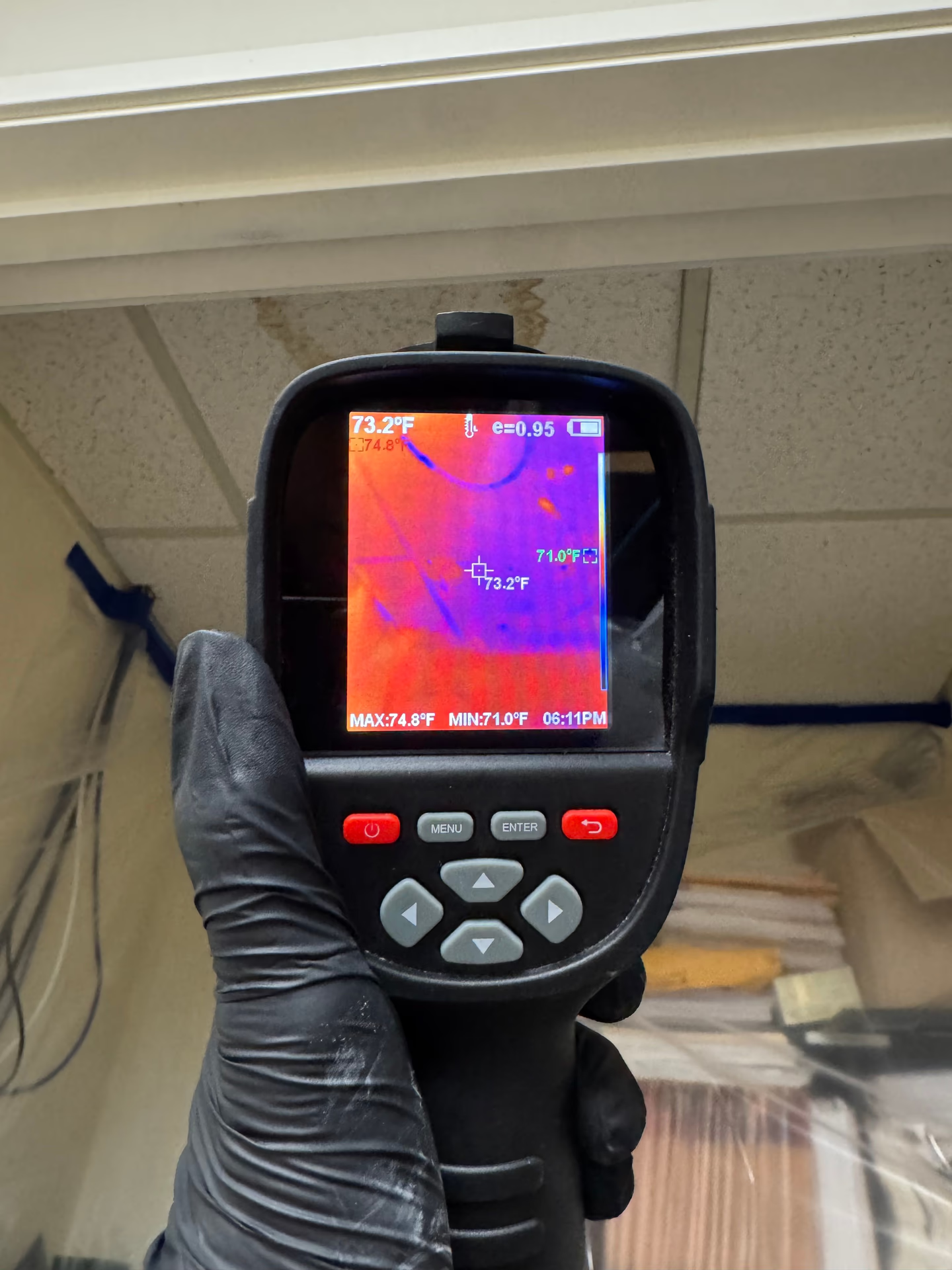
Our certified mold inspectors use FLIR cameras to read temperature differentials across surfaces. Cooler areas often signal water present in the material, even when no surface damage has appeared.

Our process includes:

  • —A complete thermal scan of key interior and exterior surfaces
  • —Identification of unusual cold or warm patterns in the readings
  • —Cross-checking thermal findings with calibrated moisture meters
  • —A mold inspection report including the annotated thermal images
How thermal imaging mold inspection works

Mold inspection Bellflower FAQ

Call For An Inspection
If the home inspection noted staining, a musty smell, or evidence of past leaks, yes — that note is a referral to a specialist. A general home inspection is a visual survey of the whole property; a mold inspection measures moisture inside walls, under flooring, and in the attic with thermal imaging and moisture meters, and sends air or surface samples to an accredited lab. In Bellflower the gap matters most in the city's postwar housing — single-story homes on slabs, now 70 years old or more, where a slab leak or a cracked cast-iron drain can run for months beneath carpet or tile without leaving a visible mark. Deep lots with rear houses, converted garages, and room additions are another blind spot, because each was built at a different time to a different standard. Book the mold inspection within your contingency window so the findings can still shape the price, the repair requests, or your decision to walk away.
Bellflower changed fast after the war. A town of apple orchards and small dairies run by Dutch, Japanese, and Portuguese families filled in with single-story homes through the 1940s and 1950s, and by the time it incorporated on September 3, 1957, most of today's neighborhoods were in place. Those houses now share the failures of their age: copper or galvanized supply lines leaking inside walls or beneath the slab, cast-iron drains cracking under bathrooms and kitchens, roofs re-covered over earlier layers, original ductwork sweating in hot attics, and bathroom fans that were never installed or that vent into the attic. Many homes have also been enlarged or partly rebuilt by several owners. The first signs are usually subtle — a musty closet, a swelling baseboard, a warm spot on the floor from a hot-water slab leak. A moisture survey of the plumbing walls, the slab perimeter, and the attic covers the places these houses usually fail.
It did, and the ground still reflects it. Before flood control, the San Gabriel was known as a tramp river: swollen by winter rains and spring thaws, it would leave its bed and run across the flat plain, at times straight down the line of what is now Bellflower Boulevard, which is why the whole area was subject to annual flooding. Today the river is confined to a concrete flood-control channel, but the land it built is flat, low, and laced with clay-bearing soil that holds water. After a run of winter storms, that soil stays saturated for weeks, and moisture moves upward through slabs poured in the 1940s and 1950s without vapor barriers. The signs are damp carpet pad, lifting tile or vinyl plank, a musty smell in ground-floor rooms, and growth along the bottom of drywall on exterior walls. Moisture readings compared across the slab show whether it is ground moisture or a leak under the floor.
They often do. Many Bellflower lots are deep, a legacy of the orchard and dairy parcels they were cut from, and over the decades owners added rear houses, duplex units, and garage apartments behind the original home. Those structures were built at different times, often by different builders, and sometimes without permits, so their foundations, roofs, and plumbing vary widely. The common moisture paths are slabs poured without vapor barriers, long buried supply and sewer lines running from the street to the rear unit that leak out of sight, roofs that pond where a low addition meets a taller structure, and small bathrooms with no exhaust fan in heavily occupied units. Growth tends to appear in closets on exterior walls, under flooring, and in ceilings below roof transitions. An inspection on these properties covers every structure on the lot, not just the front house, and documents conditions in a way that serves both owners and tenants.
It is one of the more frequent problems we find in the city. Garage conversions have a long history on Bellflower's postwar lots, and the state ADU laws that took effect from 2017 onward have added many more. A garage slab was poured to park a car, not to sit under a bedroom: it usually has no vapor barrier, it may slope toward the old door opening, and the wall that replaced the garage door often sits on a sill plate directly on the concrete. Add a bathroom or kitchenette and moisture from both the ground and the occupants has nowhere to go. In Bellflower's clay soils, which stay wet for weeks after storms, that slab moisture is especially persistent. Growth shows up behind furniture on the old door wall, under flooring, and in the slab corners. Whether you rent one out, live in one, or are buying a property with one, a moisture survey of the slab and the converted wall is the key part of the inspection.
They can, and they tend to hide it overhead. Bellflower Boulevard has been the city's main commercial street since its early days, and the frontage along it mixes older single-story storefronts, small office buildings, and mixed-use blocks with newer redevelopment. The older buildings carry flat roofs behind parapets, where drains clog and flashing fails, and leaks often travel along the roof deck or above a suspended ceiling before showing up far from where they entered. Masonry and older stucco walls hold moisture after rain, slabs poured without vapor retarders send moisture into flooring and stored goods, and restaurants and salons add constant moisture from kitchens, dishwashers, and wash stations. In mixed-use buildings, a leak in an upstairs apartment becomes the business's problem below. An inspection focuses on the roof and its drainage, the ceiling cavity, and wet rooms, and documents conditions for owners, tenants, and insurers.
Document it independently first. California law applies in Bellflower as it does everywhere in the state: Health and Safety Code section 17920.3, as amended by SB 655, lists visible mold as a substandard housing condition, and an older building doesn't excuse it. Bellflower has a large rental stock — duplexes, rear houses, converted garages, and apartment buildings along its main corridors — and disputes usually come down to whether the mold is a building defect or a household habit. A third-party report answers that with moisture readings, photographs, lab results, and an identified source: a slab leak, a plumbing failure inside the wall, a roof leak, a missing exhaust fan. Because we don't do remediation, the report has no incentive to make the problem bigger than it is. Attach it to a written repair request; if nothing changes, it is the evidence you would bring to the city's code enforcement office or to small claims court.

Contact

Book your Bellflower mold inspection today

Tell us what's going on and we'll respond the same day

Location

24H Mold Inspection of Bellflower

Hours

  • MondayOpen 24 hours
  • TuesdayOpen 24 hours
  • WednesdayOpen 24 hours
  • ThursdayOpen 24 hours
  • Friday6 AM – 6 PM
  • SaturdayClosed
  • SundayOpen 24 hours

Service area neighborhoods

  • Bellflower Boulevard corridor
  • Somerset Acres
  • Downtown Bellflower
  • Woodruff Avenue area
  • Artesia Boulevard district
  • Rose Street neighborhood
  • Clark Avenue corridor
  • Alondra Boulevard vicinity
Call For Service(562) 724-7277