
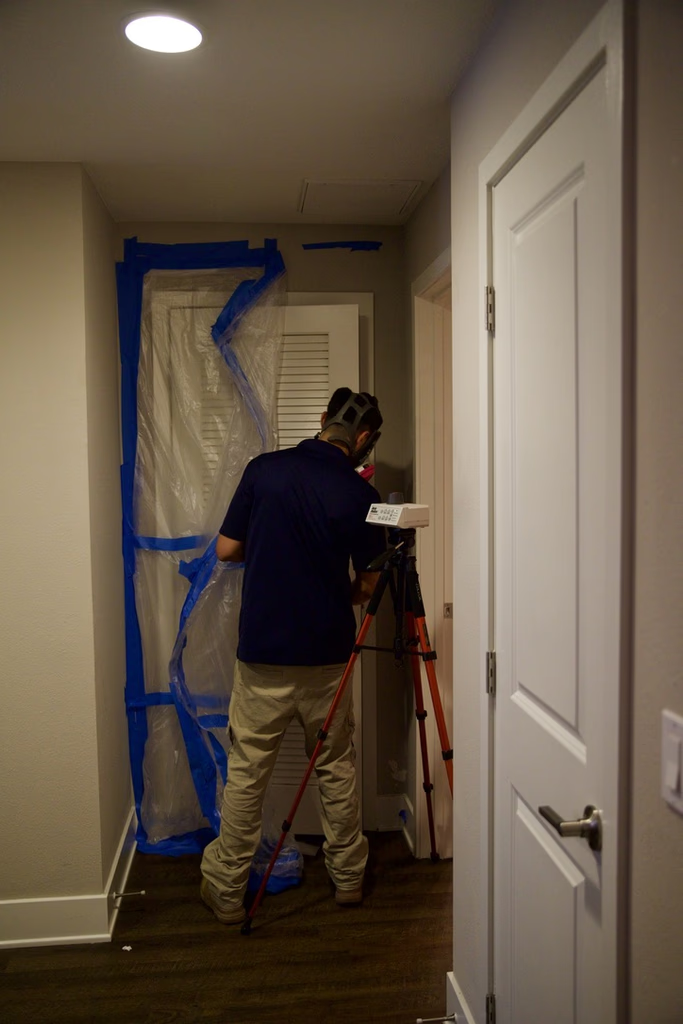
Collects airborne mold spores to assess air quality and detect hidden contamination.
our services
Mold Testing
State-certified testing that spots hidden mold—so you can act early, stay safe, and avoid costly repairs.
About
Why Mold Testing Matters
Mold isn't always visible. It hides in air vents, under floors, and inside walls. The only way to know what you're breathing—or what's spreading—is through lab-grade testing.
- —Identify mold species and spore levels
- —Detect hidden growth in "clean" areas
- —Assess the health risk to occupants
- —Decide on the right next steps
Methodology
How our mold testing works
The three sampling methods we use, chosen for what your property is showing
Sterile swabs and clear adhesive tape collect mold from visible spots on dry surfaces, giving the lab a clean sample for species identification. Suitable for walls, ceilings, baseboards, and furniture where the residue is what you're checking.
For damp or recently water-damaged areas, the sampling approach changes. Wet sampling captures live, actively growing colonies that dry methods underrepresent, which matters under flooring, behind tile, and around recent leaks.
A calibrated pump pulls a controlled volume of air through a spore trap cassette, capturing viable and non-viable spores from the breathing zone. The lab counts species and compares concentrations to outdoor levels, telling you whether your indoor air is healthy.
Checklist
Is Testing Right for You?
Mold testing is ideal if:
- —You suspect mold but can't see it
- —You've had water damage
- —Residents or tenants are reporting health symptoms
- —You're buying, selling, or managing a property
- —You need peace of mind after remediation
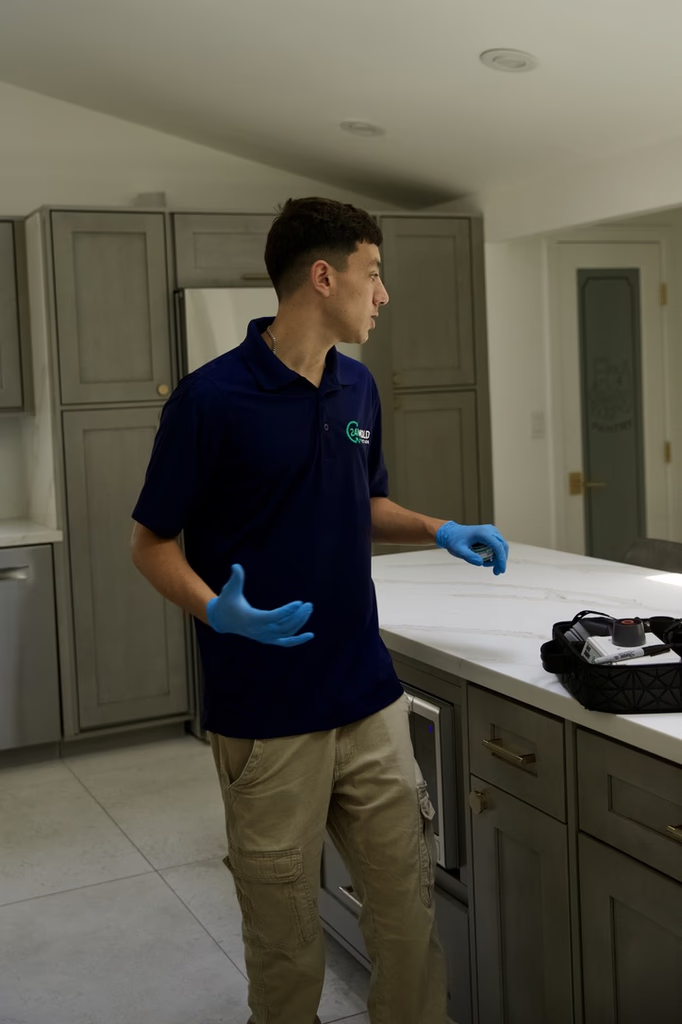
Still unsure? Let's talk. We'll help you decide which method suits your case best.
Testing Overview
Our Testing Methods
Techniques we use to collect accurate mold samples from air and surfaces.
Lifts mold samples from surfaces using clear adhesive—quick and non-destructive.
Gathers samples from damp or textured areas to identify active mold growth.
Mold inspection Seattle FAQ
Call For An InspectionSame-day and next-day appointments are usually available across our Seattle service area, with 24/7 emergency response for active leaks, recent water damage, or urgent real estate timelines. Standard scheduling runs 1 to 3 business days depending on availability.
Our certified mold inspectors assess bathrooms, kitchens, laundry rooms, basements, attics, crawl spaces, HVAC components, and any area showing signs of past or current water issues. Thermal imaging and moisture meters identify hidden moisture behind walls and under floors.
Seattle's most prevalent mold issues stem from the city's persistent rainfall and limited drying time between weather events. Crawl spaces are the single most common problem area — the combination of ground moisture, inadequate vapor barriers, and poor ventilation creates conditions where mold on floor joists and subfloor sheathing is routinely found even in otherwise well-maintained homes. Attic mold from insufficient ventilation relative to the moisture load is the second most frequent finding, followed by window-adjacent wall mold in older homes where single-pane glazing generates chronic condensation during the colder months.
Pricing varies based on the size of the property, the scope of testing required, and whether any lab work is included. Most residential mold inspections in Seattle fall within the standard industry range of $300 to $600, with a clear quote provided before any work begins.
Air sampling, swab testing, tape lift testing, wall cavity sampling, and HVAC mold testing. The inspector recommends the right method on-site based on what's found. Samples go to a state-certified lab, with results typically back in 24 to 72 hours.
Mold needs water to grow, so finding the moisture source is what prevents the same problem from coming back after any cleanup. Moisture detection during the inspection identifies plumbing leaks, roof leaks, condensation issues, and humidity buildup that's feeding any growth.
Yes. Post-remediation verification confirms the remediation contractor's work succeeded and the space is safe to reoccupy. Because we don't perform remediation ourselves, the verification stays independent of the remediation contractor's interests, which is what insurers and tenants look for.
Not every home, but the Pacific Northwest's long wet season — roughly October through April — creates sustained moisture loading that inland climates don't experience. The real risk isn't the rain itself but what happens when water finds a gap: a failed flashing, a cracked foundation stem wall, a crawl space vapor barrier that's deteriorated. Seattle's housing stock includes a significant number of homes built before modern vapor barriers and building envelope standards, and those properties accumulate moisture over decades rather than in a single event. What distinguishes a home with a manageable moisture profile from one with an active mold problem is usually the condition of the crawl space, the attic ventilation, and whether any plumbing or drainage failures have been left unaddressed. Inspection identifies which category your property falls into.
Seattle's Craftsman and bungalow housing from the 1900s through 1930s was built for a wet climate but without the vapor management systems that modern construction takes for granted. Original crawl spaces often have no vapor barrier or a deteriorated one, original wood framing sits closer to grade than current code would allow, and original roofing details — cedar shingles, built-up roof edges, early asphalt — have been replaced multiple times, with each replacement cycle creating new opportunities for water to enter at transitions. In Ballard, Fremont, and Capitol Hill specifically, many of these homes also have cast-iron or galvanized supply lines that develop slow behind-wall leaks invisible to a visual inspection. Thermal imaging and moisture meters find the wet framing and cavity accumulation that a surface walkthrough misses.
In the older masonry and wood-frame apartment stock it's consistently found, and the mechanism is usually building-system failure rather than individual unit behavior. A roof leak on a six-story brick building travels down interior party walls and shows up in third-floor units months after the water entered at the top. A failed window seal on a 1960s aluminum window frame lets condensation accumulate inside the wall cavity across dozens of units on the same exposure. High occupancy and cooking humidity in units with undersized bath exhaust — common in Capitol Hill and First Hill walk-ups — keeps indoor relative humidity above the threshold where surface mold grows. For property managers and HOA boards, a building-level inspection that documents which systems are contributing to moisture conditions is different from a single-unit inspection.
The February 28, 2001 Nisqually earthquake measured 6.8 and caused widespread cracking in unreinforced masonry chimneys, brick veneer, and older concrete foundations across Seattle and the South Sound. Many of those cracks were repaired cosmetically rather than structurally — tuck-pointed or stuccoed over — and have been admitting water ever since. In West Seattle, Capitol Hill, and the older neighborhoods of Beacon Hill, a property that was never fully assessed after 2001 may have a foundation or chimney moisture pathway that's been active for twenty-five years. Pre-purchase inspections on Seattle homes built before 1950 should specifically ask whether any earthquake-related foundation or masonry work was documented.
Yes — Washington State's Residential Landlord-Tenant Act requires landlords to maintain rental properties in a condition that does not endanger health, and the Seattle Housing Code specifically addresses moisture and mold as habitability conditions. A tenant who reports visible mold or musty odors in writing creates a documented record that the landlord must respond to. An independent mold inspection — from a company with no remediation work to sell — produces lab-verified findings that document the condition and its probable source in a form that holds up in a dispute with a landlord, a housing authority inspector, or a court. Seattle's rental market includes a significant stock of older apartments where building-system moisture failures affect multiple tenants simultaneously.
Seattle's raised-foundation housing stock means crawl space inspections are a routine part of most assessments here. The crawl space is where Pacific Northwest moisture accumulates first — ground moisture migrates up through soil and concrete if the vapor barrier has failed or was never installed, wood framing sits in elevated humidity for years, and the combination of damp wood and poor ventilation creates ideal mold conditions invisible from the living space above. The inspection maps moisture readings across the subfloor framing and joists, checks the condition and coverage of any vapor barrier, evaluates cross-ventilation through foundation vents, and samples air or surfaces where growth is visible or suspected. Findings are reported with the moisture source identified, not just the mold symptom.
Our Seattle team covers all Seattle neighborhoods — Ballard, Capitol Hill, West Seattle, Fremont, Queen Anne, South Lake Union, Beacon Hill, and Rainier Valley — with same-day and next-day appointments and 24/7 emergency response for active leaks and water damage. Several neighboring cities have their own dedicated 24H Mold Inspection pages with local teams: Bellevue, Renton, Tacoma, and Everett each have separate coverage with their own local phone numbers and area expertise. If your property is in one of those cities, start with that page for the most relevant local information.
Inspection and testing only — we never perform mold removal or remediation. In Seattle's older housing stock, where a moisture source is often a building-system failure rather than a single plumbing event, the remediation scope can be significant, and a company with cleanup work to sell has a direct reason to find more of it. What you receive from 24H Mold Inspection of Seattle is the diagnosis: how far the growth extends, what moisture source is driving it, lab-confirmed species identification, and a written report you can use to get accurate bids from multiple remediation contractors on the same defined scope. Because we perform no remediation, our post-remediation verification is also credible — we have no stake in the contractor's work passing.
Post-remediation verification is an independent inspection confirming that a remediation contractor's work succeeded — the affected area was cleared, the moisture source was controlled, and spore counts are back within normal range. In Seattle it carries particular weight because the Pacific Northwest's persistent moisture environment means a remediation that didn't fully address the moisture source will regrow within a season. Because 24H Mold Inspection never performs remediation, our verification has no stake in the contractor's work passing — we report what we find. Seattle's residential real estate market increasingly requires clearance documentation before closing on properties with disclosed mold histories.
An air test draws a measured volume of air through a spore trap in each area of concern, alongside a sample collected outdoors at the same visit. The outdoor sample is critical in Seattle because the Pacific Northwest's ambient spore counts differ from drier inland climates — certain genera are naturally elevated in a maritime environment, so what looks alarming against a national reference range may be within the expected local baseline, and vice versa. An accredited lab identifies the genera present and their concentrations, and the report interprets indoor findings against the outdoor baseline rather than reporting raw numbers without context. Air testing is the right choice when someone has symptoms or a musty odor but there's nothing visible to sample.
Yes — office buildings in South Lake Union and the downtown core, mixed-use residential and retail in Capitol Hill and Belltown, older masonry commercial buildings along First and Second Avenue, and multifamily residential throughout the city. Commercial mold in Seattle most often develops in rooftop HVAC equipment exposed to persistent rain, in ground-floor retail with high occupancy humidity, and above suspended ceiling systems where long-running roof leaks go undetected. South Lake Union's rapid conversion from industrial to tech campus has produced buildings where former warehouse concrete slabs and loading areas carry moisture histories that new tenant improvement work doesn't address. Reports are written to be handed to a property manager, insurer, or building engineer.
Washington State does not license mold inspectors as a separate credential — anyone can call themselves a mold inspector. The meaningful qualifications are third-party certifications from organizations like the American Industrial Hygiene Association or the Indoor Air Quality Association, which require demonstrated competency rather than just a fee. Equally important is whether the company also performs remediation — if it does, its inspection findings have a financial interest attached. 24H Mold Inspection of Seattle is inspection and testing only, uses certified inspectors, and sends samples to an accredited third-party laboratory rather than evaluating them in-house. Ask any inspector you're considering for their certification credentials and whether they perform remediation work.
Contact
Book your Seattle mold inspection today
Tell us what's going on and we'll respond the same day
Location
24H Mold Inspection of Seattle
Phone
(866) 634-6614Hours
- MondayOpen 24 hours
- TuesdayOpen 24 hours
- WednesdayOpen 24 hours
- ThursdayOpen 24 hours
- Friday6 AM – 6 PM
- SaturdayClosed
- SundayOpen 24 hours
Service area neighborhoods
- Ballard
- Capitol Hill
- West Seattle
- Fremont
- Queen Anne
- South Lake Union
- Beacon Hill
- Rainier Valley