24H Mold Inspection
West Bloomfield24/7 EMERGENCY(947) 262-3328
HomeOur ServicesLeak & Moisture Detection
our services

Leak & Moisture Detection

Hidden moisture is the root cause of most mold problems. We locate it precisely—without tearing into walls—so you can fix the source, not just the symptoms.

About

Why Moisture Detection Comes First

Mold needs moisture to grow, and moisture hides. We use non-destructive instruments to map water through walls, floors, and ceilings—and thermal cameras to see temperature anomalies that indicate active leaks or condensation—giving you a precise location before any repair work begins.

Moisture detection helps you:

  • —Pinpoint the exact source of a leak before demolition
  • —Map moisture spread behind walls and under flooring
  • —Identify condensation-prone areas before mold appears
  • —Confirm repairs were effective after water damage is addressed
Why Moisture Detection Comes First

Methodology

How We Detect Moisture

Non-destructive tools that locate water without cutting into your property.
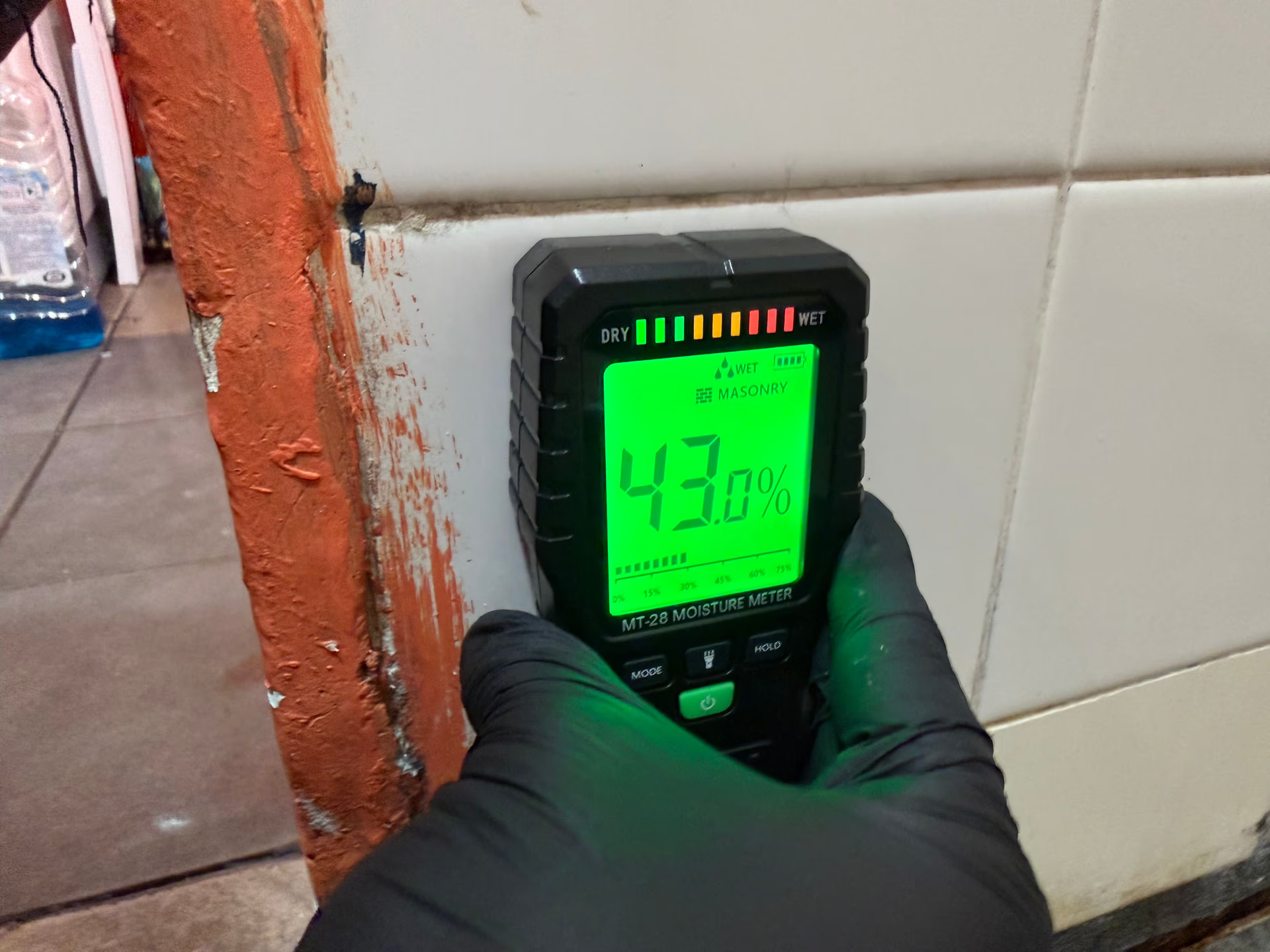
We measure the moisture content of walls, floors, and ceilings using both pin-based and non-invasive pinless meters—mapping the full extent of saturation without surface damage.

Best for:

— Drywall, wood framing, and subfloor assessment
— Mapping moisture spread after a water event
— Establishing baseline readings for monitoring

Our thermal cameras detect temperature differentials across surfaces. Water-loaded materials hold heat differently than dry materials, making leaks and saturated zones visible behind finished walls.

Best for:

— Finding active leaks behind drywall without cutting
— Locating plumbing or roof leaks not yet surface-visible
— Identifying condensation zones that feed mold

Every finding is documented with photos, moisture readings, and thermal images. You receive a clear report so contractors, insurers, or property managers can act immediately.

Report includes:

— Moisture readings mapped by room and surface
— Thermal images with annotated anomaly locations
— Probable source identification and next steps

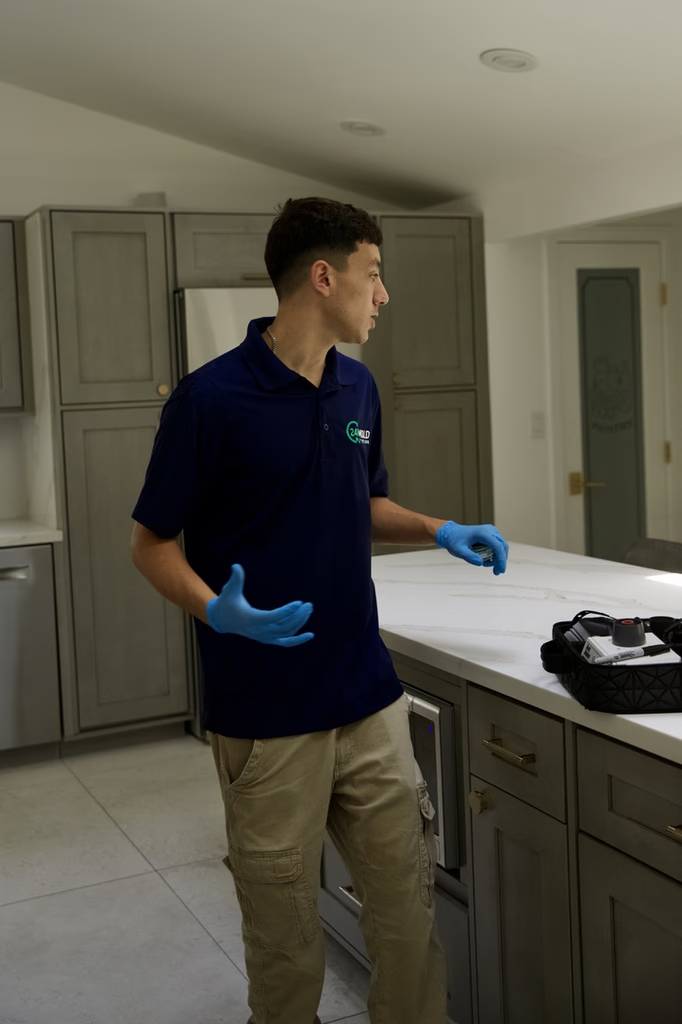
Mold inspector at work

Checklist

When Do You Need Moisture Detection?

Moisture detection is the right first step if:

  • —You smell mold or dampness but can't find the source
  • —You've had a plumbing leak, roof leak, or flood
  • —You're buying a property and want to verify no hidden moisture
  • —You had water damage and want to confirm the area is fully dry
  • —Recurring mold keeps coming back after surface cleaning

Moisture detection is often the fastest and most cost-effective way to scope a mold problem before committing to testing or remediation.

Detection Services

Our Detection Methods

Two complementary tools that together give a complete picture of moisture conditions in any building.

1Thermal Imaging

Infrared cameras reveal temperature anomalies that indicate hidden leaks, condensation zones, and moisture paths behind finished surfaces.

2Moisture Detection

Pin and pinless meters precisely measure moisture content in walls, floors, and ceilings—mapping the full extent of saturation without destructive investigation.

Mold inspection West Bloomfield FAQ

Call For An Inspection
Attic mold in this area usually has a ventilation or exhaust cause. Bath and kitchen fans that vent into the attic instead of outdoors load it with humid air, soffit and ridge vents get blocked by insulation, and warm indoor air leaks up through ceiling penetrations and condenses on cold roof sheathing in winter. Michigan winters make this worse because the temperature difference is large and sustained. An inspection checks the sheathing and rafters for staining or growth, the ventilation layout, fan ducting, and roof penetrations, using thermal imaging and moisture meters. Samples go to an accredited lab where growth is suspected. The report identifies the moisture source, which is what a cleanup contractor needs to fix.
Lakefront lots sit with foundations close to the lake's water table, which rises in wet springs and stays elevated through the thaw. Crawl spaces and basement walls on low lots take pressure from that groundwater, not just surface runoff, and the moisture can persist after the lake level drops. Docks, seawalls, and shoreline grading add maintenance that, when deferred, lets water work toward the structure. An inspection records moisture at foundation walls, floor-to-wall joints, and any crawl space, and notes the lot's grade relative to the water.
Often, yes. Seasonal cottages were built with minimal insulation, single-pane windows, and ventilation meant for open windows. Full-time heating in a Michigan winter puts warm, humid indoor air against cold exterior surfaces, which drives condensation inside walls and attics. Additions tied into the original structure add seams where moisture collects. An inspection treats the original cottage and each addition as separate spaces, since each has its own moisture profile.
Clay soil holds moisture far longer than sandy soil, so ground that saturates in the March thaw can press against foundation walls into May or June. Freeze-thaw cycling opens small cracks each winter, and the thaw is when water finds them. That is why many basement moisture problems start or worsen in spring, and why an inspection scheduled after the thaw often finds conditions a summer visit would miss.
Yes, particularly for lakefront homes, converted cottages, and 1960s through 1980s houses. The inspection covers thermal imaging for behind-wall moisture, basement or crawl-space readings, attic ventilation, and air or surface sampling where growth is suspected. A standard home inspection often notes a stain or a smell and recommends a specialist. Independent documentation before closing protects you from inheriting a slow problem.
Our West Bloomfield team covers the whole township, including the lakefront areas, the residential tracts, and the commercial corridors, with same-day and next-day appointments and 24/7 emergency response. Orchard Lake is served from the West Bloomfield team. Bloomfield Hills has its own 24H Mold Inspection page with a local team. If your property is in Bloomfield Hills, start with that page. If you are not sure which page fits your address, call the number on this page and we will point you to the right team.
The inspection is the diagnosis. We map moisture with thermal imaging and meters, identify the source, and send samples to an accredited lab, then deliver a written report with the extent of growth, the cause, and a defined scope. The cleanup is done by a separate remediation contractor, because we perform inspection and testing only. That separation keeps the report free of any financial interest in the size of the job. Once the work is done, we can return for independent post-remediation verification.

Contact

Book your West Bloomfield mold inspection today

Tell us what's going on and we'll respond the same day

Location

24H Mold Inspection of West Bloomfield

Hours

  • MondayOpen 24 hours
  • TuesdayOpen 24 hours
  • WednesdayOpen 24 hours
  • ThursdayOpen 24 hours
  • Friday6 AM – 6 PM
  • SaturdayClosed
  • SundayOpen 24 hours

Service area neighborhoods

  • West Bloomfield
  • Orchard Lake Village
  • Keego Harbor
  • Sylvan Lake
  • Commerce Township (adjacent)
  • Bloomfield Township (adjacent)
Call For Service(947) 262-3328