1
Mold inspection
- Moisture detection
- Infrared technology
- Certified mold inspectors
- No conflict of interest

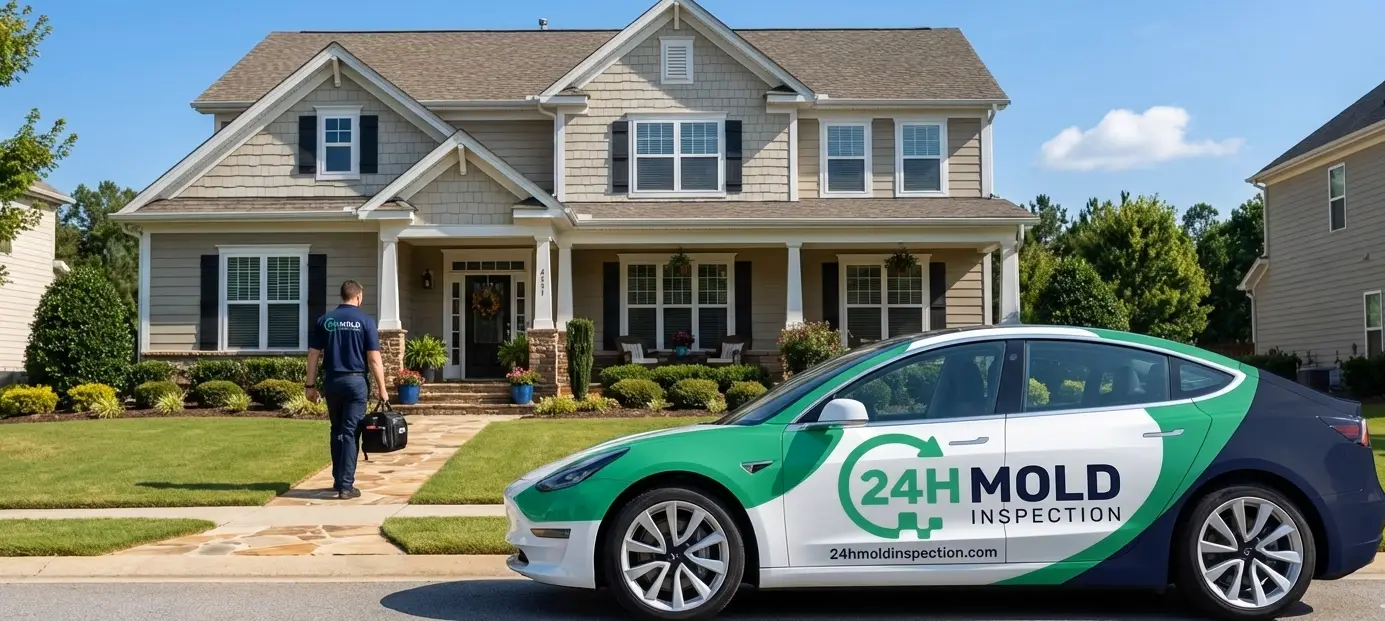
Certified mold inspection and testing in West Bloomfield. Same-day appointments, lab-verified reports, and no financial stake in any remediation work that follows.
(947) 262-3328What We Do
Air and surface samples analyzed in a state-certified lab. You receive mold species ID, spore count data, and lab-verified documentation that holds up with insurers, attorneys, or counsel.
About
At 24H Mold Inspection of West Bloomfield, we know no two buildings respond to moisture the same way.
West Bloomfield Township is defined by its network of inland lakes — Orchard Lake, Cass Lake, Pine Lake, and Walnut Lake among them — and the elevated ambient humidity and groundwater conditions that come with lakeside residential development at scale. Properties on or near these lakes face higher baseline moisture exposure than inland communities, and the township's predominantly upscale housing stock of large custom homes and estate properties means that when mold develops, it often affects significant finished square footage before it is detected. West Bloomfield's heavily wooded lots compound the lake moisture influence by limiting drying and airflow around the building envelope throughout the year.
West Bloomfield is predominantly upscale single-family residential, with a high concentration of large custom homes and estate properties built between the 1960s and 1990s on wooded lots adjacent to or within proximity of the township's inland lakes. Large finished basements and complex multi-level rooflines are characteristic of this housing stock, and the lake-influenced groundwater conditions throughout the township mean that basement waterproofing systems here are under more consistent pressure than in drier inland communities.
Services
Mold inspection, mold testing, and environmental risk assessments for West Bloomfield properties. Available 24/7, with no remediation work to bias the findings.

Why Us
24H Mold Inspection of West Bloomfield combines local field experience with state-certified methods and lab analysis. Reports get back to you quickly and clearly, with no upsell tacked on to the findings.
We don't stop at surface-level findings. Active leaks, health symptoms, post-remediation work, and pre-purchase due diligence each call for a different inspection approach. Our certified mold inspectors guide you through the specific situation rather than running a generic checklist.
Strengths
We check every box, then go further. Book your inspection today
Licensed inspectors with proven field experience in West Bloomfield.
FLIR thermal cameras, calibrated moisture meters, and lab-verified sampling.
Straightforward updates and honest reporting throughout the process.
Highly rated by West Bloomfield homeowners and businesses.
5 Step Process
Choose a date and time that fits your schedule.
Flexible scheduling means same-day and next-day appointments are usually available, with 24/7 emergency response when the situation needs it.
Our certified mold inspectors assess every mold-prone area.
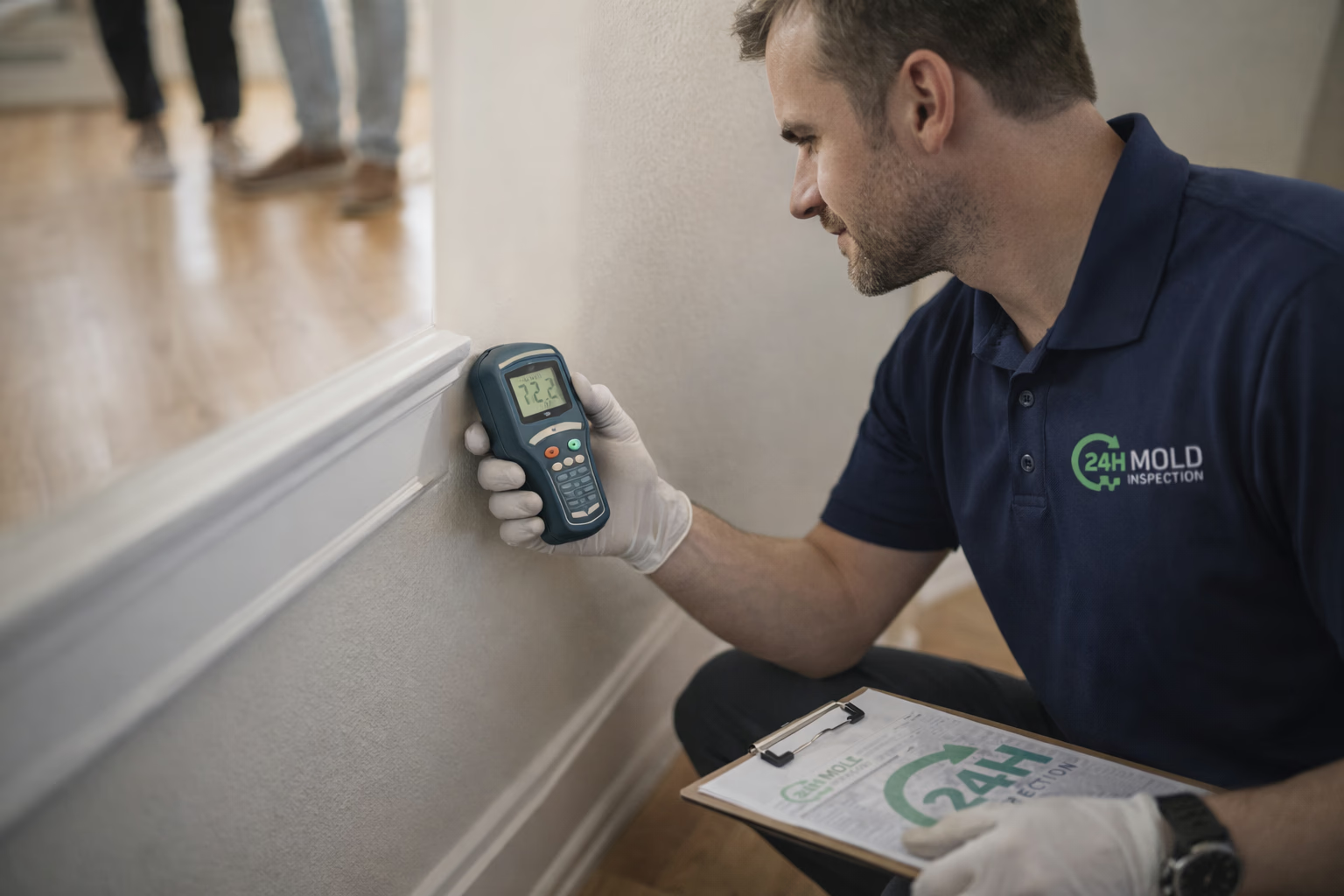
We walk the property identifying visible mold and moisture issues, using thermal imaging and moisture meters to catch what's hidden behind walls and under flooring.
Air and surface samples collected for lab analysis.
Our certified mold inspectors collect targeted samples from key areas to find mold spores both visible and hidden, with sample sites documented on a property map.
Lab testing returns precise results.
Samples go to a state-certified lab for detailed analysis identifying mold species and contamination levels, typically returned within 24 to 72 hours.
Insights and clear next steps from our experts.
You receive a written report with lab results, inspector findings, and specific recommended action steps to resolve any mold issues safely.
Who We Serve
24H Mold Inspection of West Bloomfield brings clear answers to HOAs, hotels, commercial buildings, and homes through certified mold inspection and testing services.
West Bloomfield is defined by its chain of inland lakes, including Orchard Lake, and by the residential development that gathered along their shores. Lakefront lots sit with foundations close to the lake's water table, which rises in wet springs and stays elevated through the thaw. Crawl spaces and basement walls on low lots take hydrostatic pressure from that groundwater, not only surface runoff. Docks, seawalls, and shoreline landscaping add maintenance that, when deferred, lets water work toward the structure.
Many of the oldest homes near the lakes began as seasonal cottages and were later converted to year-round use. Those buildings were designed for summer: minimal insulation, single-pane windows, and ventilation meant for open windows rather than a heated Michigan winter. Full-time occupancy brings warm, humid indoor air against cold exterior surfaces, which drives condensation inside walls and in attics. Additions built over the decades often tie into the original structure at seams where moisture collects.
Most of West Bloomfield's housing was built from the 1960s through the 1980s on former farmland and woodland, in Colonial, ranch, and split-level styles on generous lots. Those homes are now 40 to 60 years old, and original systems are aging together. Roofing has been replaced at least once, original aluminum windows have lost their seals, bath fans often vent into the attic, and HVAC condensate lines are failing. Attics are a common place for hidden moisture, since poor ventilation and exhaust ducted into the attic space both load them with humid air.
Oakland County's clay-rich soil holds moisture far longer than sandy soil. Ground that saturates during the March thaw can press against foundation walls into May or June. Freeze-thaw cycling also opens small cracks in foundation walls and masonry each winter, and water that enters in fall expands as it freezes and widens the gap by spring. The thaw is when most basement and crawl-space moisture problems start or get worse.
West Bloomfield's commercial corridors hold shopping centers, medical offices, and small commercial buildings, most built from the 1970s onward. Flat or low-slope roofs with limited drains, rooftop HVAC, and parapet details that leak at the edges send water above suspended ceilings, where it can run for months before a stain appears. Inspection here concentrates on roof drainage, condensate management, and moisture above ceilings.