1
Mold inspection
- Moisture detection
- Infrared technology
- Certified mold inspectors
- No conflict of interest

Certified mold inspection and testing in Taylor. Same-day appointments, lab-verified reports, and no financial stake in any remediation work that follows.
(734) 715-5125What We Do
Air and surface samples analyzed in a state-certified lab. You receive mold species ID, spore count data, and lab-verified documentation that holds up with insurers, attorneys, or counsel.
About
At 24H Mold Inspection of Taylor, we know no two buildings respond to moisture the same way.
Taylor sits in the southern tier of Wayne County where the combination of older housing stock, flat drainage-limited topography, and proximity to the Huron River and its tributaries creates persistent mold pressure across the city's residential neighborhoods. The city's homes are predominantly mid-twentieth-century construction with full basements, and many have seen multiple ownership transitions that have left maintenance gaps in basement waterproofing, roof systems, and HVAC infrastructure. The Huron River corridor to the south and west of the city influences groundwater levels in the lower-elevation neighborhoods, adding to the baseline moisture load that Michigan's climate already imposes.
Taylor's housing stock is primarily mid-century single-family homes with full basements, built during the postwar suburban expansion of Wayne County's southern tier. These properties share the moisture risk profile common to the region's older housing — aging basement waterproofing, original or modified plumbing, and roof assemblies that have cycled through many Michigan winters — compounded by the flat drainage conditions that keep groundwater elevated around foundations for extended periods following rainfall and snowmelt.
Services
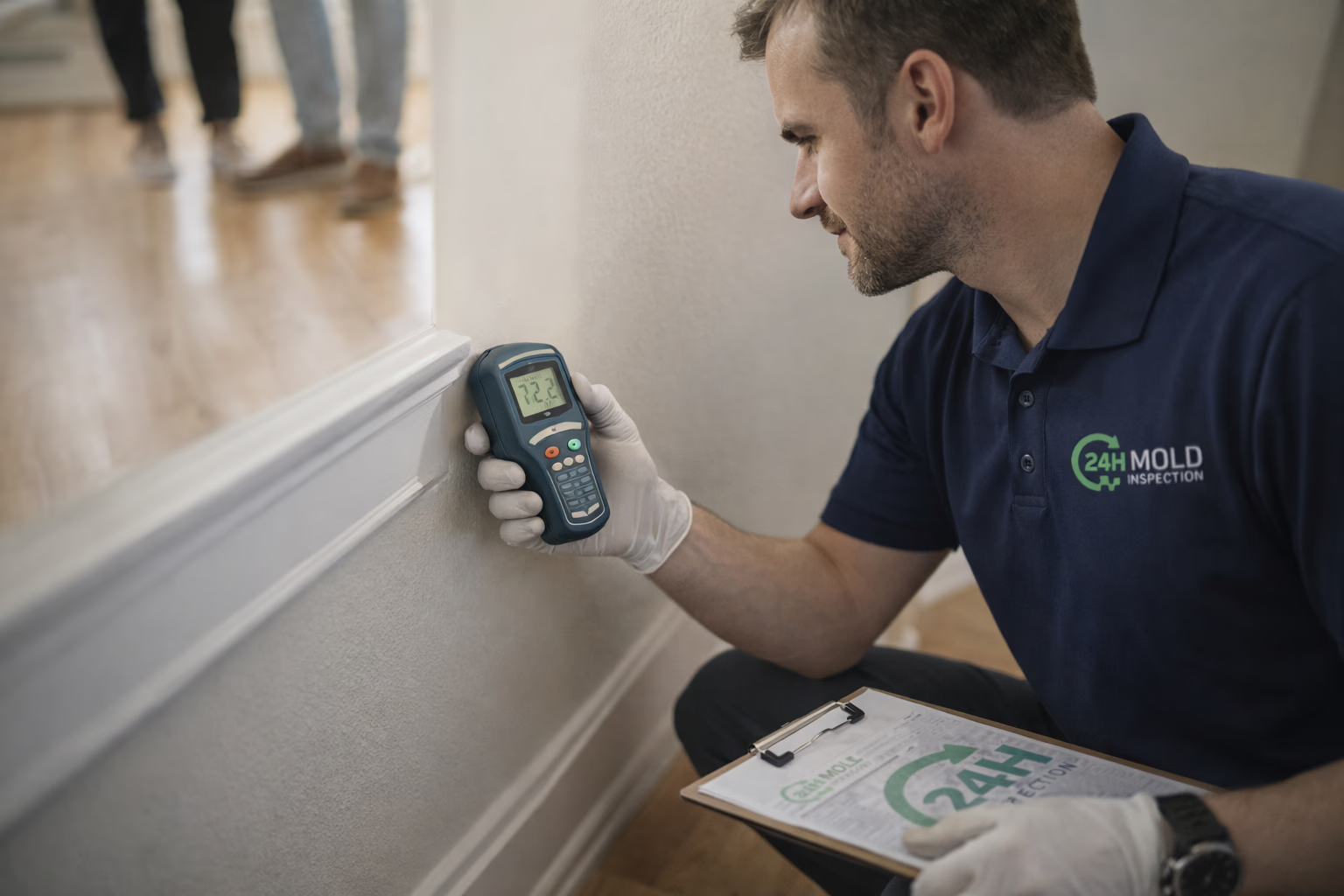
Mold inspection, mold testing, and environmental risk assessments for Taylor properties. Available 24/7, with no remediation work to bias the findings.
Why Us
24H Mold Inspection of Taylor combines local field experience with state-certified methods and lab analysis. Reports get back to you quickly and clearly, with no upsell tacked on to the findings.
We don't stop at surface-level findings. Active leaks, health symptoms, post-remediation work, and pre-purchase due diligence each call for a different inspection approach. Our certified mold inspectors guide you through the specific situation rather than running a generic checklist.
Strengths
We check every box, then go further. Book your inspection today
Licensed inspectors with proven field experience in Taylor.
FLIR thermal cameras, calibrated moisture meters, and lab-verified sampling.
Straightforward updates and honest reporting throughout the process.
5.0 stars from 5+ Taylor homeowners and businesses.
Testimonials
Thousands of Taylor property owners have come to us for reliable, detailed mold assessments
Great experience with this company. The inspector was friendly and didn't mind me following him around asking a million questions. He was very knowledgeable about local climate issues and how they affect mold growth in older homes. Definitely five-star service.
Madison J.
5 Step Process
Choose a date and time that fits your schedule.
Flexible scheduling means same-day and next-day appointments are usually available, with 24/7 emergency response when the situation needs it.
Our certified mold inspectors assess every mold-prone area.
We walk the property identifying visible mold and moisture issues, using thermal imaging and moisture meters to catch what's hidden behind walls and under flooring.
Air and surface samples collected for lab analysis.
Our certified mold inspectors collect targeted samples from key areas to find mold spores both visible and hidden, with sample sites documented on a property map.
Lab testing returns precise results.
Samples go to a state-certified lab for detailed analysis identifying mold species and contamination levels, typically returned within 24 to 72 hours.
Insights and clear next steps from our experts.
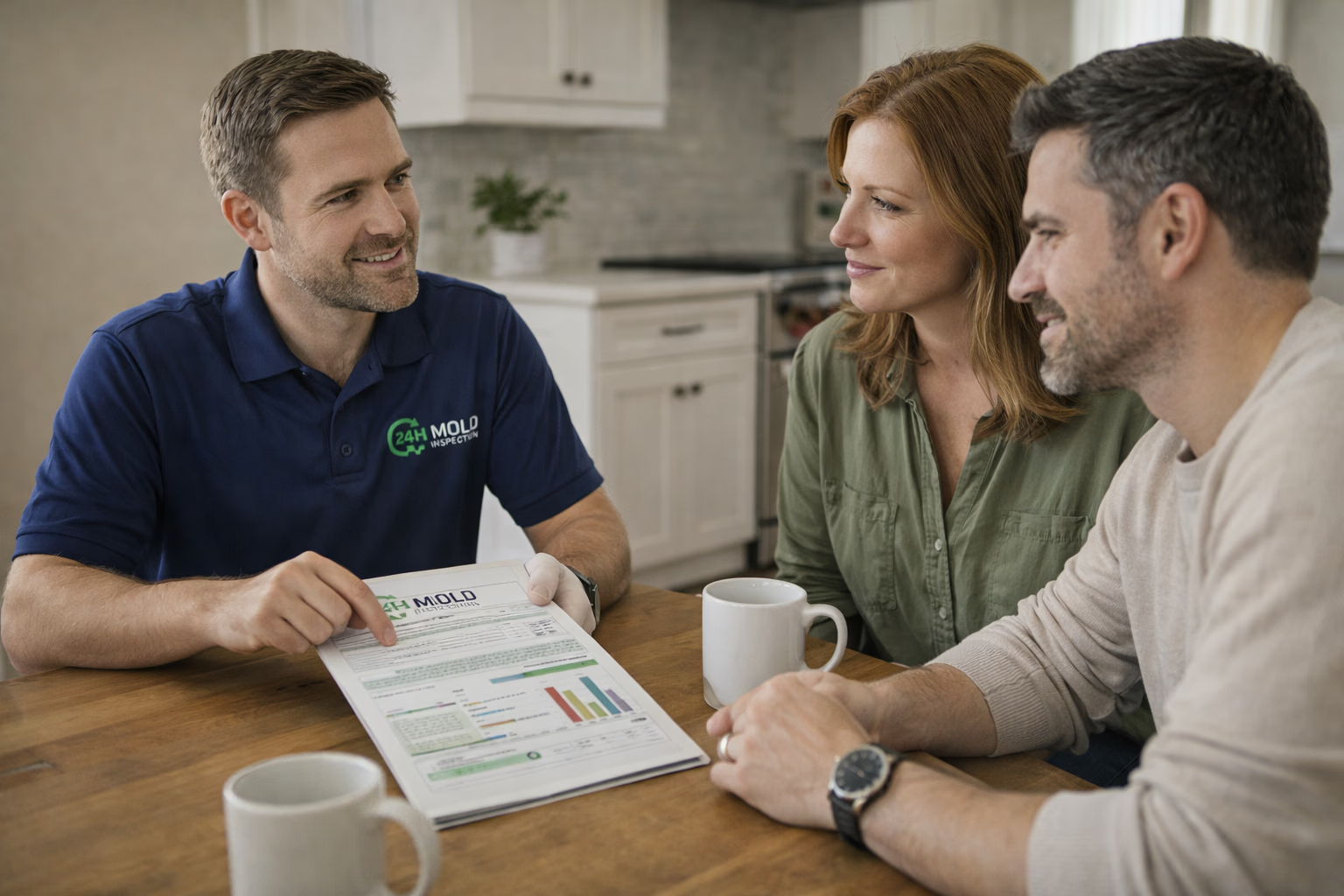
You receive a written report with lab results, inspector findings, and specific recommended action steps to resolve any mold issues safely.
Who We Serve
24H Mold Inspection of Taylor brings clear answers to HOAs, hotels, commercial buildings, and homes through certified mold inspection and testing services.
Most of Taylor's housing went up in the postwar decades as ranches, bungalows, and split-levels with full basements on flat lots. These homes are now 55 to 70 years old. Galvanized plumbing is failing, basement waterproofing has aged out or been patched, and bath fans often still vent into the attic. Southeast Michigan's clay soil holds moisture against foundations long after the snow melts.
Taylor sits on flat, drainage-limited ground in the southern tier of Wayne County, with the Huron River and its tributaries influencing groundwater in the lower-elevation neighborhoods. After heavy rain or a fast thaw, water has few places to go, so ground around foundations stays saturated and basements take on seepage through floor-wall joints and cracks. A failed sump pump or a power outage during a storm is a common start to a moisture problem.
Taylor's commercial corridors, including the shopping centers and retail strips along its main roads, are mostly large-footprint buildings with flat roofs, limited drains, and rooftop HVAC. Water that gets in travels above suspended ceilings and stays hidden for months. Inspection concentrates on roof drainage, condensate lines, and mechanical rooms.
A large share of Taylor's housing is rental, from single-family homes to duplexes and apartment communities. High occupancy, attic-venting bath fans, single-pane windows, and repairs deferred between tenancies keep humidity high through Michigan winters. In stacked buildings, a leak on one floor surfaces in the unit below.
Taylor also has subdivisions and condominium communities from the 1970s through the 1990s. Roofing, windows, and HVAC from that era are failing in clusters, and in attached housing a failure in a shared roof or plumbing stack can show up as mold in a neighboring unit.