24H Mold Inspection
Royal Oak24/7 EMERGENCY(947) 262-2922
HomeOur ServicesMold TestingSwab Testing
Mold Testing

Swab Testing

Mold swab testing handles the textured, damp, and irregular surfaces where mold often grows without any visible sign.

Overview

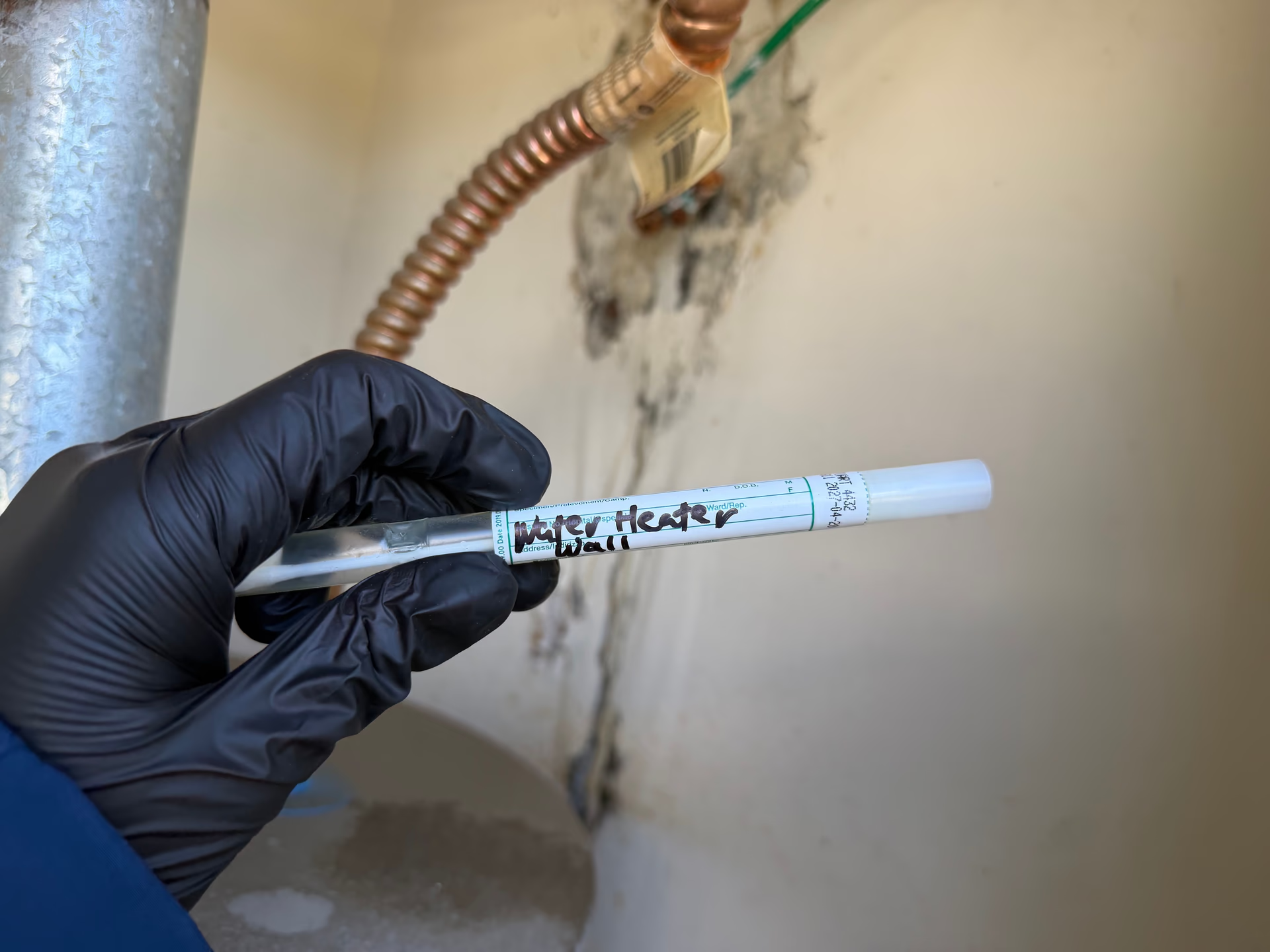
Why mold swab testing matters

Mold grows in damp areas without always showing on the surface. Swab testing detects microbial growth on materials that are soft, porous, or moisture-prone, and is the right approach after water damage or in spaces that resist visual inspection.

Mold swab testing detects:

  • —Hidden mold on porous or textured materials
  • —Growth in damp spots like under sinks or around HVAC
  • —Contamination on organic materials including wood and fabric
  • —Mold that visual inspection alone tends to miss
Why mold swab testing matters
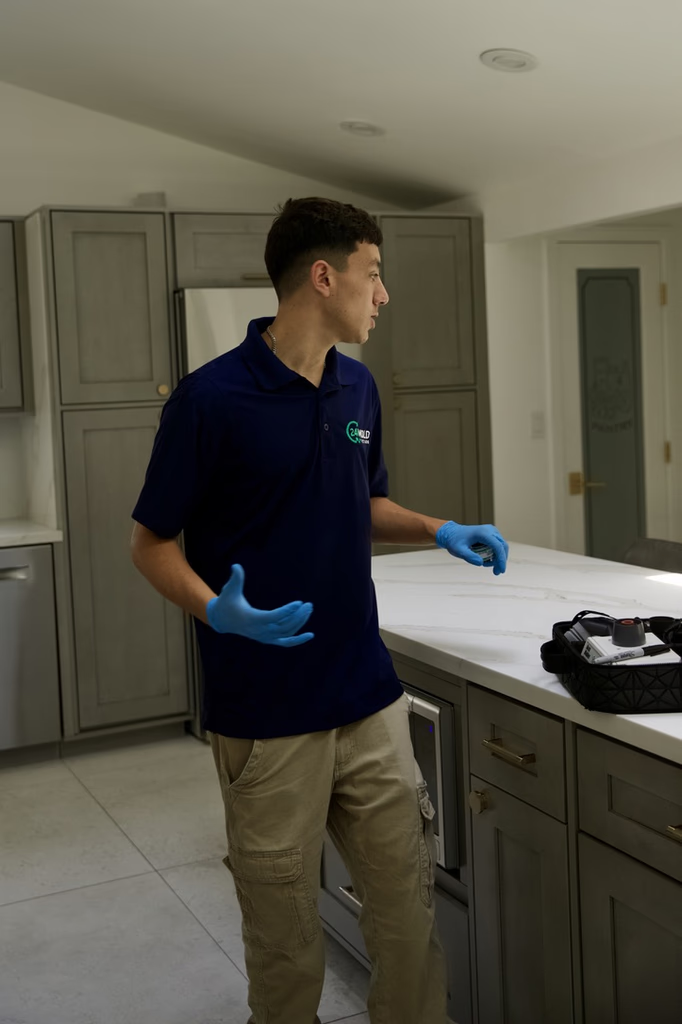
Mold inspector at work

Benefits

What you get from swab testing

A flexible method for hard-to-sample surfaces

  • —Moisture-ready: Designed for damp and water-damaged materials.
  • —Flexible: Handles uneven, porous, and irregular surfaces.
  • —Confirmatory: Validates mold presence in hidden or subtle areas.
  • —Lab-backed: Lab-verified results with species identification.

About

How mold swab testing works

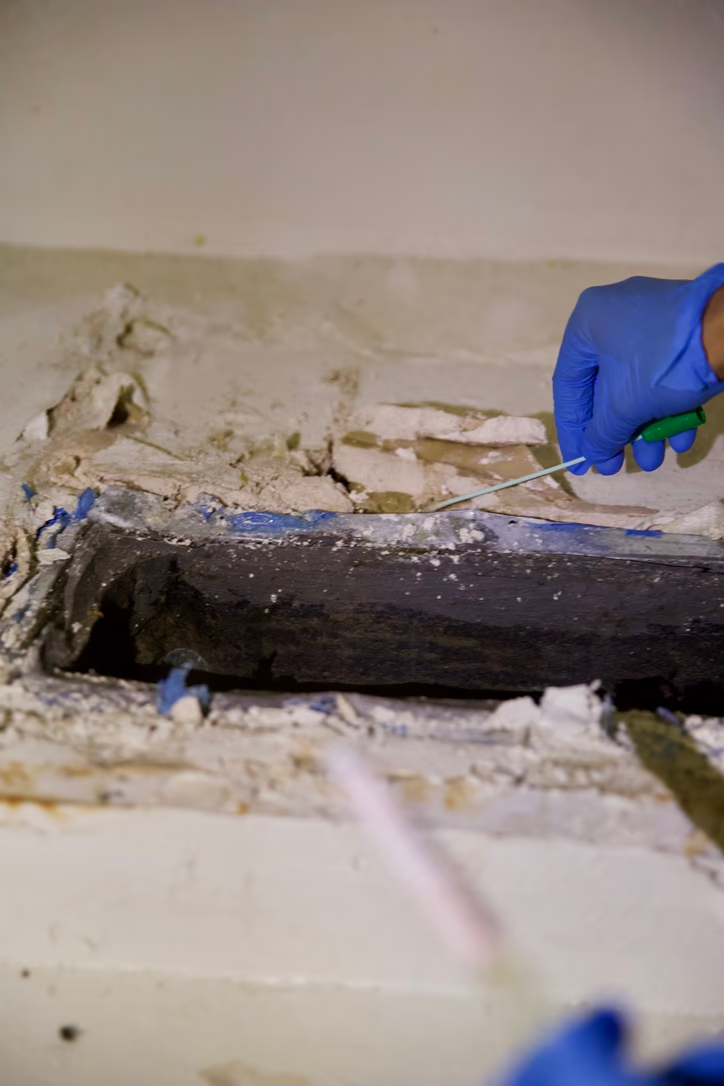
Our certified mold inspectors gently rub a sterile swab across the suspect area to collect a sample, then seal it and send it to a state-certified lab for mold species identification and contamination level.

Our process includes:

  • —Sterile collection from textured surfaces and porous materials
  • —Coverage of damp surfaces and hard-to-reach spots
  • —Lab work returning spore counts and lab-verified results
  • —A mold inspection report with clear next steps
How mold swab testing works

Mold inspection Royal Oak FAQ

Call For An Inspection
Royal Oak's oldest residential stock — the Tudor Revival, Colonial, and Craftsman homes in the blocks around downtown — carries the full aging-infrastructure moisture risk profile of their era. Original or early-replacement cast-iron radiator systems in these homes develop slow line failures in basement and wall spaces that are invisible until the surrounding material shows damage. Original plumbing transitions from galvanized to early copper create corrosion points where pipes meet fittings inside wall cavities. Crawl spaces under these raised foundations were built before modern vapor barriers and have accumulated decades of ground moisture migration. Michigan's freeze-thaw cycles stress foundation masonry and chimney mortar annually, opening new intrusion pathways each spring.
In the older masonry commercial buildings along Main Street and Washington Avenue that have been converted to mixed-use residential, moisture is a consistent finding — and the mechanism is usually the building's age and construction type rather than any specific failure. Brick construction from the 1920s and 1930s develops moisture through mortar joint degradation and parapet cap failure that has been occurring for decades. Below-grade spaces in these buildings often have original concrete floors whose moisture history includes decades of commercial use before residential conversion. The residential units above retain on the upper floors carry the moisture that moves through the exterior masonry, and it shows up as staining and growth on interior walls and above suspended ceilings.
Michigan's climate creates mold risk through two distinct seasonal mechanisms that warmer climates don't share. In winter, the temperature differential between a heated interior and Michigan's cold outside air drives condensation on cold surfaces inside wall assemblies — particularly at thermal bridges like window frames, exterior corners, and inadequately insulated rim joists. In spring and summer, Michigan's humid continental climate brings sustained relative humidity that keeps crawl spaces and basements in the moisture range where mold grows without any active leak required. Royal Oak's flat topography and clay-heavy soil retain ground moisture around foundations through the spring thaw season, which is when most basement moisture problems establish.
Pre-purchase inspection in Royal Oak is worth doing specifically in the older residential neighborhoods near downtown, where the housing era creates predictable moisture risk patterns. The inspection goes beyond what a standard home inspection covers: thermal imaging identifies moisture behind walls at plumbing and chimney locations, crawl space assessment documents the subfloor and vapor barrier condition, and attic inspection checks ventilation and any evidence of past roof intrusion. For the downtown converted buildings, a pre-purchase inspection should specifically assess the below-grade spaces and the exterior masonry condition. In Royal Oak's competitive real estate market, having independent moisture documentation before closing protects you from inheriting a long-running problem that wasn't disclosed.
Our Royal Oak team covers all of Royal Oak with same-day and next-day appointments and 24/7 emergency response for active water intrusion. Several immediately adjacent communities also have their own 24H Mold Inspection presence: Berkley, Ferndale, and Madison Heights each have coverage details on their own pages. Clawson and Oak Park are served from the Royal Oak team. If you're on the border between Royal Oak and a neighboring community and aren't sure which page to start with, call the number on this page and we'll route you to the right team.
Yes — commercial buildings along Woodward and Main Street, mixed-use residential above retail in the downtown core, and rental properties throughout the city. Royal Oak's rental stock includes a significant number of older single-family homes converted to multi-unit occupancy, where the original construction was not designed for high occupancy humidity loads. High occupancy in homes with original bath ventilation — fans that exhaust into attic space rather than outside — keeps relative humidity above the threshold where surface mold grows year-round. Reports are written to be handed to a property manager, insurer, or landlord with no remediation interest behind them.
Inspection and testing only. In Royal Oak's older housing stock, where a moisture source is often a combination of aging systems rather than a single acute failure, the remediation scope can be significant, and a company with cleanup work to sell has a financial reason to find more of it. What you receive is the diagnosis: extent of growth, moisture source, lab-confirmed species, and a written report you can use to get comparable bids from multiple contractors on the same defined scope. Because we perform no remediation, our post-remediation verification carries no conflict of interest — the clearance report documents what we found, not what a contractor needed us to find.

Contact

Book your Royal Oak mold inspection today

Tell us what's going on and we'll respond the same day

Location

24H Mold Inspection of Royal Oak

Service area neighborhoods

  • Royal Oak
  • Clawson (adjacent)
  • Berkley (adjacent)
  • Ferndale (adjacent)
  • Oak Park (adjacent)
  • Madison Heights (adjacent)
Call For Service(947) 262-2922