1
Mold inspection
- Moisture detection
- Infrared technology
- Certified mold inspectors
- No conflict of interest

Certified mold inspection and testing in Plymouth. Same-day appointments, lab-verified reports, and no financial stake in any remediation work that follows.
(734) 987-6441What We Do
Air and surface samples analyzed in a state-certified lab. You receive mold species ID, spore count data, and lab-verified documentation that holds up with insurers, attorneys, or counsel.
About
At 24H Mold Inspection of Plymouth, we know no two buildings respond to moisture the same way.
Plymouth is a historic Wayne County community where a well-preserved downtown core is surrounded by residential neighborhoods ranging from nineteenth-century homes near the historic district to mid-century residential development and newer construction in Plymouth Township. The Rouge River headwaters and the network of small tributaries that feed through the Plymouth area maintain elevated soil moisture in the lower-elevation neighborhoods and contribute to the groundwater conditions that affect basement and crawl space moisture management across the community. Plymouth's older homes near the historic core carry the deepest moisture histories, while the township's newer subdivision homes face the aging-waterproofing and HVAC condensation issues common across western Wayne County.
Plymouth's residential stock spans a wide range of construction eras, from nineteenth-century historic homes in the downtown district to mid-century single-family neighborhoods and newer subdivision development in Plymouth Township. Historic properties near the downtown core require the most thorough moisture assessment given the age of their foundation systems, while mid-century and newer homes throughout the township deal with the moisture management challenges common to their respective construction eras under Michigan's demanding climate.
Services
Mold inspection, mold testing, and environmental risk assessments for Plymouth properties. Available 24/7, with no remediation work to bias the findings.

Why Us
24H Mold Inspection of Plymouth combines local field experience with state-certified methods and lab analysis. Reports get back to you quickly and clearly, with no upsell tacked on to the findings.
We don't stop at surface-level findings. Active leaks, health symptoms, post-remediation work, and pre-purchase due diligence each call for a different inspection approach. Our certified mold inspectors guide you through the specific situation rather than running a generic checklist.
Strengths
We check every box, then go further. Book your inspection today
Licensed inspectors with proven field experience in Plymouth.
FLIR thermal cameras, calibrated moisture meters, and lab-verified sampling.
Straightforward updates and honest reporting throughout the process.
Highly rated by Plymouth homeowners and businesses.
5 Step Process
Choose a date and time that fits your schedule.
Flexible scheduling means same-day and next-day appointments are usually available, with 24/7 emergency response when the situation needs it.
Our certified mold inspectors assess every mold-prone area.
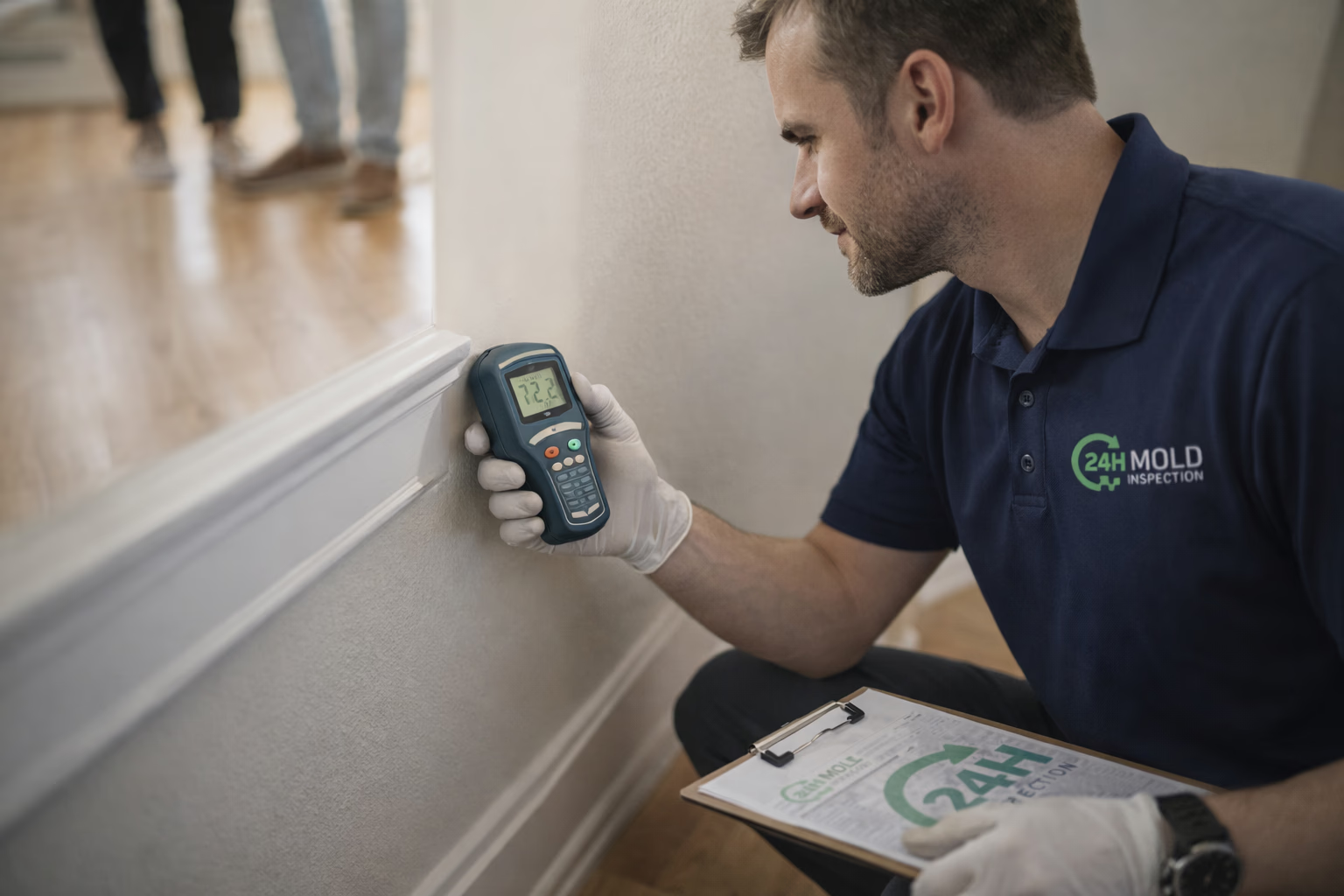
We walk the property identifying visible mold and moisture issues, using thermal imaging and moisture meters to catch what's hidden behind walls and under flooring.
Air and surface samples collected for lab analysis.
Our certified mold inspectors collect targeted samples from key areas to find mold spores both visible and hidden, with sample sites documented on a property map.
Lab testing returns precise results.
Samples go to a state-certified lab for detailed analysis identifying mold species and contamination levels, typically returned within 24 to 72 hours.
Insights and clear next steps from our experts.
You receive a written report with lab results, inspector findings, and specific recommended action steps to resolve any mold issues safely.
Who We Serve
24H Mold Inspection of Plymouth brings clear answers to HOAs, hotels, commercial buildings, and homes through certified mold inspection and testing services.
Plymouth's downtown grew up in the second half of the 1800s, and the blocks around Kellogg Park still hold brick commercial buildings and houses from that era. Many are now well over a century old. Original cast-iron or galvanized plumbing, stone or brick foundation walls built without waterproofing membranes, and roofs replaced many times are common conditions. Older masonry storefronts can move moisture through failing mortar joints into the apartments and offices above them, and basements under them often hold the building's oldest moisture history.
The streets surrounding Kellogg Park carry some of the area's oldest houses: Victorian, Queen Anne, and early-twentieth-century bungalows on small lots. Original radiator systems, stone foundations, and chimneys that have been relined and recapped many times are typical. Each repair creates a new seam where old and new materials meet, which is where sustained water entry usually starts. Mature trees keep roofs and north walls shaded and damp long after rain.
Much of the surrounding housing was built from the 1950s through the 1970s, many of them homes for the region's automotive and aerospace workforce. Colonial, ranch, and split-level homes on flat lots are now 50 to 70 years old. Original plumbing is near end of life, aluminum windows have lost their seals, bath fans often vent into the attic, and slab and crawl-space foundations have cycled through decades of freeze and thaw.
Southeast Michigan's clay-rich soil holds moisture far longer than sandy soil, so ground that saturates in the March thaw can press against foundation walls into May or June. Freeze-thaw cycling opens small cracks in foundations and masonry each winter, and water that enters in fall expands as it freezes and widens the gap by spring. Spring is when most basement and crawl-space moisture problems start or get worse.
Plymouth is two separate municipalities: the compact city around the historic downtown and the larger township that surrounds it. The city's housing skews older and denser, while the township holds more suburban development from the postwar decades onward. For an inspection, the difference shows up in housing age and lot layout rather than in the method, so scope is set by the specific home's age, foundation type, and systems, not by which side of the boundary it sits on.