
Infrared cameras reveal temperature anomalies that indicate hidden leaks, condensation zones, and moisture paths behind finished surfaces.
our services
Leak & Moisture Detection
Hidden moisture is the root cause of most mold problems. We locate it precisely—without tearing into walls—so you can fix the source, not just the symptoms.
About
Why Moisture Detection Comes First
Mold needs moisture to grow, and moisture hides. We use non-destructive instruments to map water through walls, floors, and ceilings—and thermal cameras to see temperature anomalies that indicate active leaks or condensation—giving you a precise location before any repair work begins.
Moisture detection helps you:
- —Pinpoint the exact source of a leak before demolition
- —Map moisture spread behind walls and under flooring
- —Identify condensation-prone areas before mold appears
- —Confirm repairs were effective after water damage is addressed
Methodology
How We Detect Moisture
Non-destructive tools that locate water without cutting into your property.
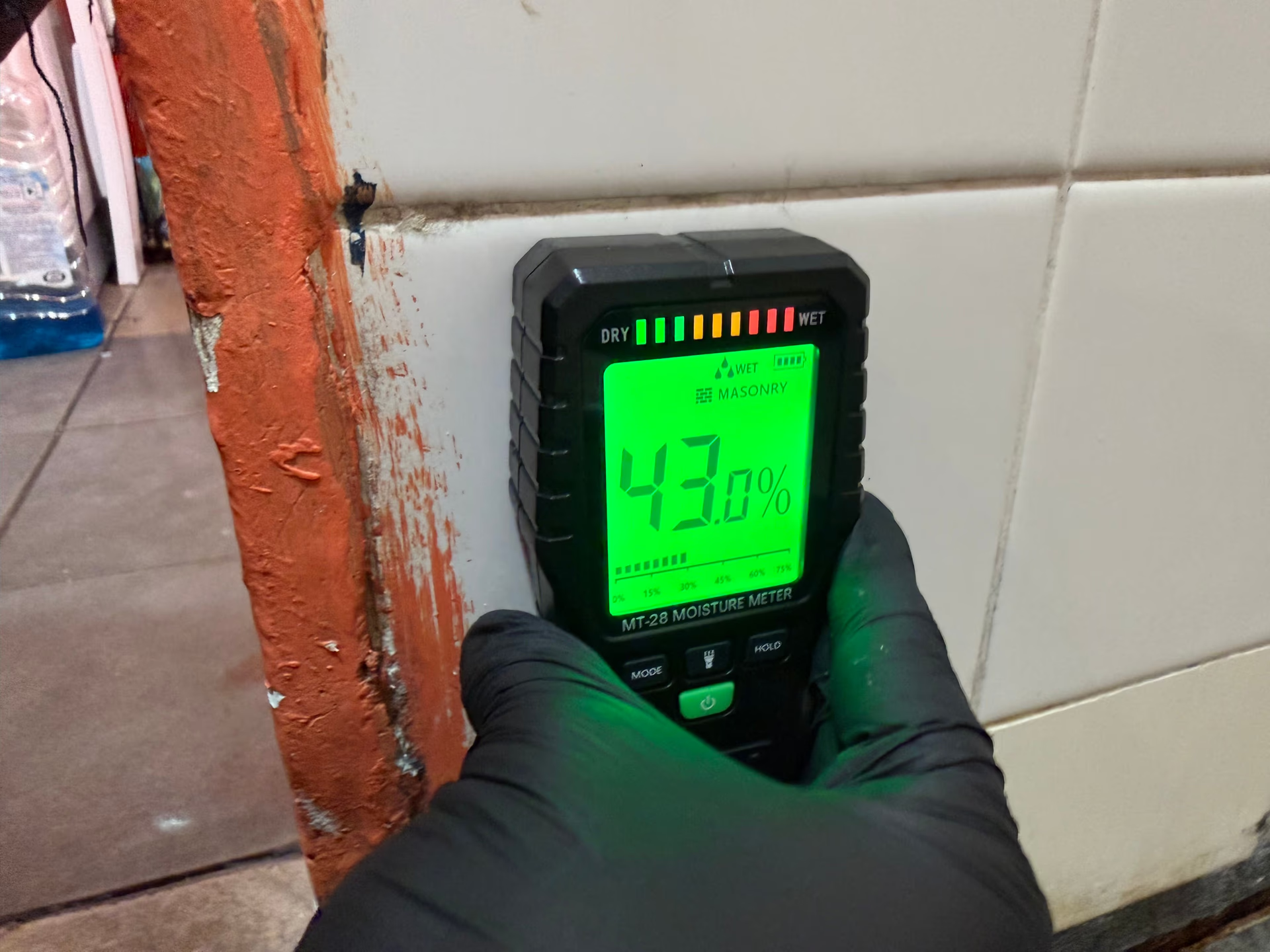
We measure the moisture content of walls, floors, and ceilings using both pin-based and non-invasive pinless meters—mapping the full extent of saturation without surface damage.
Best for:
— Drywall, wood framing, and subfloor assessment
— Mapping moisture spread after a water event
— Establishing baseline readings for monitoring
Our thermal cameras detect temperature differentials across surfaces. Water-loaded materials hold heat differently than dry materials, making leaks and saturated zones visible behind finished walls.
Best for:
— Finding active leaks behind drywall without cutting
— Locating plumbing or roof leaks not yet surface-visible
— Identifying condensation zones that feed mold
Every finding is documented with photos, moisture readings, and thermal images. You receive a clear report so contractors, insurers, or property managers can act immediately.
Report includes:
— Moisture readings mapped by room and surface
— Thermal images with annotated anomaly locations
— Probable source identification and next steps
Checklist
When Do You Need Moisture Detection?
Moisture detection is the right first step if:
- —You smell mold or dampness but can't find the source
- —You've had a plumbing leak, roof leak, or flood
- —You're buying a property and want to verify no hidden moisture
- —You had water damage and want to confirm the area is fully dry
- —Recurring mold keeps coming back after surface cleaning
Moisture detection is often the fastest and most cost-effective way to scope a mold problem before committing to testing or remediation.
Detection Services
Our Detection Methods
Two complementary tools that together give a complete picture of moisture conditions in any building.
Pin and pinless meters precisely measure moisture content in walls, floors, and ceilings—mapping the full extent of saturation without destructive investigation.
Mold inspection Dearborn FAQ
Call For An InspectionSame-day and next-day appointments are usually available across our Dearborn service area, with 24/7 emergency response for active leaks, recent water damage, or urgent real estate timelines. Standard scheduling runs 1 to 3 business days depending on availability.
Our certified mold inspectors assess bathrooms, kitchens, laundry rooms, basements, attics, crawl spaces, HVAC components, and any area showing signs of past or current water issues. Thermal imaging and moisture meters identify hidden moisture behind walls and under floors.
The Rouge River and its tributaries run through the southern portions of Dearborn and Dearborn Heights, and properties in the surrounding neighborhoods experience both direct flood risk and the chronic groundwater effects of proximity to a river system. Historic flooding along the Rouge — which has affected Dearborn neighborhoods in multiple significant events — has left behind moisture damage in basement and lower-level spaces that was not always fully remediated. Even in years without visible flooding, the elevated water table near the river corridor maintains hydrostatic pressure on foundation walls in adjacent properties. Any home within the Rouge River influence zone that has not received a recent basement and crawl space assessment should be considered a priority for inspection.
Pricing varies based on the size of the property, the scope of testing required, and whether any lab work is included. Most residential mold inspections in Dearborn fall within the standard industry range of $300 to $600, with a clear quote provided before any work begins.
Air sampling, swab testing, tape lift testing, wall cavity sampling, and HVAC mold testing. The inspector recommends the right method on-site based on what's found. Samples go to a state-certified lab, with results typically back in 24 to 72 hours.
Mold needs water to grow, so finding the moisture source is what prevents the same problem from coming back after any cleanup. Moisture detection during the inspection identifies plumbing leaks, roof leaks, condensation issues, and humidity buildup that's feeding any growth.
Yes. Post-remediation verification confirms the remediation contractor's work succeeded and the space is safe to reoccupy. Because we don't perform remediation ourselves, the verification stays independent of the remediation contractor's interests, which is what insurers and tenants look for.
The Ford Homes Historic District was built between 1919 and 1921 as 250 company houses in six models designed by Ford architect Albert Wood, which makes those homes more than a century old today. They share the mold-relevant traits of Dearborn's older stock: original basement foundations that predate modern waterproofing, layers of plaster and finishes that trap moisture, and roof and window systems that have been patched or replaced multiple times. Because the area is a designated historic district, exterior and structural modifications are restricted, which can make moisture-management upgrades like regrading, exterior drainage, or window replacement harder to carry out — so hidden dampness tends to accumulate. An inspection of a Ford Homes property focuses on the original basement, attic ventilation, and any additions built over the decades.
Yes. During the June 2021 storms — one of which dropped roughly 7.5 inches of rain, far beyond the sewer system's roughly 3-inch capacity — an estimated two-thirds of Dearborn homes took on water and sewage in their basements, and the 2014 flood was comparable. Sewage backup is Category 3 'black water' that saturates drywall, framing, carpeting, and stored belongings with contaminated water, and mold can begin growing within 24 to 48 hours. Even basements that were cleaned and dried years ago can still hide mold inside wall cavities, behind paneling, or under flooring if the drying was incomplete. If your basement flooded in 2014 or 2021 and hasn't been professionally assessed since, testing is worthwhile.
Much of Dearborn is served by an aging combined sewer system that carries both sewage and stormwater in a single line, which is why heavy rain can force backups into basements. The city is working through a multi-project sewer separation program to increase capacity, but many homes still connect through original clay laterals that are 60 to 80 years old and prone to cracking and root intrusion. Repeated minor backups and slow drains leave chronic dampness that feeds mold even without a major flood. A moisture assessment can distinguish a one-time flood event from an ongoing drainage or lateral problem that will keep producing mold until it's corrected.
Flooding has not affected Dearborn evenly. In the 2021 event, East Dearborn was hit hardest — some east-side neighborhoods reported nearly every home taking on basement water — while more of West Dearborn's higher-ground properties were spared the worst. Low-lying areas near the Rouge River corridor and the southern part of the city carry the most chronic groundwater and flood exposure. That said, no Dearborn neighborhood is immune, because the shared sewer-capacity limits affect the whole city. Homes on the harder-hit east side, and any property with a history of basement water, are the highest priority for inspection.
Dearborn's housing stock is dominated by brick bungalows and worker cottages built roughly between 1910 and 1940 for Ford factory employees. These homes typically have original stone or block basement foundations that were never designed for modern waterproofing, and after 80 to 100 years of Michigan groundwater pressure and freeze-thaw cycling, seepage through foundation walls and floor slabs is common. Their original or early-replacement windows also tend to collect condensation that migrates into wall cavities. The solid brick construction is durable, but the below-grade and window details are where moisture — and mold — most often accumulate.
Dearborn sits in a humid continental climate with hot, humid summers and cold winters, and both extremes drive mold. Summer humidity raises indoor moisture in basements and unconditioned spaces, where cool foundation walls cause condensation; winter freeze-thaw cycling stresses roofs, gutters, and foundations and opens paths for water intrusion. In many older Dearborn homes, attic ventilation and insulation were never upgraded, so warm indoor air condenses on cold roof sheathing in winter and feeds attic mold. Year-round humidity control — not just fixing visible leaks — is part of keeping these homes mold-free.
Because so much of Dearborn's stock is 80 to 100-plus years old, a pre-purchase inspection here goes beyond a surface walkthrough. The key areas are the original basement foundation for seepage and past flood staining, the attic for ventilation-related condensation mold, window frames and wall cavities for long-term condensation damage, and any additions or finished basements where older water damage may have been covered over rather than remediated. Given Dearborn's flood history, it's also worth confirming whether the property took on water in 2014 or 2021 and how it was remediated. An independent inspection — with no financial stake in remediation — gives a clear moisture picture before closing.
Inspection and testing only — we do not perform removal or remediation, and that separation is deliberate. The company telling you how much mold you have should not be the company billing you to take it out. What you get is the diagnosis: how far the growth extends, the moisture source keeping it alive, lab confirmation of what is present, and a written report you can hand to several remediation contractors so they bid the same scope instead of their own estimates. In Dearborn that independence usually works in the homeowner's favour. Basement moisture is close to universal in this housing stock, so a remediation company walking a century-old basement will nearly always find something to quote, and the useful question is not whether moisture exists but whether it is active, where it enters, and how much material is genuinely affected. A defined scope routinely produces a smaller job than a walkthrough estimate.
The visit opens with history — the age of the house, what has flooded or backed up, what has been repaired — then moves into a systematic survey with thermal imaging and pin and pinless moisture meters alongside the visual inspection. In Dearborn the basement is where the work concentrates, and for good reason: the city's brick bungalows and two-story colonials sit on original stone or poured foundations built long before modern waterproofing, and after seventy to a hundred years of groundwater pressure and freeze-thaw cycling, intrusion through foundation walls and floor slabs is the norm rather than the exception. The inspection maps where water is entering, checks the rim joist and sill area, the base of finished basement walls, and any framing installed against foundation walls. Window frames get attention too, since decades of winter condensation feed moisture into the wall cavity below. Expect two to three hours for a typical home.
Michigan does not license mold inspectors or mold remediation companies — there is no state credential to look up, and anyone can describe themselves as a mold professional here. What you can verify still tells you most of what you need. Confirm recognized third-party industry certification and current liability insurance. Confirm samples go to an accredited independent laboratory rather than being read on site by the person selling you something. Confirm the company does not also perform remediation, since an inspector who profits from the cleanup has a direct financial reason to find more of it. And confirm the deliverable is a written report with photographs, instrument readings, and marked sample locations. One thing Michigan does license is contractors: residential builders and maintenance and alteration contractors are licensed through the state, so while the mold credential cannot be checked, the licence of whoever performs the actual repair work can be.
Yes — commercial and industrial buildings across the city, retail and office in East and West Dearborn, apartment buildings, and rental houses managed on behalf of owners. Commercial and industrial inspection differs mainly in where moisture hides: low-slope roofs pond and leak above ceiling systems, rooftop and packaged HVAC units generate condensation across long duct runs, and large interior volumes let a leak run a long time before anyone notices. Older industrial buildings add below-grade areas, utility tunnels, and mechanical spaces that flood quietly. For rental property the recurring issue is the basement again, and the documentation matters as much as the finding, because a basement moisture complaint between an owner and a tenant is difficult to resolve on description alone. Reports are written so an owner, a property manager, an insurer, a tenant, or counsel can each rely on them, and they carry no interest in how large the cleanup turns out to be.
Give every contractor the same report and ask them to bid the documented scope, so quotes differ on price and method rather than on how much mold each company claims to find. Verify licensing through the state — Michigan licenses residential builders and maintenance and alteration contractors even though it does not license mold work specifically — and confirm liability insurance and workers compensation. Then press on the moisture source, because in Dearborn that is where the real decision sits. Removing damp drywall and framing from a basement without addressing why water enters through the foundation guarantees a repeat, and the fix is frequently exterior or plumbing work rather than remediation: grading and downspout discharge away from the wall, a drain tile or sump system, or a backflow preventer where the concern is sewer backup. Ask whether the contractor will coordinate that work or whether you need to arrange it separately, and settle it before demolition starts.
It is the independent check performed after the cleanup and before containment comes down and the basement is refinished: confirmation that the affected material was genuinely removed, meter verification that framing, subfloor, and masonry dried to a normal moisture content, and clearance air sampling compared against an outdoor control taken the same day. It should come from someone other than the remediation company, since a contractor verifying their own work is grading their own exam. In Dearborn it matters most before a basement is refinished, and for a concrete reason: masonry and poured foundations release moisture slowly, so a wall whose surface reads dry can still be wet enough behind new studs and insulation to start the problem over inside a finished space where nobody will see it for years. Verification before those finishes go back is the cheapest step in the entire project, and the one most often skipped.
Contact
Book your Dearborn mold inspection today
Tell us what's going on and we'll respond the same day
Location
24H Mold Inspection of Dearborn
Phone
(313) 776-3539Service area neighborhoods
- East Dearborn
- West Dearborn
- Dearborn Heights
- Melvindale (adjacent)
- Allen Park (adjacent)
- Inkster (adjacent)