1
Mold inspection
- Moisture detection
- Infrared technology
- Certified mold inspectors
- No conflict of interest

Certified mold inspection and testing in Dearborn. Same-day appointments, lab-verified reports, and no financial stake in any remediation work that follows.
(313) 776-3539What We Do
Air and surface samples analyzed in a state-certified lab. You receive mold species ID, spore count data, and lab-verified documentation that holds up with insurers, attorneys, or counsel.
About
At 24H Mold Inspection of Dearborn, we know no two buildings respond to moisture the same way.
Dearborn is one of metro Detroit's older industrial suburbs, with a residential housing stock concentrated in the early-to-mid twentieth century that has been navigating Michigan's climate for 70 to 100 years in many cases. The city's predominantly brick bungalow and colonial home inventory presents specific mold risks tied to original stone or block basement foundations, aging window frames where condensation has fed moisture into wall cavities over decades, and roof systems that have been patched and modified multiple times. The Rouge River corridor running through the southern part of the city introduces additional flood and groundwater risk for properties in low-lying neighborhoods.
Dearborn is defined by its stock of early-twentieth-century brick bungalows and two-story colonials, the majority of which feature unfinished or partially finished basements with original stone or poured concrete foundations. These basement systems were not designed to meet modern waterproofing standards, and after 70 to 100 years of Michigan groundwater pressure and freeze-thaw cycling, moisture intrusion through foundation walls and floor slabs is the norm rather than the exception in this housing stock.
Services
Mold inspection, mold testing, and environmental risk assessments for Dearborn properties. Available 24/7, with no remediation work to bias the findings.

Why Us
24H Mold Inspection of Dearborn combines local field experience with state-certified methods and lab analysis. Reports get back to you quickly and clearly, with no upsell tacked on to the findings.
We don't stop at surface-level findings. Active leaks, health symptoms, post-remediation work, and pre-purchase due diligence each call for a different inspection approach. Our certified mold inspectors guide you through the specific situation rather than running a generic checklist.
Strengths
We check every box, then go further. Book your inspection today
Licensed inspectors with proven field experience in Dearborn.
FLIR thermal cameras, calibrated moisture meters, and lab-verified sampling.
Straightforward updates and honest reporting throughout the process.
5.0 stars from 106+ Dearborn homeowners and businesses.
Testimonials
Thousands of Dearborn property owners have come to us for reliable, detailed mold assessments
I requested a mold inspection after noticing discoloration on our living room wall. The inspector confirmed it was mold and pinpointed a slow leak causing it. Their detailed findings helped us get it remediated quickly.
Jade K.
5 Step Process
Choose a date and time that fits your schedule.
Flexible scheduling means same-day and next-day appointments are usually available, with 24/7 emergency response when the situation needs it.
Our certified mold inspectors assess every mold-prone area.
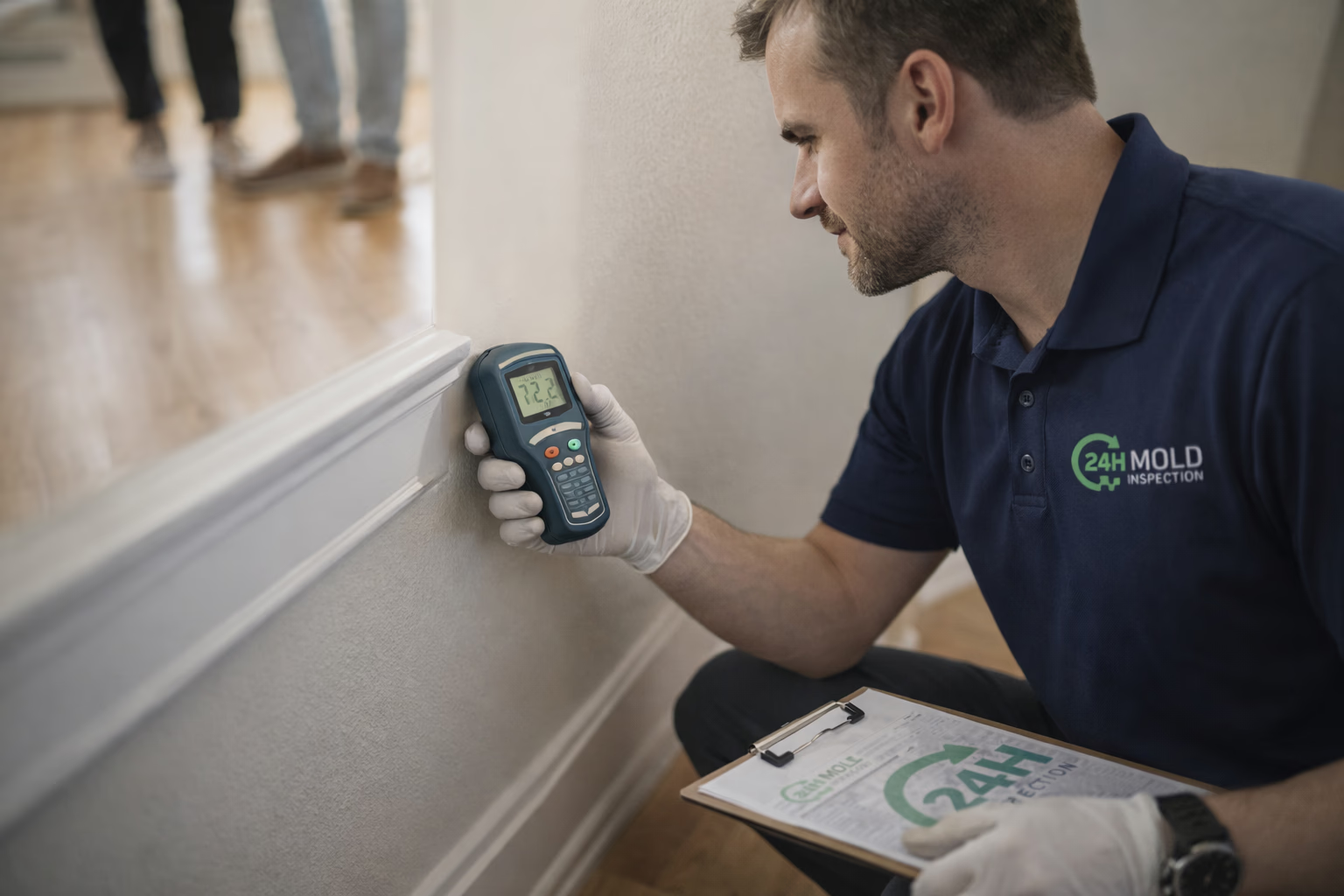
We walk the property identifying visible mold and moisture issues, using thermal imaging and moisture meters to catch what's hidden behind walls and under flooring.
Air and surface samples collected for lab analysis.
Our certified mold inspectors collect targeted samples from key areas to find mold spores both visible and hidden, with sample sites documented on a property map.
Lab testing returns precise results.
Samples go to a state-certified lab for detailed analysis identifying mold species and contamination levels, typically returned within 24 to 72 hours.
Insights and clear next steps from our experts.
You receive a written report with lab results, inspector findings, and specific recommended action steps to resolve any mold issues safely.
Who We Serve
24H Mold Inspection of Dearborn brings clear answers to HOAs, hotels, commercial buildings, and homes through certified mold inspection and testing services.
West Dearborn holds the city's larger colonials and the walkable downtown along Michigan Avenue, plus the Ford Homes Historic District — some 250 homes Henry Ford's company built in 1919 to 1921 for factory workers. These century-old brick houses, built to standardized early-1920s designs and protected as a historic district, carry original basements and roof systems that make slow, hidden moisture common and limit the modern retrofits that would fix it.
East Dearborn is denser and older, and its Warren and Michigan Avenue corridors form one of the country's most vibrant Middle Eastern commercial districts — bakeries, restaurants, markets, and apartments above the storefronts. Century-old masonry commercial buildings, heavy kitchen and food-service moisture, and shared walls in these mixed-use blocks create commercial mold pathways that behave nothing like a single-family home.
South Dearborn is dominated by the Ford River Rouge Complex — a 900-acre integrated factory built between 1917 and 1928 and still in operation — along with the warehouses and industrial buildings that surround it. These large-span, flat-roofed structures on heavily reworked former-industrial ground face condensation, roof-drainage, and slab-moisture issues on a scale, and of a kind, that residential inspections don't.
Dearborn Heights sits along Ecorse Creek, one of metro Detroit's most flood-prone waterways, and its neighborhoods have taken repeated, damaging basement flooding. In the major 2021 storms, overwhelmed and aging sewers backed water up into basements across the area — and that stormwater-and-sewage moisture, often incompletely dried, is a leading source of hidden mold in these homes.
The adjacent Downriver suburbs — Melvindale, Allen Park, and Inkster — share Dearborn's stock of early-to-mid-century bungalows, close to heavy industry, rail lines, and the Rouge complex. Aging basements, original plumbing, and decades of deferred maintenance in these working-class neighborhoods make foundation and basement moisture the routine finding, much as in the older parts of Dearborn itself.
Contact
Tell us what's going on and we'll respond the same day
Location
24H Mold Inspection of Dearborn
Phone
(313) 776-3539Service area neighborhoods
Newsletter
Monthly notes from our inspectors on prevention and air quality.