24H Mold Inspection
Dearborn24/7 EMERGENCY(313) 776-3539
HomeOur ServicesEnvironmental Risk Assessment
our services

Environmental Risk Assessment

We identify hidden mold risks and verify that your space is safe to occupy.

About

Why Risk Assessment Matters

Even after cleanup or surface testing, questions often remain: Is it really gone? Are we safe to move forward? That's where an Environmental Risk Assessment comes in.

Ideal for:

  • Post-remediation verification
  • Pre-sale property inspections
  • Property management compliance
  • Sensitive environments (schools, offices, multi-unit housing)
Why Risk Assessment Matters

Methodology

Our Assessment Process

Step-by-step inspection to confirm your space is safe.

We inspect key areas across your property to identify visible signs of mold, moisture, or environmental risks that may have been missed in past inspections.

We use precision tools to measure moisture in building materials and collect air samples for lab analysis—capturing invisible spores that may linger in the environment.

Within 24–72 hours, you'll receive a certified report detailing our findings: mold species (if present), spore levels, moisture hotspots, and actionable next steps.

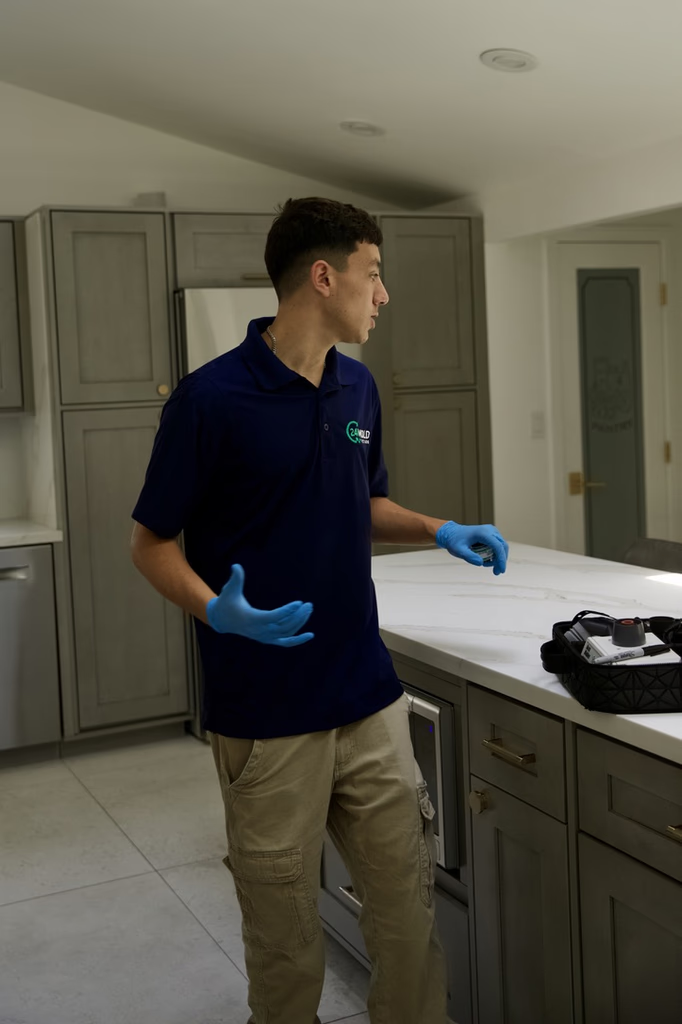
Mold inspector at work

Checklist

Is an Environmental Risk Assessment Right for You?

This service is ideal if:

  • You've had recent remediation or water damage
  • You're buying, selling, or managing a property
  • You need proof your space is safe to occupy

Still unsure? Let's talk. We'll help you decide if an assessment is the right step for your property.

Overview

What You'll Get

Certified results, safety clarity, and clear next steps—delivered fast.

1

Comprehensive Risk Report

State-certified results that summarize mold levels, moisture issues, and remediation needs.

2

Occupancy Safety Verification

Peace of mind that your property is safe to inhabit—especially critical for buyers, renters, and businesses.

3

Actionable Recommendations

If risks are found, we provide clear guidance on next steps. If not, your report becomes a safety asset.

Mold inspection Dearborn FAQ

Call For An Inspection
The Ford Homes Historic District was built between 1919 and 1921 as 250 company houses in six models designed by Ford architect Albert Wood, which makes those homes more than a century old today. They share the mold-relevant traits of Dearborn's older stock: original basement foundations that predate modern waterproofing, layers of plaster and finishes that trap moisture, and roof and window systems that have been patched or replaced multiple times. Because the area is a designated historic district, exterior and structural modifications are restricted, which can make moisture-management upgrades like regrading, exterior drainage, or window replacement harder to carry out — so hidden dampness tends to accumulate. An inspection of a Ford Homes property focuses on the original basement, attic ventilation, and any additions built over the decades.
Yes. During the June 2021 storms — one of which dropped roughly 7.5 inches of rain, far beyond the sewer system's roughly 3-inch capacity — an estimated two-thirds of Dearborn homes took on water and sewage in their basements, and the 2014 flood was comparable. Sewage backup is Category 3 'black water' that saturates drywall, framing, carpeting, and stored belongings with contaminated water, and mold can begin growing within 24 to 48 hours. Even basements that were cleaned and dried years ago can still hide mold inside wall cavities, behind paneling, or under flooring if the drying was incomplete. If your basement flooded in 2014 or 2021 and hasn't been professionally assessed since, testing is worthwhile.
Much of Dearborn is served by an aging combined sewer system that carries both sewage and stormwater in a single line, which is why heavy rain can force backups into basements. The city is working through a multi-project sewer separation program to increase capacity, but many homes still connect through original clay laterals that are 60 to 80 years old and prone to cracking and root intrusion. Repeated minor backups and slow drains leave chronic dampness that feeds mold even without a major flood. A moisture assessment can distinguish a one-time flood event from an ongoing drainage or lateral problem that will keep producing mold until it's corrected.
Flooding has not affected Dearborn evenly. In the 2021 event, East Dearborn was hit hardest — some east-side neighborhoods reported nearly every home taking on basement water — while more of West Dearborn's higher-ground properties were spared the worst. Low-lying areas near the Rouge River corridor and the southern part of the city carry the most chronic groundwater and flood exposure. That said, no Dearborn neighborhood is immune, because the shared sewer-capacity limits affect the whole city. Homes on the harder-hit east side, and any property with a history of basement water, are the highest priority for inspection.
Dearborn's housing stock is dominated by brick bungalows and worker cottages built roughly between 1910 and 1940 for Ford factory employees. These homes typically have original stone or block basement foundations that were never designed for modern waterproofing, and after 80 to 100 years of Michigan groundwater pressure and freeze-thaw cycling, seepage through foundation walls and floor slabs is common. Their original or early-replacement windows also tend to collect condensation that migrates into wall cavities. The solid brick construction is durable, but the below-grade and window details are where moisture — and mold — most often accumulate.
Dearborn sits in a humid continental climate with hot, humid summers and cold winters, and both extremes drive mold. Summer humidity raises indoor moisture in basements and unconditioned spaces, where cool foundation walls cause condensation; winter freeze-thaw cycling stresses roofs, gutters, and foundations and opens paths for water intrusion. In many older Dearborn homes, attic ventilation and insulation were never upgraded, so warm indoor air condenses on cold roof sheathing in winter and feeds attic mold. Year-round humidity control — not just fixing visible leaks — is part of keeping these homes mold-free.
Because so much of Dearborn's stock is 80 to 100-plus years old, a pre-purchase inspection here goes beyond a surface walkthrough. The key areas are the original basement foundation for seepage and past flood staining, the attic for ventilation-related condensation mold, window frames and wall cavities for long-term condensation damage, and any additions or finished basements where older water damage may have been covered over rather than remediated. Given Dearborn's flood history, it's also worth confirming whether the property took on water in 2014 or 2021 and how it was remediated. An independent inspection — with no financial stake in remediation — gives a clear moisture picture before closing.

Contact

Book your Dearborn mold inspection today

Tell us what's going on and we'll respond the same day

Location

24H Mold Inspection of Dearborn

Service area neighborhoods

  • East Dearborn
  • West Dearborn
  • Dearborn Heights
  • Melvindale (adjacent)
  • Allen Park (adjacent)
  • Inkster (adjacent)
Call For Service(313) 776-3539