1
Mold inspection
- Moisture detection
- Infrared technology
- Certified mold inspectors
- No conflict of interest

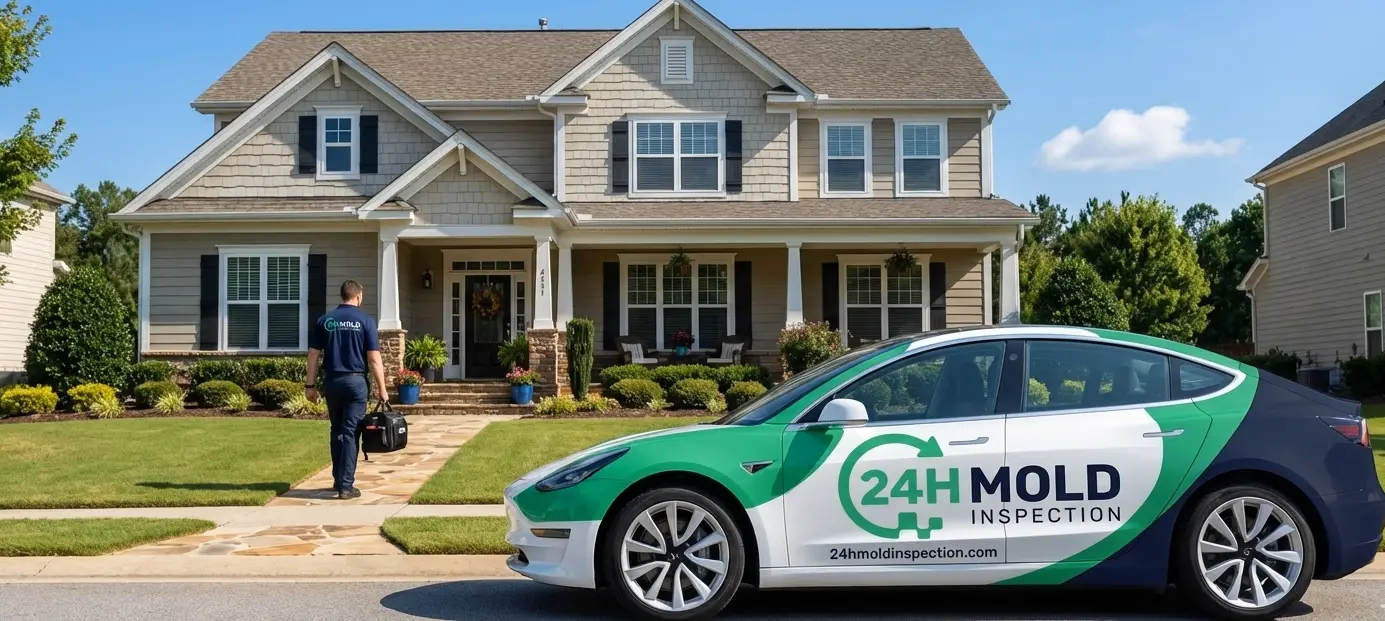
Certified mold inspection and testing in Sun Valley. Same-day appointments, lab-verified reports, and no financial stake in any remediation work that follows.
(818) 813-8308What We Do
Air and surface samples analyzed in a state-certified lab. You receive mold species ID, spore count data, and lab-verified documentation that holds up with insurers, attorneys, or counsel.
About
At 24H Mold Inspection of Sun Valley, we know no two buildings respond to moisture the same way.
Sun Valley occupies a distinctive position in the northeastern San Fernando Valley where industrial corridors, residential neighborhoods, and the foothills of the Verdugo and San Gabriel Mountains converge. Unlike many coastal communities where ambient humidity is the primary driver of mold growth, Sun Valley properties are more commonly affected by building-related moisture issues that develop within a hot inland climate. The area experiences significant temperature swings throughout the year, creating conditions where heavily air-conditioned interiors can generate condensation around ductwork, poorly insulated walls, and aging HVAC systems. Many portions of Sun Valley were developed during the mid-twentieth century and contain older housing stock with aging plumbing infrastructure, original roofing systems, and decades of renovations performed under varying construction standards. During winter storms, runoff descending from nearby foothills can also create localized drainage challenges that impact foundations and crawlspaces. Industrial activity, large paved surfaces, and dense urban development further contribute to heat retention, placing additional stress on building envelopes and mechanical systems that control indoor moisture.
Sun Valley contains a diverse mix of post-war single-family homes, light industrial properties, multifamily housing, small commercial buildings, and semi-rural foothill residences. Much of the residential inventory dates from the 1940s through the 1970s, creating recurring moisture concerns associated with aging plumbing, roofing systems, and outdated ventilation infrastructure.
Services
Mold inspection, mold testing, and environmental risk assessments for Sun Valley properties. Available 24/7, with no remediation work to bias the findings.

Why Us
24H Mold Inspection of Sun Valley combines local field experience with state-certified methods and lab analysis. Reports get back to you quickly and clearly, with no upsell tacked on to the findings.
We don't stop at surface-level findings. Active leaks, health symptoms, post-remediation work, and pre-purchase due diligence each call for a different inspection approach. Our certified mold inspectors guide you through the specific situation rather than running a generic checklist.
Strengths
We check every box, then go further. Book your inspection today
Licensed inspectors with proven field experience in Sun Valley.
FLIR thermal cameras, calibrated moisture meters, and lab-verified sampling.
Straightforward updates and honest reporting throughout the process.
5.0 stars from 15+ Sun Valley homeowners and businesses.
Testimonials
Thousands of Sun Valley property owners have come to us for reliable, detailed mold assessments
Friendly service! Tim was very patient and helpful with all my questions and concerns .
Delia M.
5 Step Process
Choose a date and time that fits your schedule.
Flexible scheduling means same-day and next-day appointments are usually available, with 24/7 emergency response when the situation needs it.
Our certified mold inspectors assess every mold-prone area.
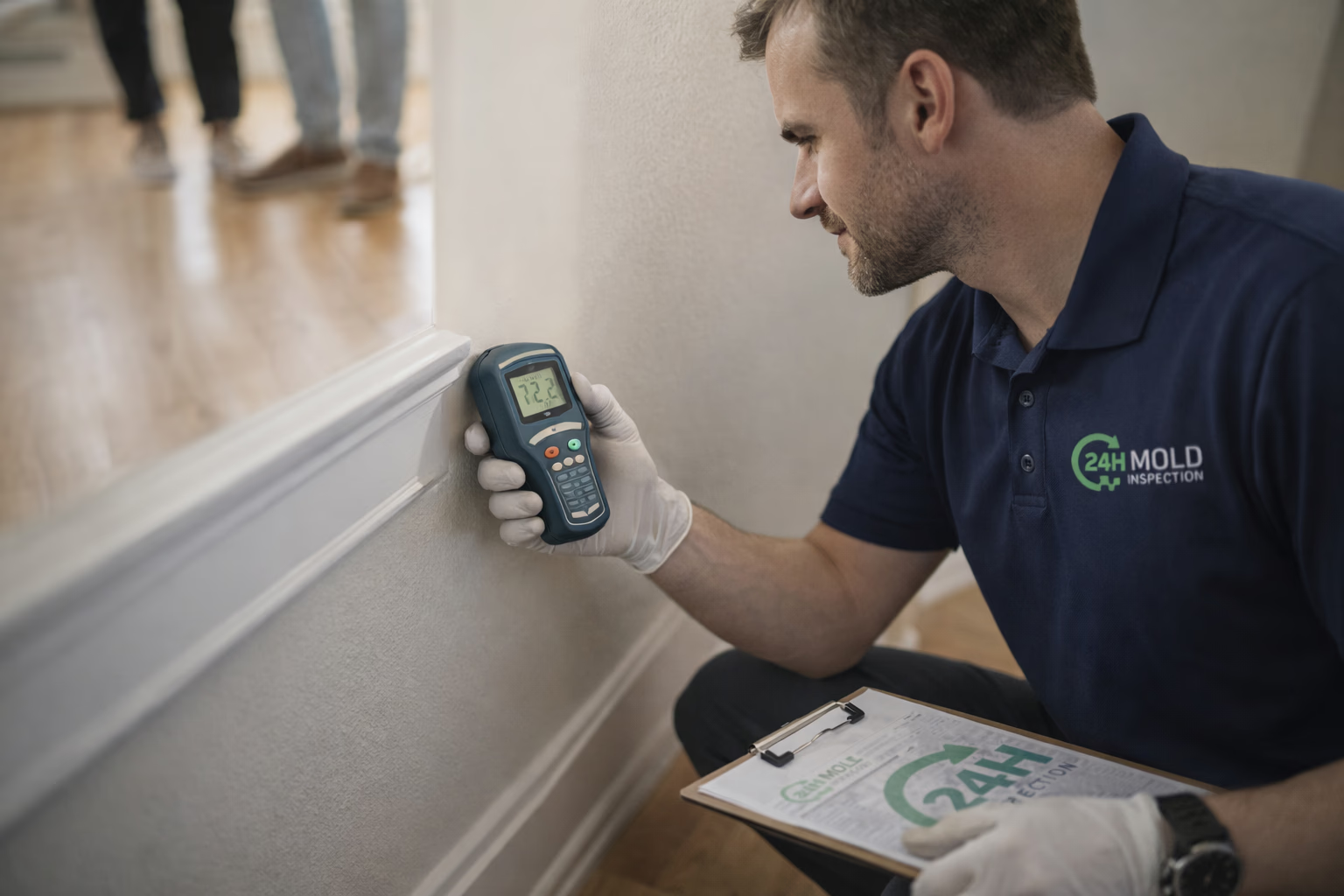
We walk the property identifying visible mold and moisture issues, using thermal imaging and moisture meters to catch what's hidden behind walls and under flooring.
Air and surface samples collected for lab analysis.
Our certified mold inspectors collect targeted samples from key areas to find mold spores both visible and hidden, with sample sites documented on a property map.
Lab testing returns precise results.
Samples go to a state-certified lab for detailed analysis identifying mold species and contamination levels, typically returned within 24 to 72 hours.
Insights and clear next steps from our experts.
You receive a written report with lab results, inspector findings, and specific recommended action steps to resolve any mold issues safely.
Who We Serve
24H Mold Inspection of Sun Valley brings clear answers to HOAs, hotels, commercial buildings, and homes through certified mold inspection and testing services.
The flat residential core is the reason Los Angeles County wrote a watershed plan for this neighborhood at all: roughly 2,700 acres of Sun Valley were built out after the war with no storm drain system, so runoff had nowhere to go but down the streets, and blocks around Sheldon and Strathern flooded on a schedule every wet winter. The infiltration systems eventually built under Sun Valley Park and at the Strathern Pit exist to catch that water. What flooded is 1940s through 1960s tract housing, much of it slab-on-grade with converted garages, and the water that matters is what wicked up into the bottom of drywall, under flooring, and into garage-turned-living-space.
Stonehurst is a Historic Preservation Overlay Zone built out in the 1920s and 1930s from stone hauled straight out of the Tujunga Wash — walls of native arroyo boulders set in mortar, laid up at grade with nothing underneath them a modern builder would call a moisture barrier. Stone and mortar are porous. They wick ground moisture upward and hold rainwater in the joints long after the face of the wall looks dry, and the usual instinct to seal or paint a damp masonry wall traps that water inside the assembly instead of letting it breathe out. Original wood windows, shallow crawl spaces, and roofs redone several times across a century fill in the rest.
Sun Valley carries one of the densest concentrations of gravel pits, recycling yards, and material-recovery facilities in Los Angeles, strung along Tuxford and Sheldon around the former Sheldon-Arleta and Bradley landfill sites. The buildings are big-span, flat-roofed warehouses and shops on slab, where roofs pond, drains clog with the dust these operations throw off, and large temperature swings condense moisture onto cold steel decking and cool concrete. Wash bays, truck yards, and processing lines add water all day. Houses sit directly across the street from several of these yards, which is why the outdoor spore and dust baseline on these blocks reads differently than a quiet residential street elsewhere in the Valley.
The September 2017 La Tuna Fire burned roughly 7,200 acres through this canyon and the Verdugo slopes above Sun Valley, Shadow Hills, and Burbank, and at the time it was the largest fire ever recorded inside Los Angeles city limits. The storms that followed that winter brought debris-flow warnings and mud off the burn scar. Parcels up here are larger and cut into decomposed granite and chaparral slopes, many on septic, and a good number sit at the mouth of a small drainage that funnels runoff toward them. Burned ground sheds water rather than absorbing it, so what arrives at a retaining wall or a below-grade garage comes fast and from uphill.
The north end of Sun Valley runs up into Glencrest Hills and the Shadow Hills line, where lots get bigger, sidewalks give out, and horse keeping is still normal. These parcels sit on the coarse sand and gravel of the Tujunga alluvial fan — the same deposit the gravel pits down the hill are dug into — which drains fast but sends sheet flow racing down unpaved lanes and long driveways when a storm outruns it. Barns, tack rooms, and wash racks are wet by design and almost never ventilated for it, detached workshops go unheated and unwatched for months, and on septic parcels a failing leach field turns up as saturated ground right against a foundation.
Google Search
Add 24H Mold Inspection as a preferred source so our pages are easier to spot in your Google results.
Contact
Tell us what's going on and we'll respond the same day
Location
24H Mold Inspection of Sun Valley
Phone
(818) 813-8308Hours
Service area neighborhoods
Newsletter
Monthly notes from our inspectors on prevention and air quality.