1
Mold inspection
- Moisture detection
- Infrared technology
- Certified mold inspectors
- No conflict of interest

Certified mold inspection and testing in South Gate. Same-day appointments, lab-verified reports, and no financial stake in any remediation work that follows.
(213) 971-1274What We Do
Air and surface samples analyzed in a state-certified lab. You receive mold species ID, spore count data, and lab-verified documentation that holds up with insurers, attorneys, or counsel.
About
At 24H Mold Inspection of South Gate, we know no two buildings respond to moisture the same way.
South Gate is a densely developed urban community in southeast Los Angeles County with a large inventory of mid-century homes, multifamily properties, and commercial buildings. Much of the housing stock dates from the post-war growth era, creating moisture concerns commonly tied to aging plumbing systems, roof leaks, slab foundations, and deferred maintenance. The city’s high-density development pattern means moisture problems can sometimes spread between adjoining units or remain hidden within shared wall assemblies for extended periods before discovery.
South Gate contains single-family homes, duplexes, apartment buildings, mixed-use properties, and neighborhood commercial developments. Aging infrastructure, shared building systems, and long-term maintenance conditions frequently influence moisture performance.
Services
Mold inspection, mold testing, and environmental risk assessments for South Gate properties. Available 24/7, with no remediation work to bias the findings.

Why Us
24H Mold Inspection of South Gate combines local field experience with state-certified methods and lab analysis. Reports get back to you quickly and clearly, with no upsell tacked on to the findings.
We don't stop at surface-level findings. Active leaks, health symptoms, post-remediation work, and pre-purchase due diligence each call for a different inspection approach. Our certified mold inspectors guide you through the specific situation rather than running a generic checklist.
Strengths
We check every box, then go further. Book your inspection today
Licensed inspectors with proven field experience in South Gate.
FLIR thermal cameras, calibrated moisture meters, and lab-verified sampling.
Straightforward updates and honest reporting throughout the process.
Highly rated by South Gate homeowners and businesses.
5 Step Process
Choose a date and time that fits your schedule.
Flexible scheduling means same-day and next-day appointments are usually available, with 24/7 emergency response when the situation needs it.
Our certified mold inspectors assess every mold-prone area.
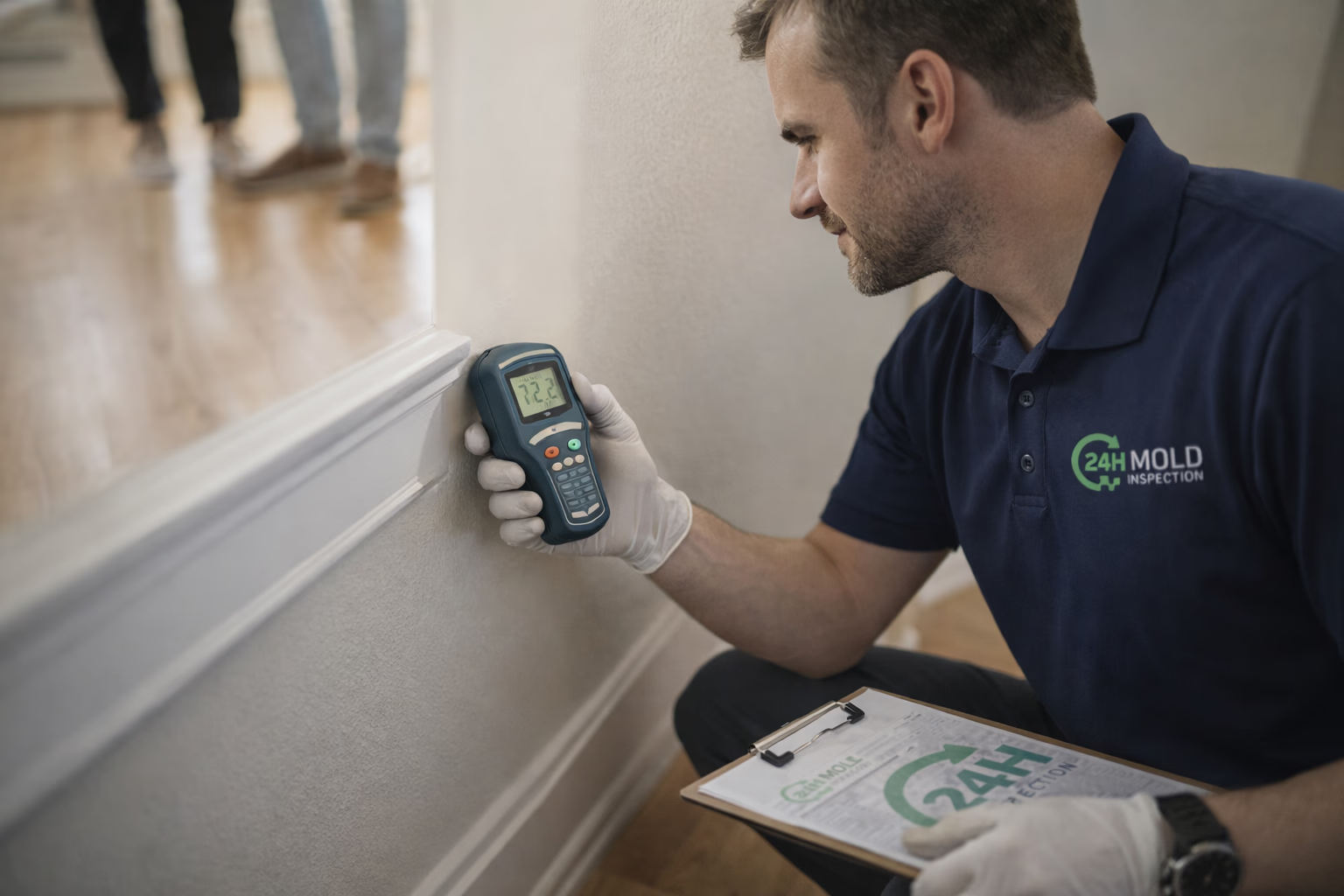
We walk the property identifying visible mold and moisture issues, using thermal imaging and moisture meters to catch what's hidden behind walls and under flooring.
Air and surface samples collected for lab analysis.
Our certified mold inspectors collect targeted samples from key areas to find mold spores both visible and hidden, with sample sites documented on a property map.
Lab testing returns precise results.
Samples go to a state-certified lab for detailed analysis identifying mold species and contamination levels, typically returned within 24 to 72 hours.
Insights and clear next steps from our experts.
You receive a written report with lab results, inspector findings, and specific recommended action steps to resolve any mold issues safely.
Who We Serve
24H Mold Inspection of South Gate brings clear answers to HOAs, hotels, commercial buildings, and homes through certified mold inspection and testing services.
Tweedy Mile along Tweedy Boulevard is South Gate's original commercial spine, named for the Tweedy family who homesteaded here in the 1870s before the city incorporated in 1923. The surrounding residential blocks carry California Bungalow and Craftsman homes from the 1920s through 1940s that were built for workers at the industrial facilities that defined this part of Los Angeles County. These properties are now nearly a century old and carry the full aging-infrastructure moisture risk of their era — original galvanized plumbing developing slow behind-wall leaks, foundation walls built without waterproofing membranes, and chimney and roofing details that have been through four or five replacement cycles.
Hollydale on South Gate's eastern edge was developed primarily in the 1940s and 1950s as Los Angeles County's industrial expansion drew workers to the Southeast LA communities. The ranch and bungalow homes here represent the first wave of South Gate's residential build-out beyond the original Tweedy Mile core, and they carry the aging-system moisture risks of their era — original slab-on-grade foundations developing moisture migration, galvanized plumbing at or past end of life, and HVAC systems developing condensate issues as they age. Hollydale's flat topography and clay-heavy Los Angeles County soil retain moisture around foundations through the wet season.
Firestone Boulevard carries South Gate's industrial legacy — the Firestone Tire and Rubber plant that gave the Boulevard its name operated here from 1928 until 1980, and the surrounding residential neighborhoods developed in the shadow of that and other manufacturing facilities along the corridor. Industrial-adjacent residential properties in South Gate carry a soil and groundwater context distinct from purely residential neighborhoods — the historical contamination from industrial operations affects the broader Southeast LA groundwater basin. While soil remediation is outside mold inspection scope, the moisture conditions around foundations in this corridor reflect both the industrial drainage history and the flat topography that accumulates runoff.
The residential neighborhoods around South Gate Park and the Civic Center represent the city's established mid-century residential core, with 1940s and 1950s homes on flat lots that have been through multiple ownership cycles. High rental density in this area adds high-occupancy moisture loading to construction that was designed for single-family use — original bath fans exhausting into attic space, single-pane windows condensing in winter mornings, and original plumbing at end of life create the conditions where moisture accumulates between tenancy cycles rather than being addressed.
South Gate's southern edge along Southern Avenue and the Gardendale neighborhood borders Lynwood and Compton, sharing the housing era and moisture risk profile of those communities — 1940s and 1950s residential development on flat Los Angeles County lots with aging infrastructure across a large number of properties simultaneously. The Southern Avenue corridor has seen higher rates of conversion from owner-occupied to rental use than South Gate's interior neighborhoods, adding high-occupancy humidity to already aging construction. Properties in the lower-lying blocks near the LA River flood control channel sit closer to the regional water table than the surrounding neighborhood average.
Contact
Tell us what's going on and we'll respond the same day
Location
24H Mold Inspection of South Gate
Phone
(213) 971-1274Service area neighborhoods
Newsletter
Monthly notes from our inspectors on prevention and air quality.