1
Mold inspection
- Moisture detection
- Infrared technology
- Certified mold inspectors
- No conflict of interest

Certified mold inspection and testing in Santa Monica. Same-day appointments, lab-verified reports, and no financial stake in any remediation work that follows.
(310) 620-6065What We Do
Air and surface samples analyzed in a state-certified lab. You receive mold species ID, spore count data, and lab-verified documentation that holds up with insurers, attorneys, or counsel.
About
At 24H Mold Inspection of Santa Monica, we know no two buildings respond to moisture the same way.
Santa Monica sits directly on the Pacific coast where some of the most persistent marine layer humidity in the Los Angeles region keeps ambient moisture elevated at the building envelope level throughout the year — even during months when the broader LA area experiences dry conditions. Properties within a mile of the ocean face a nearly constant moisture presence that works its way into stucco cracks, aging window seals, and poorly ventilated attic and crawl spaces regardless of whether it has recently rained. The city's housing stock ranges from early-twentieth-century bungalows and Spanish Revival homes near the historic downtown to mid-century apartment buildings along the residential corridors and newer luxury construction closer to the waterfront.
Santa Monica's property landscape includes a significant share of older single-family homes and bungalow courts from the 1920s through 1940s, a dense mid-century apartment building inventory, and a growing number of luxury residential and mixed-use developments near the waterfront. The older single-family and multi-family stock carries the most concentrated mold risk given the combination of building age, coastal moisture exposure, and the maintenance challenges that come with high-value properties in a market where cosmetic renovation often takes precedence over moisture remediation.
Services
Mold inspection, mold testing, and environmental risk assessments for Santa Monica properties. Available 24/7, with no remediation work to bias the findings.

Why Us
24H Mold Inspection of Santa Monica combines local field experience with state-certified methods and lab analysis. Reports get back to you quickly and clearly, with no upsell tacked on to the findings.
We don't stop at surface-level findings. Active leaks, health symptoms, post-remediation work, and pre-purchase due diligence each call for a different inspection approach. Our certified mold inspectors guide you through the specific situation rather than running a generic checklist.
Strengths
We check every box, then go further. Book your inspection today
Licensed inspectors with proven field experience in Santa Monica.
FLIR thermal cameras, calibrated moisture meters, and lab-verified sampling.
Straightforward updates and honest reporting throughout the process.
5.0 stars from 43+ Santa Monica homeowners and businesses.
Testimonials
Thousands of Santa Monica property owners have come to us for reliable, detailed mold assessments
If you're looking for someone to check your air, stop searching! 24H Mold Inspection of Santa Monica is the one. My realtor suggested them when I was worried about my house in Santa Monica. I'm not good with all this new technology stuff, but they made it so easy. The man who came was very polite and checked everything for air quality testing. He even saw a little water spot that I didn't notice! It made me feel much better in my home. If you need the best Home inspector near Santa Monica, just call them. They are good people.
Josiah C.
5 Step Process
Choose a date and time that fits your schedule.
Flexible scheduling means same-day and next-day appointments are usually available, with 24/7 emergency response when the situation needs it.
Our certified mold inspectors assess every mold-prone area.
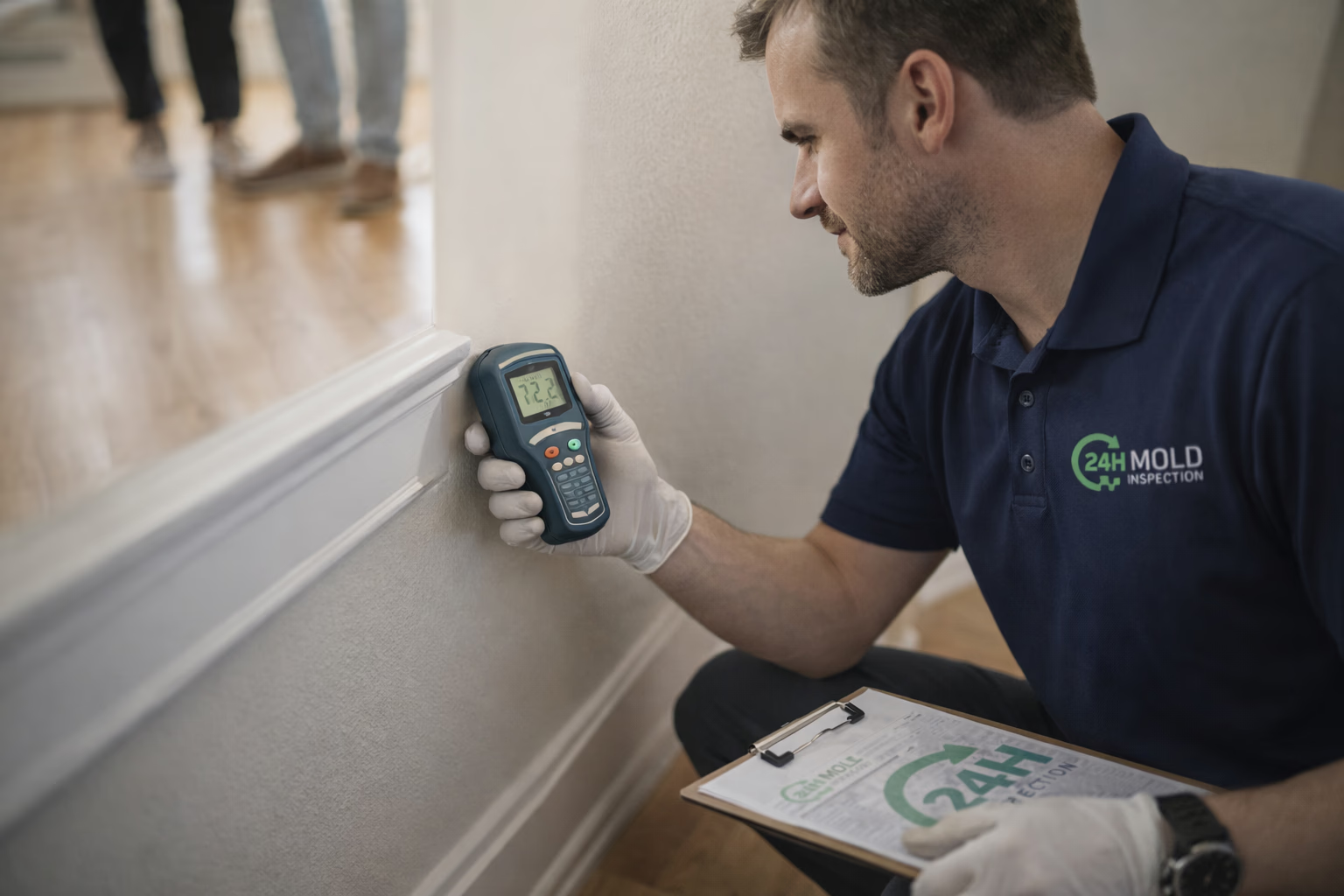
We walk the property identifying visible mold and moisture issues, using thermal imaging and moisture meters to catch what's hidden behind walls and under flooring.
Air and surface samples collected for lab analysis.
Our certified mold inspectors collect targeted samples from key areas to find mold spores both visible and hidden, with sample sites documented on a property map.
Lab testing returns precise results.
Samples go to a state-certified lab for detailed analysis identifying mold species and contamination levels, typically returned within 24 to 72 hours.
Insights and clear next steps from our experts.
You receive a written report with lab results, inspector findings, and specific recommended action steps to resolve any mold issues safely.
Who We Serve
24H Mold Inspection of Santa Monica brings clear answers to HOAs, hotels, commercial buildings, and homes through certified mold inspection and testing services.
The Third Street blocks were closed to cars in 1965 as one of the country's first pedestrian malls and rebuilt as the Promenade in 1989, but the buildings lining them are older than either date — 1920s and 1930s brick and early reinforced concrete with shared party walls and low-slope roofs drained by a handful of interior drains and scuppers. A blocked drain up there spreads water sideways across a ceiling instead of dripping in one obvious place. The city's 2017 seismic retrofit ordinance now reaches roughly two thousand buildings citywide, unreinforced masonry among them, and that work opens wall cavities and roof-to-wall connections nobody has looked behind in decades.
Ocean Park was laid out as a beach resort in 1892, and the amusement pier that defined it — Pacific Ocean Park, open from 1958 until 1967 — burned in stages and was cleared by the mid-1970s. What survives inland is a dense grid of 1900s-to-1920s beach cottages and bungalow courts on shallow raised foundations, set on sand a short distance above the water table. Sand drains quickly but the ground underneath stays humid, so the sub-floor beneath these cottages holds moisture while the yard looks dry. Salt fog attacks flashing, fasteners, and window hardware on the seaward elevations faster than anything inland, and many of these houses have no real attic above the ceiling.
Clover Field opened here in the 1920s and became the Douglas Aircraft plant that built the DC-3; during the war the entire complex was hidden under camouflage netting painted to look like an ordinary suburb from the air. Much of Sunset Park is the housing that went up for those workers between the late 1930s and the 1940s — small stucco bungalows, some on slab and some on raised floors, built quickly and to wartime material standards. The runway was shortened in 2017 and the airport is scheduled to close by the end of 2028. This is flat ground that drains slowly toward the storm system, and additions from every decade since have left roof-to-wall transitions as the routine intrusion point.
The blocks north of Montana Avenue hold the city's largest concentration of 1920s and 1930s Spanish Colonial Revival houses: clay barrel tile roofs over cement stucco applied to wire lath and building paper, with no drainage plane behind it and no cavity insulation — an assembly that sheds water at its surface and has nowhere to send whatever gets past. The coral trees in the San Vicente median, designated a city landmark in 1976, date from the same era of development. These are also among the few homes in the city with real basements, and the modern rebuilds replacing them dig further down still for subterranean garages, where below-grade waterproofing and a shallow coastal water table decide whether the lowest level stays dry.
Wilshire Boulevard between the ocean and the eastern city limit is lined with 1950s and 1960s mid-rise apartment buildings and medical offices, many built over tuck-under parking with units stacked on shared plumbing risers. The corridor took severe damage in the January 17, 1994 earthquake — Providence Saint John's was hurt badly enough to require rebuilding, and hundreds of buildings across the city were red-tagged — and the shaking that cracked stucco also cracked cast-iron drain lines inside the walls. Three decades of slow seepage from those joints surfaces a floor or two below the source, so the unit that reports a stained ceiling is rarely the one holding the leak.
Google Search
Add 24H Mold Inspection as a preferred source so our pages are easier to spot in your Google results.
Contact
Tell us what's going on and we'll respond the same day
Location
24H Mold Inspection of Santa Monica
Phone
(310) 620-6065Hours
Service area neighborhoods
Newsletter
Monthly notes from our inspectors on prevention and air quality.