What Happens If You Ignore Mold?
TipsScience & Health
24H Mold InspectionIgnoring mold can lead to health risks, structural damage, and legal headaches. Here's what really happens when you delay action.
Ignoring mold can lead to health risks, structural damage, and legal headaches. Here's what really happens when you delay action.
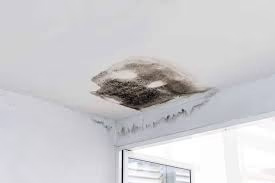
Mold is more than an inconvenience. What starts as a faint musty smell or a small dark spot on the ceiling can quietly spread into a property-wide problem.
If you're a homeowner, property manager, or HOA board member, ignoring mold puts more than your walls at risk—it affects your health, your budget, and even your legal standing.
Mold needs three things to grow: moisture, warmth, and organic material. Unfortunately, most buildings offer all three.
If left alone, mold doesn't just sit in one place—it spreads. It feeds on drywall, insulation, flooring, and wood framing, and can travel through air vents or plumbing gaps to reach new areas.
How fast can it spread?
Mold exposure affects people differently, but for many, it causes serious health symptoms that worsen the longer you're exposed.
Common health effects include:
Higher risk groups:
Even if just one unit in a multi-family property is affected, mold can circulate through ventilation systems and spread the impact.
For landlords, HOAs, or commercial building managers, ignoring mold complaints is risky. Tenants or residents who experience health issues may seek legal action, especially if they can prove negligence.
Common consequences include:
In many states, mold disclosure is also legally required during property sales. If a known issue is ignored or hidden, it can lead to legal disputes after closing.
You might think skipping an inspection saves money—but in reality, delaying mold treatment can cost 10–20x more in repairs, labor, and material replacement.
In a home sale or refinance, mold is a red flag. Appraisers and inspectors are trained to spot signs of moisture damage. If they find it—or worse, if it's in the disclosure report—buyers may:
For commercial or multi-unit properties, the impact can be even greater.
The most dangerous mold is often the kind you can't see.
You don't need visible mold to act. In fact, the most dangerous mold is often the kind you can't see.
Act immediately if:
Ignoring mold is rarely about lack of concern—it's usually about not knowing the next step. But the longer you wait, the more expensive and complicated it becomes.
A professional inspection is fast, non-invasive, and gives you clear answers—so you can protect your health, your investment, and your peace of mind. Book a certified mold inspection today.
Worried about something you've seen—or smelled?
Our certified inspectors can be at your property within 24 hours.
Call today and protect your investment.