
Collects airborne mold spores to assess air quality and detect hidden contamination.
our services
Mold Testing
State-certified testing that spots hidden mold—so you can act early, stay safe, and avoid costly repairs.
About
Why Mold Testing Matters
Mold isn't always visible. It hides in air vents, under floors, and inside walls. The only way to know what you're breathing—or what's spreading—is through lab-grade testing.
- —Identify mold species and spore levels
- —Detect hidden growth in "clean" areas
- —Assess the health risk to occupants
- —Decide on the right next steps
Methodology
How our mold testing works
The three sampling methods we use, chosen for what your property is showing
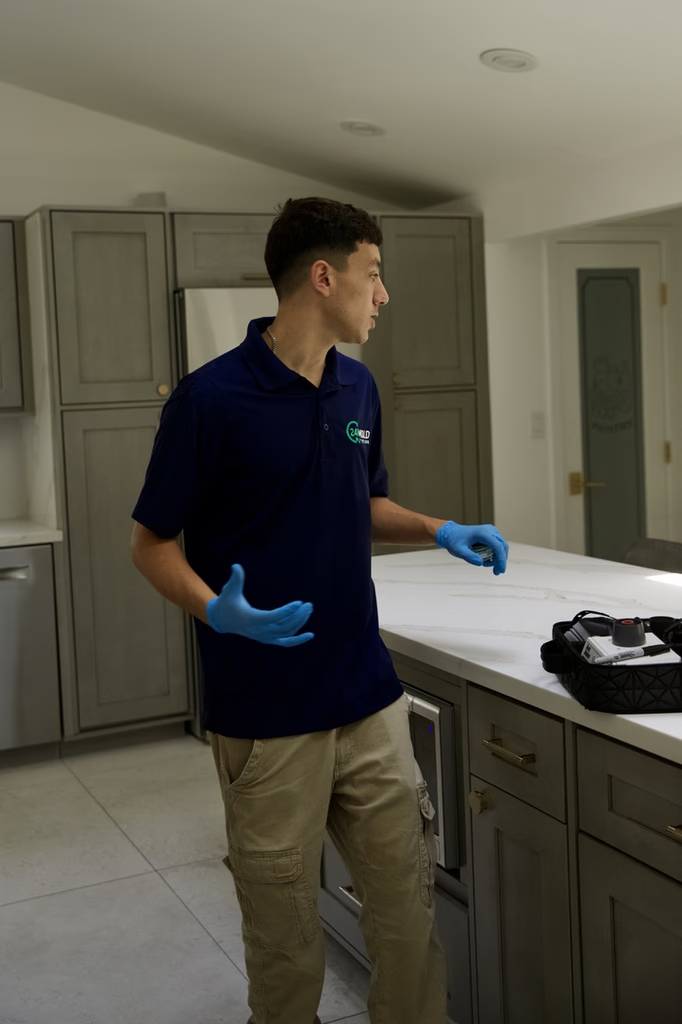
Sterile swabs and clear adhesive tape collect mold from visible spots on dry surfaces, giving the lab a clean sample for species identification. Suitable for walls, ceilings, baseboards, and furniture where the residue is what you're checking.
For damp or recently water-damaged areas, the sampling approach changes. Wet sampling captures live, actively growing colonies that dry methods underrepresent, which matters under flooring, behind tile, and around recent leaks.
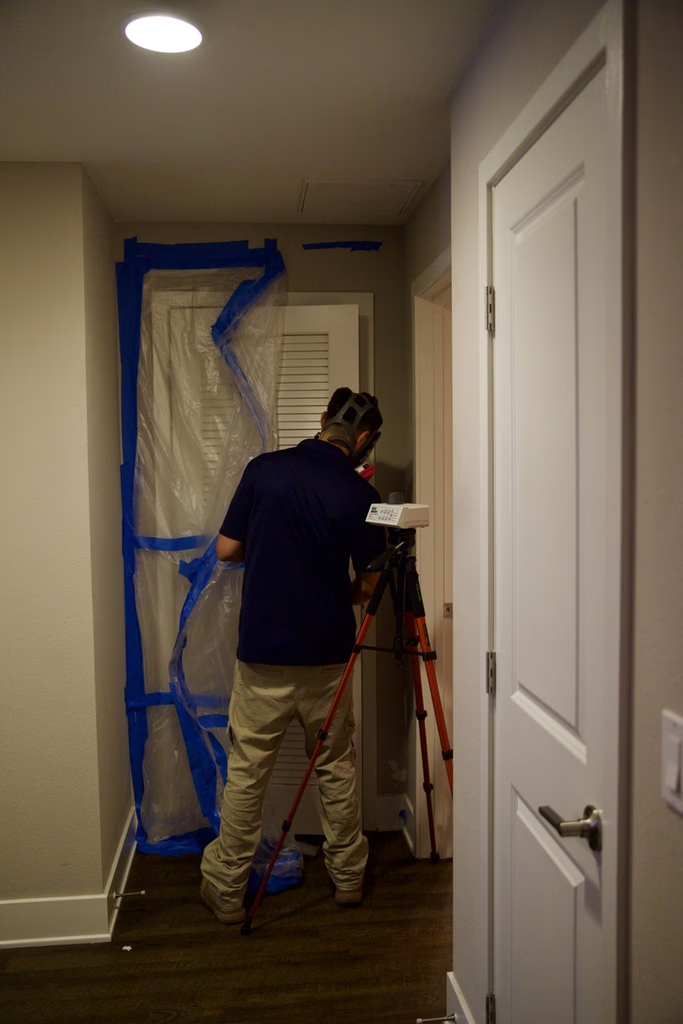
A calibrated pump pulls a controlled volume of air through a spore trap cassette, capturing viable and non-viable spores from the breathing zone. The lab counts species and compares concentrations to outdoor levels, telling you whether your indoor air is healthy.
Checklist
Is Testing Right for You?
Mold testing is ideal if:
- —You suspect mold but can't see it
- —You've had water damage
- —Residents or tenants are reporting health symptoms
- —You're buying, selling, or managing a property
- —You need peace of mind after remediation
Still unsure? Let's talk. We'll help you decide which method suits your case best.
Testing Overview
Our Testing Methods
Techniques we use to collect accurate mold samples from air and surfaces.
Lifts mold samples from surfaces using clear adhesive—quick and non-destructive.
Gathers samples from damp or textured areas to identify active mold growth.
Mold inspection Rancho Cucamonga FAQ
Call For An InspectionSame-day and next-day appointments are usually available across our Rancho Cucamonga service area, with 24/7 emergency response for active leaks, recent water damage, or urgent real estate timelines. Standard scheduling runs 1 to 3 business days depending on availability.
Our certified mold inspectors assess bathrooms, kitchens, laundry rooms, basements, attics, crawl spaces, HVAC components, and any area showing signs of past or current water issues. Thermal imaging and moisture meters identify hidden moisture behind walls and under floors.
Yes — the northern foothill neighborhoods of Rancho Cucamonga, particularly in Alta Loma and Etiwanda, face a mold risk dimension that the city's lower-elevation master-planned communities do not encounter at the same intensity. The alluvial fan topography of these neighborhoods means that stormwater and snowmelt from the San Gabriel Mountains above flow through the subsurface in concentrated channels that can raise the local water table and direct significant ground moisture toward downslope foundations after significant rain events or mountain snowmelt periods. Older properties in these neighborhoods — many predating the city's major 1980s development boom — have foundation systems designed without the benefit of current knowledge about mountain drainage dynamics and may lack adequate drainage details to manage the moisture loads their topographic position generates.
Pricing varies based on the size of the property, the scope of testing required, and whether any lab work is included. Most residential mold inspections in Rancho Cucamonga fall within the standard industry range of $300 to $600, with a clear quote provided before any work begins.
Air sampling, swab testing, tape lift testing, wall cavity sampling, and HVAC mold testing. The inspector recommends the right method on-site based on what's found. Samples go to a state-certified lab, with results typically back in 24 to 72 hours.
Mold needs water to grow, so finding the moisture source is what prevents the same problem from coming back after any cleanup. Moisture detection during the inspection identifies plumbing leaks, roof leaks, condensation issues, and humidity buildup that's feeding any growth.
Yes. Post-remediation verification confirms the remediation contractor's work succeeded and the space is safe to reoccupy. Because we don't perform remediation ourselves, the verification stays independent of the remediation contractor's interests, which is what insurers and tenants look for.
Spore detection is the air-sampling side of a mold inspection: measured volumes of indoor air are drawn through a spore trap, a matching outdoor sample is taken on the same visit, and an accredited lab counts and identifies what was captured. The outdoor comparison matters more in Rancho Cucamonga than in most cities, because the foothill neighborhoods sit beside open chaparral and mountain canyons that put a heavy natural spore load in the air, especially after rain. A high indoor number means little until it is measured against that background. Spore detection is the right test when someone in the house has symptoms, or there is a musty smell with nothing visible — often a sign of growth inside a wall, under carpet at a slab edge, or in the attic of a 1980s or 1990s tract home. Pair it with a moisture survey so the result points to a location, not just a number.
It is worth considering for homes on the upper foothill streets. The Grand Prix Fire started on October 21, 2003 and burned for six days across the mountains directly above Alta Loma and Etiwanda, in places running down into the neighborhoods, and it destroyed 13 homes in Alta Loma alone. On Christmas Day that year an intense storm set off debris flows across the Grand Prix and Old fire burn areas, and the lesson for the foothills has held since: burned slopes shed water and sediment far faster than vegetated ones. Homes at the top of the alluvial fan, where streets meet the basins and channels below Cucamonga and Deer canyons, take the brunt of that runoff in heavy storms — against foundations, garage slabs, and retaining walls. After any major fire in the range above, a moisture check at the uphill wall and slab edge before the first wet winter is a reasonable precaution.
These homes share a construction profile, so they tend to share failure points. Terra Vista and the Victoria villages were built out largely in the 1980s and 1990s as master-planned neighborhoods of stucco-clad, slab-on-grade houses and townhomes under concrete tile roofs, with forced-air systems in the attic. Thirty-plus years on, the common moisture sources are underlayment beneath the tile reaching the end of its life while the tiles still look fine, original water heaters and supply lines failing in garages and closets, condensate lines from attic air handlers clogging and overflowing into ceilings, and stucco cracks around windows letting rain behind the wall. In townhome and condominium buildings, a leak in one unit can travel through a shared wall, which raises the question of whether the HOA or the owner is responsible. An inspection report that identifies the source and its path is what settles that question.
It can, mostly through the water it moves around rather than the pool itself. In Alta Loma and the larger-lot neighborhoods of Rancho Cucamonga, backyard pools and spas often sit close to the house on sloped lots, and the problems we trace back to them are splash-out and overflow draining toward the foundation instead of away, leaking supply or return lines saturating the soil beside a slab, enclosed spa rooms running at high humidity with little exhaust, and equipment plumbed through or against an exterior wall. On a foothill lot where groundwater already moves downhill through the alluvial soil, a slow pool-line leak adds to the load against the uphill side of the house. Signs include white mineral deposits on the slab edge, swelling baseboards on the pool-side wall, and a musty smell in rooms facing the yard. A moisture survey along that wall tells you whether the pool plumbing is part of the problem.
Often they do. Etiwanda was founded by George and William Chaffey, who subdivided the land into 10-acre parcels early in 1882 and piped irrigation water down from the mountain canyons — the Chaffey-Garcia house had electric lights by December 4 of that year. The older homes that remain along Etiwanda Avenue and the original colony blocks range from early twentieth-century farmhouses to mid-century ranches, many on raised foundations and many remodeled several times. That history leaves crawl spaces, original or patched plumbing, and additions joined to older structures, each a place where moisture collects out of sight. Around these properties, rows of eucalyptus planted as windbreaks drop leaves into gutters and roof valleys and send roots toward sewer lines. An inspection here goes under the house and into the junctions between original construction and later additions, rather than stopping at the slab-and-attic routine of a newer tract.
If the home inspection noted any moisture, staining, or odor, a mold inspection is the follow-up the report is pointing to. A general home inspector surveys the whole house visually; a mold inspection uses thermal imaging and moisture meters to find water inside walls, under flooring, and in the attic, and lab samples to identify any growth. In Rancho Cucamonga the gap matters most in two places: the attics of 1980s and 1990s tile-roof houses, where aging underlayment can leak for years beneath tiles that look intact, and foothill homes in Alta Loma and Etiwanda, where groundwater moving downhill shows up at the uphill wall and slab edge. Many homes here also belong to an HOA, so knowing whether a moisture problem starts in a common element or inside the unit affects who pays for the repair. Schedule it inside your contingency window so the findings can still shape the deal.
Indirectly, yes. The eucalyptus windbreaks still lining streets in Etiwanda and Alta Loma were planted because this stretch of the foothills sits in the path of the strong offshore wind events that pour out of the mountain passes each fall and winter. Those winds lift and crack concrete roof tiles, tear ridge caps, peel back flashing, and pack dust and debris into gutters and roof valleys. Nothing leaks that day — it is dry. The damage shows up with the first heavy rain, when water gets under the displaced tiles and through the torn underlayment into the attic, or backs up from a clogged valley into the wall below. Because tile roofs hide that kind of damage well, many homeowners only notice a ceiling stain months later. After a significant wind event, a roof check before the rainy season, and an attic moisture inspection if a leak has already appeared, catches the problem while it is still small.
Inspection and testing only. We don't sell removal, and that is what makes our findings useful when you hire someone who does. Our job is to locate the growth, identify the moisture driving it, and document the extent with thermal imaging, moisture meters, and lab-analyzed samples. In Rancho Cucamonga the cause is frequently somewhere other than the stain: aging tile-roof underlayment above the ceiling, a clogged attic condensate line, groundwater pushing against the uphill side of a foothill home in Alta Loma, or a leaking pool line beside the slab. Removal that doesn't fix the source tends to repeat. The written report gives you a scope that several remediation contractors can bid on equally, and if you are in an HOA it shows whether the source sits in a common element. Once remediation is complete, we can return for independent clearance testing before the area is closed back up.
A full residential inspection follows water, not just visible growth. The inspector starts with the history — leaks, odors, symptoms, past repairs — then works through the house with a thermal camera and moisture meter: bathrooms and kitchens, the water heater and supply lines, the laundry, window openings in the stucco, the slab perimeter, and the attic, where Rancho Cucamonga's tile-roof houses often hide the most. The air handler and ducts get attention too, because attic HVAC is standard in the city's 1980s through 2000s homes. Where growth is suspected, air samples with an outdoor baseline, plus surface swabs or tape lifts, go to an accredited lab. The report documents what was found, the moisture source behind it, photographs, lab results, and the recommended scope if remediation is needed. An inspector who doesn't also sell remediation has nothing riding on the size of that scope, which is the point of hiring independently.
If water sat for more than a day or nobody can confirm the structure dried completely, yes. The usual triggers in Rancho Cucamonga are an original water heater or supply line failing in a 30- to 40-year-old tract house, an attic condensate line overflowing into a ceiling during the summer cooling season, roof leaks under wind-damaged tiles in the first big storm, and runoff against the uphill side of foothill homes after heavy rain. Restoration crews dry what they can reach, but the moisture that matters stays inside wall cavities, beneath flooring and baseboards, and in attic insulation. Mold can start growing within 24 to 48 hours under those conditions. An independent moisture assessment confirms whether drying actually finished, documents any growth that began, and gives you a dated record for your insurer — and because we don't do restoration ourselves, that verification is separate from whoever did the drying.
Yes. Commercial work is a regular part of our Rancho Cucamonga schedule, from retail and restaurant space around Victoria Gardens — the open-air center that opened in 2004 at Foothill Boulevard and Day Creek — to offices and light-industrial buildings in the business parks south of Foothill. Commercial mold problems follow different paths from residential ones: low-slope roofs with internal drains that clog and pond, rooftop HVAC curbs and penetrations, restaurant kitchens and walk-in coolers producing constant moisture, and slabs poured without vapor retarders under carpeted offices. Leaks in these buildings often travel a long way above a suspended ceiling before they show. We schedule around business hours where needed, sample occupied space with minimal disruption, and provide documentation suited to landlords, tenants, and insurers — including independent clearance testing after remediation, before a space reopens.
Our Rancho Cucamonga team covers the whole city — Alta Loma, Etiwanda, Victoria Groves, Terra Vista, Day Creek, Deer Creek, and the Foothill Boulevard corridor — with same-day and next-day appointments and 24/7 response for active leaks and water damage. HOA and commercial accounts get the same response windows. Several neighboring cities have their own 24H Mold Inspection page written for their own housing and climate, including Upland, Ontario, Fontana, Chino, and San Bernardino. If your property is in one of those, start with that city's page for local details. If you aren't sure which page fits your address, call the number on this page and we'll route you to the right team.
Contact
Book your Rancho Cucamonga mold inspection today
Tell us what's going on and we'll respond the same day
Location
24H Mold Inspection of Rancho Cucamonga
Phone
(909) 901-5334Hours
- MondayOpen 24 hours
- TuesdayOpen 24 hours
- WednesdayOpen 24 hours
- ThursdayOpen 24 hours
- Friday6 AM – 6 PM
- SaturdayClosed
- SundayOpen 24 hours
Service area neighborhoods
- Alta Loma
- Etiwanda
- Victoria Groves
- Deer Creek
- Terra Vista
- Day Creek
- Bella Vista
- Caryn