
Detect hidden moisture, leaks, and insulation issues without invasive methods.
our services
Mold Inspection
Advanced moisture detection and infrared technology—so you can act before it spreads.
About
Why Mold Inspection Matters
Mold often hides behind walls or under flooring. Our inspection process is designed to catch both the obvious and the invisible—before they become costly repairs or health concerns.
- —Detect visible mold
- —Locate the source of moisture that feeds it
- —Identify which areas need testing or remediation
- —Get peace of mind after leaks or before buying property
Methodology
How our mold inspectors inspect
We combine certified field experience with calibrated detection tools
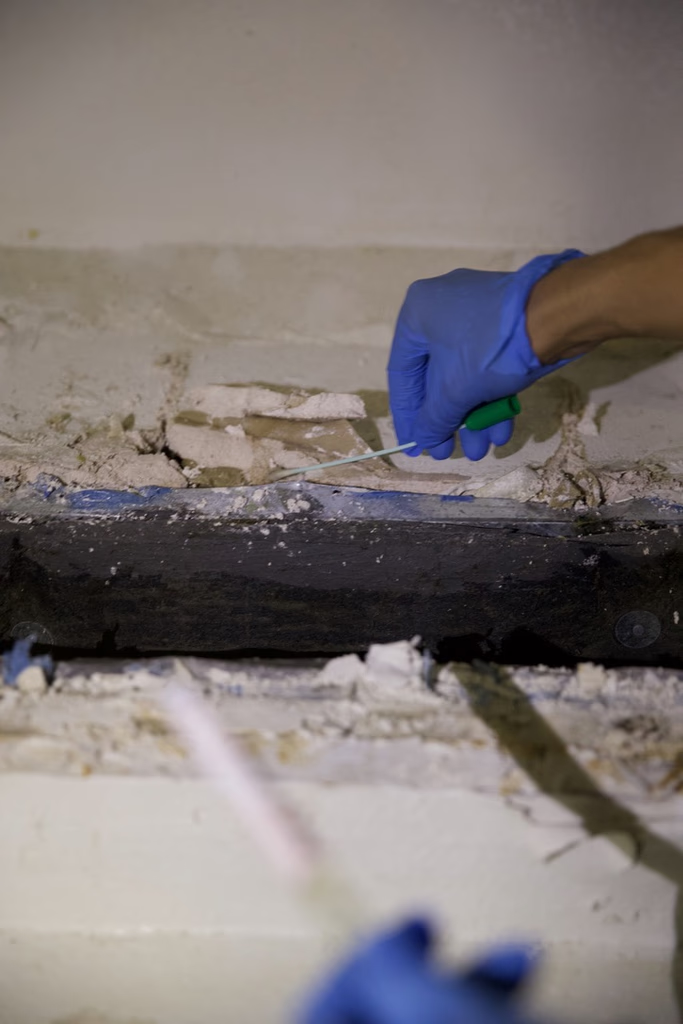
Every job starts with a structured walkthrough of high-risk areas: bathrooms, kitchens, attics, basements, crawl spaces, and around any plumbing, windows, or HVAC components. The inspector documents visible growth, stains, warping, and other physical signs as they go.
Mold doesn't grow without water, so finding the moisture is half the work. Pin and pinless moisture meters measure water content inside walls, ceilings, and flooring materials, locating active leaks and elevated humidity that the eye can't see.
FLIR thermal imaging cameras read temperature differentials behind surfaces, which is how we find wet areas inside walls without opening anything up. Cold spots flag moisture, condensation, and air leaks that often correlate with hidden mold growth.
Checklist
Is an Inspection Right for You?
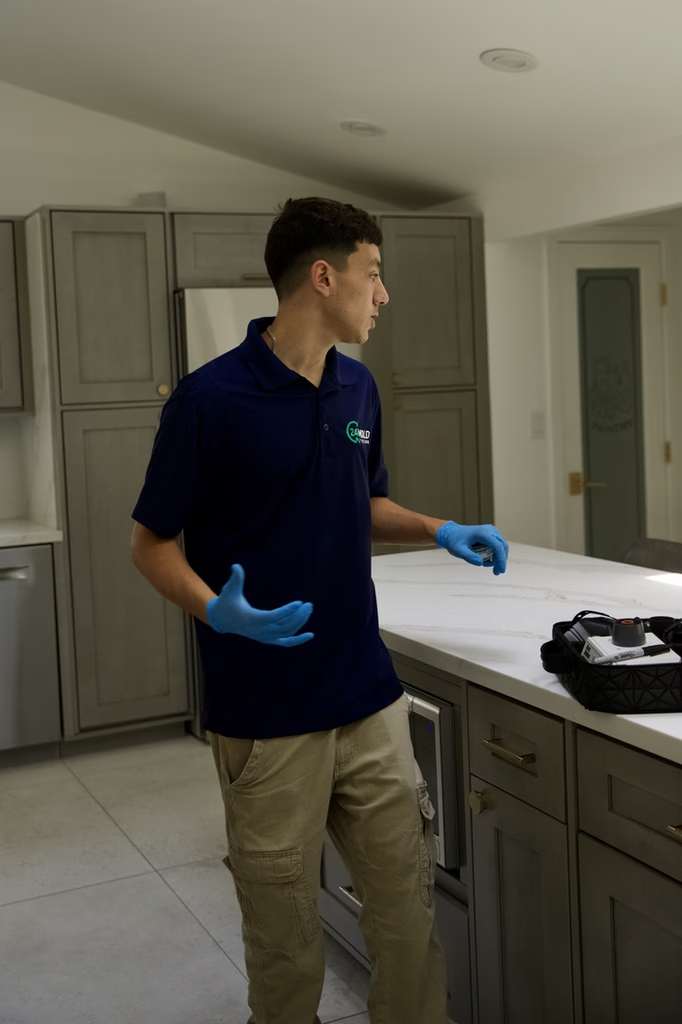
Mold inspection is ideal if:
- —You've had recent leaks or water damage
- —You notice musty odors in certain rooms
- —You're buying, selling, or managing a property
- —You want to check for mold before testing or remediation
- —You just want peace of mind
Still unsure? Our team will help you decide if an inspection—or testing—is the right first step.
Inspection Overview
Our Inspection Methods
Understand the key methods we use to deliver a complete, thorough mold inspection.
Measure moisture levels inside surfaces to find leaks, trapped water, or early signs of mold risk.
Homes, condos, and rentals—moisture and mold assessment with clear reporting for occupants and transactions.
Offices, retail, hospitality, and industrial—inspections that respect operations and support facilities teams.
Mold inspection Pasadena FAQ
Call For An InspectionSame-day and next-day appointments are usually available across our Pasadena service area, with 24/7 emergency response for active leaks, recent water damage, or urgent real estate timelines. Standard scheduling runs 1 to 3 business days depending on availability.
Our certified mold inspectors assess bathrooms, kitchens, laundry rooms, basements, attics, crawl spaces, HVAC components, and any area showing signs of past or current water issues. Thermal imaging and moisture meters identify hidden moisture behind walls and under floors.
The Arroyo Seco and the smaller drainage channels that feed into it maintain elevated soil moisture in adjacent residential neighborhoods throughout the year, not just during active rainfall. Properties within a few blocks of the arroyo experience higher groundwater and soil moisture levels than comparable homes further from the corridor, and this moisture translates into elevated crawl space humidity and foundation wall pressure in the older homes that dominate this part of Pasadena. During significant rain events, the arroyo channels concentrate and move large volumes of water that recharge surrounding soils rapidly, creating sudden increases in groundwater that can overwhelm drainage systems in adjacent properties. The combination of arroyo proximity and Craftsman-era construction — with its original wood foundations and crawl spaces — makes properties in this corridor a priority for thorough mold assessment.
Pricing varies based on the size of the property, the scope of testing required, and whether any lab work is included. Most residential mold inspections in Pasadena fall within the standard industry range of $300 to $600, with a clear quote provided before any work begins.
Air sampling, swab testing, tape lift testing, wall cavity sampling, and HVAC mold testing. The inspector recommends the right method on-site based on what's found. Samples go to a state-certified lab, with results typically back in 24 to 72 hours.
Mold needs water to grow, so finding the moisture source is what prevents the same problem from coming back after any cleanup. Moisture detection during the inspection identifies plumbing leaks, roof leaks, condensation issues, and humidity buildup that's feeding any growth.
Yes. Post-remediation verification confirms the remediation contractor's work succeeded and the space is safe to reoccupy. Because we don't perform remediation ourselves, the verification stays independent of the remediation contractor's interests, which is what insurers and tenants look for.
No. 24H Mold Inspection of Pasadena inspects and tests only. We never perform remediation or removal, and that line is deliberate. Most of the calls here come from pre-1930 raised-foundation housing: Craftsman blocks in Bungalow Heaven, period revivals around Madison and El Molino, plaster over wood lath that hides wet framing without ever staining. The visible spot on a baseboard is usually the tail end of something that starts in a vented crawl space, a shower pan on original cast iron, or stucco with no drainage plane behind it. A company that bills for the cleanup is also the company deciding how much cleanup you need. What we produce is the diagnosis: what is growing, what moisture source feeds it, how far it runs behind finishes, and lab confirmation of the samples. You take that to two or three remediation contractors and get comparable bids on a defined scope, which matters more here than most places, because in a landmark district pulling original siding or windows is a review process with the city, not a call a crew makes on site. When the work is done, we can return for independent verification.
We cover the whole city and the unincorporated pockets around it. Inside Pasadena that means Old Town and the Playhouse District, Bungalow Heaven, Madison Heights, the San Rafael Hills west of the arroyo, Hastings Ranch, and the Caltech blocks along California Boulevard, plus the foothill streets north of New York Drive. We also serve South Pasadena, San Marino, and Sierra Madre from this same team, so a search for mold detection in South Pasadena lands in the right place. Several neighbors have their own 24H Mold Inspection page written around their own housing and drainage: if your property is in Altadena, Arcadia, Monrovia, Alhambra, Glendale, or La Cañada Flintridge, start on that city's page instead. Standard scheduling runs same day or next day across this area, and we answer emergency calls around the clock, which is what a burst supply line at midnight or a contingency expiring Friday actually requires. If your address sits on a boundary and you are not sure which page fits, call the number on this page and we will route it.
No, and the gap is wider in Pasadena than in most markets. A general home inspection is a broad condition survey, covering roof, electrical, plumbing, and appliances, and most contracts exclude mold outright; its moisture coverage stops at what is visible from accessible areas. That leaves a lot uninspected in a city where much of the for-sale inventory is a century old: crawl spaces with clearance too tight for an inspector to enter, plaster over wood lath that holds moisture without showing a stain, galvanized supply lines and cast-iron drains at the end of their service life, and additions built across five permit eras. A mold inspection is narrow and instrument-driven instead: moisture meters along the base of walls, thermal imaging over suspect areas, entry into the attic and sub-area, and lab-analyzed air or surface samples where the walkthrough justifies them. Most buyers here order both. The practical sequence is to schedule the mold inspection inside your contingency window with the home inspection report already in hand, so we target the sub-area, odor, or prior water damage it flagged.
Yes, in three distinct ways. The fire started in Eaton Canyon on January 7, 2025 and pushed evacuation orders across the northeast side of the city. Houses that survived took smoke and ash into attics, wall cavities, and duct systems, many took suppression water on top of that, and then they sat closed with the power off for weeks during the wettest stretch of the year, with no conditioning and no air movement over wet materials. Second, burned ground above the canyon sheds rain instead of absorbing it, so the storms that followed moved more water and sediment down the drainages than the streets below were built to carry, and that reaches crawl spaces and slab edges on the blocks nearest the wash. Third, rebuild and repair work adds its own moisture when framing gets rained on before it is closed in. If your home was inside the evacuation area and has had smoke or water cleanup, air sampling against an outdoor baseline is what separates leftover combustion particulate from an active mold source, and it is worth doing before anyone closes a wall back up.
Air sampling draws a measured volume of air through a spore trap, and the lab reports spores per cubic meter by type. There is no legal threshold number to compare it against, so the indoor result only means something next to an outdoor baseline taken the same day at the same property. That comparison is the test, not the raw count. Local conditions are what make the baseline matter here. The foothills catch noticeably more rain than the basin floor, close to twenty inches a year against roughly fifteen downtown, and the arroyo and canyon vegetation push Cladosporium and basidiospore counts up outdoors for days after a storm. Demolition and rebuild dust on the east side and construction in the Old Town blocks shift it again. A number that looks elevated against a generic table can be entirely normal for a February morning above the arroyo, and a modest number can be significant in a sealed unit in August. Ask any report you receive to show the outdoor sample beside the indoor one, with the moisture readings that explain the difference.
Yes, and multifamily is a large share of the work here, because more than half of Pasadena households rent. The stock is unusually varied: the bungalow court was invented in this city, with St. Francis Court going up on Colorado Boulevard in 1909, and the surviving courts and 1920s courtyard buildings sit alongside 1960s dingbats with tuck-under parking around Del Mar and the Caltech blocks, plus newer podium construction in Old Town and the Playhouse District. The recurring problem in all of them is that the leak and the damage are in different units, because wet walls are shared and plumbing stacks serve several floors, so inspecting one unit answers half the question. Since the 2022 charter amendment that created rent stabilization and a rental housing board here, habitability disputes get documented far more formally than they used to, and a report from a company that does not bid the repair carries weight with owners, tenants, and insurers alike. For a building, ask us to scope by riser and stack rather than only by the unit that called.
Not as its own trade. California licenses no mold inspector or mold remediator specifically. The 2001 Toxic Mold Protection Act directed the state to set permissible exposure limits and it never did, so there is no state mold license and no state number to test against. What is verifiable is third-party certification for the inspector, general liability coverage, a contractor's license for whoever performs the physical repair work, and whether the company doing the testing also sells the removal. Pasadena adds a step most cities do not: if the property is a designated landmark, a contributor in a district like Bungalow Heaven, or under a Mills Act contract, exterior work goes through the city's historic preservation review before it starts. That means the report has to describe affected materials precisely enough to survive that review, or the scope gets rewritten mid-project. When you call around, ask each company for its certification numbers and whether it performs remediation, and if it does both, have the testing done by someone who does not.
The visit begins with the building's history — age, previous repairs, recent remodels, and what you have noticed — then moves into a systematic survey: room by room visually, thermal imaging to locate temperature differences that indicate wet material behind finishes, and pin and pinless moisture meters to confirm it. On a Craftsman or Victorian in Bungalow Heaven or Madison Heights the sequence weights toward the parts of the building that are original. Raised foundations and the crawl space beneath them come first, because a century-old subfloor sitting over soil that stays damp through the wet season is where a large share of local findings begin. Original wood framing at the base of exterior walls, aging supply and drain lines, and the junctions where a later addition ties into original construction follow. Properties near the Arroyo Seco and the smaller drainage corridors get extra attention at the foundation perimeter. Expect three to four hours on a historic home — the crawl space alone often accounts for an hour.
The report documents four things: what was found and where, the photographs and instrument readings supporting it, the moisture source driving the growth, and any laboratory results with sample locations marked. That combination is what makes it useful to somebody other than you. Adjusters want the moisture source and a dated record of the condition, since policies distinguish sharply between a sudden failure and long-term seepage and that distinction usually decides coverage. Remediation contractors want a defined scope so their bids are comparable. Buyers, sellers, and agents want findings from a party with no stake in the transaction — which matters a great deal in a market built on historic homes, where a hundred-year-old house always has some moisture history and the useful question is what is active now. If the property sits in one of the city's landmark districts, the report also gives your contractor and the design review process a documented basis for why original material has to be disturbed.
Yes — offices and retail throughout Old Town, restaurants and hotels, medical and professional suites, and the institutional properties around the Caltech area and the city's civic core. Commercial inspection differs from residential in where the moisture hides rather than in method. Large low-slope roofs pond and leak above ceiling systems, packaged rooftop HVAC units generate condensation along extended duct runs, and the damage typically develops above occupied space or inside mechanical areas that see attention only at service intervals, so it spreads considerably before anyone reports it. Old Town brings a particular version of the problem: many of those buildings are historic masonry structures now carrying modern mechanical systems and restaurant tenancies they were never designed for, and the moisture load from a commercial kitchen migrating into a century-old wall assembly behaves nothing like a roof leak. Reports are written to be handed to a landlord, a tenant, an insurer, or counsel.
Give every contractor the same report and ask them to bid the documented scope, so the quotes differ on price and method rather than on how much mold each company claims to find. Confirm a current CSLB license — there is no separate state licence for mold work, so the CSLB record plus recognized industry certification is what you actually verify — along with workers compensation and liability coverage. On a historic property, add two questions. Ask what the contractor's approach is to original material, because the fastest remediation method is wholesale removal and that is frequently the wrong answer on a Craftsman where original framing, plaster, or millwork can often be dried and saved rather than demolished. And ask whether they have worked within one of the city's landmark districts, since exterior work on a designated property can require design review that adds time to the schedule. Finally, make certain the moisture source repair is in the scope.
Before, whenever it can be arranged. Once material has been torn out and the building has partly dried, the original condition cannot be reconstructed — and that condition is exactly what an insurer needs to see and what determines whether a claim is treated as a sudden failure or as long-term seepage. After a water event the useful order is to stop the source, photograph everything, and get the assessment booked before demolition begins. This matters more on Pasadena's older homes than on newer construction, because the characteristic local failure is slow rather than dramatic: an aging supply line weeping inside an original wall, or a foundation perimeter that has been taking arroyo-adjacent soil moisture for decades. By the time it becomes visible the question of how long it had been going is already contested, and documentation is what answers it. If drying has already started, an inspection still establishes what remains wet and whether the structure actually dried.
It is the independent check performed after the cleanup and before containment comes down and finishes are restored: confirmation that the affected material was genuinely removed, meter verification that framing and substrate have dried to a normal moisture content, and clearance air sampling compared against an outdoor control taken the same day. It should never be performed by the company that did the removal, for the same reason you would not ask a contractor to sign off on their own work. On a historic Pasadena home it does something additional. Where original framing or plaster was dried and retained rather than demolished, verification is what demonstrates that decision was sound — meter readings across the retained material are the evidence that it came back to a normal moisture content instead of being closed up damp behind new finishes. At resale, an independent clearance report answers a buyer's question about a past mold event in a way a remediation invoice never does.
Contact
Book your Pasadena mold inspection today
Tell us what's going on and we'll respond the same day
Location
24H Mold Inspection of Pasadena
Phone
(626) 752-3528Service area neighborhoods
- Old Town Pasadena
- Bungalow Heaven
- Madison Heights
- San Rafael Hills
- Hastings Ranch
- Caltech area
- South Pasadena (adjacent)
- Arcadia (adjacent)