
24H Mold Inspection
Orange County24/7 EMERGENCY(888) 818-0311
HomeOur ServicesLeak & Moisture Detection
our services

Leak & Moisture Detection

Hidden moisture is the root cause of most mold problems. We locate it precisely—without tearing into walls—so you can fix the source, not just the symptoms.

About

Why Moisture Detection Comes First

Mold needs moisture to grow, and moisture hides. We use non-destructive instruments to map water through walls, floors, and ceilings—and thermal cameras to see temperature anomalies that indicate active leaks or condensation—giving you a precise location before any repair work begins.

Moisture detection helps you:

  • Pinpoint the exact source of a leak before demolition
  • Map moisture spread behind walls and under flooring
  • Identify condensation-prone areas before mold appears
  • Confirm repairs were effective after water damage is addressed
Why Moisture Detection Comes First

Methodology

How We Detect Moisture

Non-destructive tools that locate water without cutting into your property.
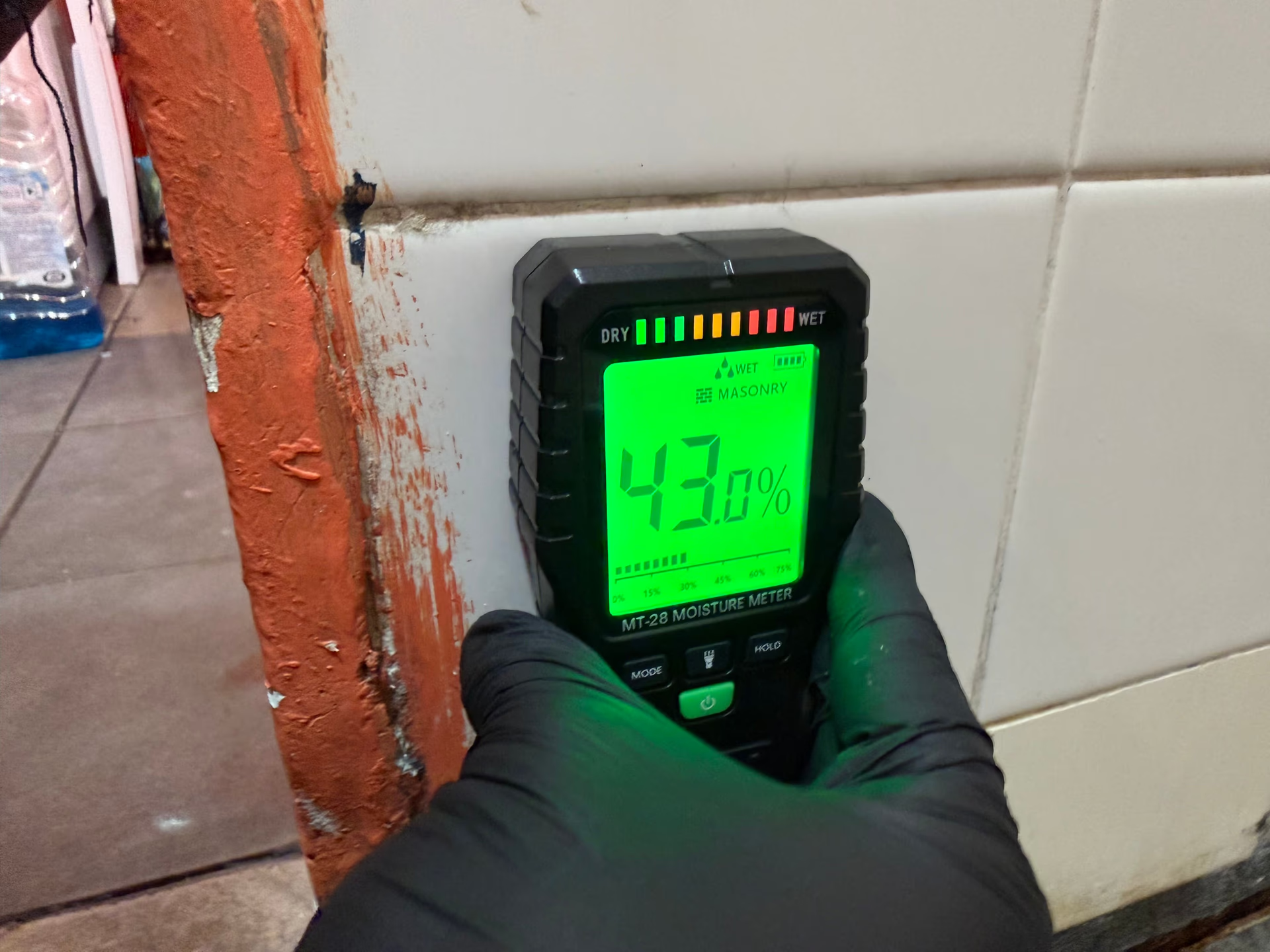
We measure the moisture content of walls, floors, and ceilings using both pin-based and non-invasive pinless meters—mapping the full extent of saturation without surface damage.

Best for:

Drywall, wood framing, and subfloor assessment
Mapping moisture spread after a water event
Establishing baseline readings for monitoring

Our thermal cameras detect temperature differentials across surfaces. Water-loaded materials hold heat differently than dry materials, making leaks and saturated zones visible behind finished walls.

Best for:

Finding active leaks behind drywall without cutting
Locating plumbing or roof leaks not yet surface-visible
Identifying condensation zones that feed mold

Every finding is documented with photos, moisture readings, and thermal images. You receive a clear report so contractors, insurers, or property managers can act immediately.

Report includes:

Moisture readings mapped by room and surface
Thermal images with annotated anomaly locations
Probable source identification and next steps

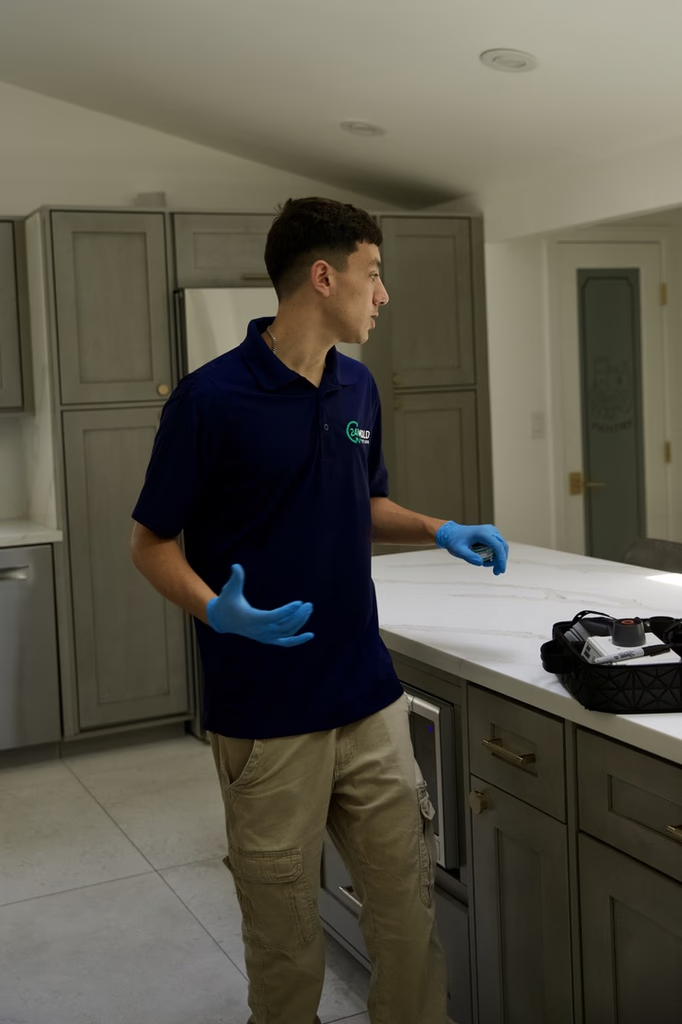
Mold inspector at work

Checklist

When Do You Need Moisture Detection?

Moisture detection is the right first step if:

  • You smell mold or dampness but can't find the source
  • You've had a plumbing leak, roof leak, or flood
  • You're buying a property and want to verify no hidden moisture
  • You had water damage and want to confirm the area is fully dry
  • Recurring mold keeps coming back after surface cleaning

Moisture detection is often the fastest and most cost-effective way to scope a mold problem before committing to testing or remediation.

Detection Services

Our Detection Methods

Two complementary tools that together give a complete picture of moisture conditions in any building.

1Thermal Imaging

Infrared cameras reveal temperature anomalies that indicate hidden leaks, condensation zones, and moisture paths behind finished surfaces.

2Moisture Detection

Pin and pinless meters precisely measure moisture content in walls, floors, and ceilings—mapping the full extent of saturation without destructive investigation.

Mold inspection Orange County FAQ

Call For An Inspection
Orange County's housing stock leans heavily on condominium and townhome communities, where the most common sources of water intrusion — roofs, exterior walls, and plumbing that runs through shared structures — are HOA-maintained common areas under California Civil Code 4775. That means a failure originating in a common-area roof or wall can migrate into your unit and cause mold without any defect inside your own walls, and responsibility for the repair often falls to the association rather than the individual owner. Failed waterproofing membranes and deficient stucco are among the most frequent construction defects in these developments. An independent inspection documents where the moisture is actually coming from, which is what determines responsibility and supports any claim to the HOA or developer.
Much of Orange County's residential stock is post-1960s single-family tract housing built on concrete slab-on-grade foundations. On a slab, water from a plumbing leak or intrusion can travel beneath the finished flooring and wick up into wall cavities, drywall, and framing with no visible sign at floor level, setting up mold that isn't discovered until it spreads or produces odors. Because Orange County rarely sees freezing temperatures, that moisture can support mold year-round. Moisture meters and thermal imaging locate under-slab and in-wall moisture that a visual walkthrough misses, which is the main reason slab homes benefit from instrument-based inspection.
Orange County has taken repeated heavy rain in recent seasons, including the late-December 2025 atmospheric river that dropped 4 to 8 inches across parts of the region and prompted a state of emergency, and earlier storms that caused millions in damage across beach towns like Newport Beach, Laguna Beach, and Seal Beach. Wind-driven rain forces water through stucco cracks, roof and window gaps, and drainage failures, and mold can begin growing within 24 to 48 hours of that saturation. Damage from wind-driven intrusion is often hidden inside walls rather than visible, so a home that looked fine after a storm can still be developing mold. If your property took on water this past winter, a moisture assessment is worthwhile.
Orange County's master-planned communities in Irvine, and similar developments countywide, are dominated by newer stucco-clad construction — and newer doesn't mean immune. Water intrusion through deficient stucco and exterior cladding, failed waterproofing membranes, and drainage deficiencies are among the most common construction defects in California's newer developments, and moisture trapped behind stucco against the sheathing has no easy path to dry out, a condition that supports hidden mold inside the wall assembly. These problems frequently surface within the first several years and fall under California's construction-defect and right-to-repair framework. Because the damage sits behind hard cladding, it's found with moisture meters and thermal imaging rather than a visual check.
Waterfront and bayfront properties around Newport Beach and the Balboa Peninsula combine persistent marine-layer humidity — indoor humidity in these coastal homes often hovers near 60%, where mold growth accelerates — with proximity to standing water and a high water table. Ground-floor and below-grade assemblies, along with older beach-cottage construction, stay damp enough to support mold even without a specific leak, and salt-laden air degrades exterior sealing over time. The 2025 winter storms also raised concern about saturated soils and water pooling beneath coastal homes. Waterfront properties benefit from checks focused on the building envelope, ground-floor and subfloor moisture, and any below-grade space.
The 2024 Airport Fire left burn scars above Orange County's canyon communities — Trabuco Canyon, Silverado, and Modjeska among them — and burn scars sharply increase debris-flow and water-intrusion risk during heavy rain, which is why those areas faced evacuation orders during the December 2025 storms. When mud, debris, and water enter or surround a home, the resulting saturation of framing, drywall, and crawl spaces creates mold conditions. Canyon properties also tend to sit in shaded, humid microclimates with limited airflow that keep soils and crawl spaces damp year-round. Homes in these communities, especially any that took on water or debris, are a priority for moisture and mold assessment.
Orange County's mix of condos, tract homes, and coastal properties each calls for a different focus. In a condo or townhome, the inspection looks at shared walls, ceilings, and plumbing chases where common-area water intrusion migrates between units; in a slab-foundation tract home, it targets under-slab and in-wall moisture that leaves no surface sign; and in a coastal or waterfront home, it centers on the building envelope, attic ventilation, and ground-floor assemblies exposed to marine-layer humidity. Given the recent winter storms, it's also worth confirming whether the property took on water and how it was handled. An independent inspection — with no financial stake in remediation — gives a clear moisture picture before closing.

Contact

Book your Orange County mold inspection today

Tell us what's going on and we'll respond the same day

Location

24H Mold Inspection of Orange County

Service area neighborhoods

  • Huntington Beach
  • Anaheim
  • Irvine
  • Costa Mesa
  • Santa Ana
  • Garden Grove
  • Orange
  • Yorba Linda
Call For Service(888) 818-0311