1
Mold inspection
- Moisture detection
- Infrared technology
- Certified mold inspectors
- No conflict of interest

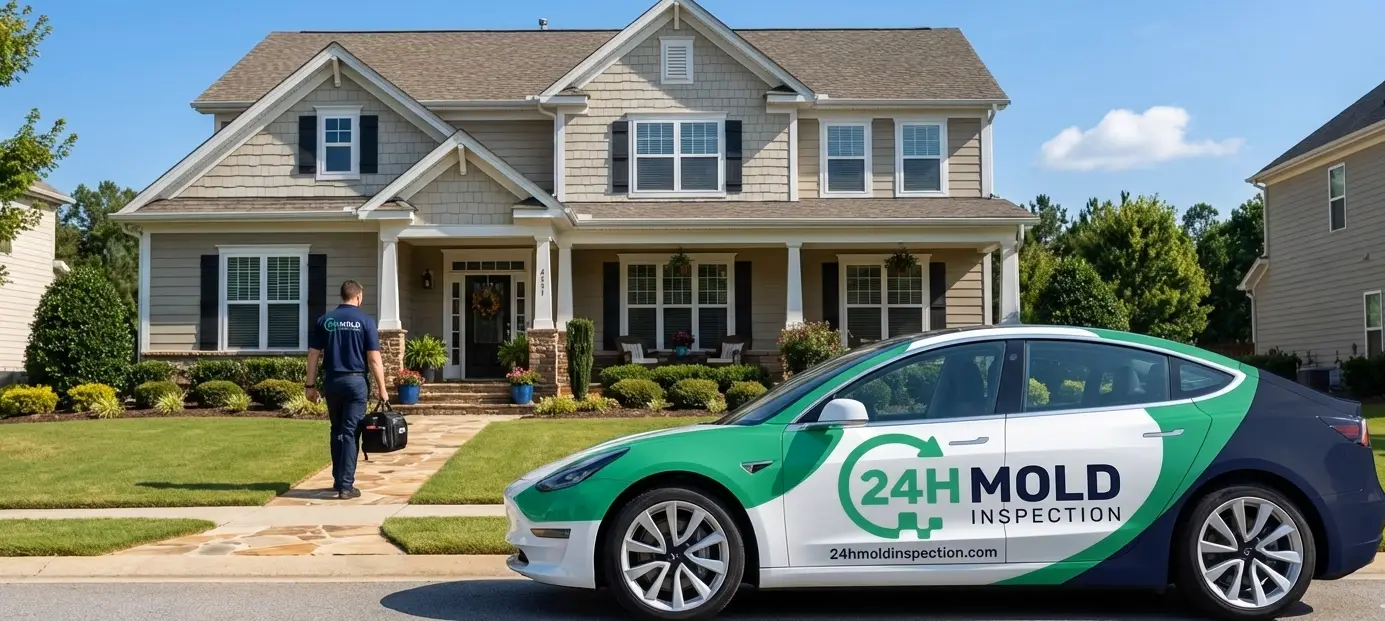
Certified mold inspection and testing in Lancaster. Same-day appointments, lab-verified reports, and no financial stake in any remediation work that follows.
(661) 899-7997What We Do
Air and surface samples analyzed in a state-certified lab. You receive mold species ID, spore count data, and lab-verified documentation that holds up with insurers, attorneys, or counsel.
About
At 24H Mold Inspection of Lancaster, we know no two buildings respond to moisture the same way.
Lancaster sits in the heart of the Antelope Valley, where a high-desert climate, extreme seasonal temperature swings, and rapid residential growth create moisture conditions unlike those found elsewhere in Los Angeles County. While outdoor humidity is typically low, mold problems still occur regularly due to plumbing leaks, evaporative cooling systems, HVAC condensation, roofing failures, and slab-related moisture intrusion. Many homes experience large daily temperature fluctuations that place stress on building materials and mechanical systems over time. The city’s housing inventory ranges from older desert subdivisions and rural properties to large master-planned communities, creating moisture risks that often stem from indoor water sources rather than ambient environmental humidity.
Lancaster contains suburban developments, master-planned communities, desert residences, rural properties, manufactured homes, and commercial buildings. HVAC systems, evaporative coolers, slab construction, and temperature extremes frequently influence moisture conditions.
Services
Mold inspection, mold testing, and environmental risk assessments for Lancaster properties. Available 24/7, with no remediation work to bias the findings.

Why Us
24H Mold Inspection of Lancaster combines local field experience with state-certified methods and lab analysis. Reports get back to you quickly and clearly, with no upsell tacked on to the findings.
We don't stop at surface-level findings. Active leaks, health symptoms, post-remediation work, and pre-purchase due diligence each call for a different inspection approach. Our certified mold inspectors guide you through the specific situation rather than running a generic checklist.
Strengths
We check every box, then go further. Book your inspection today
Licensed inspectors with proven field experience in Lancaster.
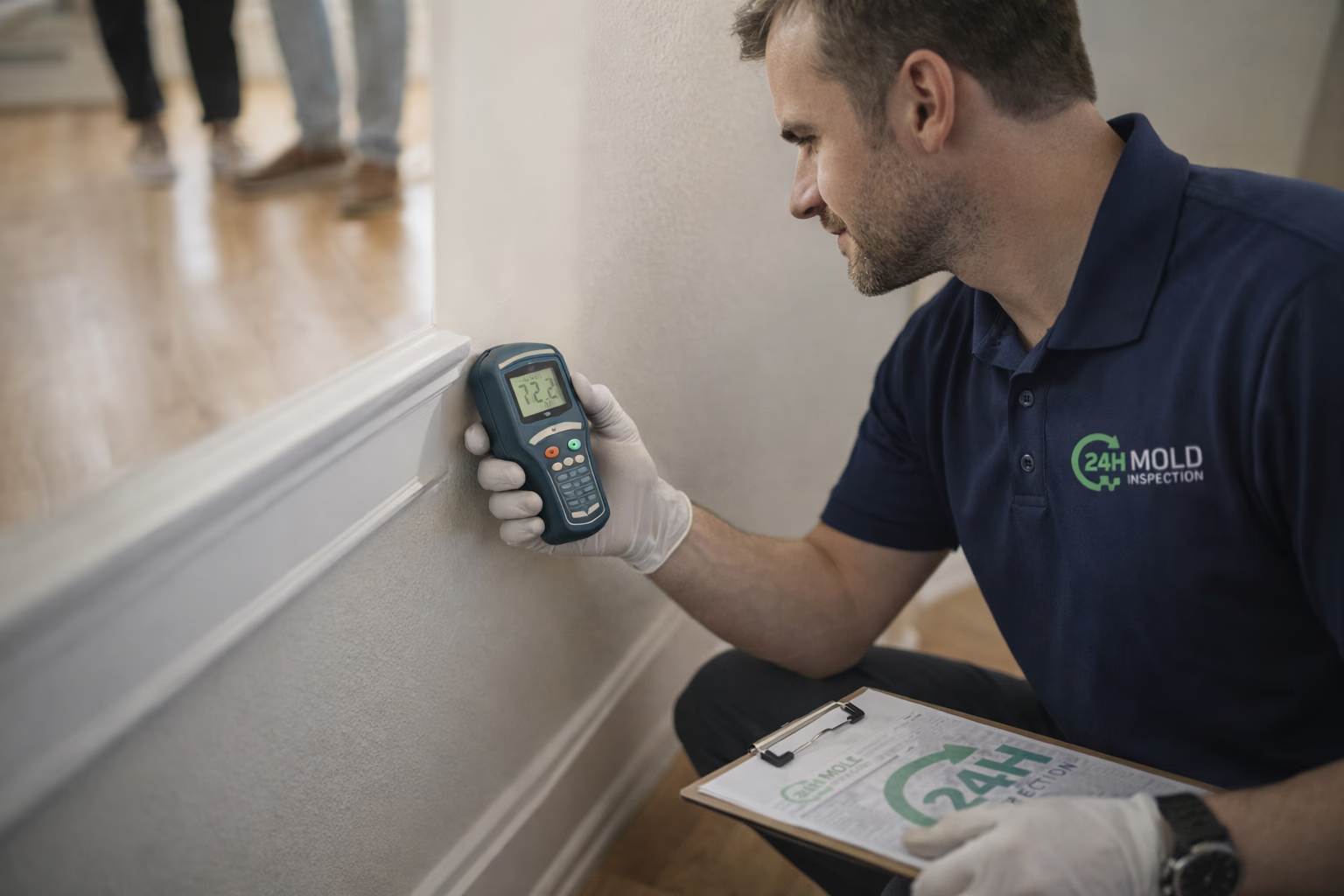
FLIR thermal cameras, calibrated moisture meters, and lab-verified sampling.
Straightforward updates and honest reporting throughout the process.
5.0 stars from 12+ Lancaster homeowners and businesses.
Testimonials
Thousands of Lancaster property owners have come to us for reliable, detailed mold assessments
Roy was great! On time, very friendly and very knowleable. We were very satisfied with his service.
Kuhio
5 Step Process
Choose a date and time that fits your schedule.
Flexible scheduling means same-day and next-day appointments are usually available, with 24/7 emergency response when the situation needs it.
Our certified mold inspectors assess every mold-prone area.
We walk the property identifying visible mold and moisture issues, using thermal imaging and moisture meters to catch what's hidden behind walls and under flooring.
Air and surface samples collected for lab analysis.
Our certified mold inspectors collect targeted samples from key areas to find mold spores both visible and hidden, with sample sites documented on a property map.
Lab testing returns precise results.
Samples go to a state-certified lab for detailed analysis identifying mold species and contamination levels, typically returned within 24 to 72 hours.
Insights and clear next steps from our experts.
You receive a written report with lab results, inspector findings, and specific recommended action steps to resolve any mold issues safely.
Who We Serve
24H Mold Inspection of Lancaster brings clear answers to HOAs, hotels, commercial buildings, and homes through certified mold inspection and testing services.
Lancaster's center grew around the Southern Pacific station house and watering stop built when the railroad completed its line through the Antelope Valley in 1876, linking San Francisco and Los Angeles. The town remained unincorporated until 1977, and Lancaster Boulevard was later rebuilt as the pedestrian-oriented BLVD. The blocks around it hold the city's oldest commercial buildings and some of its earliest houses — masonry storefronts with flat roofs behind parapets, and small wood-frame homes enlarged over the decades. Ponding roof drains, aging supply plumbing, and leaks where additions meet original walls are the recurring moisture sources in this part of the city.
Lancaster's postwar growth followed the military and aerospace work in the valley, beginning with the airfield 32 miles north that became Edwards Air Force Base after World War II. The single-story stucco homes built through the 1950s and 1960s on the east side are now 60 to 70 years old: slab foundations, roof-mounted evaporative coolers, gas wall furnaces or early forced air, and copper or galvanized supply lines. Slab leaks, cast-iron drains cracking under bathrooms, coolers leaking at the roof curb, and roofs re-covered over older layers are the recurring sources of hidden moisture, along with garage conversions built directly on unsealed concrete.
West Lancaster filled in during the city's rapid growth of the 1980s through the mid-2000s, when the population climbed from about 37,000 at incorporation in 1977 to more than 156,000 by 2010. Then the foreclosure wave hit: in December 2010 alone, roughly one in every 91 homes in the city received a foreclosure filing, and many houses sat empty for long stretches. Vacant homes are where small failures become large ones — a supply line weeping under a sink, a pipe split in a winter freeze, or a roof leak during a monsoon storm, with no one there to notice, and fresh paint at resale covering what was left behind.
Lancaster sits on the flat floor of the Antelope Valley, where summer monsoon thunderstorms can drop heavy rain in an hour and water has little slope to run off; Amargosa and Littlerock creeks flooded the town repeatedly in the 1910s, worst in 1914. The ground itself has moved too: the USGS has documented long-term subsidence across the valley as groundwater pumping compacted fine-grained aquifer sediments, along with fissures and cracks at the surface. Pooling at slab edges, water under garage and patio doors, and slab cracks that give soil moisture a path into the house are the defining risks on the low ground.
West and northwest of the city, lots open up into rural parcels of an acre or more out toward Antelope Acres and the Fox Field airport, with ranch houses, custom homes, manufactured homes, and outbuildings spread across open desert. These properties are the most exposed to high-desert wind events, which lift roofing, tear flashing, and drive dust into cooler housings and vents, and to hard winter freezes that split exposed supply lines and hose bibs. Manufactured homes add their own pattern — plumbing hidden inside an underbelly wrap, skirting that traps humidity beneath the floor, and roof seams that leak at the joints.
Google Search
Add 24H Mold Inspection as a preferred source so our pages are easier to spot in your Google results.
Contact
Tell us what's going on and we'll respond the same day
Location
24H Mold Inspection of Lancaster
Phone
(661) 899-7997Hours
Service area neighborhoods
Newsletter
Monthly notes from our inspectors on prevention and air quality.