24H Mold Inspection
Lake Forest24/7 EMERGENCY(888) 476-4112
HomeOur ServicesMold Testing
our services

Mold Testing

State-certified testing that spots hidden mold—so you can act early, stay safe, and avoid costly repairs.

About

Why Mold Testing Matters

Mold isn't always visible. It hides in air vents, under floors, and inside walls. The only way to know what you're breathing—or what's spreading—is through lab-grade testing.

  • —Identify mold species and spore levels
  • —Detect hidden growth in "clean" areas
  • —Assess the health risk to occupants
  • —Decide on the right next steps
Why Mold Testing Matters

Methodology

How our mold testing works

The three sampling methods we use, chosen for what your property is showing
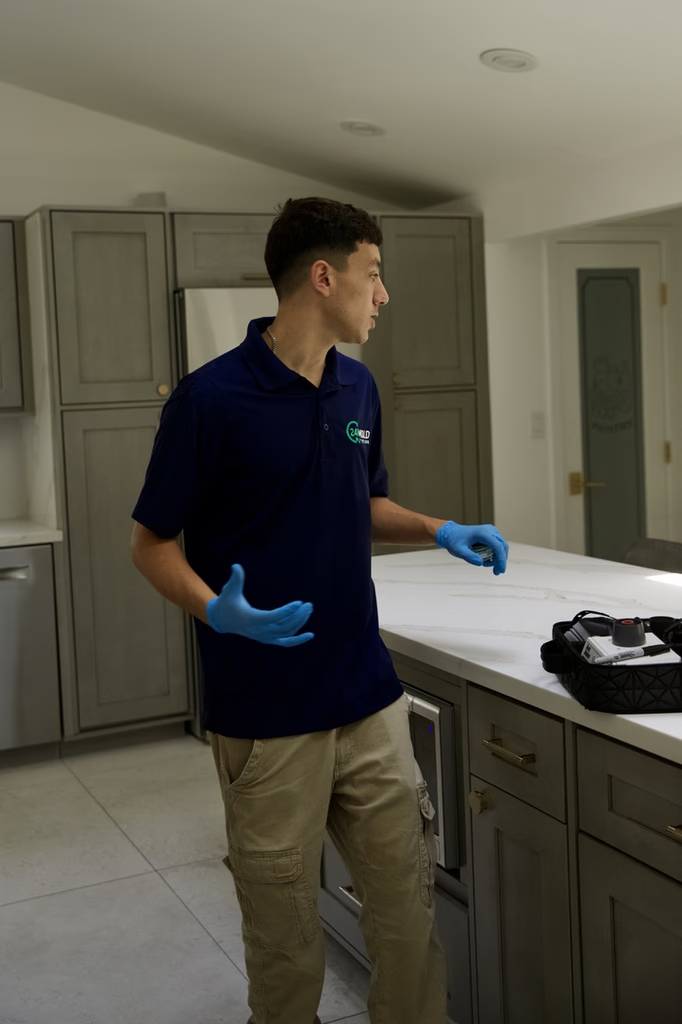
Sterile swabs and clear adhesive tape collect mold from visible spots on dry surfaces, giving the lab a clean sample for species identification. Suitable for walls, ceilings, baseboards, and furniture where the residue is what you're checking.

For damp or recently water-damaged areas, the sampling approach changes. Wet sampling captures live, actively growing colonies that dry methods underrepresent, which matters under flooring, behind tile, and around recent leaks.

A calibrated pump pulls a controlled volume of air through a spore trap cassette, capturing viable and non-viable spores from the breathing zone. The lab counts species and compares concentrations to outdoor levels, telling you whether your indoor air is healthy.

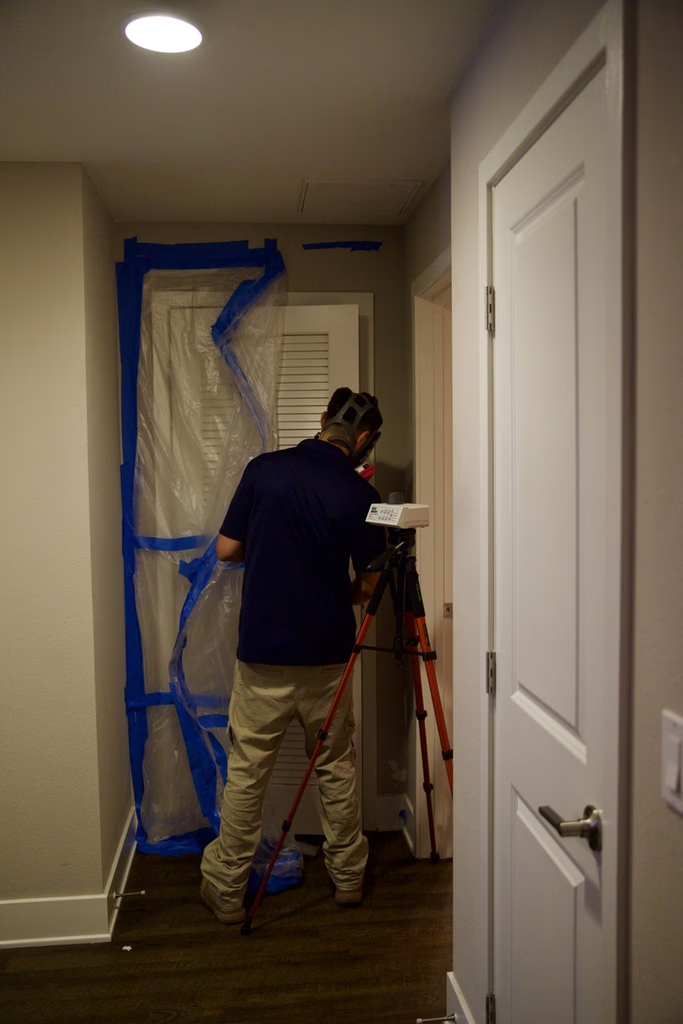
Mold inspector at work

Checklist

Is Testing Right for You?

Mold testing is ideal if:

  • —You suspect mold but can't see it
  • —You've had water damage
  • —Residents or tenants are reporting health symptoms
  • —You're buying, selling, or managing a property
  • —You need peace of mind after remediation

Still unsure? Let's talk. We'll help you decide which method suits your case best.

Testing Overview

Our Testing Methods

Techniques we use to collect accurate mold samples from air and surfaces.

1Air Testing

Collects airborne mold spores to assess air quality and detect hidden contamination.

2Tape Testing

Lifts mold samples from surfaces using clear adhesive—quick and non-destructive.

3Swab Testing

Gathers samples from damp or textured areas to identify active mold growth.

Mold inspection Lake Forest FAQ

Call For An Inspection
Attached housing concentrates moisture risk in shared systems. A failed section of shared roofing, a leaking plumbing stack inside a party wall, or a rooftop HVAC condensate overflow can put moisture into a neighboring unit's walls months before anything is visible. Fixed-schedule HOA irrigation also keeps soil damp against foundations all year. The deciding question is whether the moisture started inside the unit or in a common element, because that usually determines who pays. An independent inspection traces the moisture pathway with thermal imaging and moisture meters and documents it with no financial interest in the outcome.
They often are. Homes from this era are now 50 to 65 years old, with original galvanized or early copper plumbing near end of life, original bath fans that may still vent into the attic, and roofing and HVAC systems that have been replaced at least once. Many are slab-on-grade, which hides moisture problems: a slow supply-line leak can wick into drywall and framing with no visible sign at floor level, and Orange County's mild climate lets that moisture support growth year-round. Thermal imaging and moisture meters find in-wall and under-slab moisture that a visual check misses.
Homes built into the foothills sit on graded pads with retaining walls, weep holes, and subdrains that keep slope moisture away from foundations. Over time, weep holes plug with mineral deposits and roots, and subdrains clog or crush, so slope runoff that used to be managed starts to concentrate at downhill foundations. Irrigation used for slope plantings can also push water into fill that was compacted to shed it. The result often shows up as a damp lower level or garage long after the last rain. An inspection focuses on the downhill and below-grade walls, foundation drainage, and any lower-level living space.
Yes, though through different mechanisms. Newer construction is built tight for energy efficiency, which traps interior humidity when ventilation underperforms, and moisture trapped behind stucco and exterior cladding has little path to dry out. Water intrusion through stucco, window flashing, and balcony or deck waterproofing is among the most common defects in newer California communities, and it often appears within the first several years. Because the damage sits behind hard cladding, it is typically found with moisture meters and thermal imaging rather than a visual check.
Yes, particularly for attached units, foothill lots, and homes from the 1960s and 1970s. The inspection covers thermal imaging for behind-wall moisture, slab and foundation readings, attic ventilation, and air or surface sampling where growth is suspected. For condos and townhomes it also documents whether a moisture condition comes from a shared building system, which affects who pays for repairs. Independent documentation before closing protects you from inheriting a slow, long-running problem.
Our Lake Forest team covers the whole city of Lake Forest, including El Toro, Foothill Ranch, Portola Hills, Baker Ranch, and Serrano Highlands, with same-day and next-day appointments and 24/7 emergency response. Mission Viejo and Irvine each have their own 24H Mold Inspection page with a local team. If your property is in either city, start with that page. If you are not sure which page fits your address, call the number on this page and we will point you to the right team.
The inspection is the diagnosis. We map moisture with thermal imaging and meters, identify the source, and send samples to an accredited lab, then deliver a written report with the extent of growth, the cause, and a defined scope. The cleanup is done by a separate remediation contractor, because we perform inspection and testing only. That separation matters in HOA communities, where the party paying for the repair needs documentation with no financial interest in the size of the job. Once the work is done, we can return for independent post-remediation verification.

Contact

Book your Lake Forest mold inspection today

Tell us what's going on and we'll respond the same day

Location

24H Mold Inspection of Lake Forest

Hours

  • MondayOpen 24 hours
  • TuesdayOpen 24 hours
  • WednesdayOpen 24 hours
  • ThursdayOpen 24 hours
  • Friday6 AM – 6 PM
  • SaturdayClosed
  • SundayOpen 24 hours

Service area neighborhoods

  • El Toro
  • Foothill Ranch
  • Portola Hills
  • Baker Ranch
  • Serrano Highlands
  • Rancho Serrano
  • Lake Forest Sports Park area
  • Toledo corridor
Call For Service(888) 476-4112